Summary: The weight of the evidence says the pain trade remains higher. Qs are breaking out from a tight daily compression regime. LQD/IEF is jumping to multi-month highs. Breadth has been weak and diverging lower, but the index has absorbed it on the resiliency of MAG7. That means a good chunk of the market has been in a deeper correction this past month while the index stayed buoyant on rotation into megacaps. The risks are real: weak seasonality and a buyback blackout over the next few weeks. But we overweight the read of the tape, and the tape says the path of least resistance is up. Positioning and sentiment back that up. So we’re buying here, but we’ll be waiting for breadth confirmation before we press, as we could see a shakeout first. We cover breakouts in semis, a pause in the Ag trade, and a pattern breakout in USDSEK, plus more…
***The MO port is currently up +47.12% ytd in 26’. The Collective is where we discuss the theory behind the positioning, publish the differentiated research, track the book in real time, and argue it out with a global group of serious investors. If that’s your kind of group, join us in Slack. ***
MO Portfolio & Trades
1. The portfolio gained +167 basis points last week, leaving us +47.12% on the year, below our ytd high-water mark of +61%. We’re long Ags, energy, miners, ETHUSD. Long biotech, healthcare, crypto miners, and natty producers.
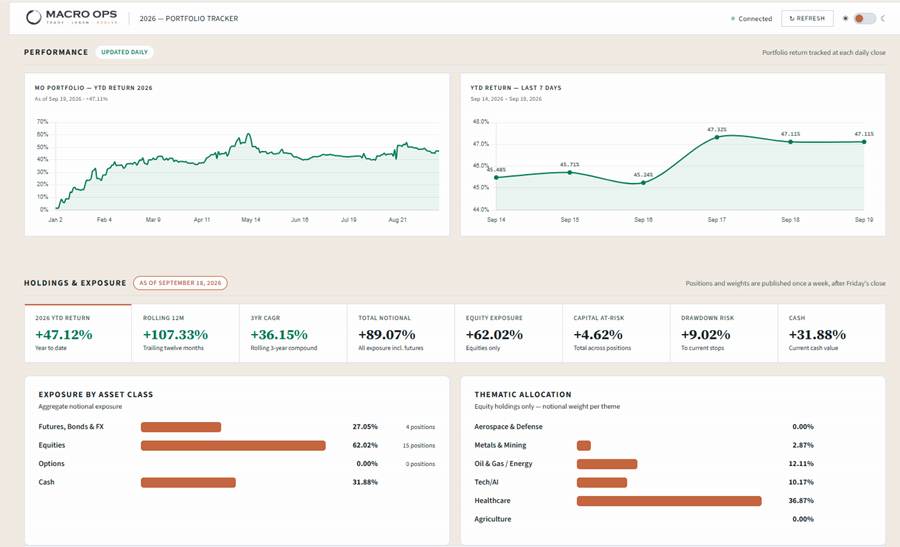
2. The week ahead in data: Thursday brings Xi to Washington with the tariff truce, rare earths and export controls on the table, plus three Nordic decisions. Supply is all front-end: 2s, 5s and 7s. Treasury’s 20–30yr buyback operation lands Thursday after a soft first round. The backdrop is a Fed that hiked to 3.75–4.00% with no dissent and a hawkish dot plot. Twelve of 18 see one more this year, and Goldman now expects October.
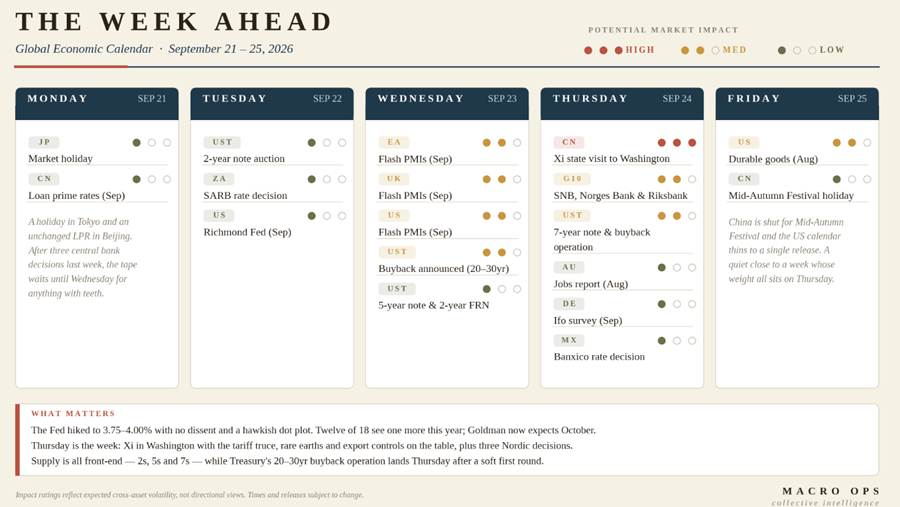
3. This environment isn’t without risks, but we trade the tape first, and price keeps telling us the path of least resistance is up. Qs are breaking out from a tight daily compression regime, inside a Bull Quiet regime and an established primary uptrend. We’re buying here…
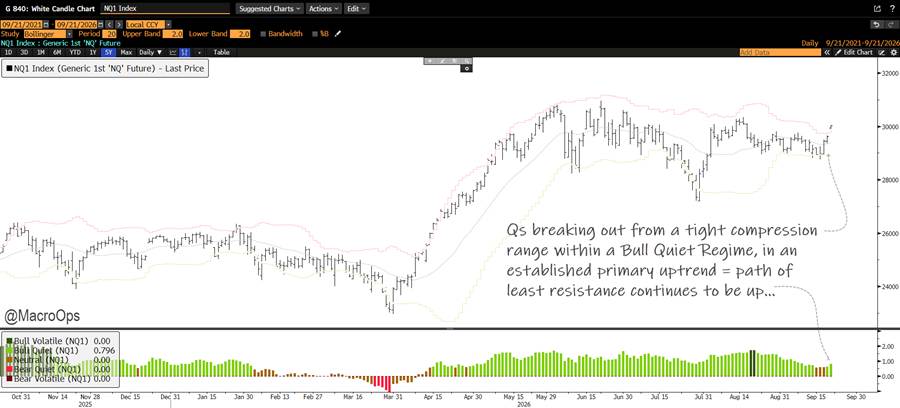
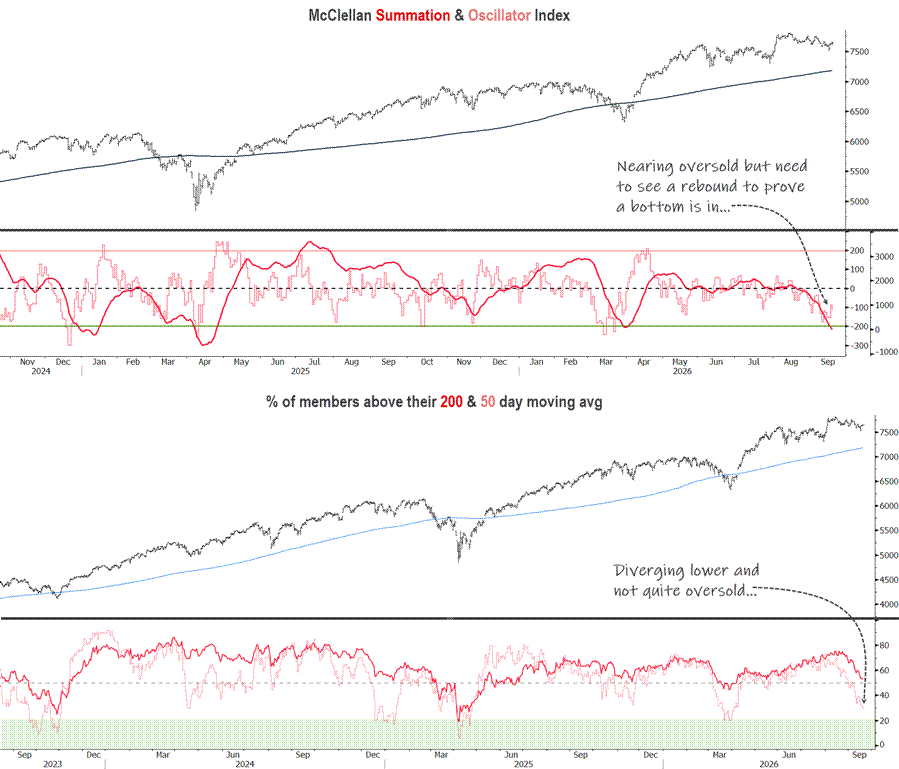
4. Breadth still looks weak, though it’s nearing oversold. We don’t want to press long aggressively until broader participation bottoms and confirms the move.
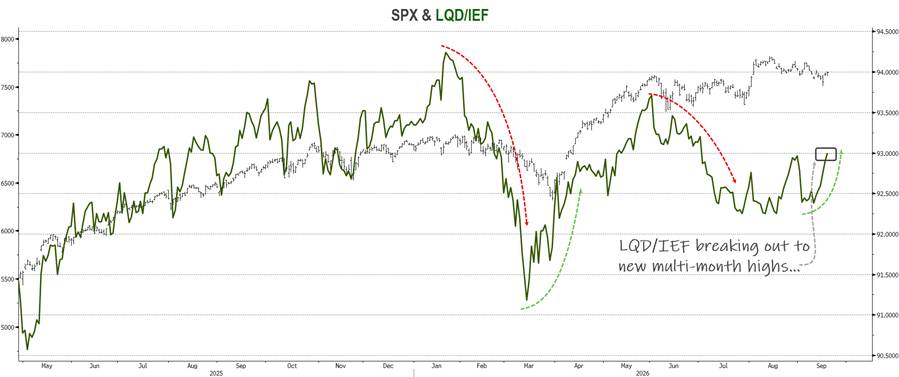
5. On the positive side of the ledger, my favorite market internal (LQD/IEF) is inflecting to new multi-month highs. That suggests some durability to this breakout
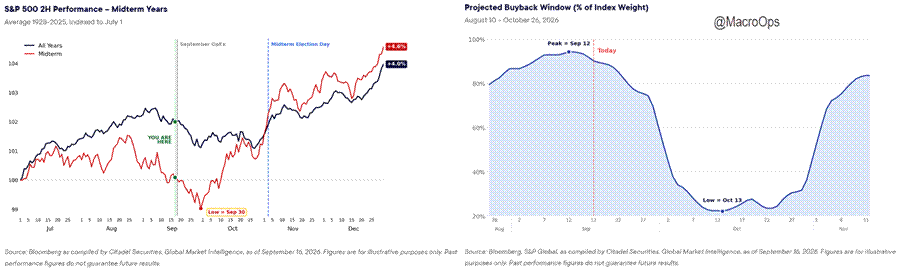
6. Citadel laid out their bullish Q4 case in a recent note (link here), but they want a pullback first, with the bottom and next leg up not arriving until the end of September. Their reasoning:
“Buybacks are heading into blackout. 10% of S&P 500 weight is in a pre-earnings blackout today. By September 30 that rises to 61%, and the window does not reopen for the majority of the index until November 1. One of the market’s largest structural buyers is stepping aside during exactly the window when the calendar is weakest… The calendar is now entering the exact window we highlighted earlier this month. Historically, September weakness has been concentrated in the back half of the month, and the pattern has been even more pronounced during midterm years. We continue to think the path into month-end is lower.”
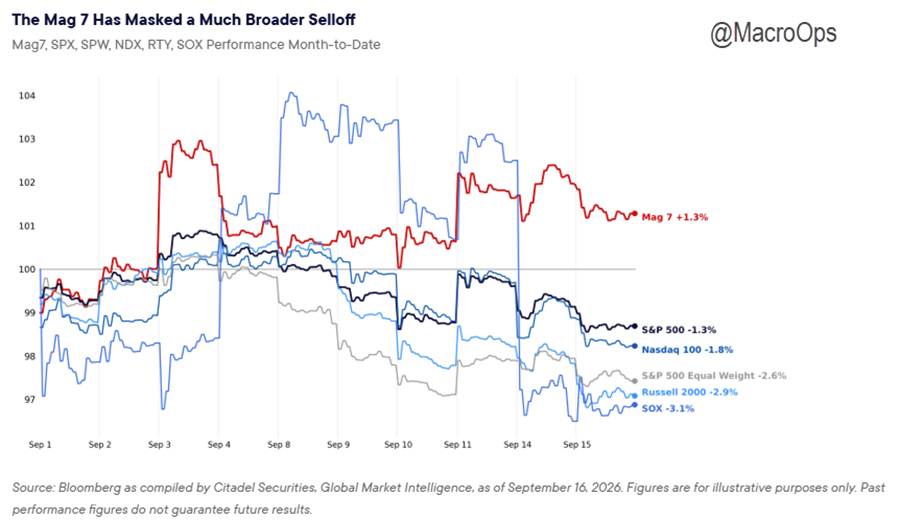
7. The index doesn’t tell the full story. Much of the market has been in correction for the past month while SPX and NQ traded sideways, thanks entirely to MAG7 retaining a decent bid. The question is whether the megas catch down to the underperformers or the rest catches up. I think the latter.
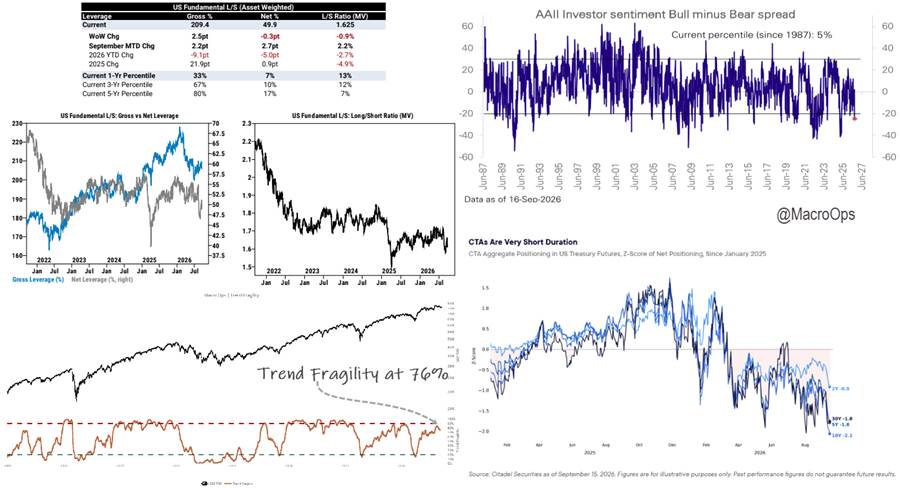
8. Sentiment & Positioning — GS: “US L/S Gross leverage rose +2.5 pts to 209.4% (33rd percentile one-year), while US L/S Net leverage fell -0.3pts to 49.9% (7th percentile one-year). US Fundamental long/short ratio (MV) decreased -0.9% to 1.625 (13th percentile one-year).” AAII net bull/bear sits in the 5th %tile, high bearishness. Our Trend Fragility gauge is at 76%, a neutral read that supports higher prices. And CTAs are extremely short bonds across the curve, suggesting we may soon see some respite from yields.
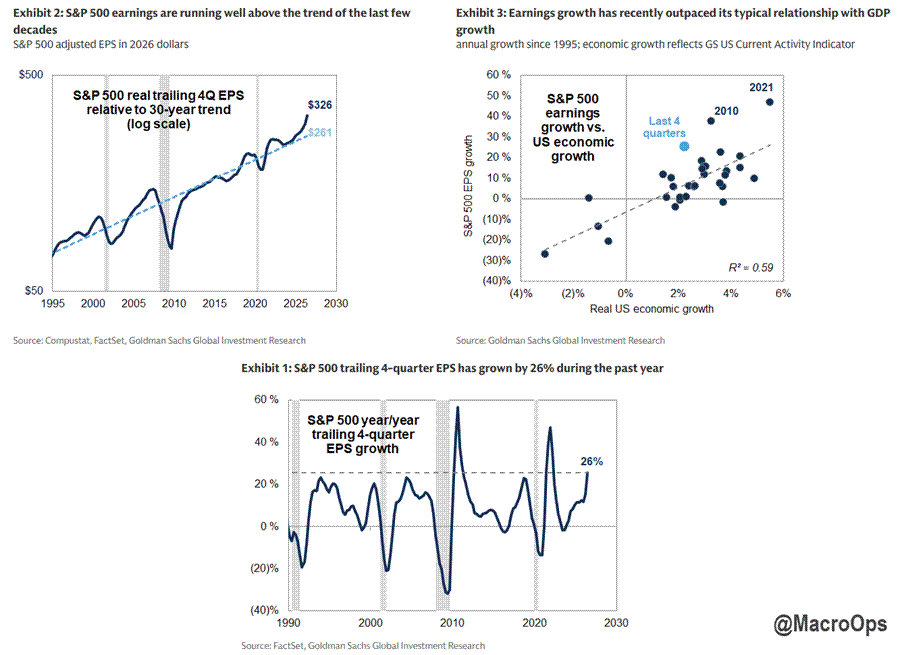
9. If the Iran escalation takes a breather and crude trades sideways, bonds get some relief and attention turns back to earnings. Those should keep coming in strong as long as the AI CAPEX cycle runs.
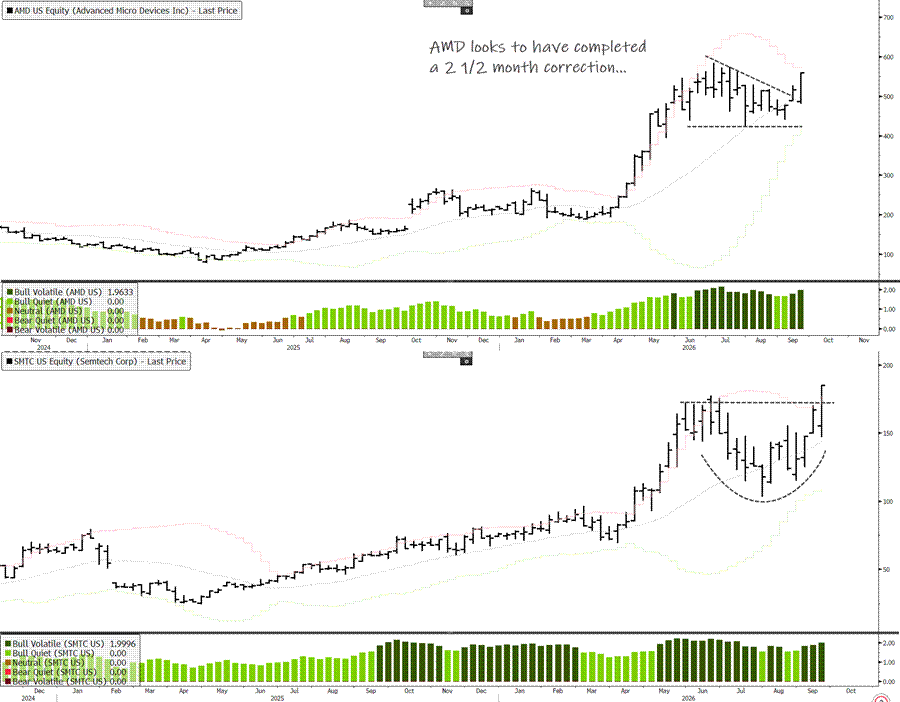
10. We flagged the bullish setup in semis and momentum last week. We’ve gotten more confirmation since, with leaders like AMD and SMTC breaking out of solid bases (charts are weekly)
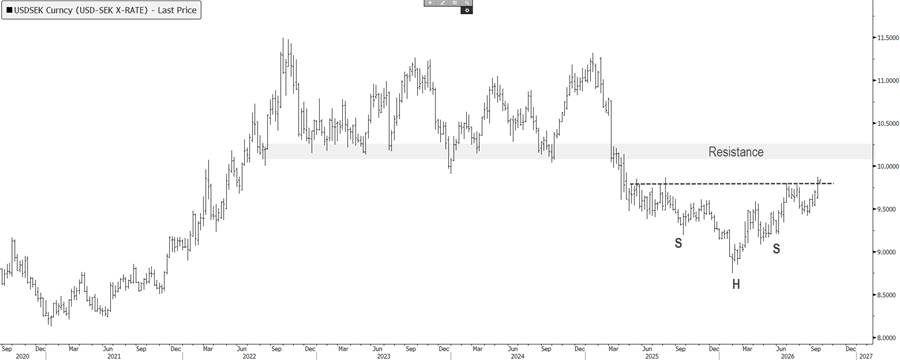
11. USD positioning is mostly back to neutral, and I’m seeing setups in long dollar pairs. Here’s an inverted H&S bottom in USDSEK (weekly chart).
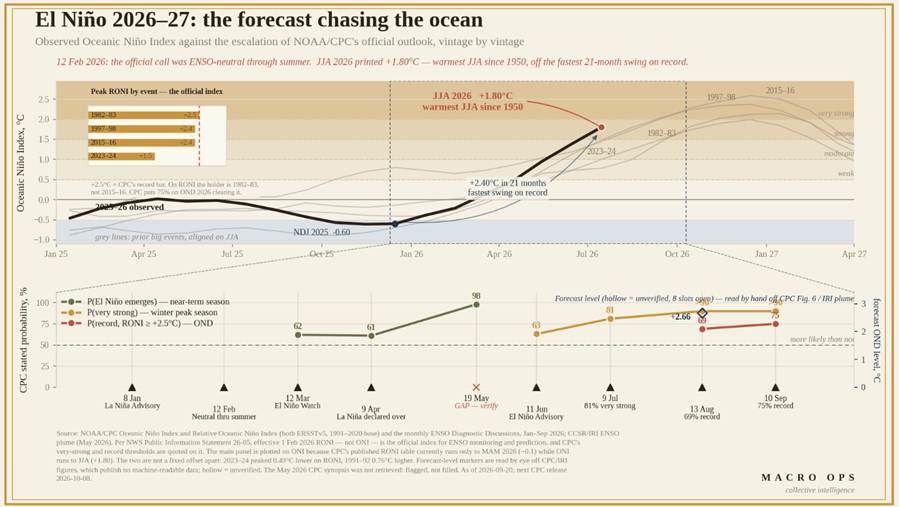
12. Weather forecasters have done nothing but revise up their El Niño forecasts since June. Month after month. They now put a three-in-four chance that this winter tops every El Niño since 1950. If this ends up being the case, there will be real consequences for South American and Australian growing conditions and for the Asian palm and rice complex.
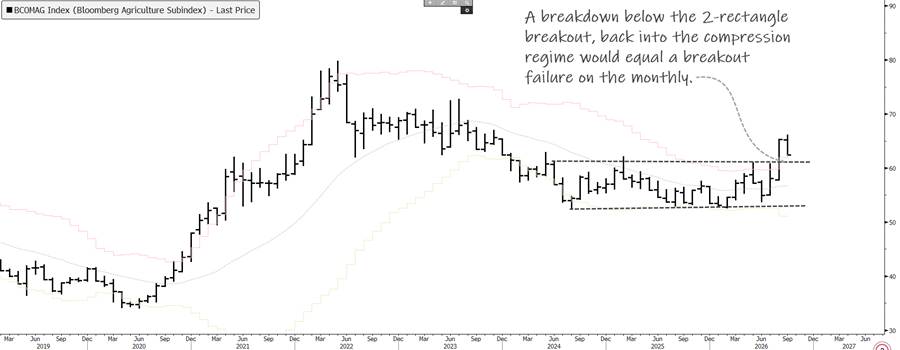
13. The Ags trade is taking a breather after an explosive breakout from its 2yr compression regime. The chart below is a monthly of the BBG Ag subindex. Positioning had gotten crowded, so this correction is exactly what we’d expect. We’ll add to Ags as long as it holds above the breakout level.
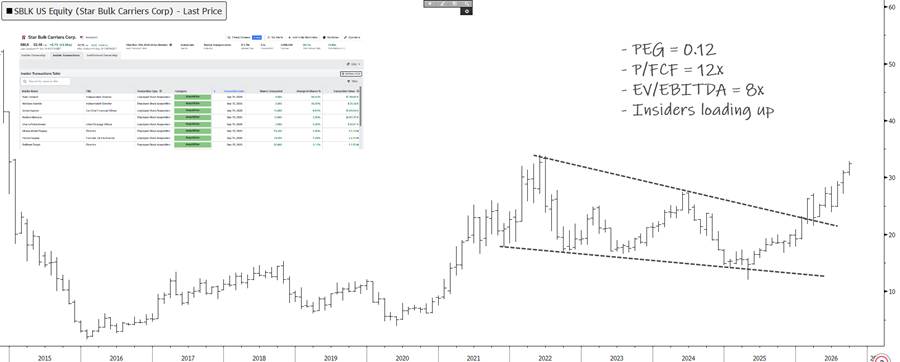
14. H/T to Collective member @Phil Deane for this one. SBLK is a liquid way to play a constructive dry-bulk cycle. 145 vessels, limited effective fleet growth, improving cargo demand.
The earnings torque is showing up in the numbers… $144.9mn of net income and $1.21 adjusted EPS in Q2, with industry-low operating costs, so stronger spot rates drop disproportionately into cash.
Chart is a monthly. Low multiple relative to growth, insiders buying heavily, and the geopolitical backdrop should keep working in dry bulk’s favor.
Thanks for reading.