Key points:
- Technology retained its #1 ranking, but some areas weakened
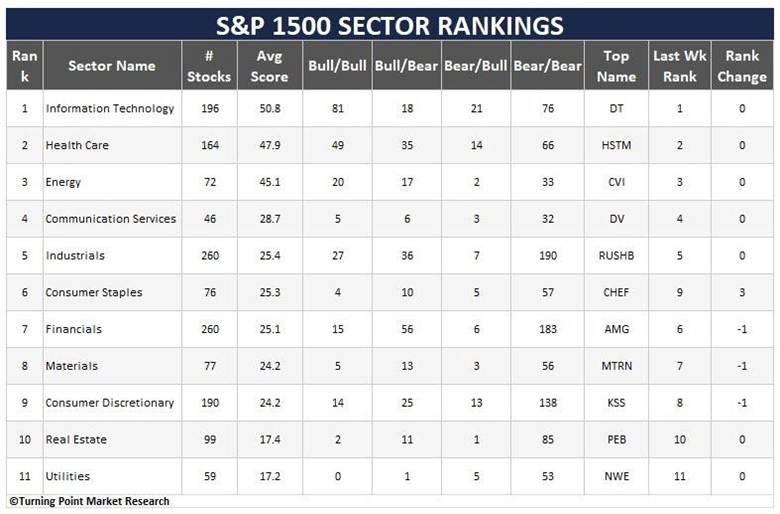
- Health care and energy were steady, ranking #2 and #3
- The South Korea ETF (EWY), a tech proxy, shifted to a bearish DT status
Three sectors lead in an increasingly uneven market
After briefly stabilizing, the percentage of S&P 1500 stocks with bullish short- and long-term Dual Trend signals fell again, from 16% to 15%. Technology maintained its lead, but its average stock score slipped from 51.3 to 50.8. Health Care and energy remained second and third, respectively, with energy improving more strongly as its average score rose from 41.2 to 45.1.
At the bottom of the rankings, financials, materials, and consumer discretionary all lost ground. Utilities remained last, though its average score improved from 12.0 to 17.2. Consumer staples was the biggest gainer, moving from ninth to sixth, a shift that may point to growing interest in defensive areas of the market.
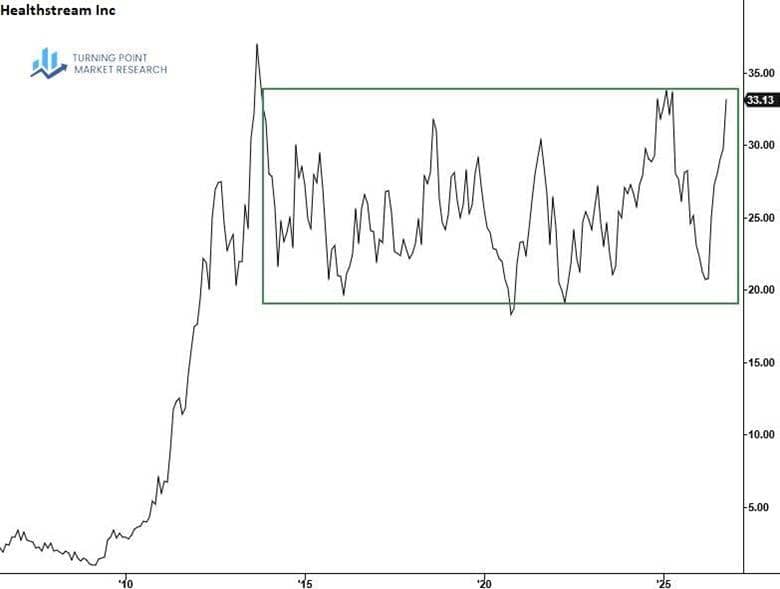
HealthStream (HSTM), the top-ranked health care stock and overall leader in the latest S&P 1500 rankings, caught my eye given its technical setup. The stock has spent nearly a decade consolidating and is now approaching the upper end of that range. What could be driving its recent strength is the company’s AI initiatives, which are streamlining expensive, labor-intensive processes and boosting productivity across health care organizations.
Broadly speaking, the slower-growing health care industry is ripe for AI automation.
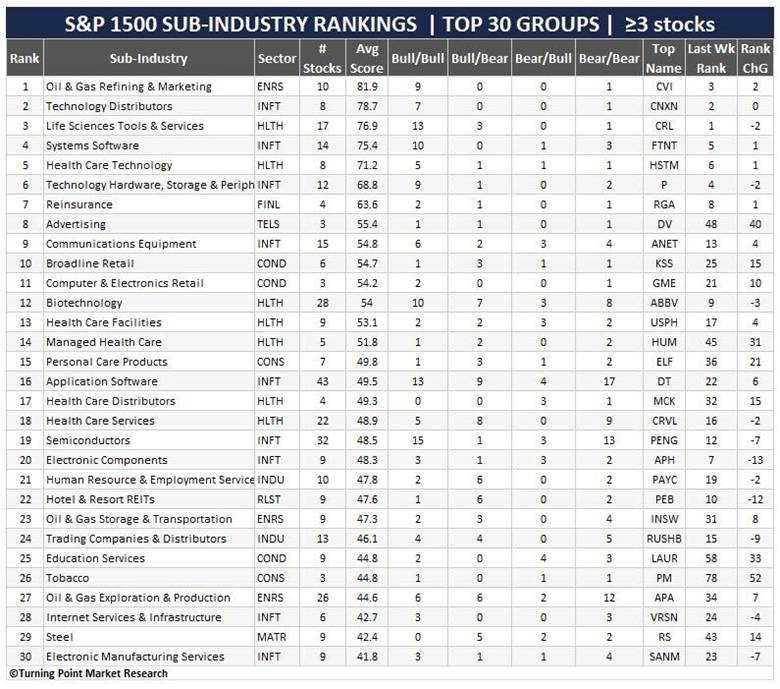
Little changed among the top-ranked sub-industries, with most movement limited to shuffling within the top seven. Consumer staples and consumer discretionary led the biggest week-over-week gains, with tobacco and broadline retail leading the charge.
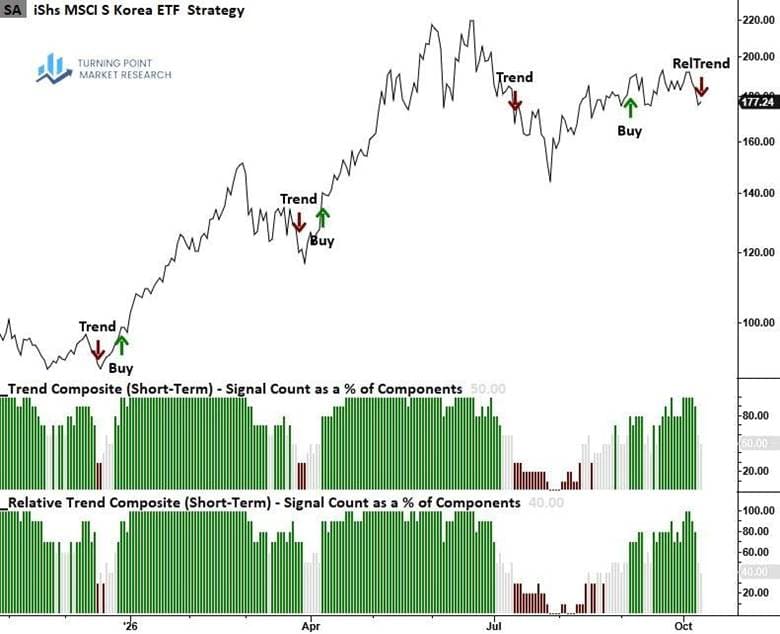
On Friday, the South Korea ETF (EWY), heavily weighted toward SK hynix and Samsung Electronics, two of the world’s most important memory-chip manufacturers, shifted to a bearish short-term Dual Trend status. The pressure extends beyond these two companies, with weakness spreading across the broader memory and storage space.
Micron, which recently reported earnings, is down 7% since its announcement. The inability to rally on seemingly good fundamentals raises an important question: If AI stocks can’t rally on solid earnings, what’s the next catalyst to move them higher?
This is becoming an increasingly common trend across AI-related names.
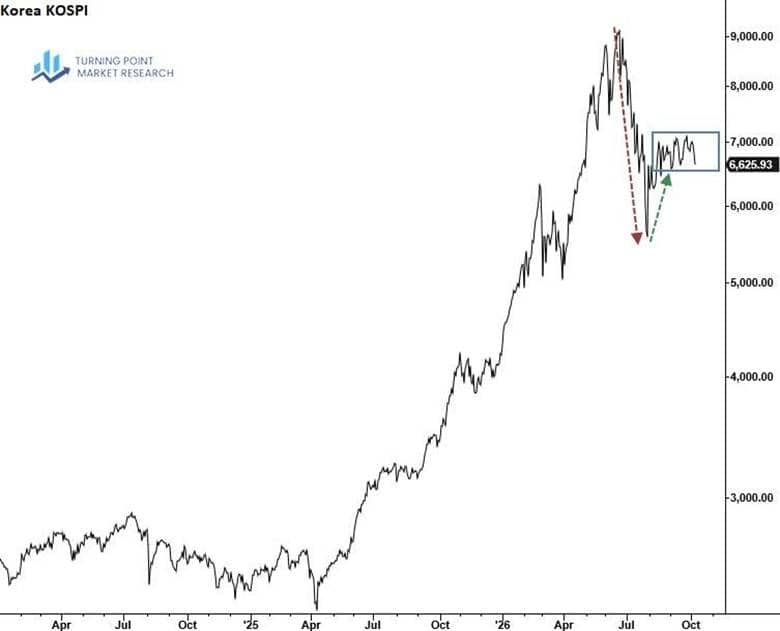
The Korean KOSPI is showing a concerning technical pattern. After a sharp break, the index bounced but has struggled to regain momentum, instead consolidating at a lower level. That type of price action can precede a more significant top if buyers fail to regain control.
The KOSPI needs to turn things around quickly, and the concern extends well beyond Korea. More AI stocks are showing similar behavior.
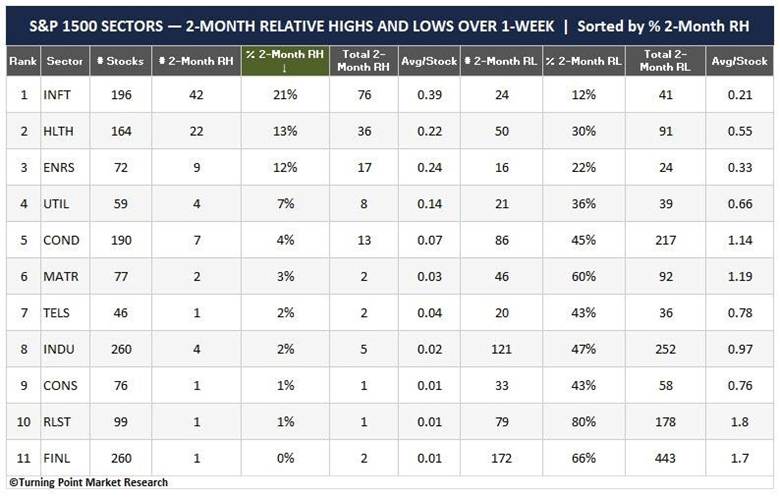
Technology, health care, and energy once again led in the percentage of stocks hitting two-month relative highs. However, tech and health care both fell week over week, while energy rose. Among cyclical sectors, relative lows increased in financials, consumer discretionary, and industrials.
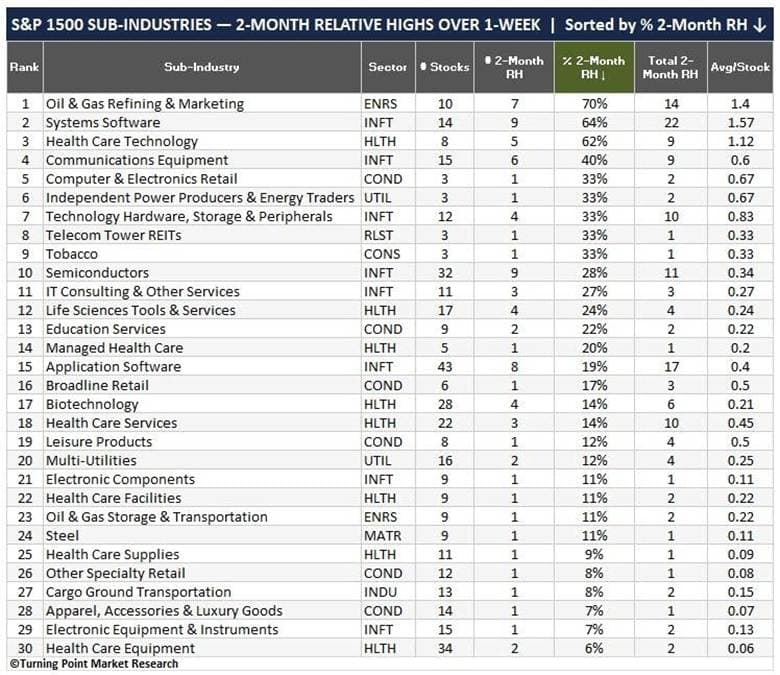
Relative highs remained concentrated in a handful of the sector leaders. Systems software led technology, while oil and gas refining and marketing continued to drive most relative highs in energy. HealthStream, noted above, accounted for four of the nine total relative highs in health care technology over the past week.
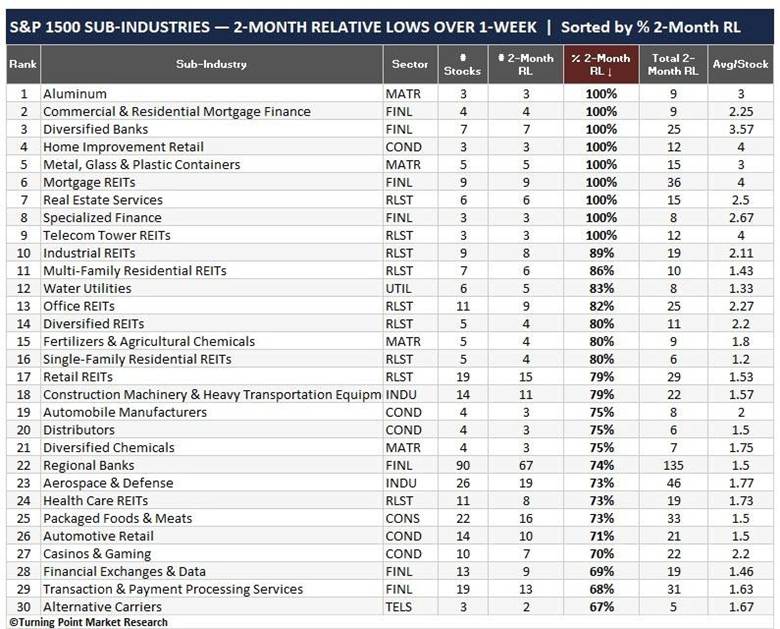
Rate-sensitive groups continued to struggle, with two-month relative lows accumulating across several areas. Real estate remained the weakest, as 9 of 12 groups registered relative breakdowns. Consumer discretionary and financials also deteriorated notably, led by banks and housing-related groups. With bank earnings starting tomorrow, the industry faces an important test.
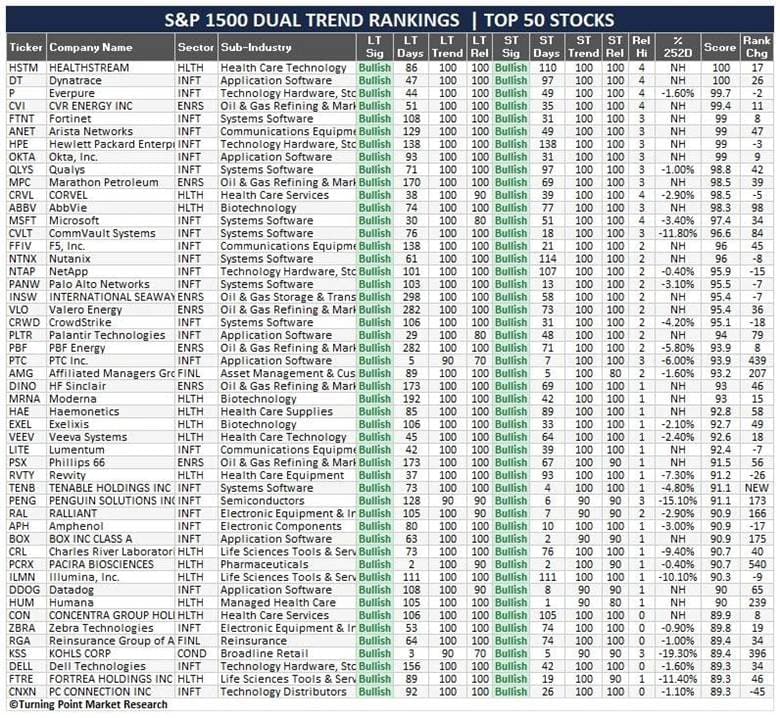
The top 50 stocks in the S&P 1500 rankings remain heavily concentrated in technology and health care, which account for 40 of the 50 names. Within technology, software companies make up 14 of the 26 stocks, while just one semiconductor name (PENG) cracks the top 50.
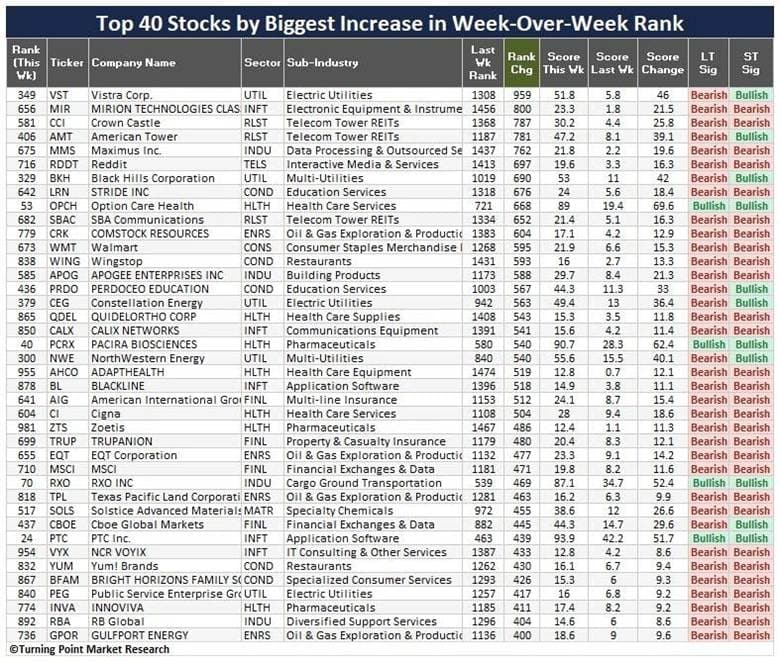
Utility stocks were among the biggest week-over-week gainers, led by Vistra (VST) and Constellation Energy (CEG), which signed a nuclear-power agreement with Alphabet.
Telecom Tower REITs also posted significant gains, bucking broader real estate weakness.
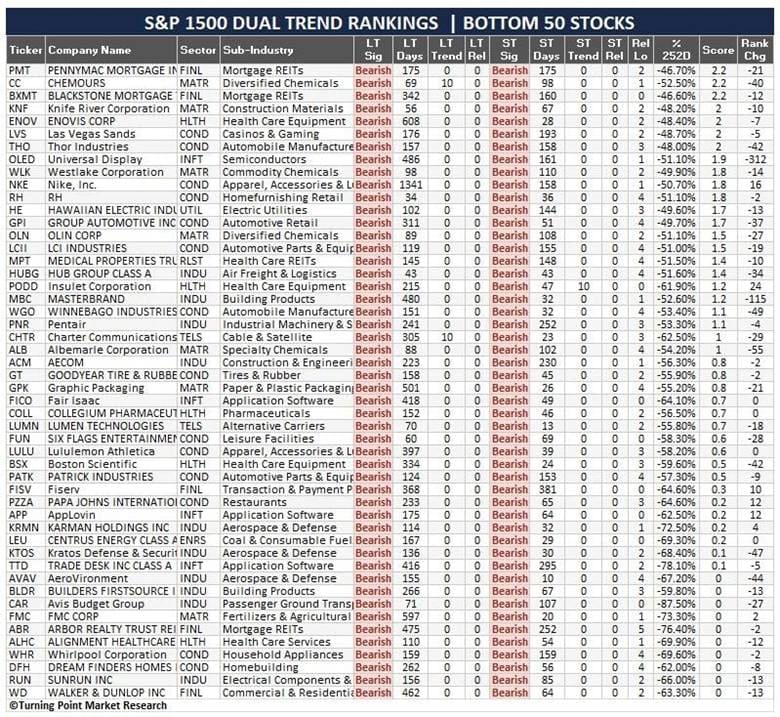
Consumer discretionary and industrials still make up most of the bottom 50 stocks. Within discretionary, housing and auto-related groups remain the biggest areas of concern, reflecting continued weakness in big-ticket items.
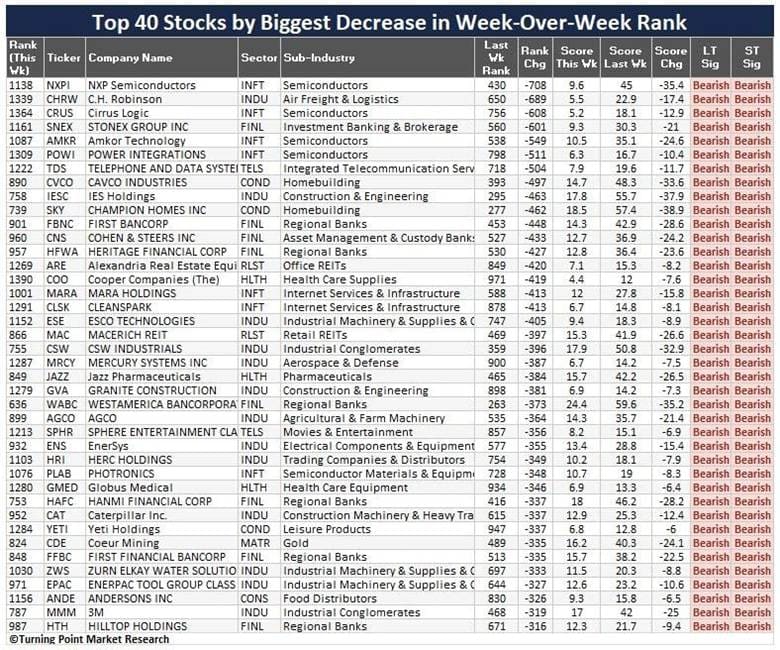
Industrials had the largest representation among stocks with the sharpest week-over-week ranking deterioration, followed by financials and technology. Semiconductor stocks drove most of tech’s declines, while two Bitcoin miners pursuing data center infrastructure opportunities also fell sharply.
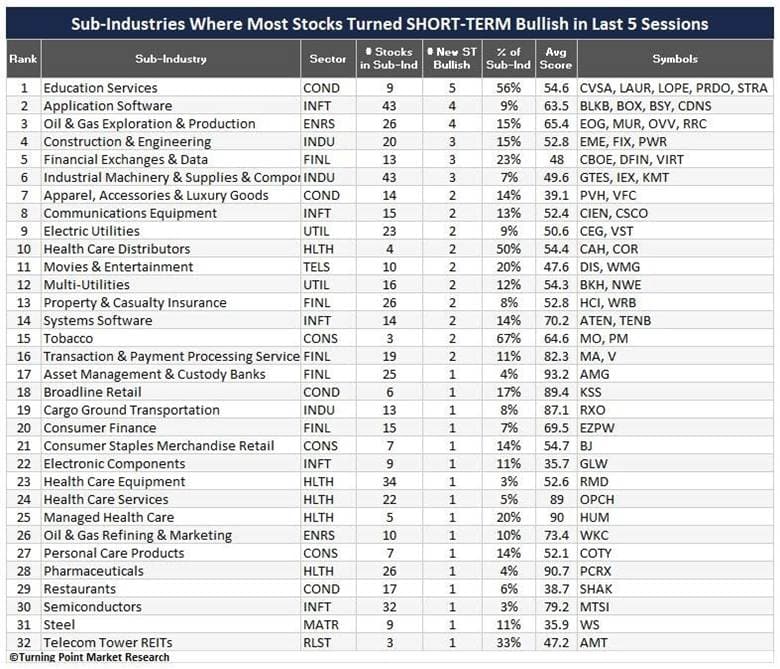
Education services had the highest proportion of new short-term Dual Trend buy signals across all sub-industries. Oil & gas exploration & production also stands out, particularly as energy’s recent strength has been driven primarily by refiners. That leadership could be starting to broaden.
What the research tells us…
Technology retained the top ranking last week, though weakness in AI stocks slightly overshadowed strength in software names, pushing the sector’s overall score down modestly. Despite remaining the leading group, cracks are beginning to show in the AI trade. Micron fell 80 points in the rankings, while memory and storage names such as Seagate and Western Digital also remain under pressure. The weakness is showing up overseas as well, with the South Korean ETF (EWY) shifting to a bearish short-term Dual Trend signal.
More broadly, price action across AI stocks is becoming increasingly concerning. Many have bounced from their lows but lost momentum, forming consolidations below their previous highs.
Health care and energy remain the only other sectors showing consistent relative strength, suggesting investors should continue to favor them. Overall, market leadership remains narrow, a dynamic consistent with late-cycle conditions.