Key points:
- Three of the top four sectors in the S&P 1500 rankings come from defensive groups
- Utilities and materials rose most; communication services fell most
- Some pockets of strength can be found in discretionary and industrials
Signs of broadening, but still a defensive tilt
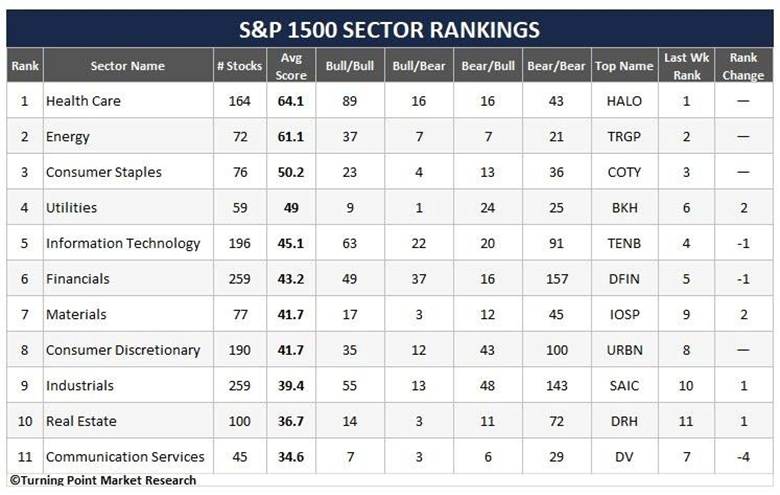
This week’s S&P 1500 rankings show broad improvement, with every sector’s average score rising. The number of stocks bullish on both long- and short-term signals climbed from 338 to 398, and the number of fully bearish stocks fell from 861 to 762.
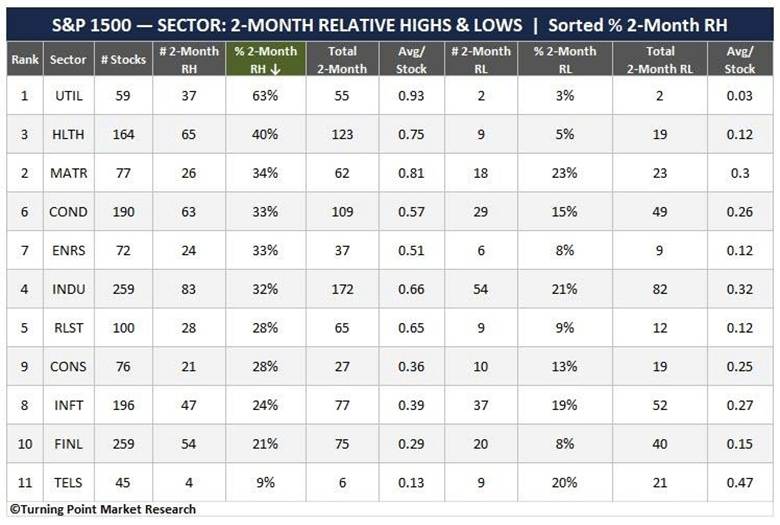
Health Care remains firmly in first with an average score of 64.1, holding 7 of the top 30 sub-industries and 18 of the top 50 stocks, while energy and consumer staples hold second and third. Utilities extended last week’s advance, rising two more spots to fourth, and now lead every sector with 63% of stocks at 2-month relative highs.
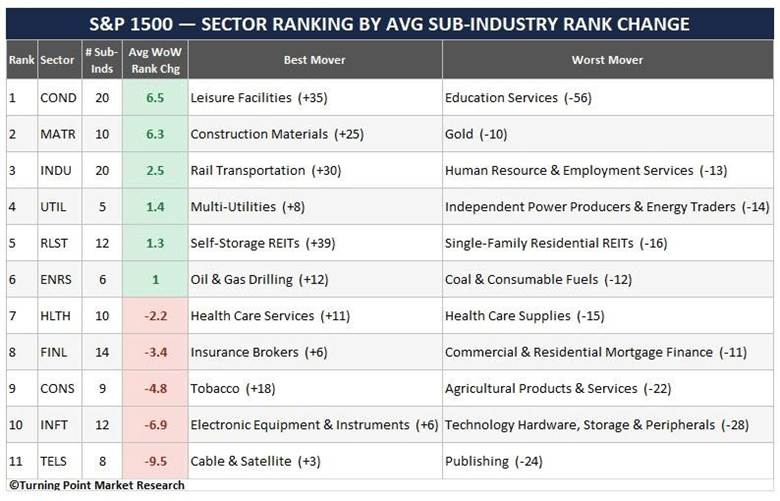
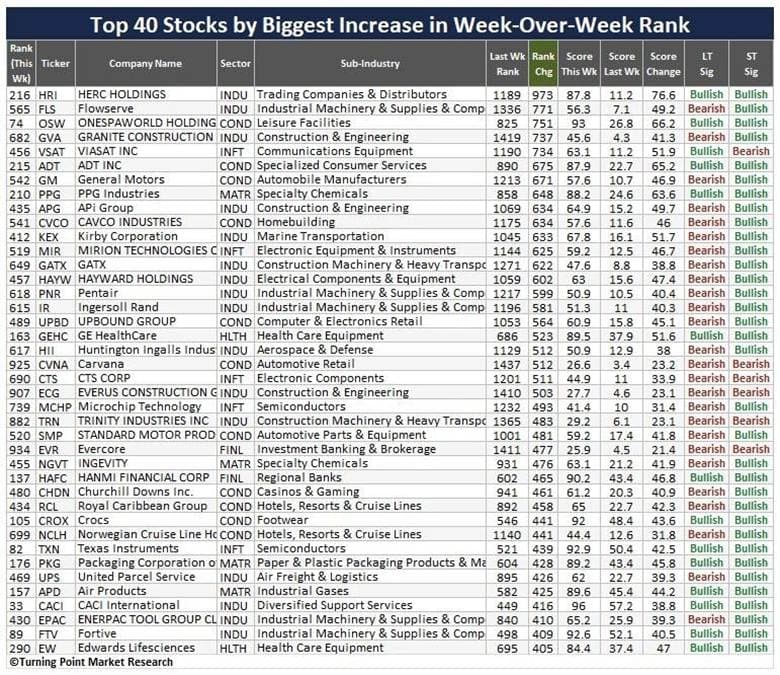
The more notable change is in cyclicals: consumer discretionary, materials and industrials posted the strongest average sub-industry rank gains, and industrials supplied 16 of the week’s 40 biggest stock-level risers after leading the decliners a week ago. Technology and communication services moved the other way, with software, semiconductors, and media groups losing ground.
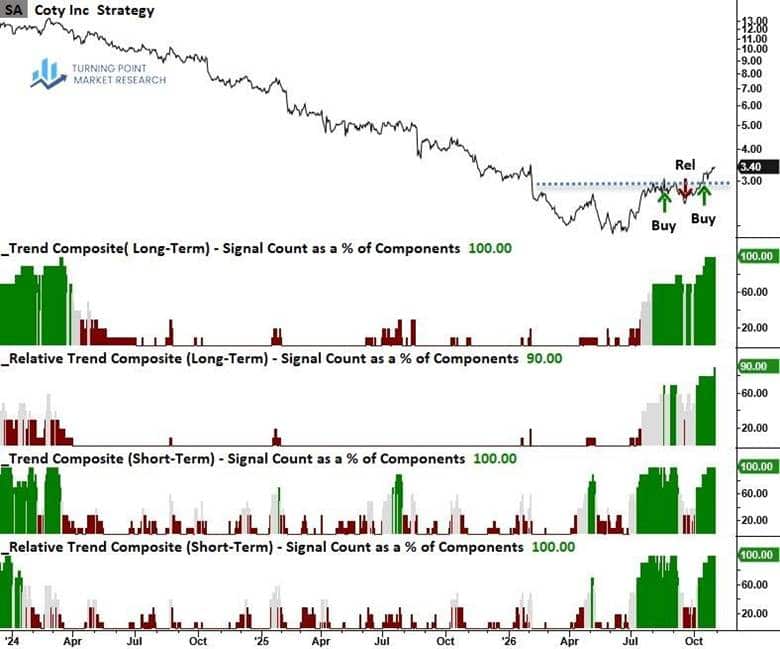
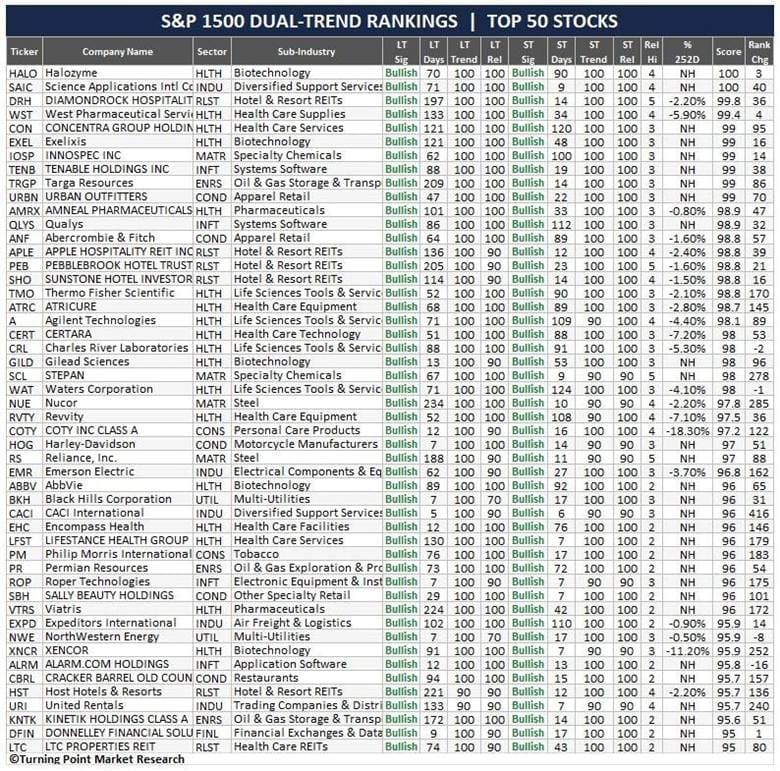
Coty Inc. (COTY) caught my eye as the top-ranked stock in consumer staples. Both the short- and long-term Dual Trend systems are bullish, providing a favorable technical backdrop for a potentially interesting turnaround story. With a new CEO at the helm, the focus is on revitalizing a business built around established beauty and fragrance brands such as Burberry, Calvin Klein, Hugo Boss, Marc Jacobs, and Chloé.
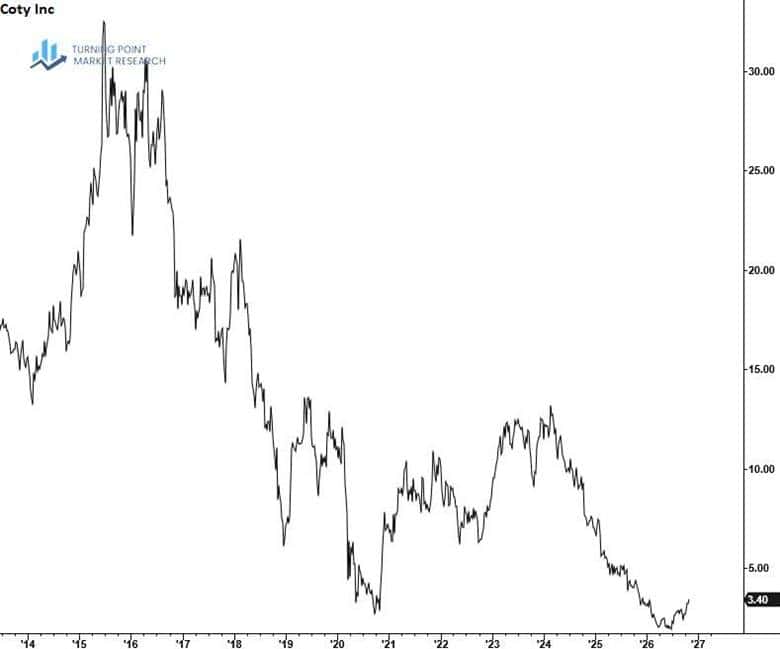
A longer-term view of Coty’s chart puts the stock’s upside potential into better perspective.
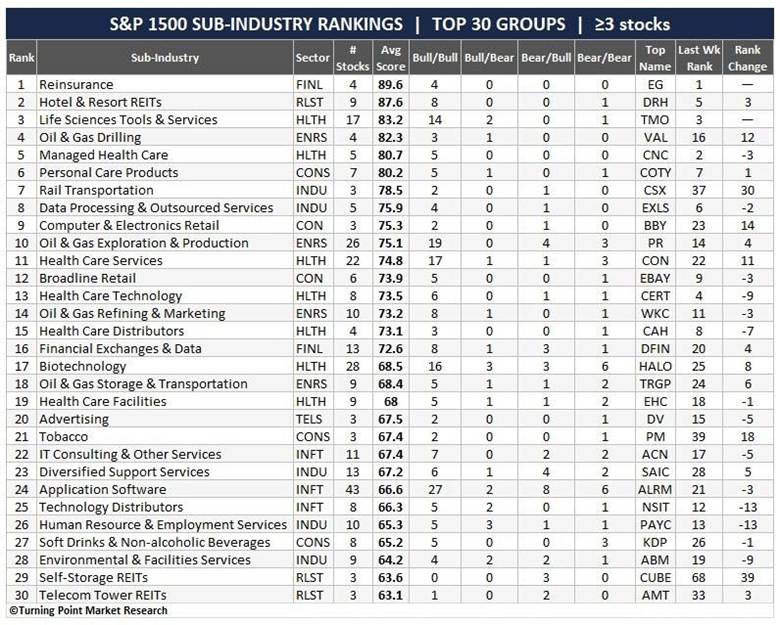
While health care once again accounted for the most sub-industry groups among the top 30, the more notable development was industrials ranking second with five, led by rail transportation. Notably, these aren’t AI beneficiaries but traditional old-economy groups showing renewed strength.
The three biggest week-over-week average score gainers were cyclical sectors, led by consumer discretionary. Falling interest rates have helped the group, and with crude oil tumbling today, it’s an area worth monitoring for individual stock opportunities.
The distribution of relative highs and lows across sectors once again reflected the market’s defensive tone, with utilities and health care posting the highest percentages of 2-month relative highs. More notable, however, was that 33% of consumer discretionary stocks registered a multi-month relative high, further reinforcing the group’s improving technical profile.
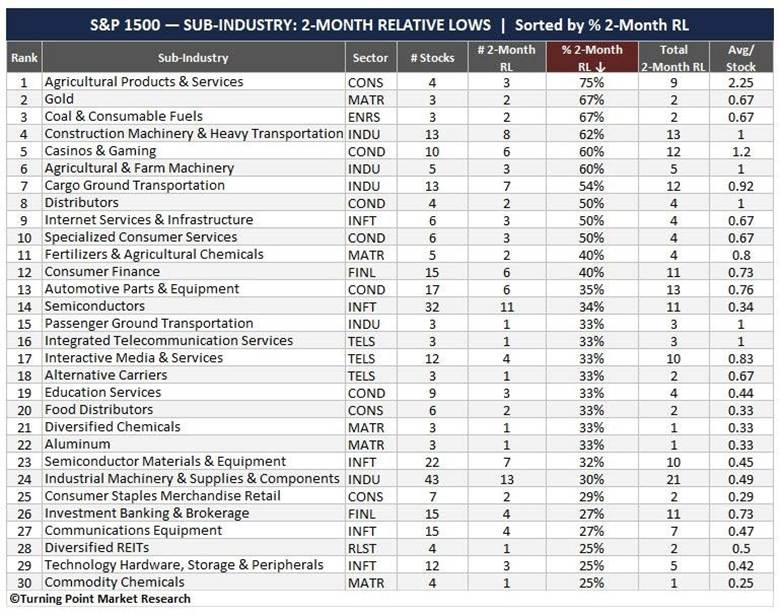
Consumer discretionary and industrials each had six sub-industries rank among the top 30 based on the percentage of stocks making 2-month relative highs. Within discretionary, consumer-facing experiences continue to stand out, led by leisure facilities and hotels, resorts & cruise lines.

AI beneficiaries accounted for much of the technology representation among sub-industries with the highest percentage of 2-month relative lows. Financials also raised a flag, with consumer finance and investment banking and brokerage making the list. Both groups have historically struggled during late-cycle periods.
Health care once again led the leaderboard, with 18 stocks represented in the top 50. Life sciences tools and services and biotechnology contributed the most names. Every sector except communication services had at least one stock in the top 50, although financials had just one.
Industrials led all sectors among the 40 stocks with the largest weekly ranking gains, accounting for 16 names. Consumer discretionary followed with 11.
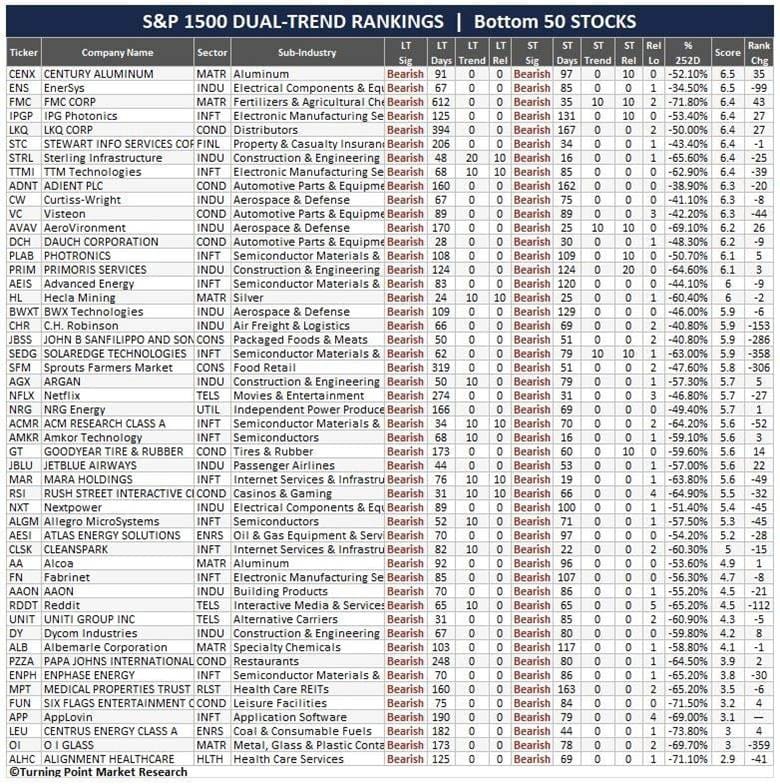
Technology and industrials dominate the bottom of the S&P 1500 rankings, accounting for 25 of the 40 worst-ranked stocks. Much of this reflects deteriorating trends and relative strength among AI beneficiaries. Elsewhere, metals remain a weak spot within materials, while auto parts and equipment continue to struggle within consumer discretionary.
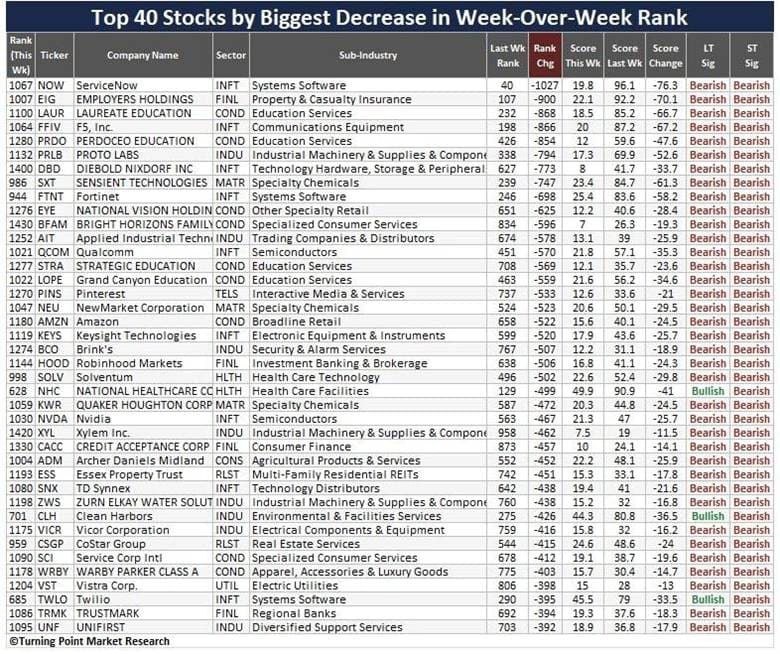
Technology and industrials accounted for 17 of the 40 largest week-over-week ranking declines, with AI beneficiaries driving much of the deterioration. Software also experienced several significant setbacks, led by ServiceNow, which recorded the largest decline of any stock.
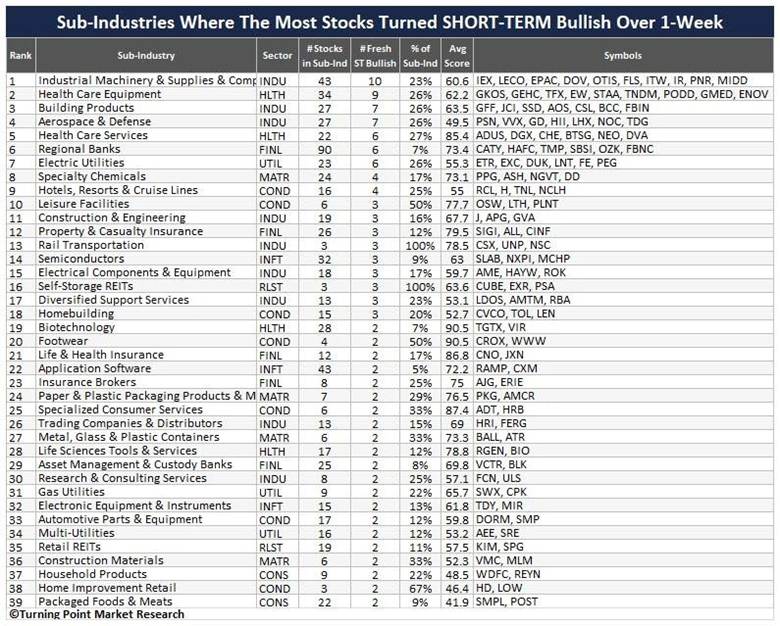
Industrial machinery & supplies & components led all sub-industry groups, with 10 stocks shifting to bullish short-term status over the past week. Health care equipment, a notable laggard within the otherwise strong health care sector, followed closely, with nine stocks turning bullish.
Aerospace & defense also showed encouraging strength, with several stocks displaying signs of bottoming following a significant pullback.
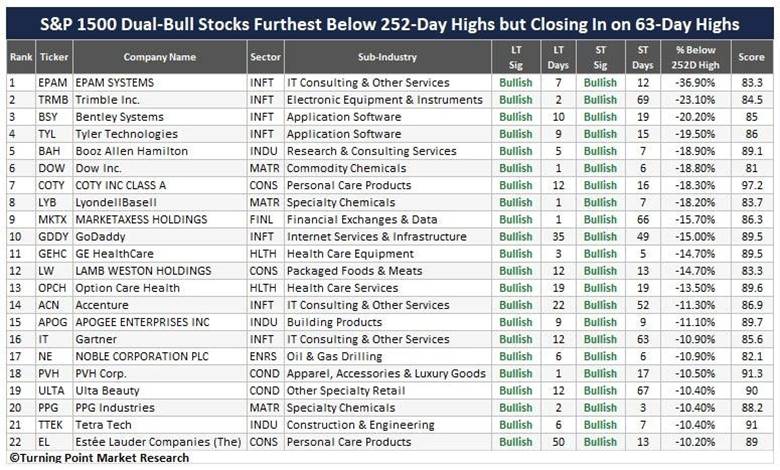
The following table highlights stocks that remain bullish on both the short- and long-term Dual Trend systems, are down more than 10% from their 252-day highs, but are within 3% of their 63-day highs. In other words, these are stocks that have experienced meaningful longer-term pullbacks but are showing signs of near-term improvement. Some of the best-looking charts include BSY, TYL, BAH, GDDY, IT, and PVH.
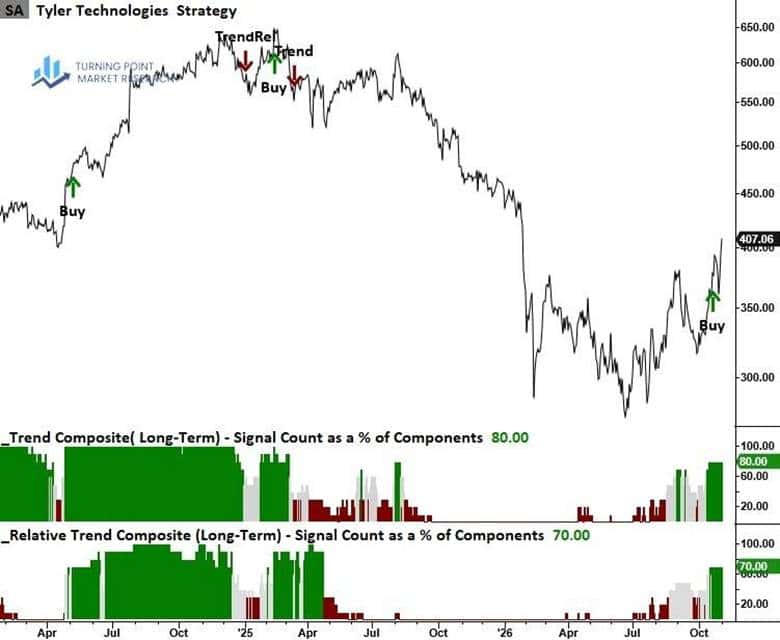
Tyler Technologies developed a constructive consolidation pattern, one that could even be interpreted as a reverse head-and-shoulders formation, ahead of its dual trend shift. This is a textbook example of the type of setup to look for when using the dual trend system.
What the research tells us…
The market’s defensive character became more pronounced last week as renewed selling pressure hit AI-related stocks. While the broader leadership picture remains defensive, some encouraging pockets of relative strength have emerged in consumer discretionary and non-AI segments of industrials, potentially benefiting from lower Treasury yields. However, the increasingly fragmented market continues to make stock selection challenging as more sectors and sub-industries are displaying negative correlations to the S&P 500, a dynamic reminiscent of the late 1990s. Until a sustainable uptrend takes hold, maintaining a selective approach and avoiding aggressive sector positioning remains prudent.