My breakout trading starts with a bottom-up screening process across thousands of individual stocks.
Doing so gives a much different perspective on the market’s health and resiliency than other approaches, such as top-down screening or using indices alone.
After the sharp market sell-off last April following President Trump’s “Liberation Day” tariff announcement, my bottom-up screening process had me feeling stuck in the mud for much of the remainder of 2025.
Market trends were contained within narrow thematics—AI infrastructure, metals, large-cap tech. The slow drift higher in the indices created the illusion of wide market participation, but the reality under the hood was not so.
Candidly, it was a very challenging period for my strategy as there were so few setups—and those stocks that did set up outside of the aforementioned themes failed to follow-through.
What I have experienced in my bottom-up process since last December has been the complete inverse.
The crowded themes that defined 2025 have taken shots across the bow. The indices have stuttered and stalled. SPY’s return YTD stands just under 1%.
And yet quality setups have proliferated in my screens, and breakouts are following through with strength.
Capital appears to be rotating out of the overcrowded 2025 thematics and into new sectors of the market.
Members of our Macro Ops Collective have asked me how much of this shift in environment has been a feeling and how much has been informed by my trades themselves.
For me, it has been 90% informed by my trades.
To make this as clear as possible, I wanted to contrast the exact same setups from Q4 2025 to those in Q1 2026.
Here is what my breakout trades looked like in Q4 of 2025:
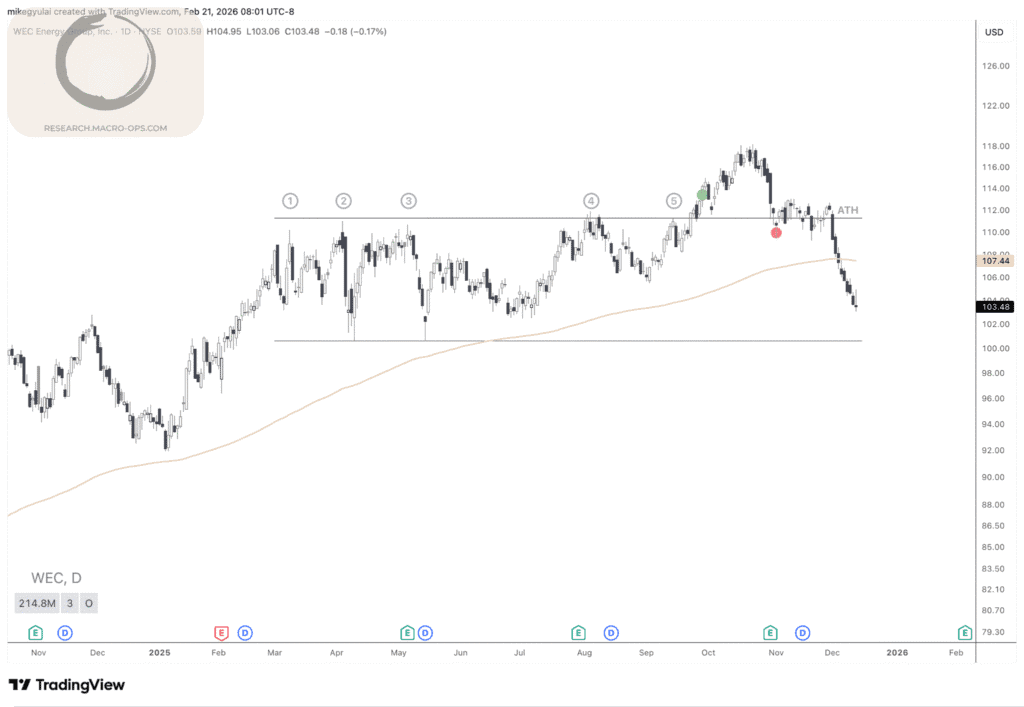
WEC Energy Group, Inc. (WEC), 1D, November 2025
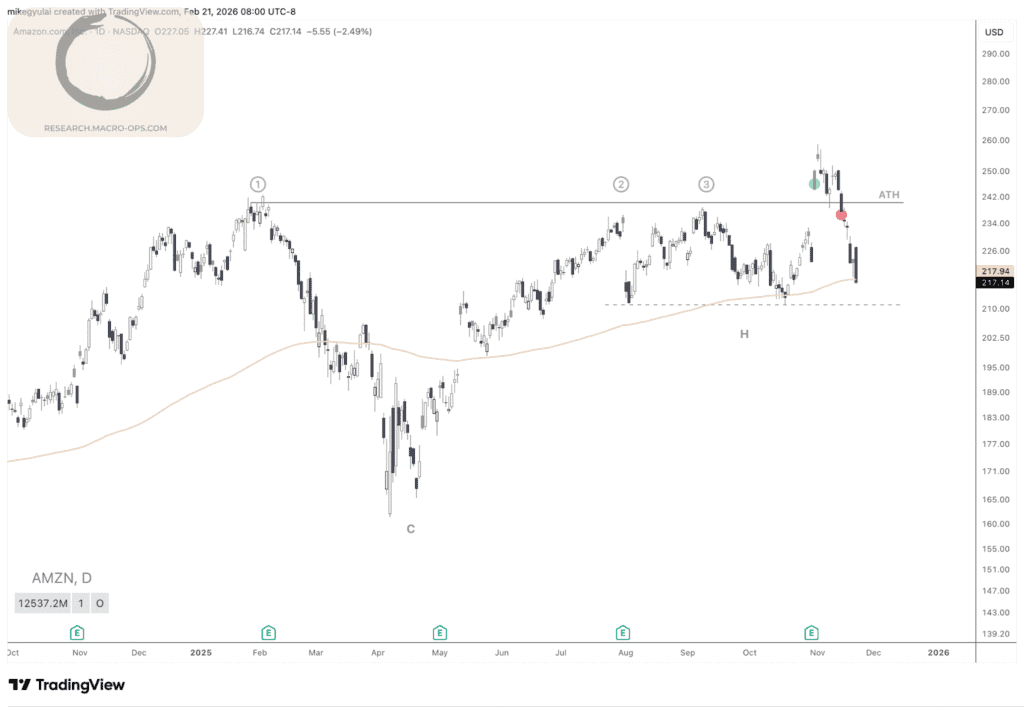
Amazon (AMZN), 1D, November 2025
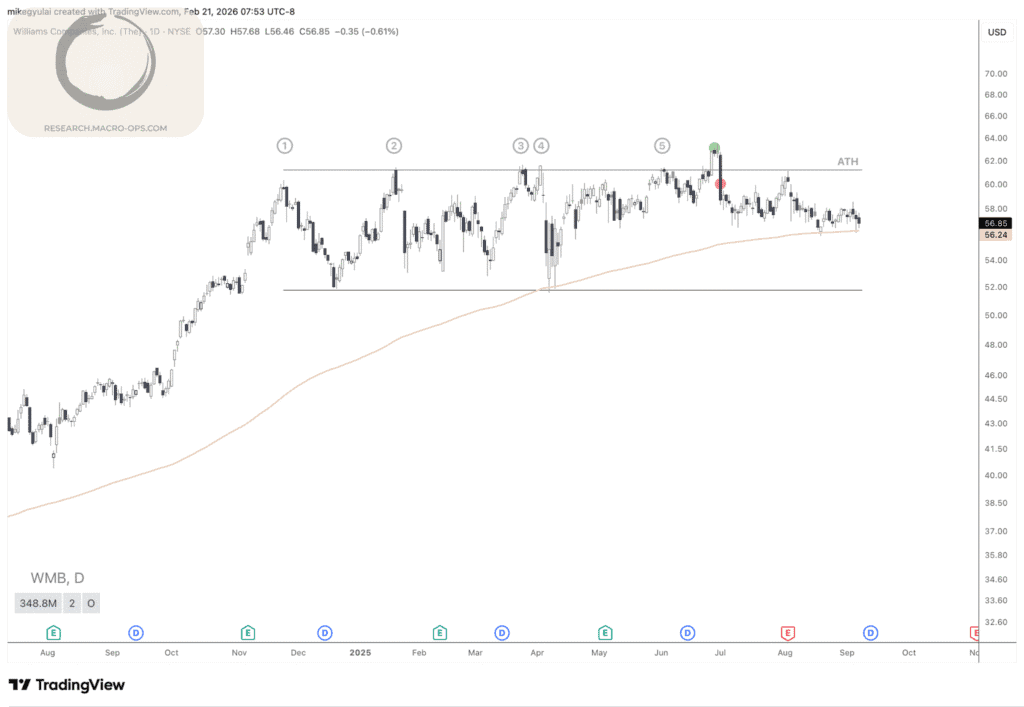
Williams Companies, Inc. (WMB), 1D, December 2025
Note that all of these trades fit my breakout criteria: 1) continuation patterns, 2) multiple months in duration with 3) minimum of three reactions to the same horizontal price level, 4) confirmed by the 200 EMA trend filter.
The three stocks above even had the additional tailwind of moving into new All-Time Highs.
Yet price repeatedly stalled out following each breakout, and collapsed back inside the range.
Compare the looks of those breakouts above to the ones here in Q1 2026:
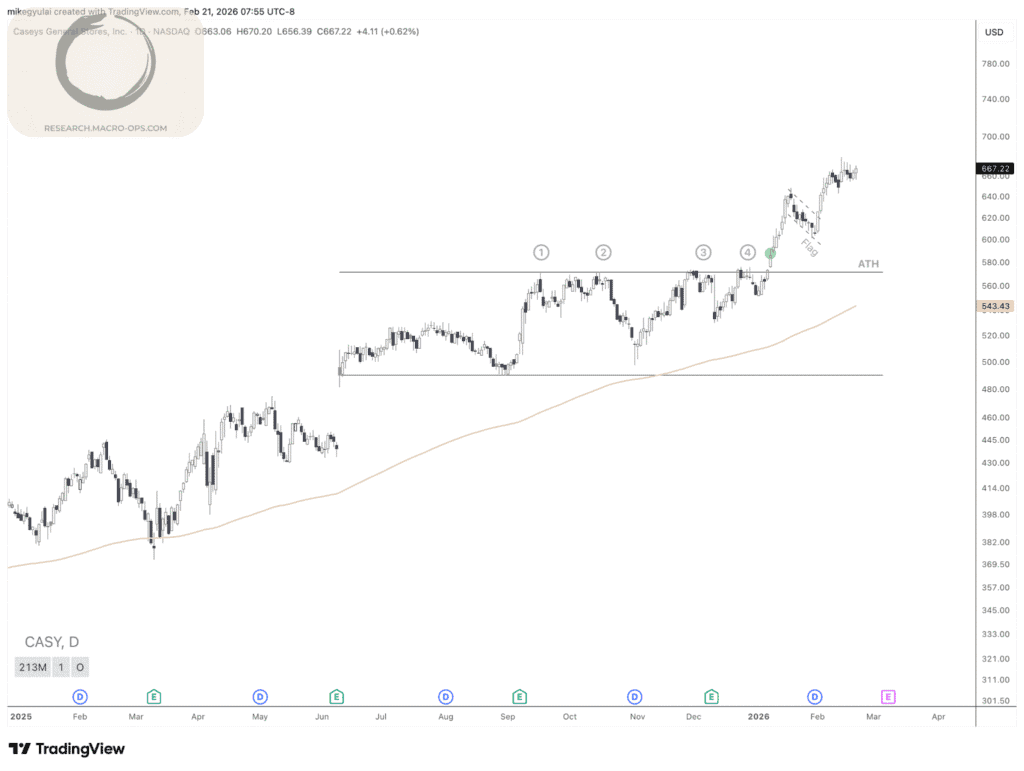
Caseys General Stores (CASY), 1D
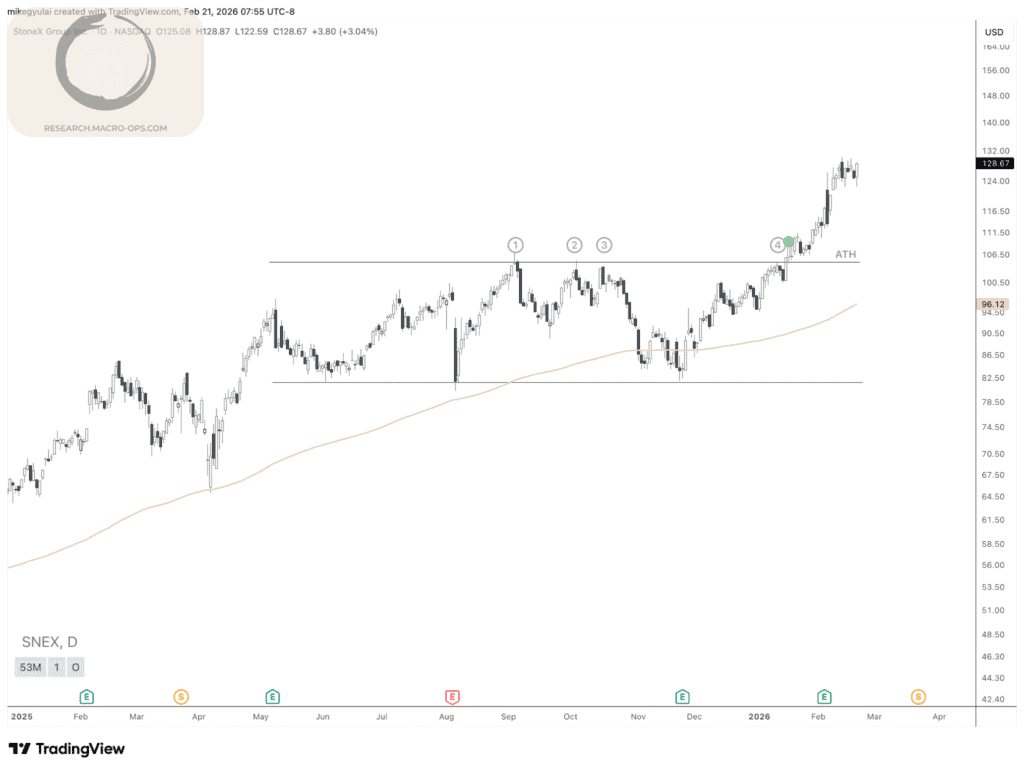
StoneX Group Inc. (SNEX), 1D
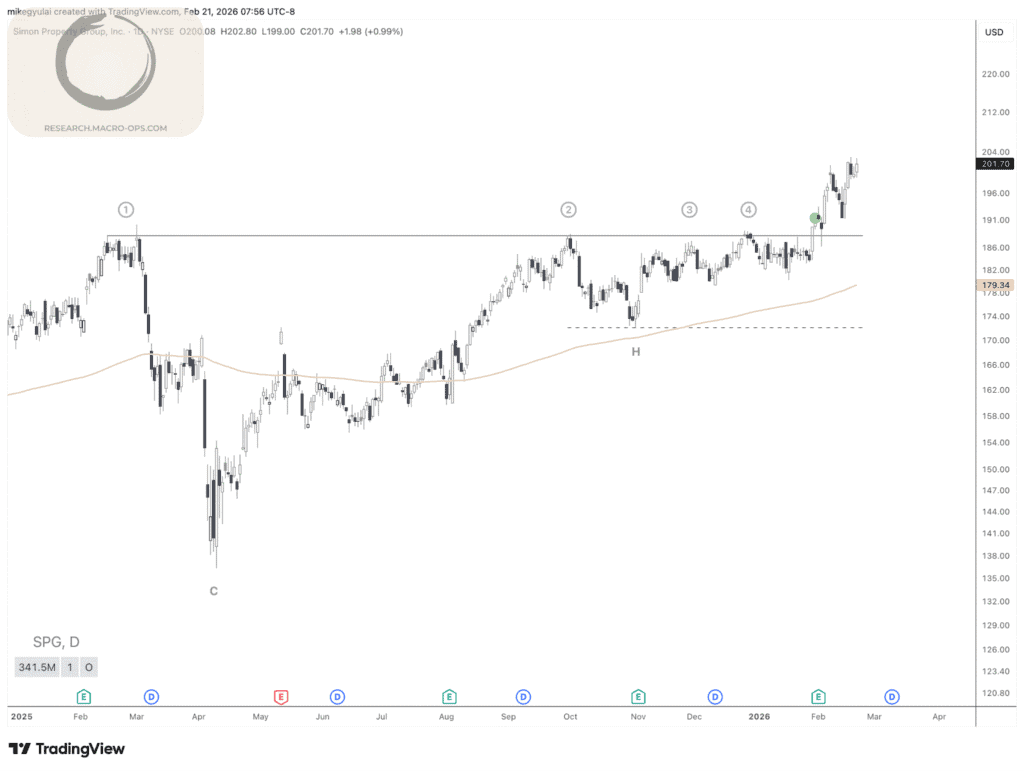
Simon Property Group (SPG), 1D
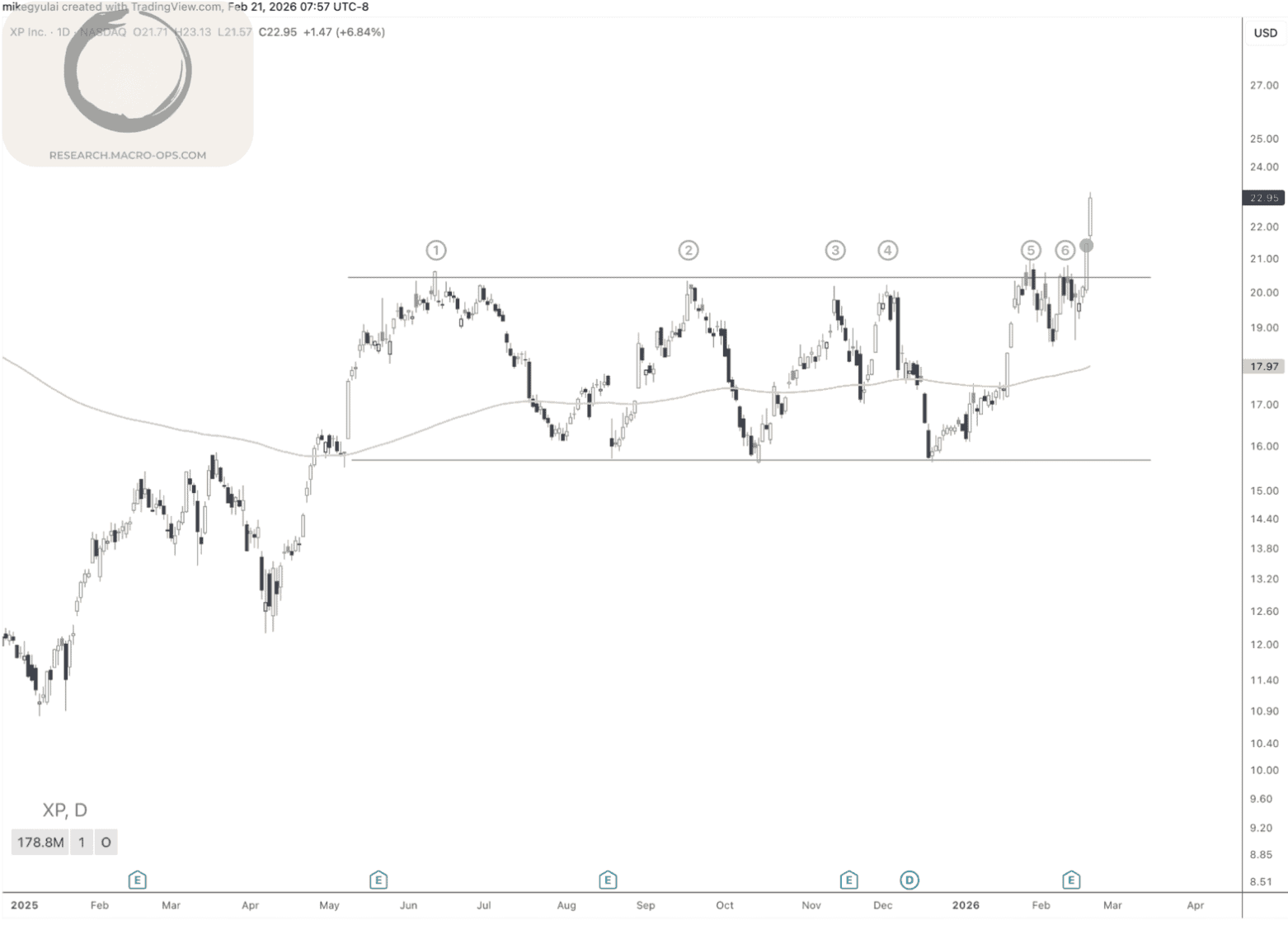
Just last week, XP, Inc. (XP) broke out of a nine-month range with a wide-body bar, and followed through with equal strength on Friday:
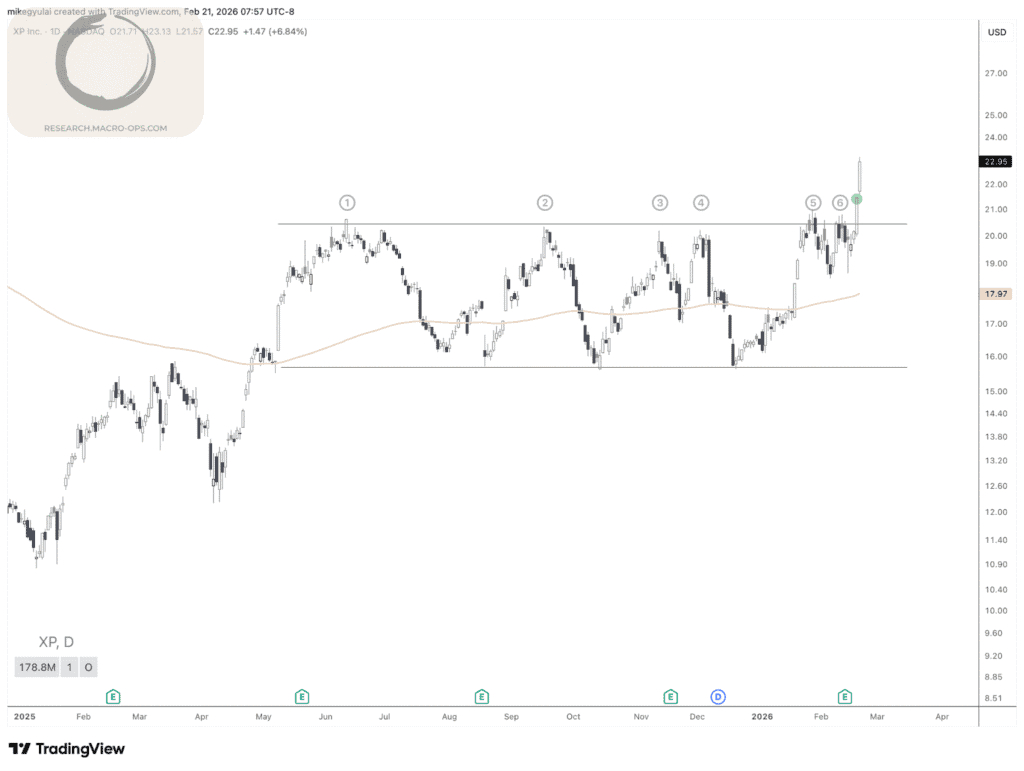
XP, Inc. (XP), 1D
All this while the indices have gone absolutely nowhere.
Mark Minervini puts it this way:
“One of the best decisions I made in my career was to stop looking to the market indexes as a barometer of health for breakout stocks and leading names, or even specific industry groups. The big turnaround for me came when I started letting the individual stocks themselves do the talking, and I did the listening.”
The index is not the environment. I’ve seen individual stocks with identical setups result in dramatically different outcomes across these two time periods.
When your trading is this structured and methodical, it is not something you must feel or intuit.
Price is truth, and the behavior of price in individual stocks will tell you when the regime has changed.
We are in a very different market environment than 2025.
And I, for one, welcome the change.