A portfolio manager rushes to his desk. Three screens light up in front of him. Only one shows his capital at risk.
The screen on his left reflects his perceived demands: professional obligations, status signals, the expectations of others. Fixed there, he isn’t managing his portfolio. He’s playing a character in someone else’s script.
The screen on his right reflects his ruminations: fears, self-judgment, indecision. Fixed there, he isn’t managing his portfolio either. He’s managing what he mistakes for his worth.
Between them sits the middle screen.
The middle screen offers no verdict. No worth to defend. No character to keep playing. Just the positions, the prices, the plan.
Yet his attention snaps back to the other two. Because they’re loud. Because they’re certain. Because they’re easy to believe.
The middle screen requires something more: to let the uncertainty stand, and to see the expectations and the fears for the projections they are. Not to be suppressed. Not to be argued with. Not to be believed. To be watched. The way he watches price.
Of the managers I’ve spoken with, those who’ve endured across decades are not the ones with no left or right screen. They’re the ones who notice where their attention has been pulled, and bring it back.
Only from here can the manager take the next action his plan calls for. Which may be no action at all.
The screen that holds his attention matters most exactly when it feels least optional: a gap down, a string of losses, a stretch spent trailing the benchmark. When markets appear to force him into action.
In those moments, all three screens light up with equal urgency. Only one of them is telling the truth.
Which has your eyes?
Energy Up, Agriculture Down
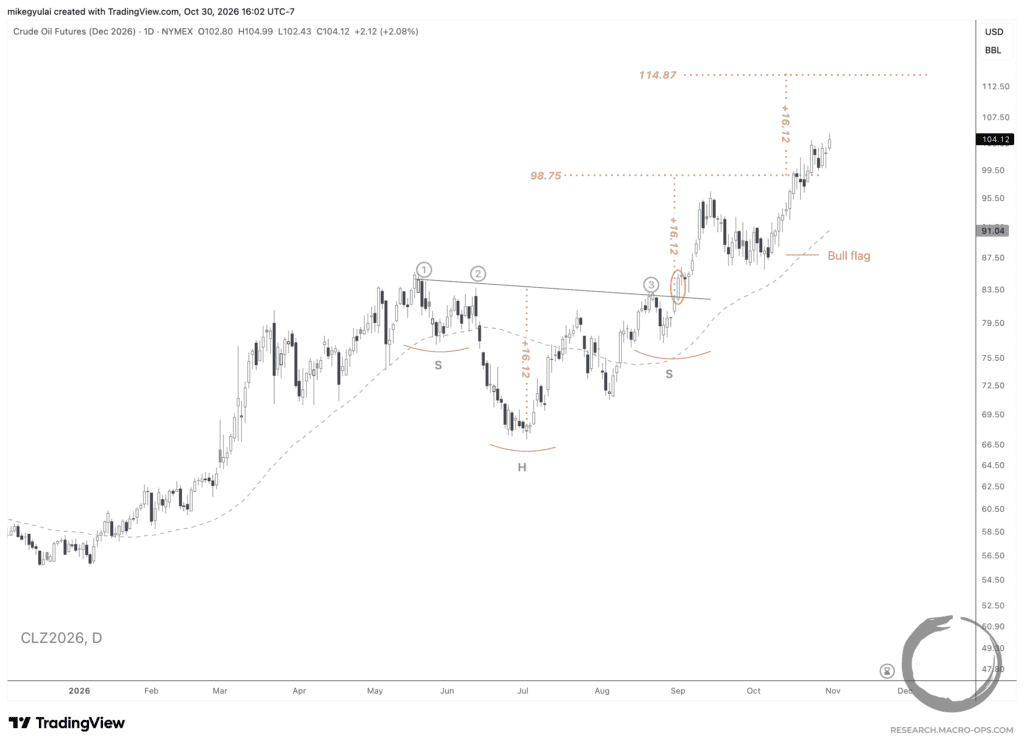
Energy continued to rise this week while equities fell. December WTI crude drifted higher toward the 2x measured move target of its 3.5-month head-and-shoulders continuation. We continue to hold our long energy positions in the Macro Ops portfolio.
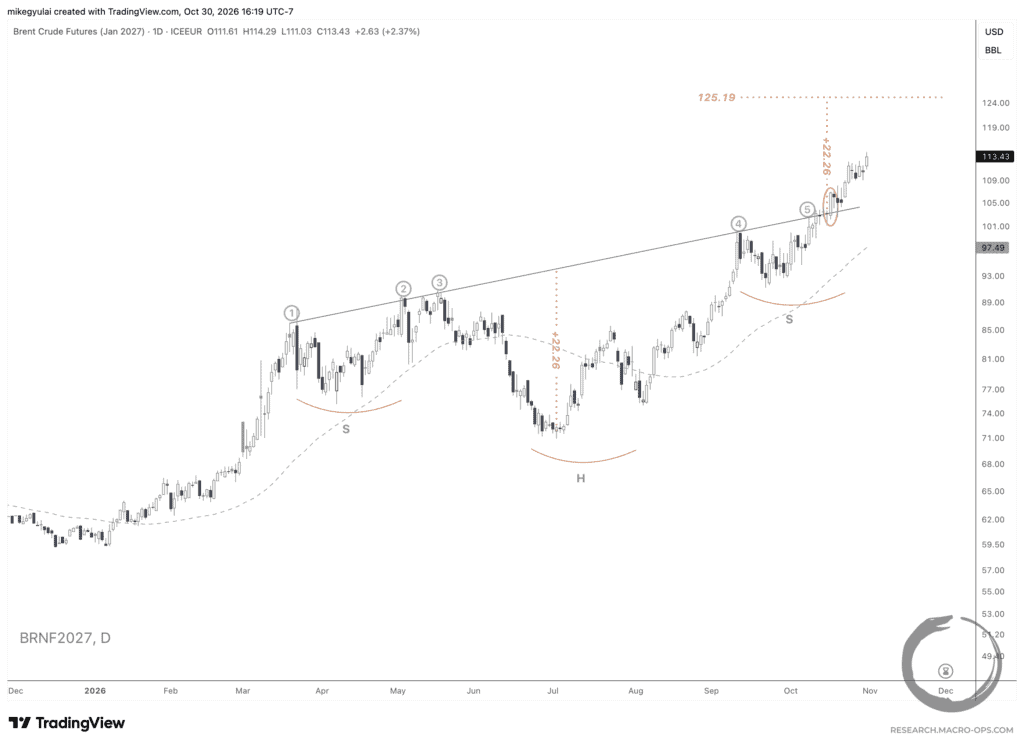
January Brent, whose breakout from a 7-month head-and-shoulders continuation we featured earlier this month, also moved higher. Its 1x measured move target sits at 125.19.
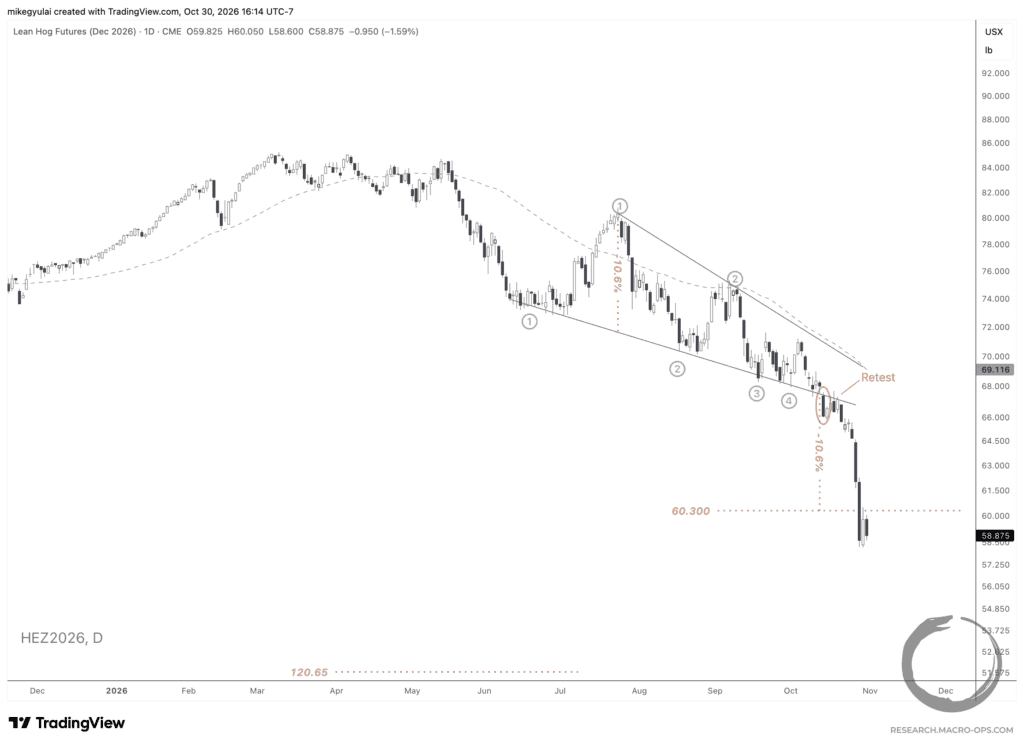
We featured the retest of the lower boundary of a 4-month running wedge in lean hogs last week, noting that “running wedges should accelerate with little delay.” Price cascaded lower this week, falling through the 1x measured move target of 60.300 on Wednesday. Classical chart pattern breakouts don’t get much cleaner than this.
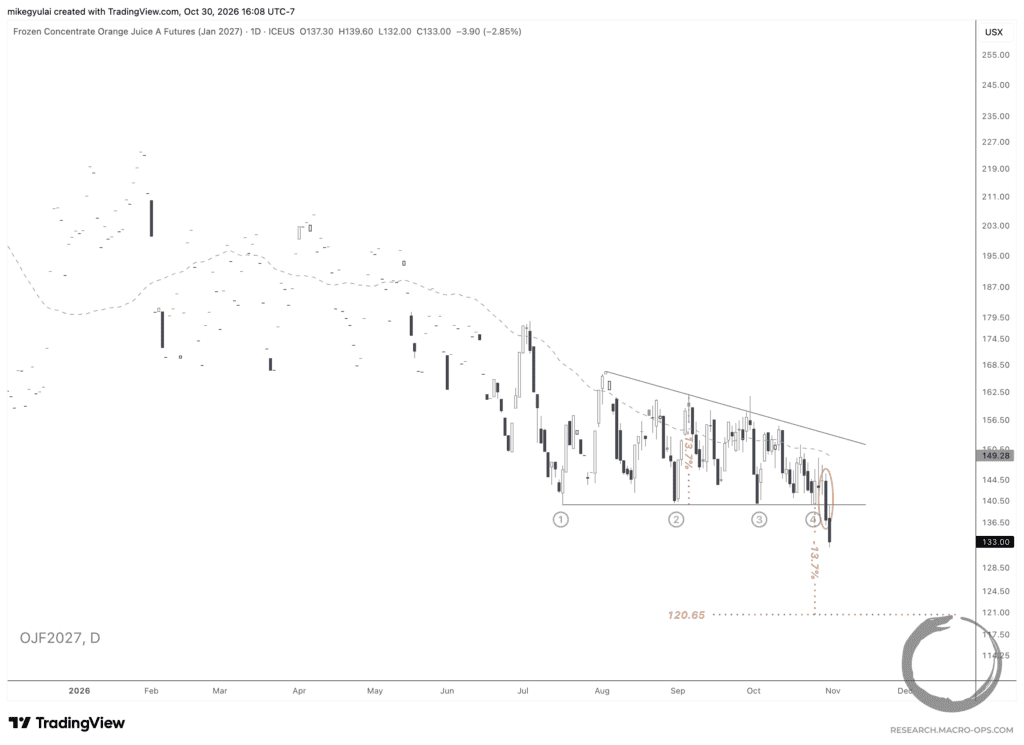
Elsewhere in agricultural commodities, January orange juice broke down from a 3.5-month descending triangle on Thursday and sold off further into Friday’s close. The 1x target stands at 120.65.
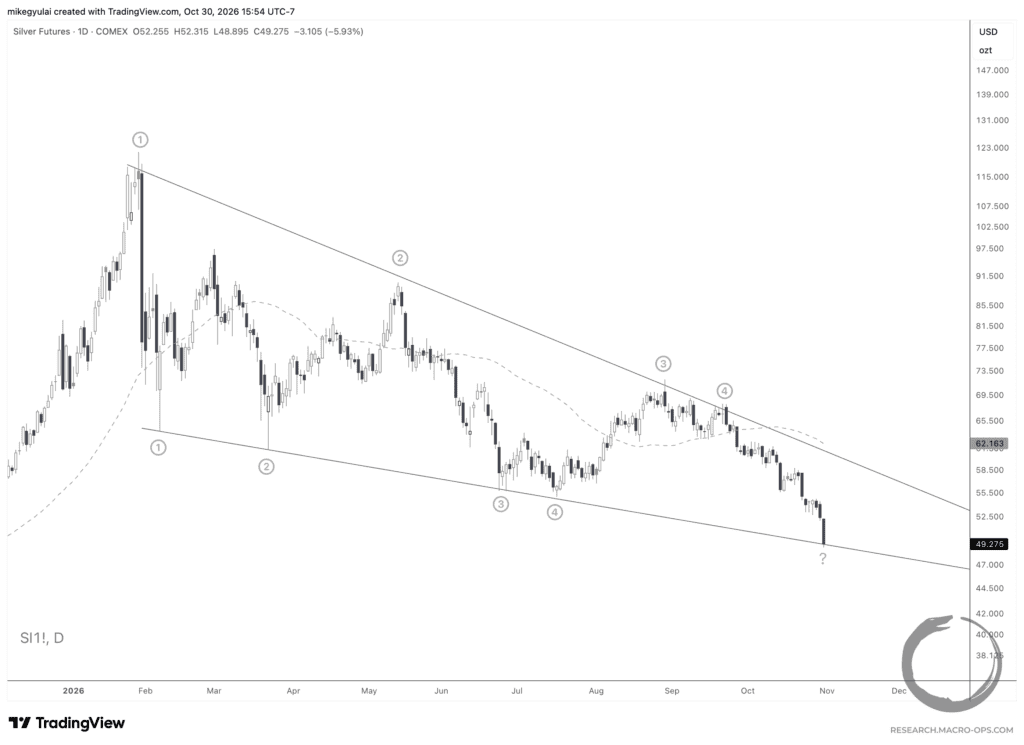
Silver futures have formed a 9-month falling wedge, with price closing the week at the lower boundary. Falling wedges carry a bullish bias. This is the fifth test of the lower boundary.
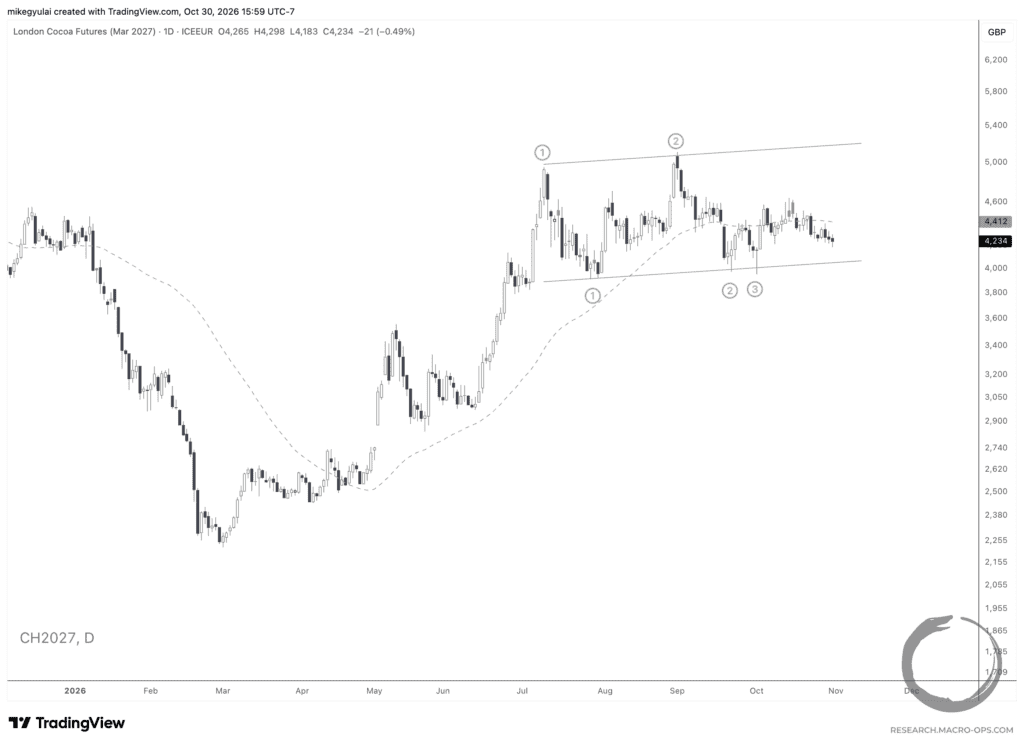
March London cocoa continued to consolidate within a 3-month ascending channel. Price has failed to rally back toward the upper boundary, while the lower has already been tested three times.
The Pauses That Refresh
Energy names continue to show relative strength in this week’s equity screen.
Cheniere Energy, featured in last week’s active watchlist section, broke out of a 7-month cup-and-handle following pre-market earnings Thursday. Its 1x measured move target stands at 371.20.
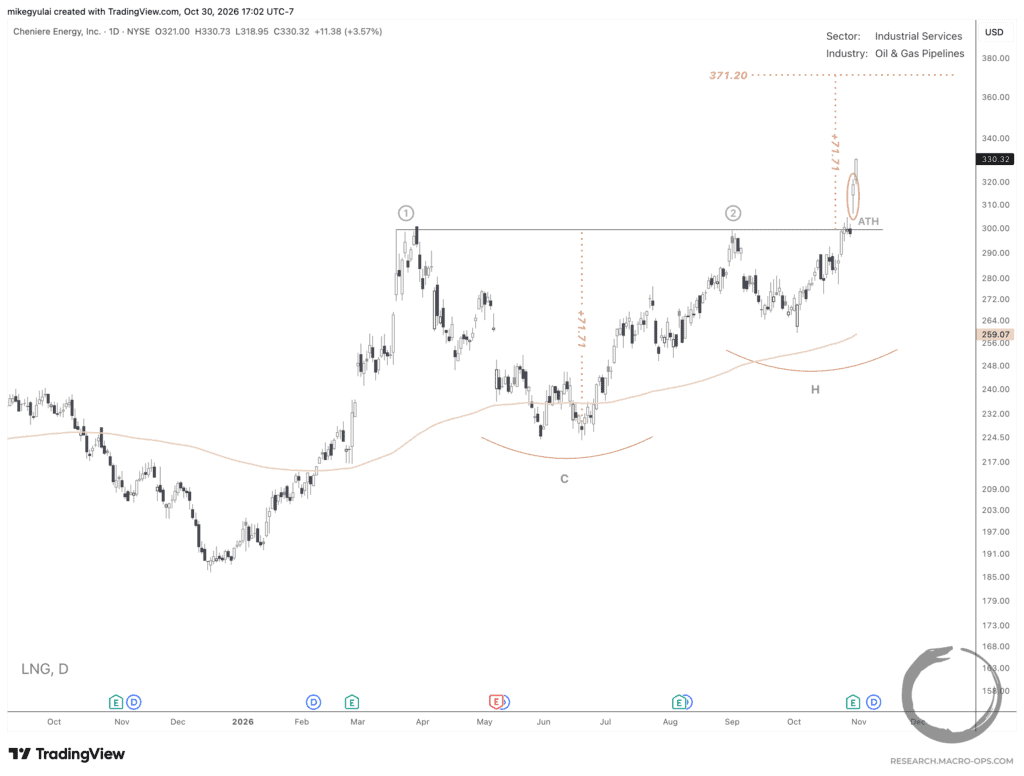
Here are the equities that caught my attention this week:
Active watchlists, real-time positioning updates, and live portfolio tracking are reserved for members of The Collective, our premier service offering discussions on high-level theory and performance, differentiated research, and a global community of serious traders and investors dedicated to mastery. Learn more about The Collective here.