The last few weeks have been absolutely brutal.
Rate cut, no rate cut…maybe a rate cut? Everyone watching their portfolios swing wildly while trying to figure out if this is the start of something worse or just noise.
And that’s the problem with discretionary trading during times like these. You’re making decisions every single day based on incomplete information, headlines that contradict each other, and your own emotional state after watching your account drop 3% overnight.
Should you sell? Should you buy the dip? Is this the crash everyone’s been calling for? Or is this just another shakeout before we rip higher?
You go to bed second-guessing every decision. You wake up checking futures. You spend your day refreshing your portfolio, reading X (Twitter), trying to find some signal in all the chaos.
And the worst part is you know you’re probably making it harder on yourself. But you don’t know what else to do.
This is exactly why I built Trendlock.
Not to predict the future. Not to catch every move. But to remove you from having to make those decisions in the middle of the chaos.
The system doesn’t care about tariffs. It doesn’t read Trump’s posts. It doesn’t watch CNBC. It just follows the data. When conditions are strong, it’s in leveraged ETFs capturing momentum. When conditions deteriorate, it rotates to defense.
You’re not sitting there every day wondering if today’s the day you should get out. The system handles that. You get one email per week with any changes. You execute over the weekend. And you carry on with your life.
Here’s what the system actually does.
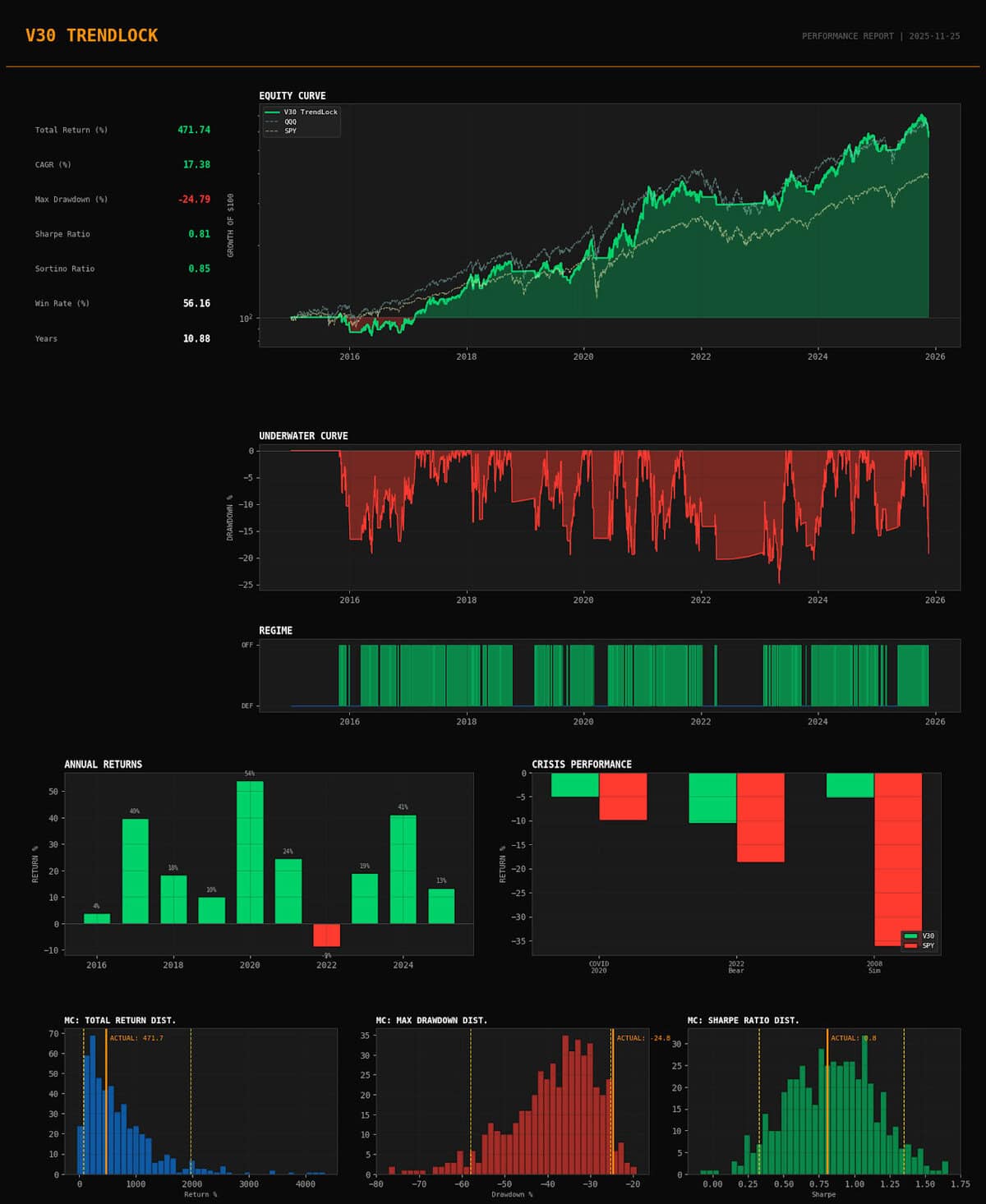
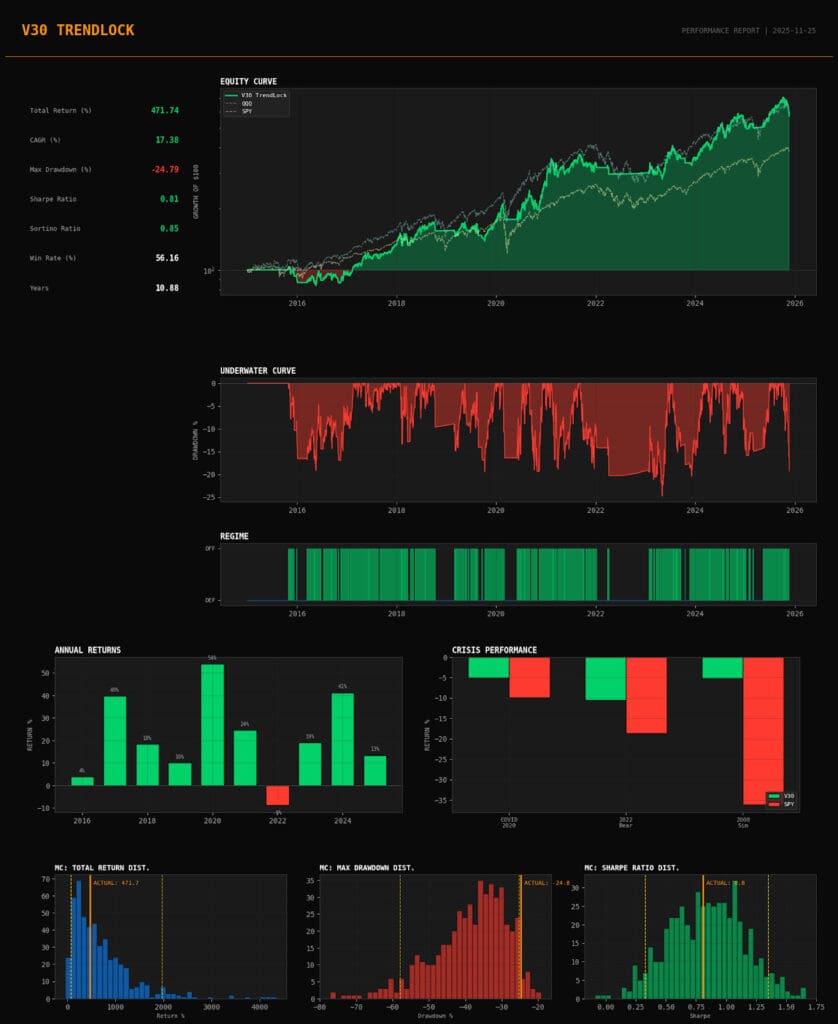
Over the past 10 years, Trendlock has delivered 17.4% annualized returns with a max drawdown of 24.8%. Compare that to buy and hold SPY at 13% returns with a 33% drawdown.
You’re getting better returns with less pain.
But more importantly, look at what happens during the chaos.
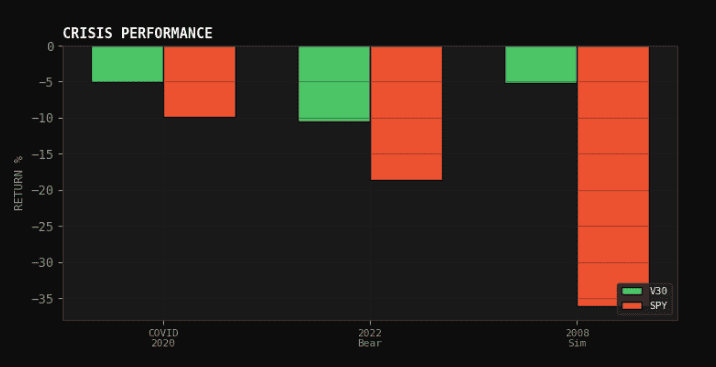
During COVID in 2020, when SPY was down 10%, Trendlock was down 5%.
During the 2022 bear market, when SPY dropped 18.6%, Trendlock limited damage to 10.6%.
In the 2008 simulation, when SPY collapsed 36%, Trendlock was down about 5% because it rotated to cash and sat there while everyone else got destroyed.
That’s the whole point. You don’t have to predict the crash. You just have to not be in it when it happens.
Now let me be clear about something.
This system will not win every trade. There will be stretches where you’re underwater for months.
It sucks!
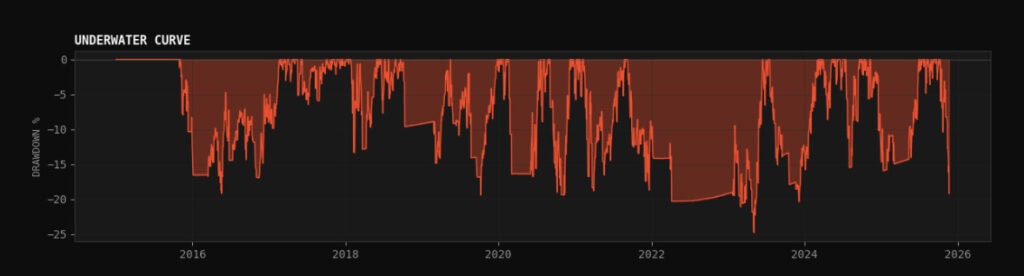
The system recovered. It always has. But can you stick with it through that?
That’s the only question that matters.
Because here’s the reality. About 71% of years are positive. That means roughly 3 losing years per decade. You need to budget for that mentally before you start.
And those losing years are nowhere near as bad as white knuckling it through long only SPY.
But when you look at the alternative, trying to navigate this on your own, making decisions every day based on fear and headlines and Twitter, the systematic approach starts to make a lot more sense.
The edge isn’t in the signals. The edge is in your ability to follow them.
The system rotates between offensive and defensive positioning based on market conditions. You can see it in real time. When it moves to cash, you know something has changed. When it loads back into leveraged ETFs, you know the coast is clear (offensive or defensive).

You’re not guessing. You’re following a process that’s been validated across multiple market cycles, crisis periods, and regime changes.
We’ll be rolling this out to a limited number of traders, first come first serve. Keep an eye out for the email, we’ll be launching later this week.
This system works. Not because it’s magic. But because it removes you from the hardest part of trading, which is managing your own psychology while the market is trying to shake you out.
You’ve been asking for this for at least six years. I finally listened.
More details coming soon on how to get access.