“To everything there is a season, and a time to every purpose under the heaven… A time to get, and a time to lose; a time to keep, and a time to cast away.” ~ Ecclesiastes 3
A quick note on markets before we sign off for the holidays. Consider it a PSA.
You don’t need to be making money in markets all the time.
You don’t need to bottom-tick this move in the Qs.
You don’t need a strong opinion on where NVDA trades next.
And you definitely don’t need to press your bets because the last six months whipsawed you flat or into the red and you want your money back.
Markets cycle through regimes. Some are great for making money. Some are fine. Some are terrible.
Every system, every approach, every style has a regime it thrives in and one it doesn’t. Every investor worth his salt needs a repeatable process for identifying the current regime and matching his approach to it.
Last week my partner Brandon walked through the findings from the due diligence that the hedge fund we recently joined ran on the MO track record. It’s a good piece. The charts show the work behind building an asymmetric process, from portfolio construction to trade selection and down to execution. If you haven’t read it, you can find it here.
One of the first illustrations he shares is this one from TraderLion. It’s simple, and it’s true.
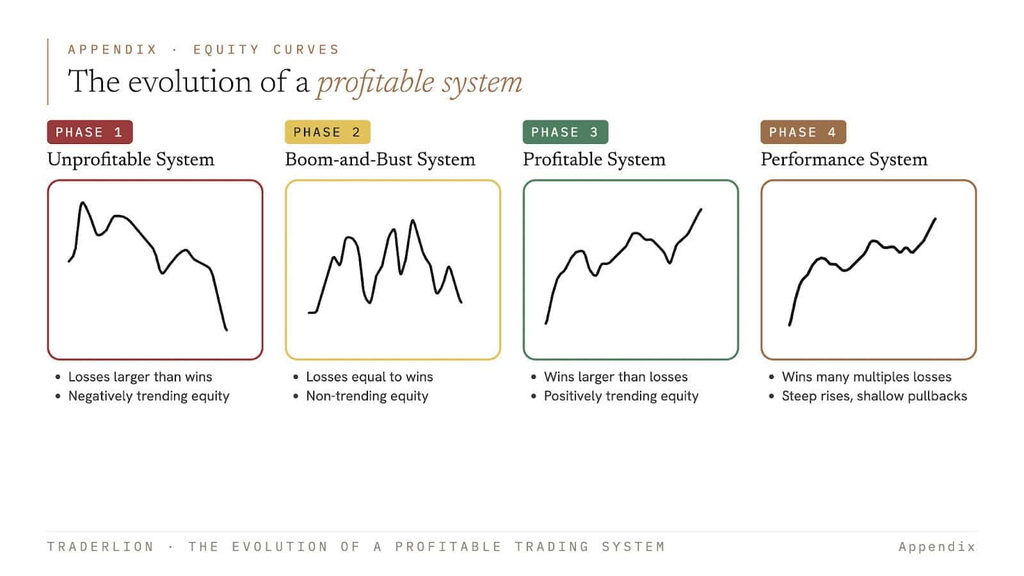
You want to be running a Phase 3 system or better. Obviously…
A trader makes the jump from Phase 3 to Phase 4 by mastering two things: (1) regime identification and system fit, and (2) tight, consistent risk and portfolio management. Today I want to focus on the first.
Most synthetically long-vol systems, whether systematic, discretionary, or somewhere in between, have bunchy returns. That comes from the cyclical nature of markets and the 90-10 return distribution built into most robust approaches. A reliable regime process lets you pull back during ill-fitted regimes and avoid the deep givebacks that define a Phase 3 system.
This is critical because those givebacks cost more than they look. Volatility drag means a loss needs a disproportionately larger gain just to get back to breakeven. A 25% drawdown takes a 33% gain to recover. A 50% drawdown takes 100%. That’s why we’re always working toward optimizing the blending of higher returns and shallower givebacks — a smoother equity curve.
Here’s the MO portfolio’s equity curve over the last five years. I’d argue it’s a Phase 4 return profile. Even so, you can see extended, but relatively shallow, periods of giveback from NAV highs.
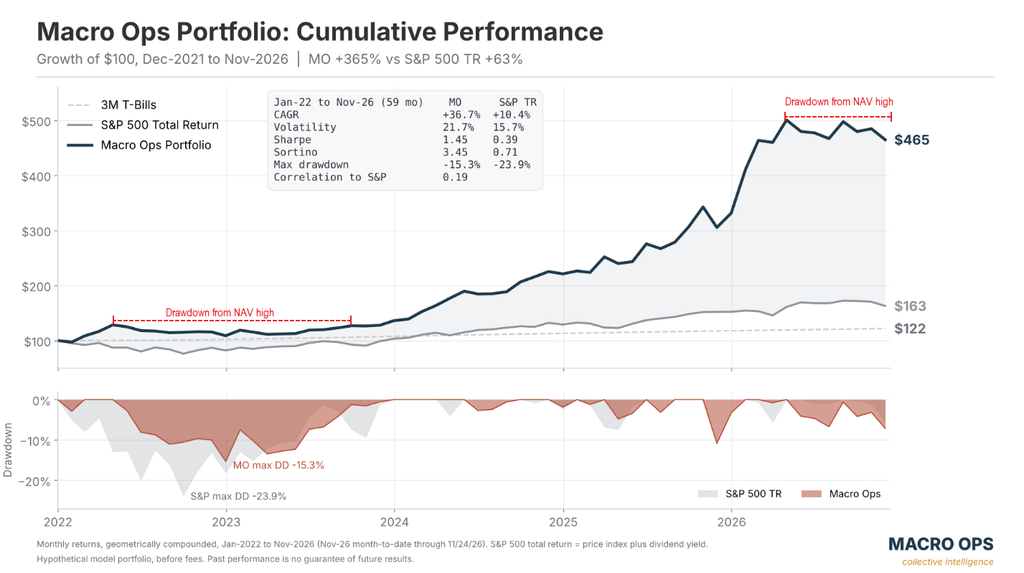
We’ve now been in a drawdown from NAV highs since May. So, while yes, we’re up 40%+ YTD. It’s honestly felt like a shit year. It has not been fun.
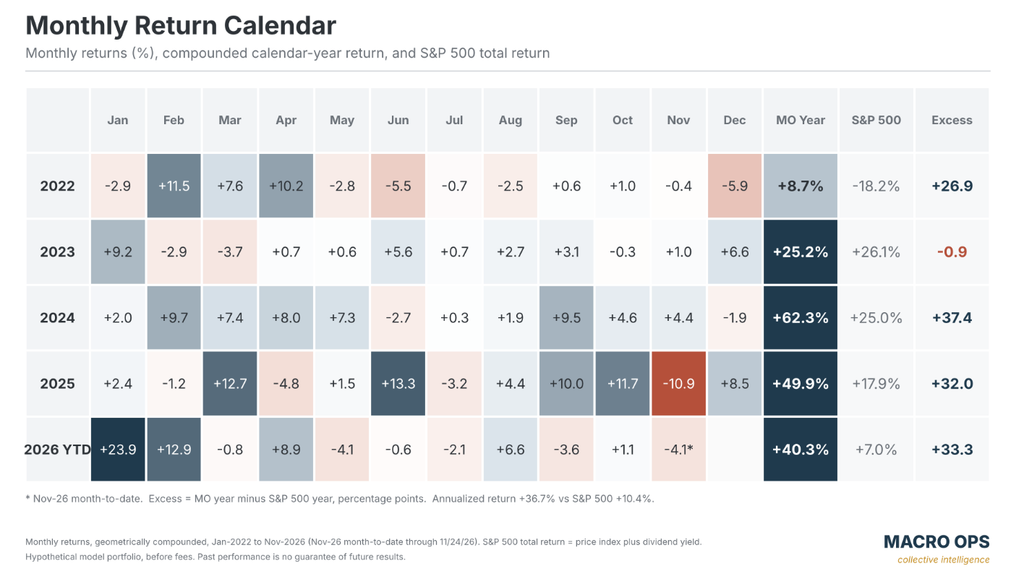
The reason why is regime fit.
This year’s market has been ill-suited to our Trifecta process, which is the basis of how we trade. Nearly all of our YTD performance came from an exceptional January and February, when we happened to be carrying heavy precious metals and AI exposure. Strip out those two months, and the portfolio is up a measly +30bps. A very different year.
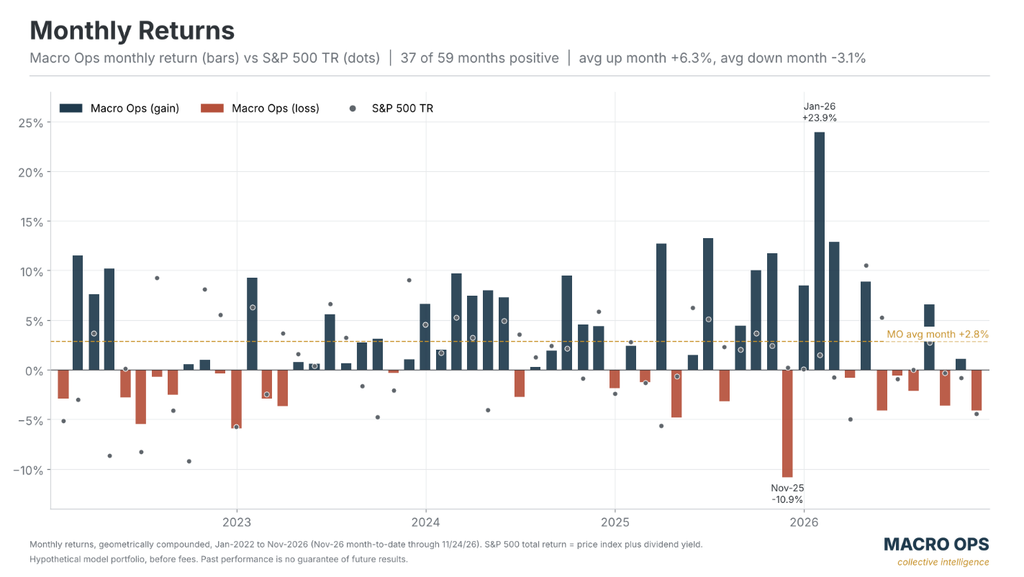
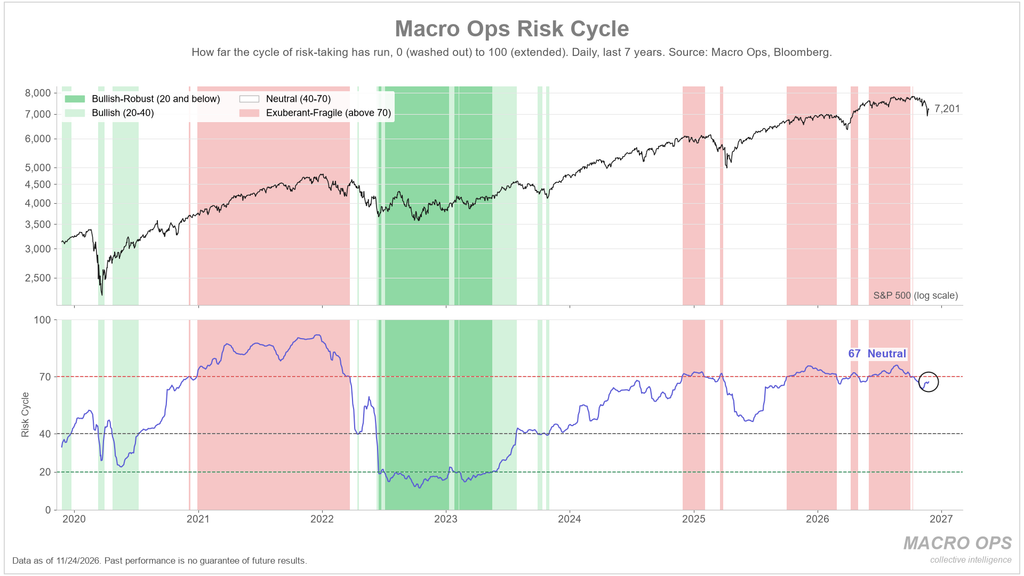
“Ill-fitted” isn’t a feeling. It’s quantitative. We use a number of tools to identify what kinds of regime we’re in. The MO Risk Cycle below is one of these: a composite of longer-term measures of positioning, relative positioning, flows, and valuation.
It shows we’ve been in an “Exuberant-Fragile” regime nearly all year. Historically, these are our worst regimes — by far. These regimes are characterized by a speculative frenzy that drives parabolic trends on the back of unmoored positioning and valuations. 2021 was the same story, and also a hard year for the MO portfolio.
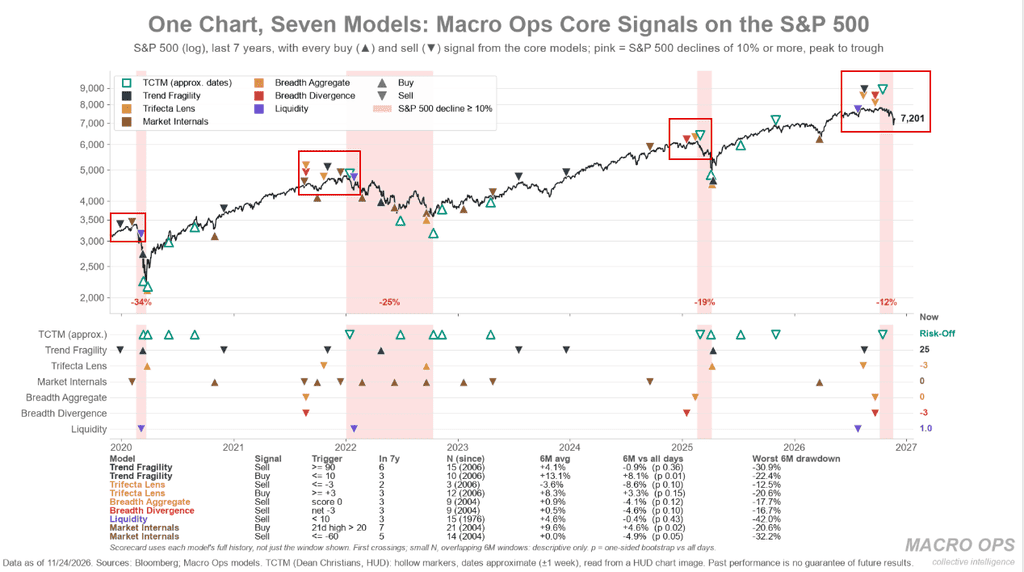
We stemmed the bleed because our systems flagged the regime and we adjusted. We sized down risk, cut losers faster, and raised cash.
Since a cluster of sell signals fired across our core risk models in October, we’ve been almost entirely in cash. In a regime this poorly suited to our process, cash is a good position.
In markets, sometimes you win by not losing.
Livermore said there’s a time to go long, a time to go short, and a time to go fishing. Everyone wants the first two. Almost nobody practices the third. In a hyper-connected, 24/7 world that never stops calling you to act, the discipline to go fishing is rare. And what’s rare is an edge.
There’s a season to sow, a season to wait, and a season to reap. The mistake is demanding a harvest every season, or mistaking a season of abundance for a permanent condition.
If the current regime doesn’t suit your approach either, step away. Enjoy the holidays. Spend real time with friends and the people you love. That’s real wealth. The markets aren’t going anywhere. There will be a time to harvest again.
That time just isn’t now.
Housekeeping
As some of you know, the MO team recently joined an established asset management firm to manage capital using the Macro Ops investment process. If you’re a qualified purchaser (definition here) and want to learn more, let us know.
We’ve also expanded the team, bringing on Dean Christians, and are in the process of merging our companies.
Next month, Macro Ops relaunches with a new brand, a new website, and an interactive quantitative dashboard featuring our models and proprietary historical datasets.
At the relaunch, we’ll be more than doubling Collective pricing to protect the size and quality of the community. If you’ve been on the fence, now’s the time to try it and see if it fits.
Have a blessed and beautiful Thanksgiving.
Your Macro Operator,
Alex