Broad Market Thoughts
Technology continues to improve, although leadership is selective. Energy is another area maintaining a bullish trend, but the group is increasingly extended to the upside and could pull back swiftly if tensions surrounding Iran ease. Higher oil prices and interest rates are weighing on discretionary and industrials, both of which have historically struggled during rate-hiking cycles. Financials have also begun to weaken and face similar historical headwinds during tightening periods. Taken together, these crosscurrents point to a low-conviction environment characteristic of consolidations.
These periods can be frustrating because the market can look ready to break higher one day and vulnerable to a decline the next.
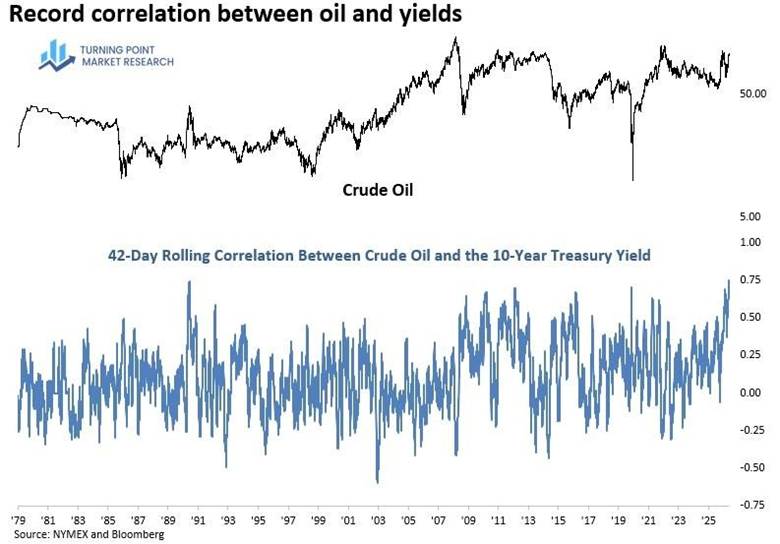
Adding to the frustration is the fact that crude oil and the 10-year Treasury yield are moving together more closely than ever, with their correlation reaching a record high on Wednesday. When oil moves higher, rates have followed, creating a ripple effect across other asset classes and making the investment landscape even harder to navigate.
Research this week
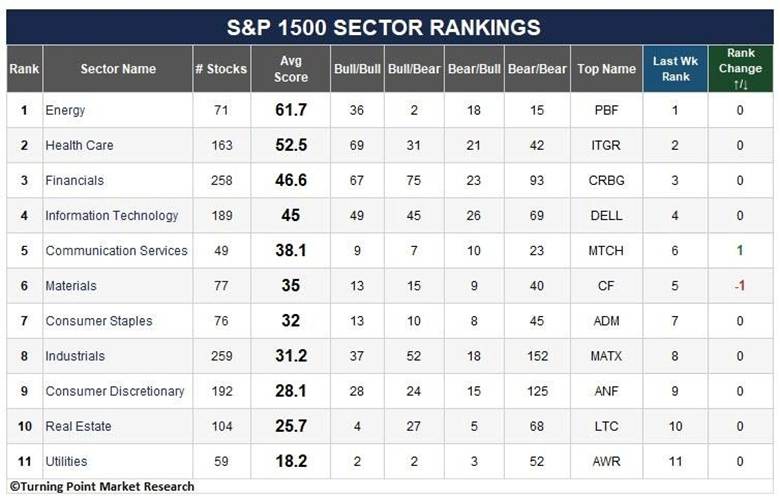
Energy retained the top position in the S&P 1500 Dual Trend rankings, but Technology posted the biggest improvement in individual rankings. Tech stocks accounted for 18 of the 40 largest week-over-week ranking gains across the S&P 1500. Despite Monday’s selloff following weekend comments from AI leaders, the group has bounced back nicely, reinforcing the relative strength emerging across parts of the technology sector.
Wednesday’s report provided a comprehensive analysis of asset-class returns following the first rate hike of a tightening cycle. While we won’t know whether this week’s rate increase was a one-and-done hike or the beginning of a broader tightening cycle, the historical tendencies are clear: stocks tend to struggle during the first four months, commodities generally rally, the dollar weakens, and bond yields rise.

Dual trend analysis
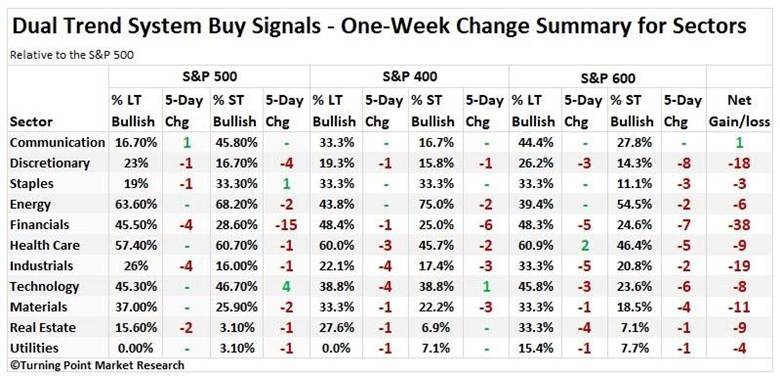
Similar to last week, net losses in Dual Trend signals were widespread across all but one sector. While technology experienced a net decline, the S&P 500 technology group recorded a net gain of four signals, including two semiconductor stocks, AMD and INTC.
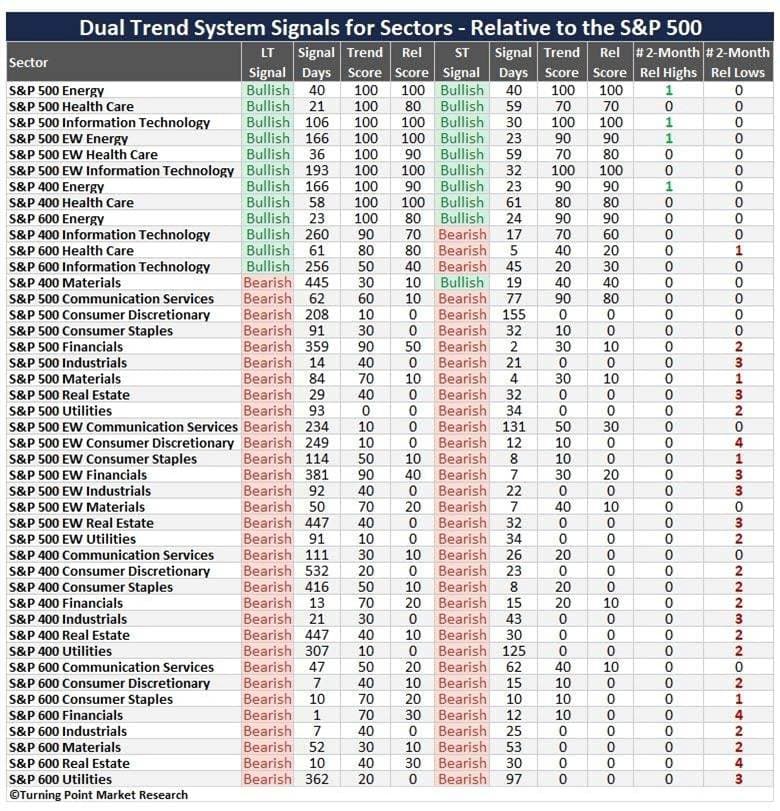
Energy, technology, and health care remain the dominant sectors across both cap- and index-weighted methodologies. With energy appearing somewhat stretched to the upside, I prefer to continue identifying compelling opportunities in technology, particularly if a Q4 rally develops.
I would also note that Financials recently shifted to a bearish status on the short-term model, aligning with the bearish condition already in place on the long-term model. As highlighted in Wednesday’s Fed Study Guide, Financials have historically been one of the weaker sectors during tightening cycles. This new signal provides additional evidence for maintaining a cautious stance on sector exposure.
Human Resources & Employment and Marine Transportation are the only two cyclical industries maintaining bullish short- and long-term signals. That is notable given the S&P 500 remains less than 3% below its record high. Relative weakness has also accelerated over the past week, with a significant number of cyclical groups hitting two-month relative lows.
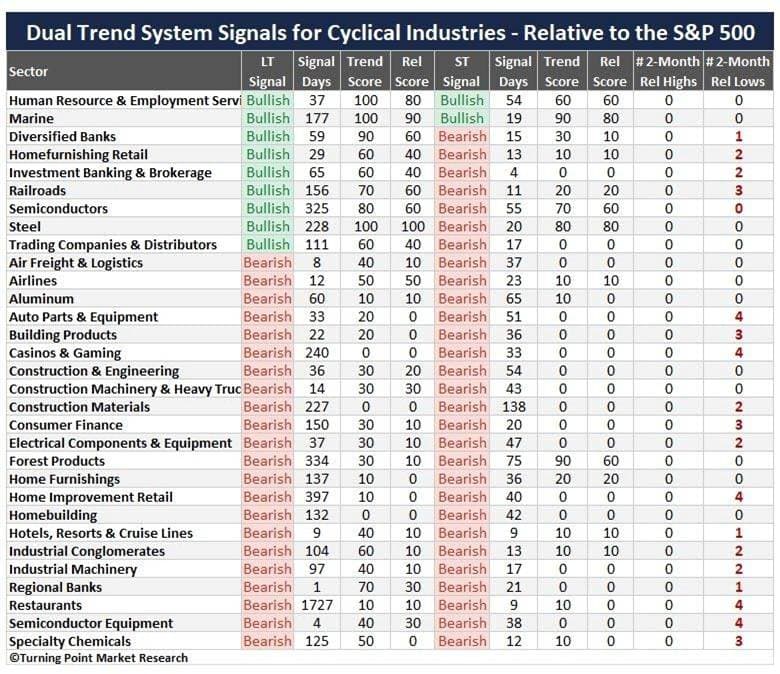
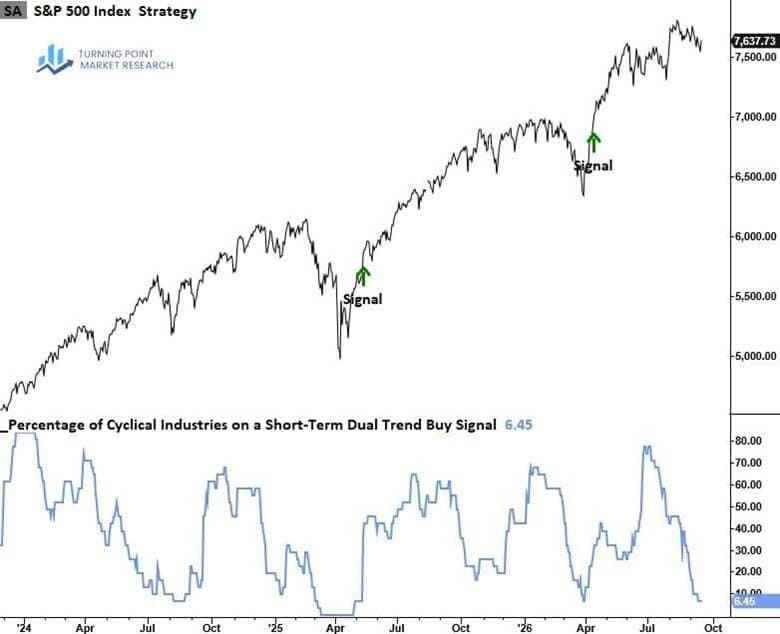
As highlighted in the table above, the short-term Dual Trend aggregate indicator for cyclical industries has fallen to just 6%, or two groups, indicating that these old-economy industries are increasingly feeling the macroeconomic pressures highlighted over the past month.
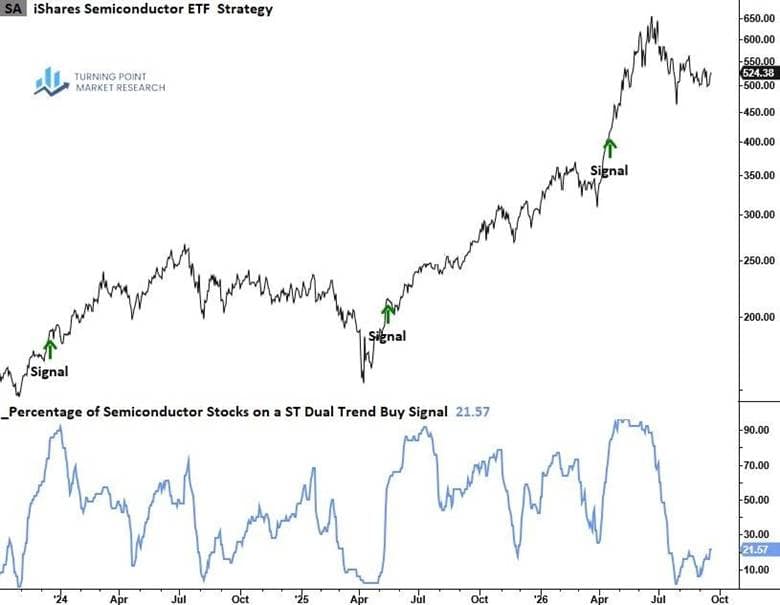
While bullish short-term Dual Trend signals for cyclical industrials continue to fade, semiconductor stocks have experienced a modest increase in buy signals. However, the improvement remains well short of the broad-based signal expansion required to trigger a Thrust.
Portfolio update
This week, the DT portfolio exited positions in the S&P 600 Health Care ETF (PSCH), Robinhood (HOOD), and Bank of New York Mellon (BK), as each either shifted bearish on the ST DT system or, in Robinhood’s case, the stock immediately fell 10% following a failed breakout.
The Micron Technology (MU) position was increased, while a new position was initiated in Semtech (SMTC), another semiconductor name that is bullish on both the ST and LT models and recently recorded a new all-time high.
Cash remains elevated at 23.76% given several warnings highlighted last week, the Fed rate hike, unfavorable seasonality, and historical midterm-election trends.
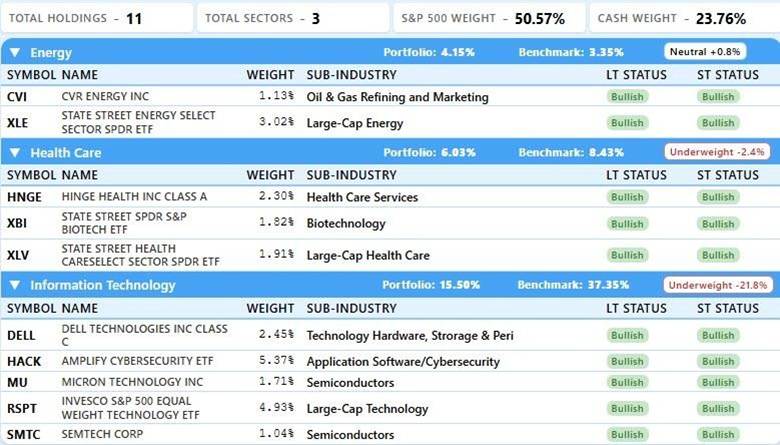
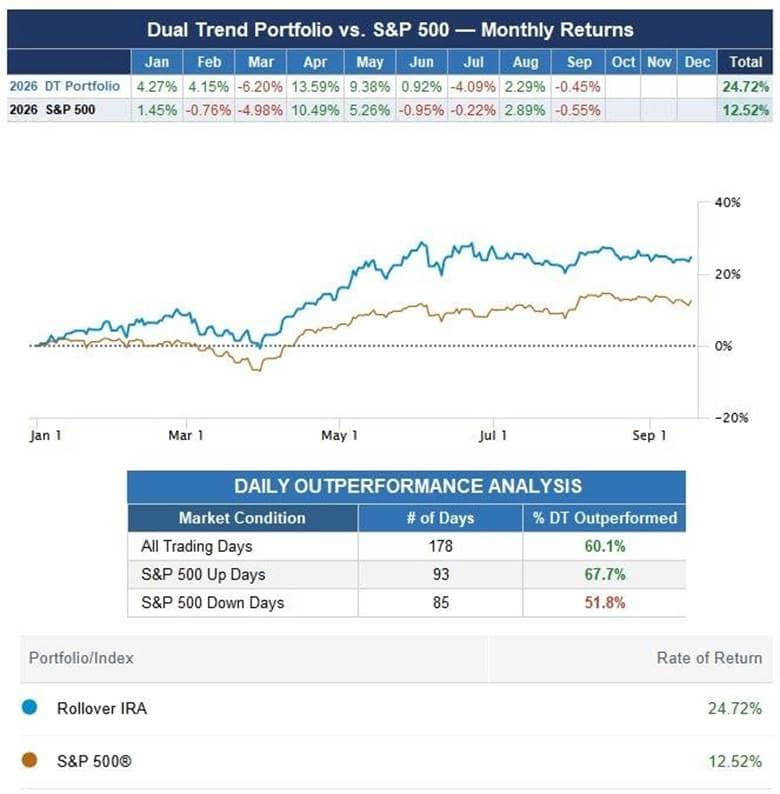
Through Thursday’s close, the Dual Trend portfolio had gained 24.72%, outperforming the S&P 500’s 12.52% return.
Final thoughts
The market environment remains challenging, with most stocks and major indexes continuing to consolidate. Beneath the surface, conditions have worsened in several areas, particularly consumer discretionary, industrials, and financials, as higher interest rates and elevated oil prices continue to filter through the market’s old-economy segments. These groups also remain particularly sensitive to tightening cycles.
Technology stands in contrast, showing modest signs of improvement despite the broader market headwinds. Part of this relative resilience may reflect capital flowing away from more economically sensitive groups and toward the technology sector, where investment in artificial intelligence and related infrastructure remains enormous.
That does not mean technology is without risks. The sector is still working off an extremely overbought condition after discounting substantial favorable news, while regulatory concerns about data-center construction remain. Still, at the margin, technology appears better positioned than many other sectors and could emerge as a market leader if a fourth-quarter rally develops.
Q3 earnings season could be particularly important for the group. If companies maintain or increase their 2027 capital-expenditure plans and management commentary remains constructive on AI demand and infrastructure spending, it could provide an important catalyst for technology stocks.
For now, patience remains warranted. The market continues to contend with several significant overhangs, including uncertainty surrounding the Federal Reserve’s rate-hiking path, elevated oil prices, deteriorating conditions across economically sensitive sectors, and seasonal headwinds. Until some of these factors resolve, a selective approach remains appropriate, with technology an area worth monitoring if market conditions improve.