Broad Market Thoughts
Crude oil prices pushed higher this week, and Treasury yields followed suit, culminating in a flurry of warnings on Thursday.
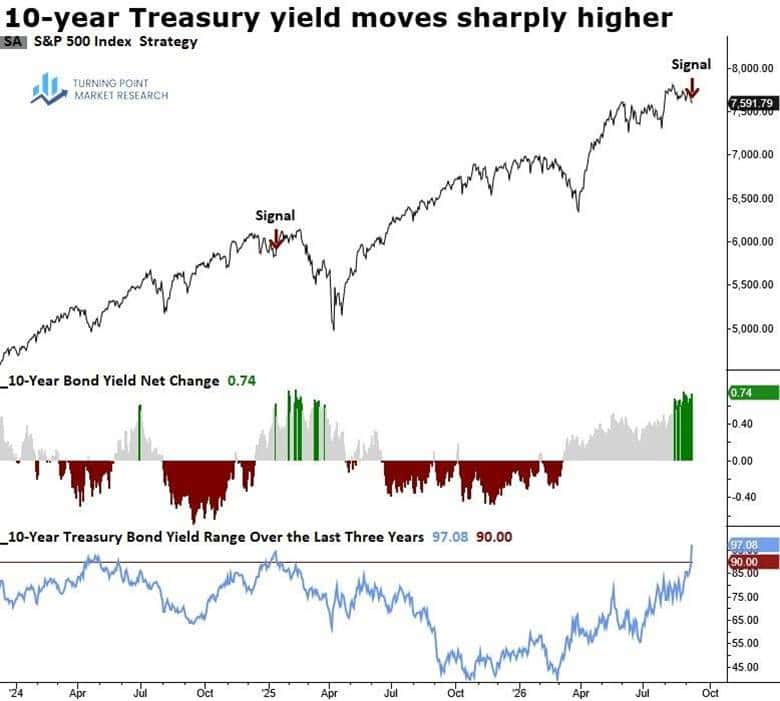
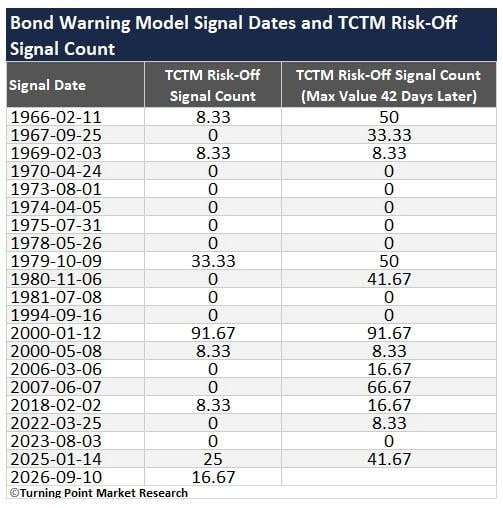
A Treasury yield model shown in the chart below triggered an alert—the 21st such instance since 1966—suggesting the 10-year yield has risen too far, too quickly within its elevated three-year range. As typically seen when yields move higher, the pressure is beginning to show up in market breadth, with participation narrowing. That dynamic produced two TCTM Risk-Off warnings.
As for why yields are rising, there probably isn’t a single answer. Strong economic growth, inflation concerns related to higher oil prices, Treasury supply, competition from corporate issuance, and other factors may all be contributing. Regardless of the precise mix, the message for investors is fairly straightforward: if rates continue to rise, the backdrop for equities is likely to become more challenging.
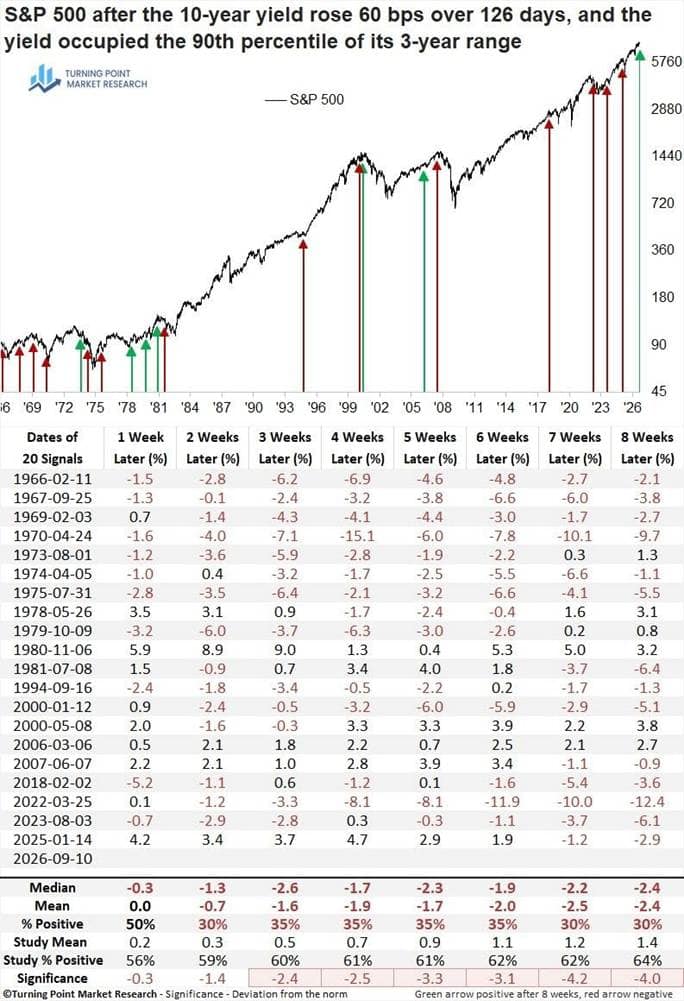
The S&P 500 has historically experienced unfavorable returns and win rates during the eight weeks following a bond-yield warning signal. Several signals also occurred near major market peaks, and these warnings were far more frequent during the 1966–82 secular bear market, when inflationary pressures were elevated.
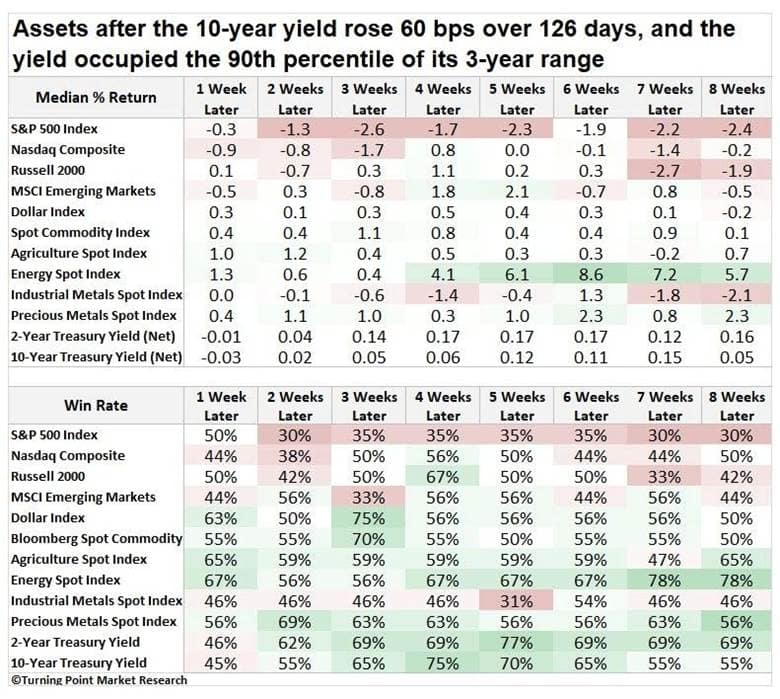
Across other asset classes, 2- and 10-year Treasury yields showed a fairly strong tendency to move higher. The dollar exhibited a similar pattern, particularly over the three-week horizon. Energy also performed well, which likely contributed to the further rise in yields and the dollar.
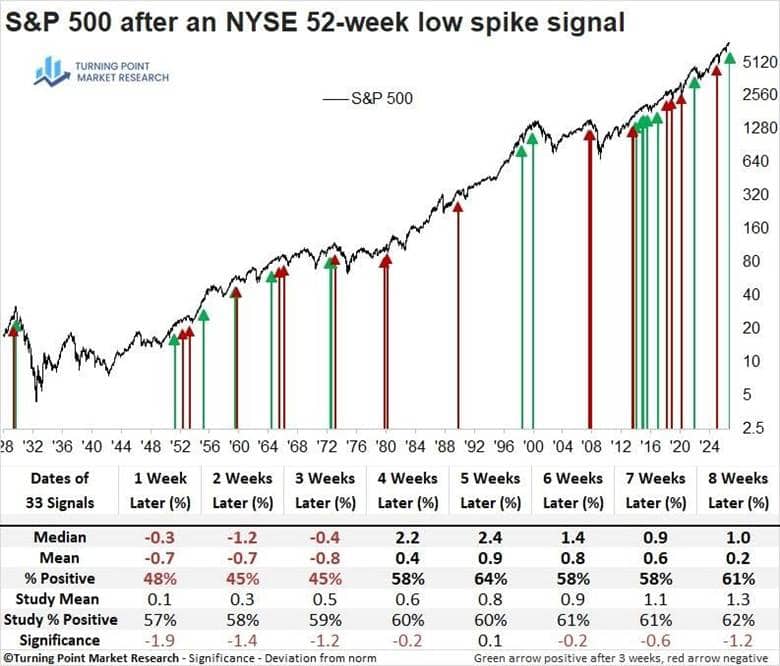
As several reports noted, the surge in Treasury yields has weighed on interest-rate-sensitive stocks. On Thursday, more than 12% of NYSE issues registered a 52-week low, triggering a TCTM Risk-Off Composite member signal. As a reminder, NYSE data includes bond proxies, which likely contributed to the alert.
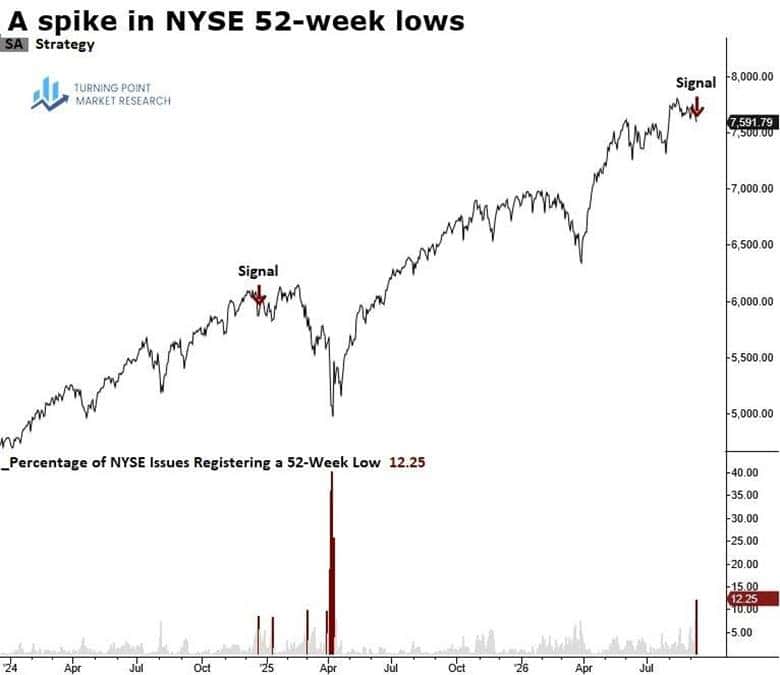
A surge in NYSE 52-week lows has historically preceded negative S&P 500 returns over the first three weeks, with performance then generally lagging the study-period averages over the following four to eight weeks.
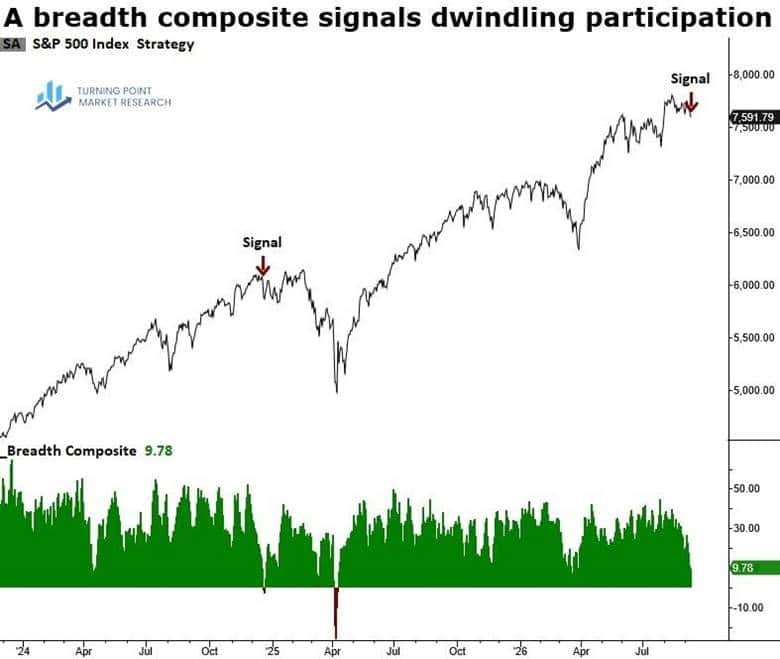
Cyclical stocks—particularly those in the industrial and consumer groups—have pulled back, contributing to a deteriorating overall market breadth backdrop. A breadth composite for S&P 500 stocks designed to capture weakening participation triggered a warning as it fell below a bearish threshold, even as the index remained less than 3% below its high.
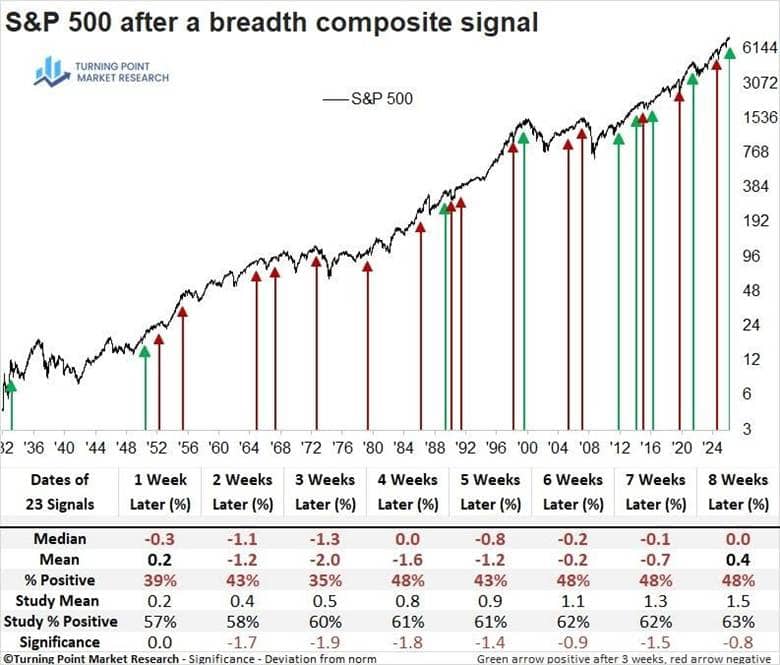
Over the ensuing eight weeks, the S&P 500 delivered poor returns and unfavorable win rates, with performance weakest at the three-week mark.
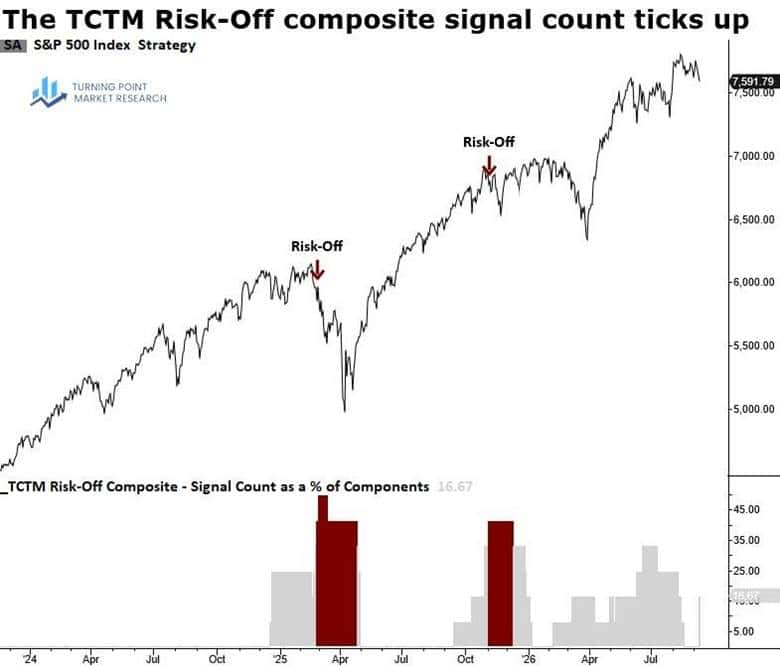
The two new TCTM Risk-Off component warnings bring the composite signal count to 16.67%. The threshold for a broad composite warning is above 45%, equivalent to five component signals.
The following table provides additional context on the breadth implications of the bond warning model by showing the TCTM Risk-Off signal count when each warning occurred and the maximum reading over the subsequent 42 trading sessions. Eight of the 21 bond warnings coincided with a signal count above 0%, and another four instances saw the signal count increase over the next two months. In other words, bond warnings were often associated with a worsening breadth backdrop in the following months.
Research this week
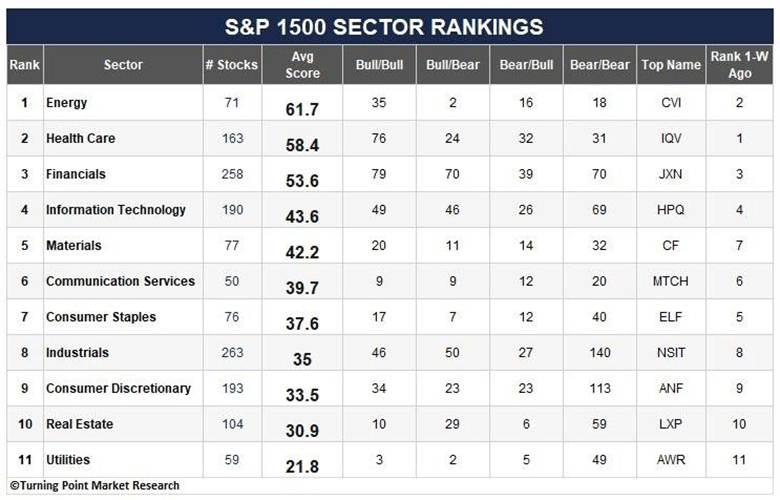
Energy continued its steady ascent in the S&P 1500 rankings, moving into the top position as health care slipped to number two. Financials and technology maintained their respective rankings. Within technology, memory names are showing more constructive price action.
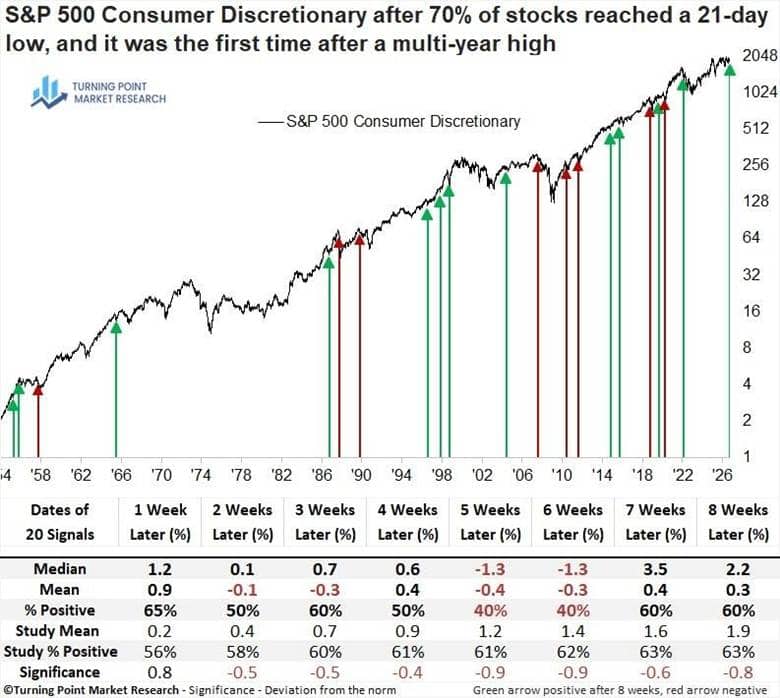
Thursday’s report highlighted a substantial spike in 21-day lows among S&P 500 consumer discretionary stocks. Similar precedents saw the sector stagnate and underperform the broader market. Unless oil prices and Treasury yields reverse sharply, investors should largely avoid this group.
Dual Trend Analysis
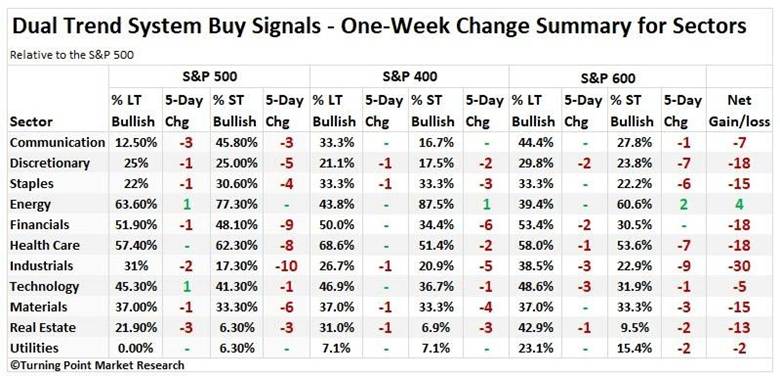
Outside energy, net losses across Dual Trend signals were widespread, touching every sector and suggesting that rising rates are beginning to weigh on an increasingly broad range of groups.
Portfolio Update
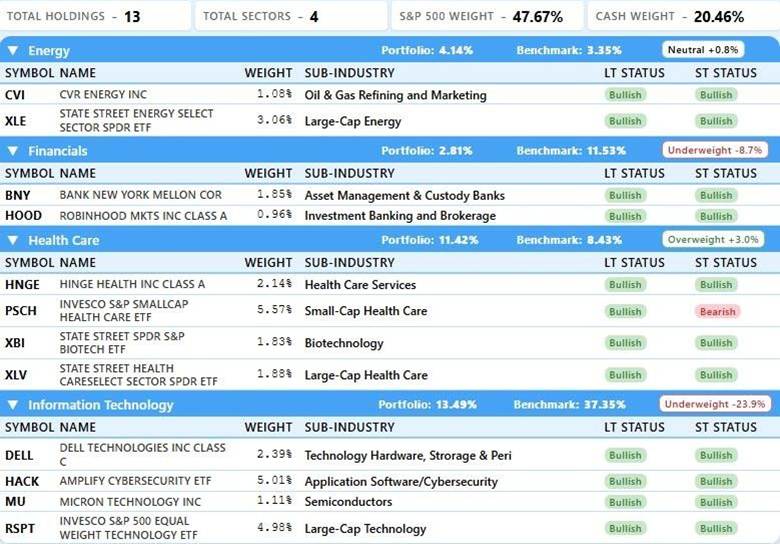
This week, the portfolio initiated a position in Micron Technology (MU) after its ST Dual Trend status turned bullish and aligned with the long-term model. It also added CVR Energy (CVI) for exposure to oil refining and fertilizer. Rising expectations for a Fed rate hike prompted the sale of Centerra Gold (CGAU), while a reduction in the S&P 500 ETF position raised cash to 20%, leaving the portfolio slightly more cautious.
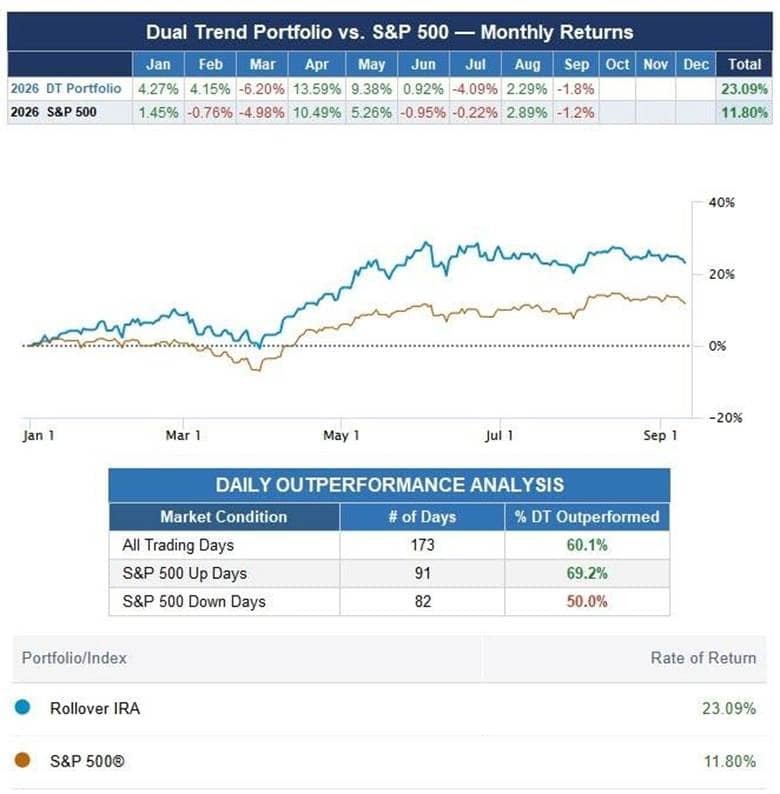
Through Thursday’s close, the Dual Trend portfolio had gained 23.09%, outperforming the S&P 500’s 11.80% return.
Final thoughts
Several warnings emerged this week as rising interest rates begin to weigh on a broader group of stocks. I view these signals as a shot across the bow, suggesting that market risks are building and warranting a more disciplined approach to risk management. With Treasury yields moving higher, the Fed likely to raise the target rate next week, and the midterm elections approaching, the near-term backdrop for equities is becoming less compelling. For now, it makes sense to remain patient and keep some extra cash on the sidelines. Should additional TCTM Risk-Off signals emerge, the portfolio would likely become even more defensive.