Broad Market Thoughts
I’ve spent considerable time highlighting the deterioration in market breadth, so today’s focus shifts to credit, particularly its riskier segments. Credit often acts as a leading indicator, foreshadowing financial stress that can eventually spill over into equities.
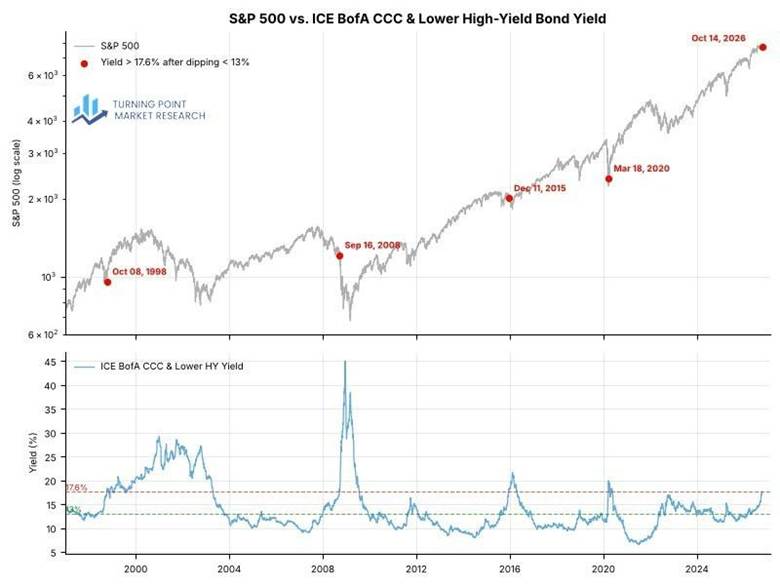
The first warning comes from CCC-rated and lower high-yield bonds, where yields surged to 17.61% this week, the highest level since the COVID crisis in 2020. Looking back at instances when CCC yields first crossed above 17.6% after previously falling below 13%, uncovered four historical precedents. All occurred during periods of significant market stress, with the S&P 500 caught in a correction or bear market. Notably, following a similar development in 1998, CCC yields continued climbing toward 30% as stocks approached their 2000 peak.
This is highly unusual, given where the S&P 500 stands today.
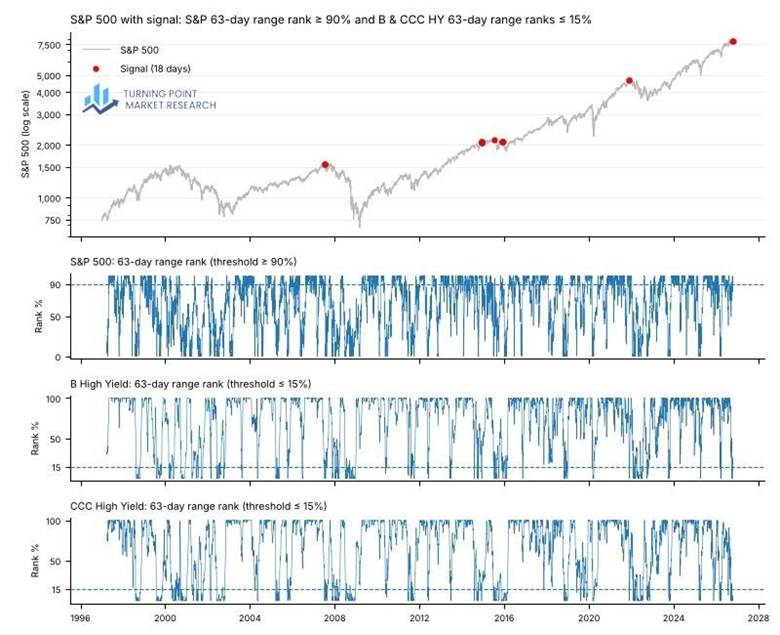
The following chart highlights instances when CCC- and B-rated high-yield bonds fell to the bottom 15th percentile of their respective 63-day ranges while the S&P 500 remained in the top 10th percentile. Although rare, this divergence between credit and equities has occurred near major stock market peaks. Notably, even higher-rated BB high-yield bonds are trading below the 15th percentile of their range.
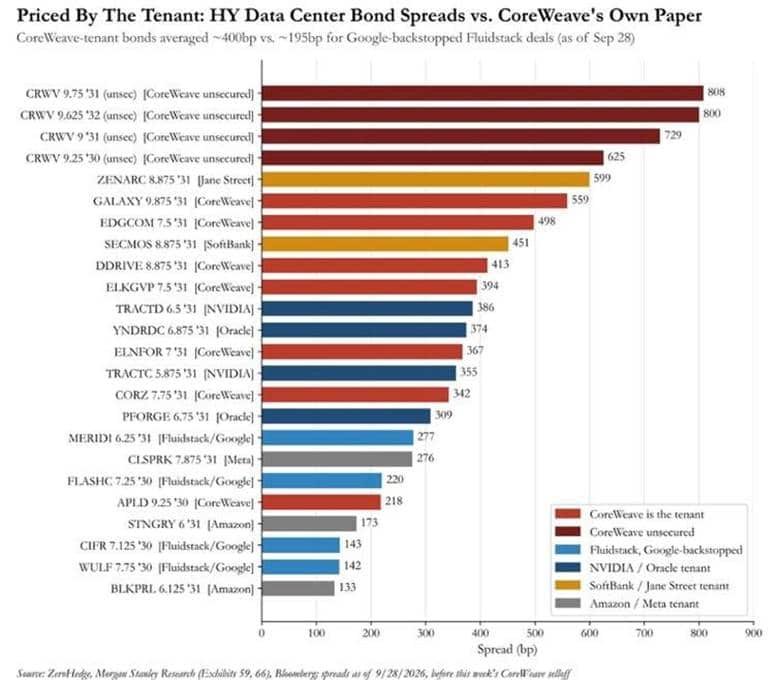
If you’re active on social media, you’ve probably seen this chart circulating. CoreWeave has become a poster child for the highly leveraged, high-yield debt financing fueling the AI boom. I have no special insight into how things ultimately play out for CoreWeave or similar companies, and I’m not going to pretend otherwise. The dot-com era produced plenty of bankruptcies, reminding investors that companies with too much debt can quickly run into trouble when market conditions turn.
One lesson from market history is clear: Early in a cycle, junk can be an opportunity. Late in the cycle, it’s best to avoid it like the plague.
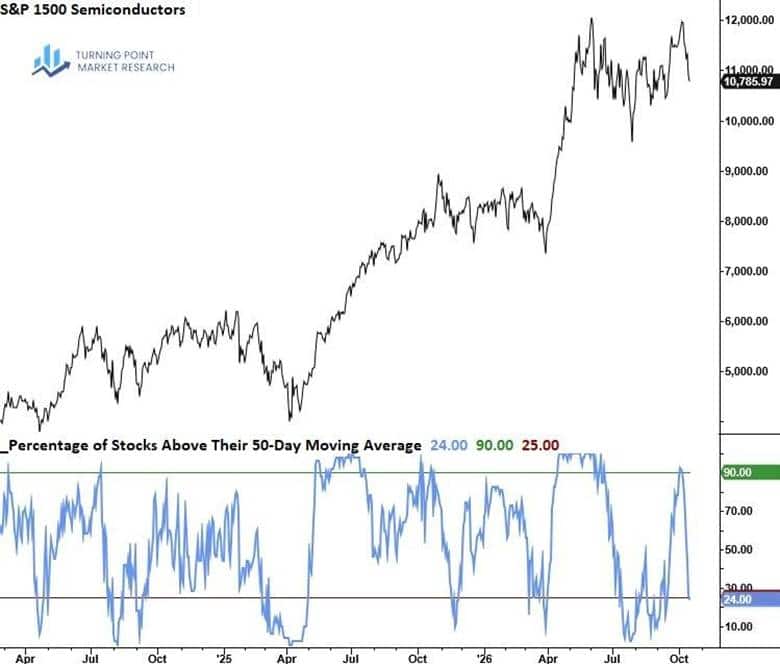
Speaking of the AI trade, semiconductor breadth just experienced one of the swiftest reversals on record. The percentage of semiconductor stocks trading above their 50-day moving average plunged from above 90% to below 25% in just eight sessions. This has happened only three other times: July 2024, May 2010 during the Flash Crash, and November 1973 during the 1973–74 bear market.
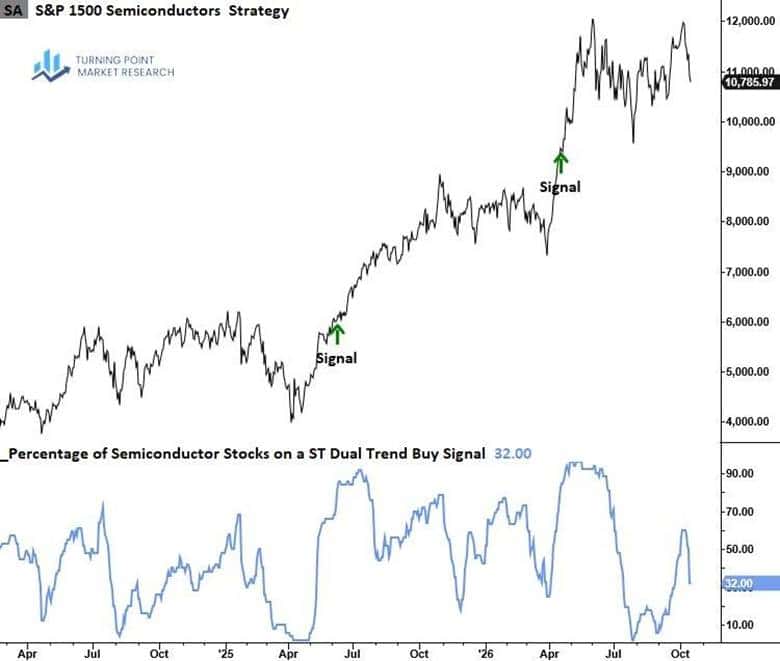
The percentage of semiconductor stocks with short-term Dual Trend buy signals has reversed sharply, falling from 60% to 32%. The initial plan was to use the indicator’s buy signal as an opportunity to increase exposure to the group. Instead, deteriorating participation shifted the focus from adding exposure to reducing risk, resulting in the elimination of all semiconductor positions from the Dual Trend Portfolio.
Research this week
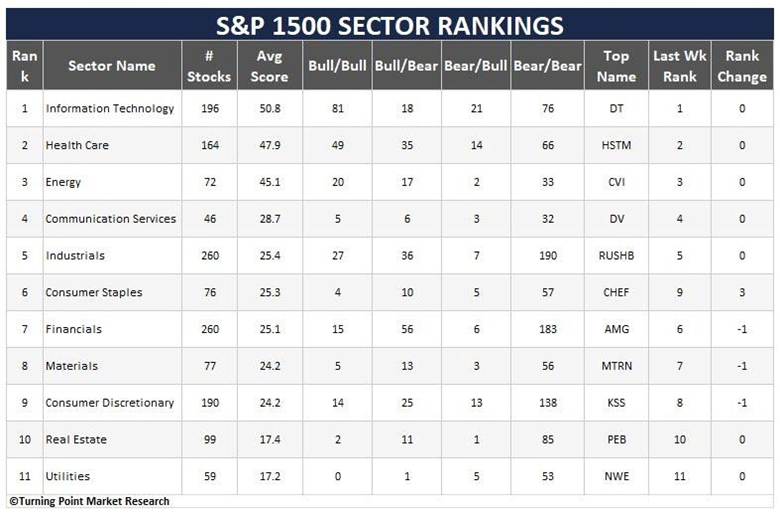
Monday’s S&P 1500 rankings report showed Technology moving to the top, with health care and energy once again occupying two of the top three spots. However, given this week’s price action, I suspect technology will slip in the rankings while health care and energy move higher. Consumer staples also climbed in the latest report and could advance further after a strong week.
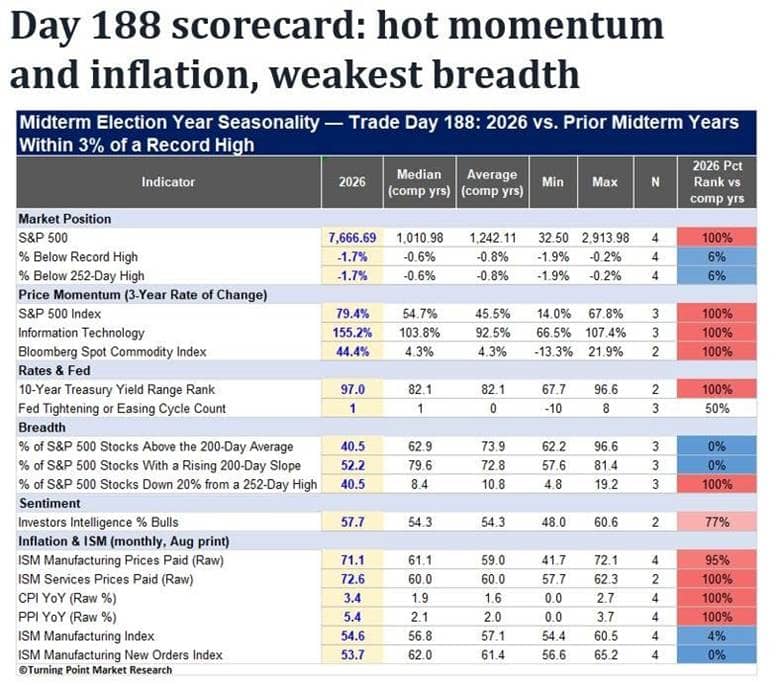
Wednesday’s report examined several market factors at day 188, the seasonal low in midterm election years, comparing 2026 with the historical composite since 1954. The differences were striking, especially when evaluating years when the S&P 500 was near a record high. Across most measures, 2026 ranked among the most extreme observations, suggesting investors should temper expectations for the average 17% rally in year three of the presidential cycle.
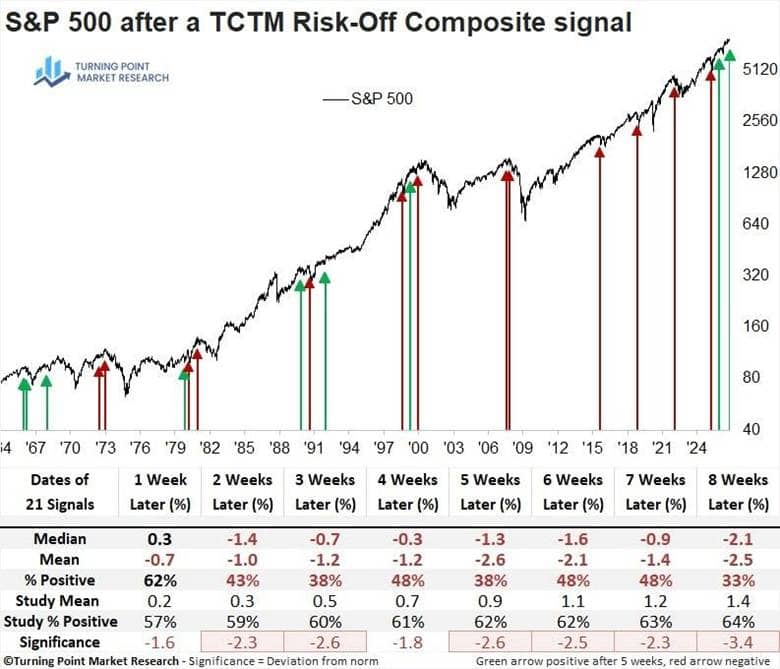
For only the 30th time since 1929, the TCTM Risk-Off Composite has triggered a warning, signaling narrowing market participation and increased vulnerability to a countertrend pullback in the S&P 500.
Broad Dual trend analysis
For the second consecutive week, net gains in dual trend signals were distributed across most sectors, likely reflecting the retreat in the 10-year Treasury yield. Technology and industrials were the only sectors to post net losses as the AI trade reversed to the downside.
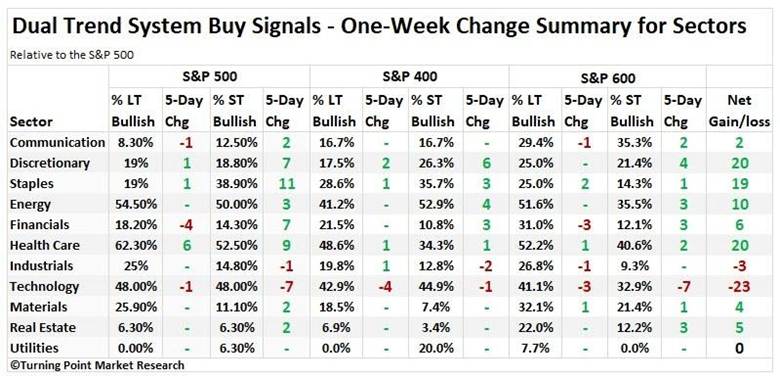
Sector buy signals over the past week emerged in health care, energy, and consumer staples, suggesting defensive groups were exhibiting bullish trend and relative strength characteristics.
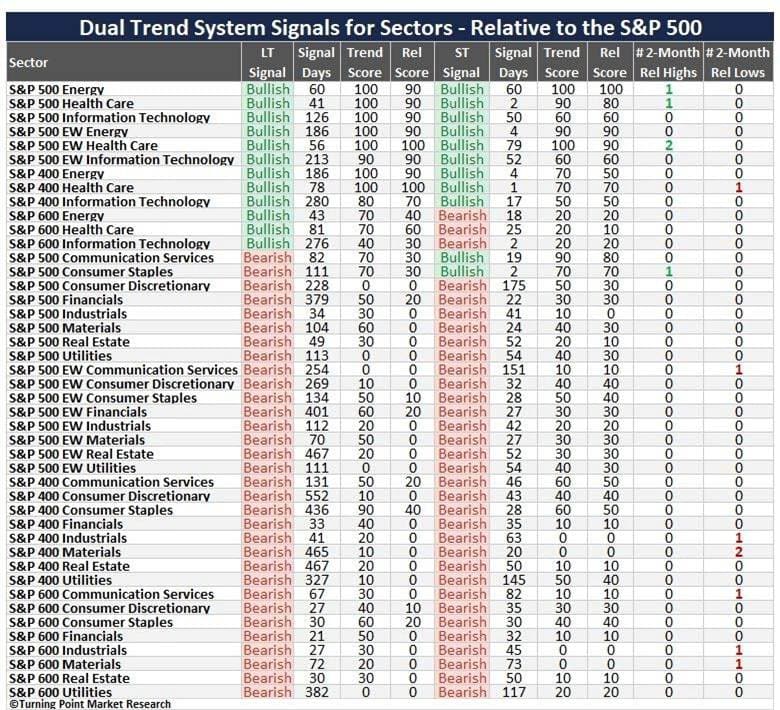
Portfolio update
This week, I took decisive action to reduce portfolio exposure, selling Semtech, the semiconductor ETF (SOXX), Marvell Technology, Dell Technologies, the S&P 500 equal-weighted and cap-weighted technology ETFs, and the cybersecurity ETF. Earlier in the week, I increased the position in Dynatrace as the stock continued to show solid relative strength. Dynatrace remains the portfolio’s only technology holding, but that position could also be on the chopping block if the sector’s unraveling continues.
Cash now stands at 40%, reflecting a more defensive posture.

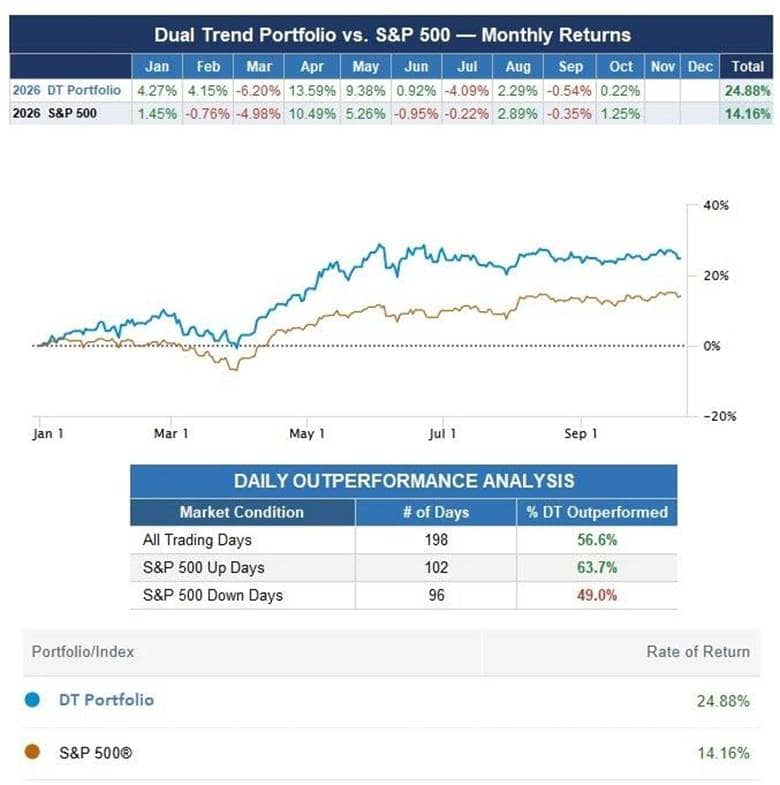
Through Thursday’s close, the Dual Trend portfolio had gained 24.88%, outperforming the S&P 500’s 14.16% return.
Final thoughts
Optimism has historically paid off for stock investors, with the S&P 500 rising in 70% of rolling one-year periods. However, maintaining a constructive outlook is becoming increasingly difficult as the weight of the evidence favors caution over risk-taking. With the Fed’s next meeting not scheduled until the end of the month and the election just three weeks away, volatility is likely to remain elevated in the near term. Manage risk accordingly.