Broad Market Thoughts
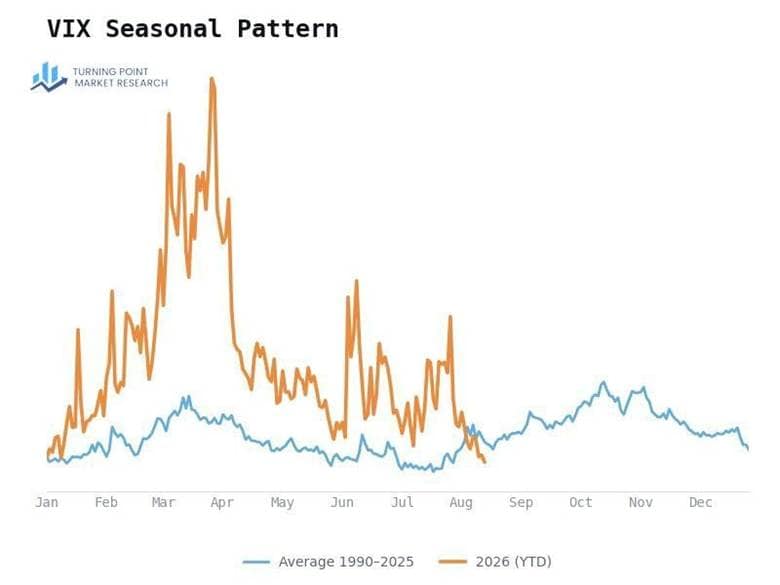
Breadth and trend indicators continue to improve, reinforcing the view that the underlying market environment remains constructive. However, seasonality suggests investors should remain mindful of risk, as this is typically when market volatility begins to increase, as shown by the seasonal pattern of the Volatility Index (VIX) in the chart below.
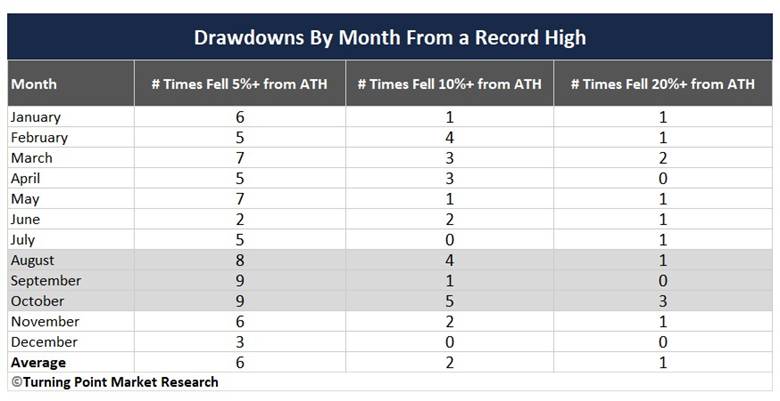
Historically, pullbacks of more than 5%, 10%, and 20% from record highs tend to become more frequent at this point in the year, with October recording the highest number of drawdowns of any month.
Research this week
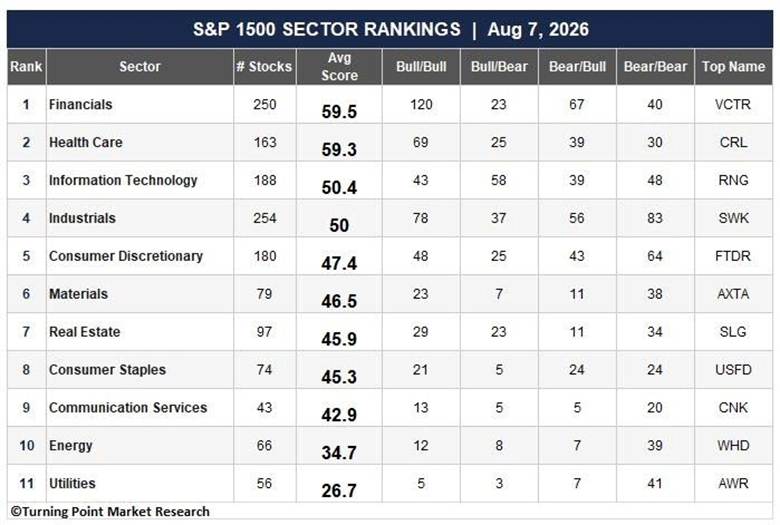
Monday’s report shared Dual Trend rankings across S&P 1500 stocks, providing a bottom-up assessment of market trends. While financials and health care maintained their leadership positions, the most notable development was technology’s rise from seventh to third place, driven by improving trends among application software companies and AI beneficiaries.
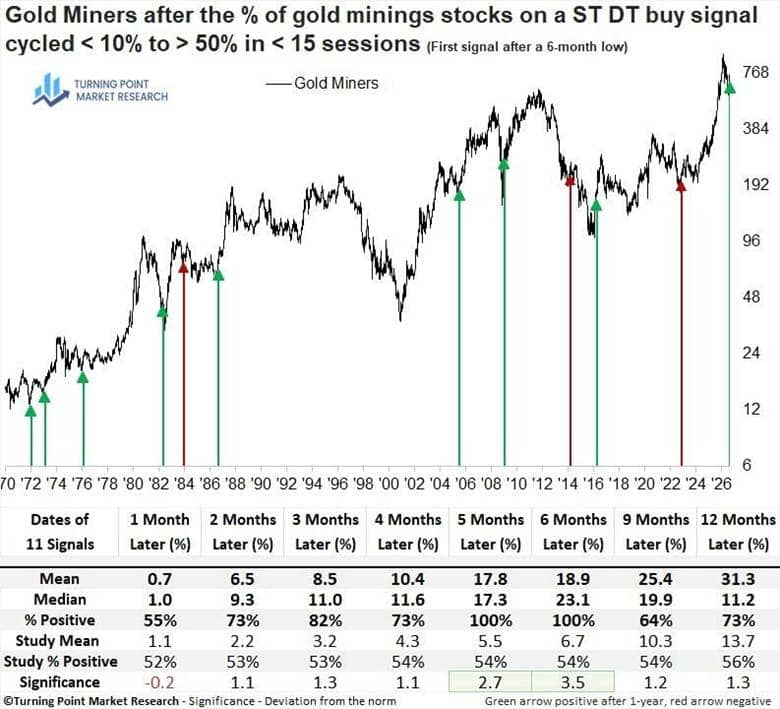
Wednesday’s report highlighted a notable bullish shift in Dual Trend signals across gold mining stocks. Historically, similar thrusts have been followed by gains in every instance over the subsequent five- and six-month periods. Given the group’s significant advance since the mid-July low in gold, we favor a measured and strategic approach to increasing exposure.
Dual trend analysis
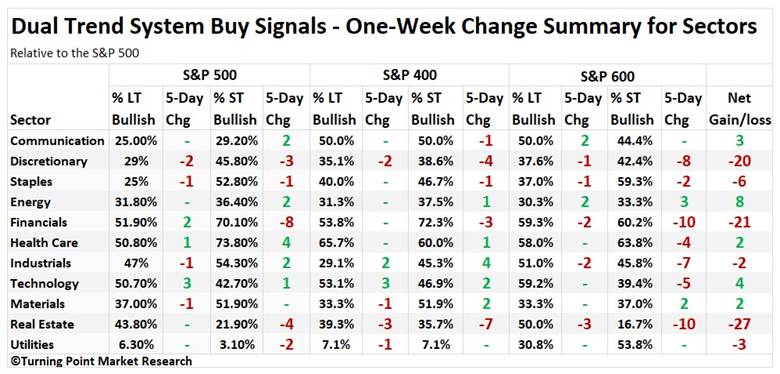
Real estate led all sectors lower, with a net loss of 27 dual trend buy signals, followed by financials and consumer discretionary. The weakness in financials was somewhat surprising, but most of the losses came from short-term signals, particularly among insurance stocks.
Net gains across sectors were limited, with energy leading.
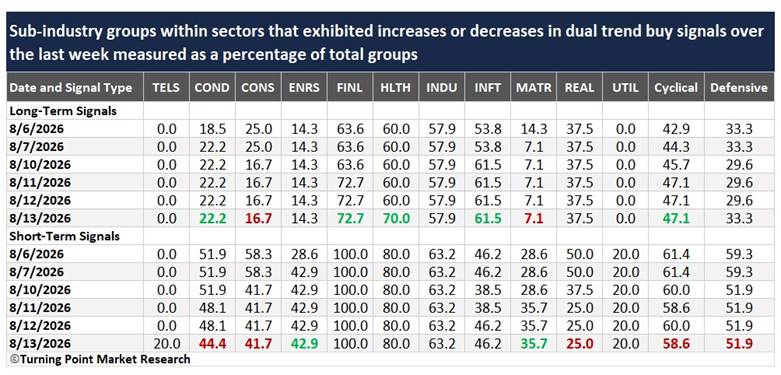
Cyclical sub-industry groups continued to improve on the long-term dual-trend model, with financials posting the highest share of groups on a buy signal. While long-term signals remain weak for energy and materials, the short-term system is improving modestly, consistent with the trend seen across energy stocks in the table above.
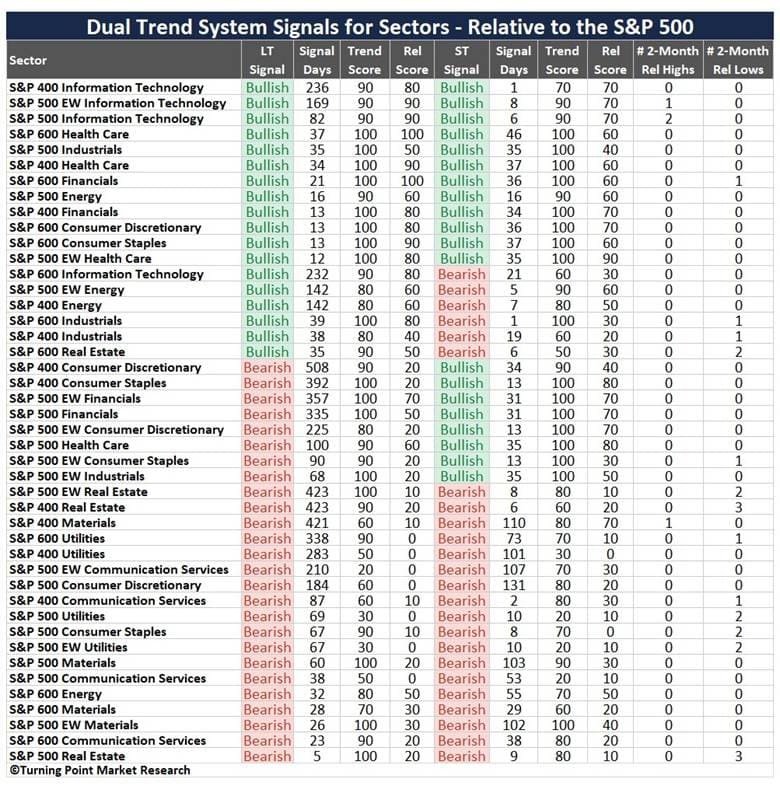
Technology continues to show improving momentum at the sector level, with the S&P 400 technology sector moving into bullish short-term territory. As a result, the S&P 600 technology sector is now the lone bearish short-term reading across market-capitalizations and weighting methodologies.
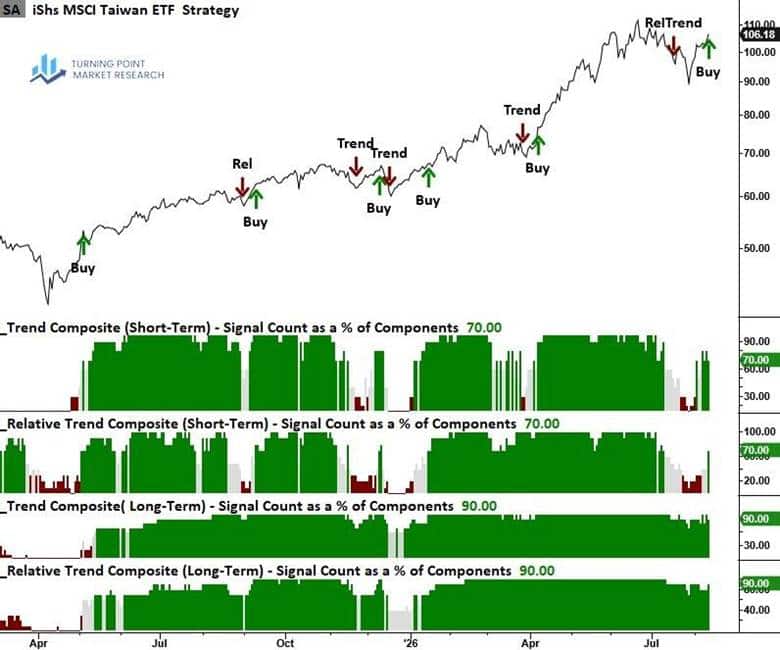
The Taiwan ETF (ETW) shifted back to a bullish short-term Dual Trend signal, confirming its long-term bullish signal. Interestingly, the shift occurred without Taiwan
Semiconductor (21% weight) returning to a bullish short-term signal. Looking under the hood, nine of ETW’s top 10 holdings are technology stocks, providing another sign of improving technology breadth—even without the biggest AI stock in alignment.
Portfolio update
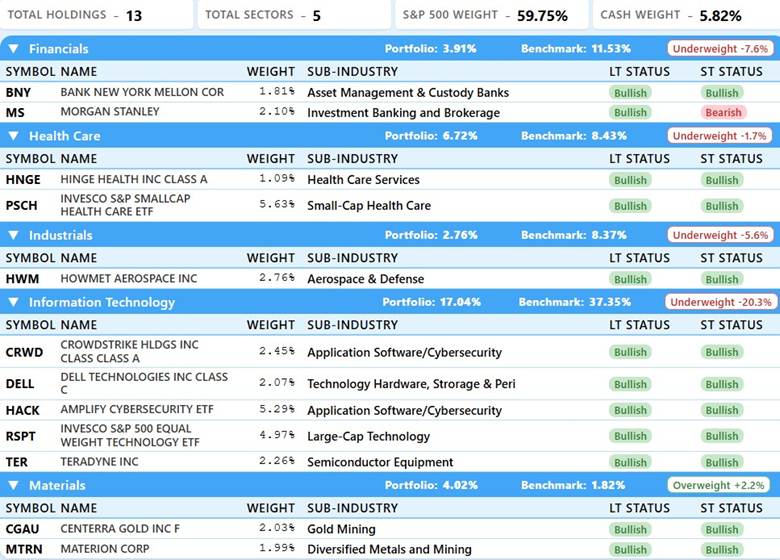
Activity in the dual trend portfolio was limited this week. The portfolio initiated a position in the S&P 500 Equal Weight Technology ETF (RSPT) after the short-term model turned bullish, reinforcing its positive long-term condition. The equal-weighted ETF was favored over its cap-weighted counterpart as renewed strength in software stocks signals broader participation across the sector. The portfolio funded the position by reducing exposure to the S&P 500 ETF.
Portfolio cash remains low, reflecting a bullish bias.
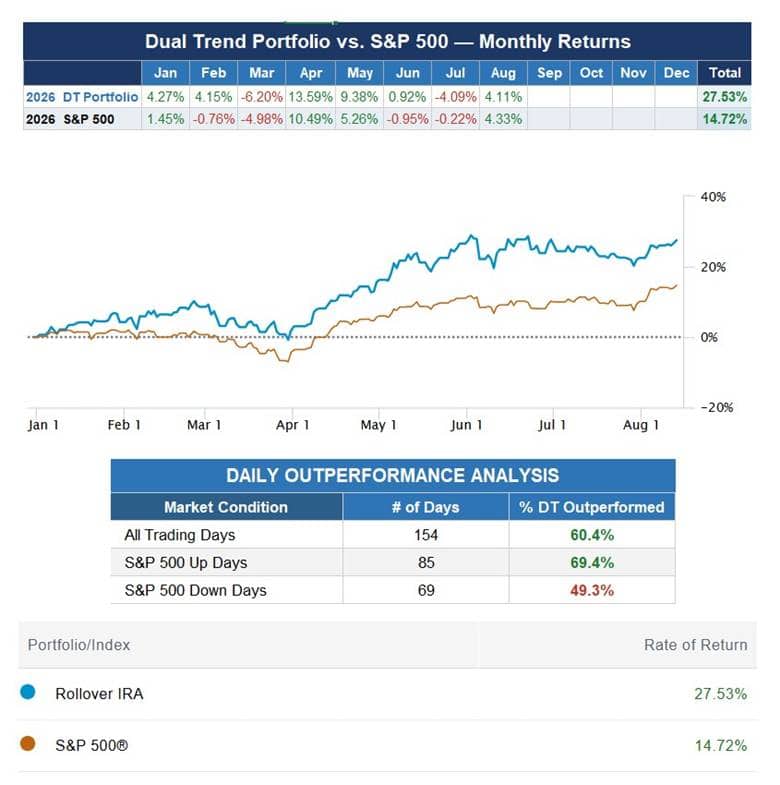
Through Thursday’s close, our Dual Trend portfolio had gained 27.53%, outperforming the S&P 500’s 14.72% return.
Final Thoughts
The market continues to signal a constructive backdrop, with improving momentum in technology providing an encouraging development. This is particularly important given technology’s significant influence on the S&P 500 and its ability to drive broader market performance. Although seasonal weakness could weigh on markets over the coming months, a more meaningful disruption to the current trend would likely require an unexpected catalyst that catches market participants off guard. The dual trend system continues to identify several attractive opportunities, but there is little reason to force the issue at this point in the calendar. For now, a patient approach to increasing exposure to single-stock and ETF names seems more appropriate.