Key points:
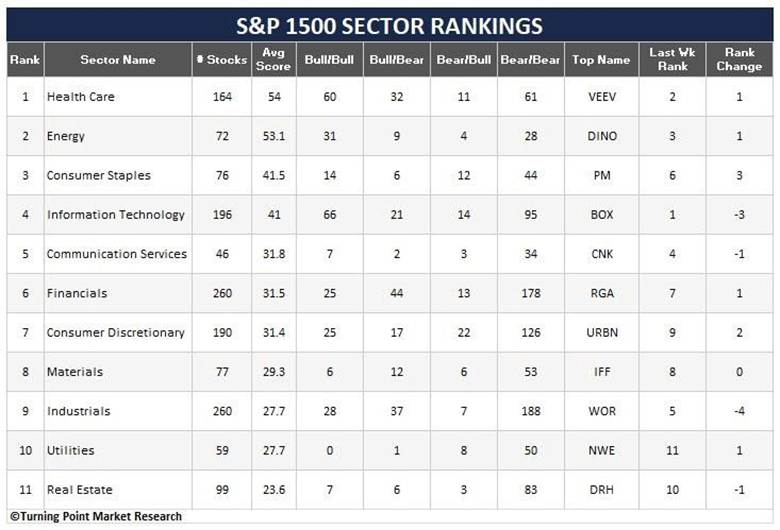
- Health care and energy rose to #1 and #2 in the latest rankings
- Technology tumbled three spots, landing at #4 in the standings
- Consumer staples continued its march higher, rising to #3
A challenging environment to navigate
Last Monday’s rankings report warned that cracks were beginning to form in the AI rally. By Friday, those cracks had developed into a full-scale rout. Technology stocks were hammered, sending prominent AI-themed ETFs down 10% to 16% over the week. The selloff triggered a sharp reversal in the rankings, pushing technology from first to fourth. Industrials suffered an even steeper setback, falling four places to ninth as data center beneficiaries and fuel-sensitive industries came under heavy selling pressure.
Meanwhile, consumer staples continued to build momentum, climbing to third as investors gravitated toward more defensive areas of the market. The combination of deteriorating technology and industrial rankings, along with improving defensive leadership, suggests the market’s character is changing.
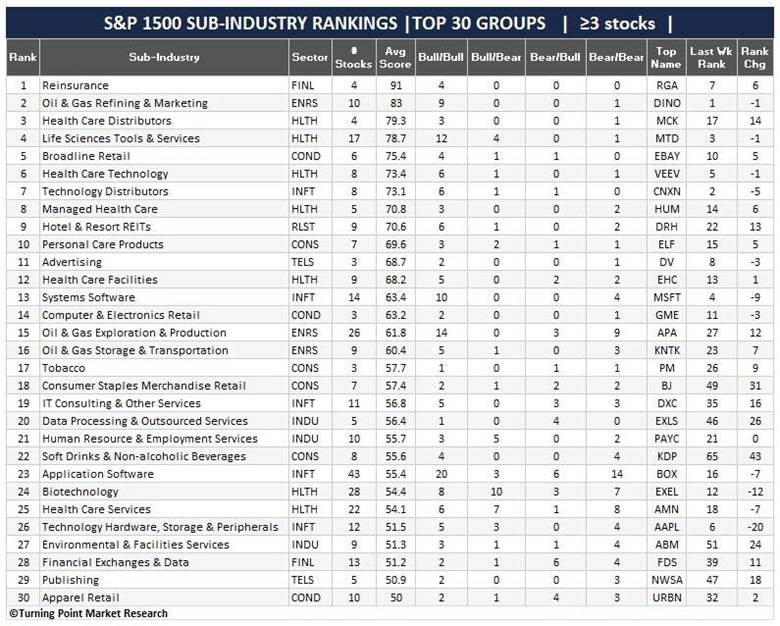
Health care maintained a strong presence in the sub-industry rankings, with seven groups in the top 30, led by distributors and life sciences tools. Although reinsurance climbed to #1 in the overall sub-industry rankings, financials had had virtually no other presence among the leaders except for financial exchanges & data at #28.
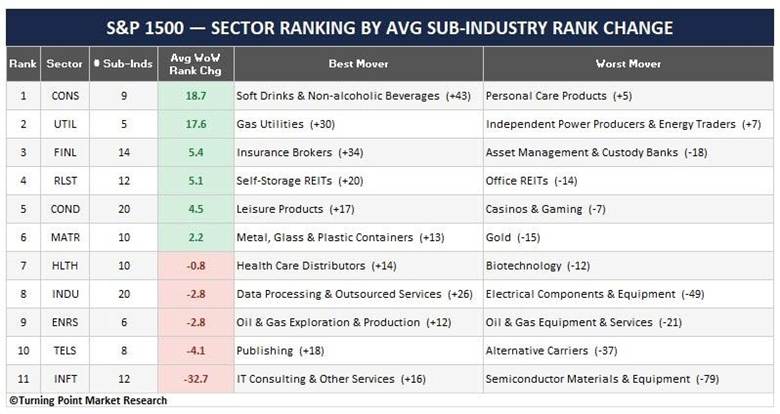
The average ranking across technology sub-industry groups fell 32.7 points, led by a steep 79-point decline in semiconductor materials & equipment—the largest drop among all sub-industry groups. As tech succumbed to selling pressure, money rotated into defensive areas, with consumer staples (+18.7) and utilities (+17.6) posting the biggest average rank gains, led by Soft Drinks (+43) and Gas Utilities (+30).
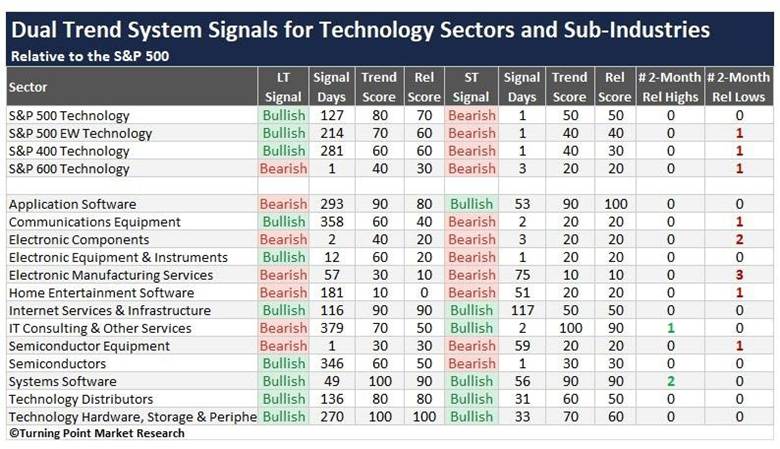
The deterioration in technology pushed the short-term dual trend model to a bearish signal.
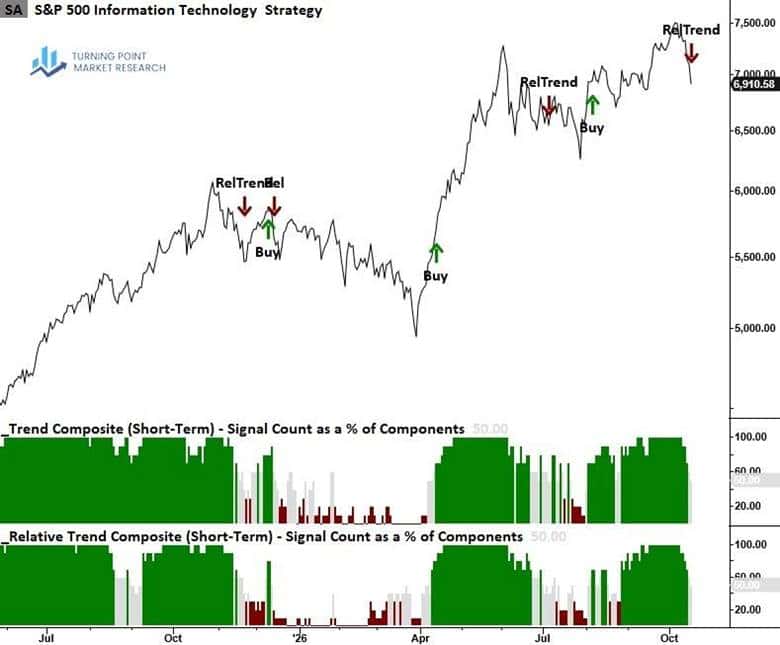
Technology’s rout was broad-based, shifting the short-term dual trend system to a bearish stance across market capitalizations and in the equal-weighted sector, and even flipping the S&P 600 technology sector’s long-term model to a negative stance. At the sub-industry level, semiconductors, communication equipment, electronic components, and electronic equipment & instruments all shifted to bearish short-term readings.
Interestingly, IT consulting & other services, a group previously viewed as vulnerable to AI disruption, moved to a bullish short-term reading.
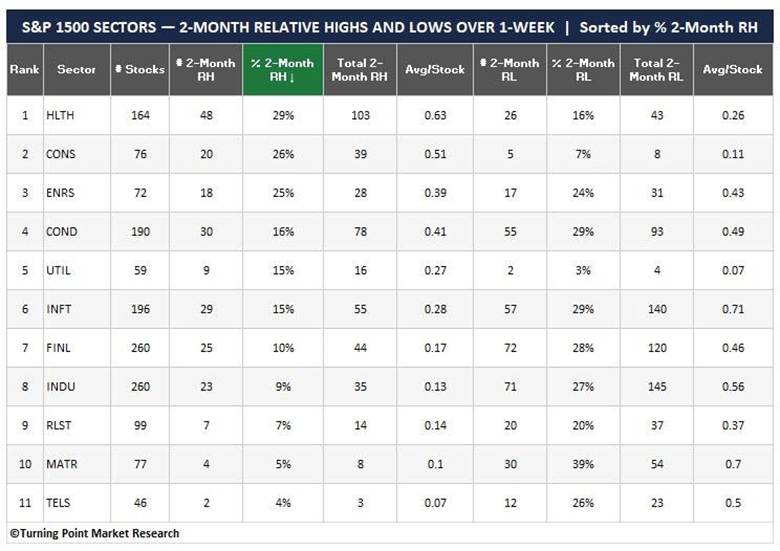
The distribution of two-month relative highs and lows across sectors last week underscored the market’s defensive tone. Health care and consumer staples led in the percentage of stocks reaching relative highs, while materials lagged badly, with only 5% hitting a relative high versus 39% reaching a relative low.
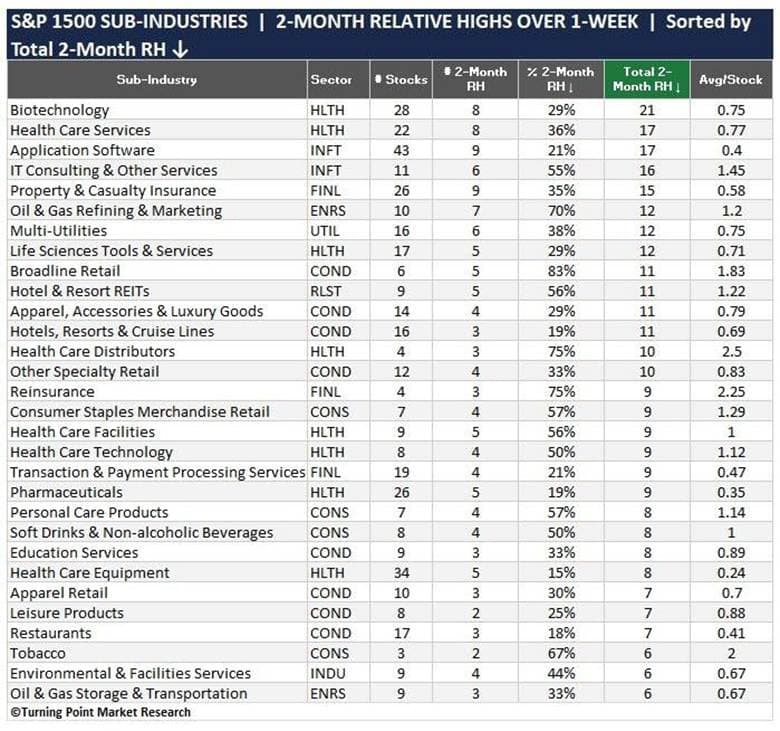
Drilling down to the sub-industries, biotechnology and health care services led the list of two-month relative highs. More notably, consumer groups accounted for nine of the top 30, led by travel, leisure, hotel & cruise lines, restaurants, and apparel. The strength likely reflects some relief from the pullback in the 10-year Treasury yield rather than oil prices, which moved higher last week.
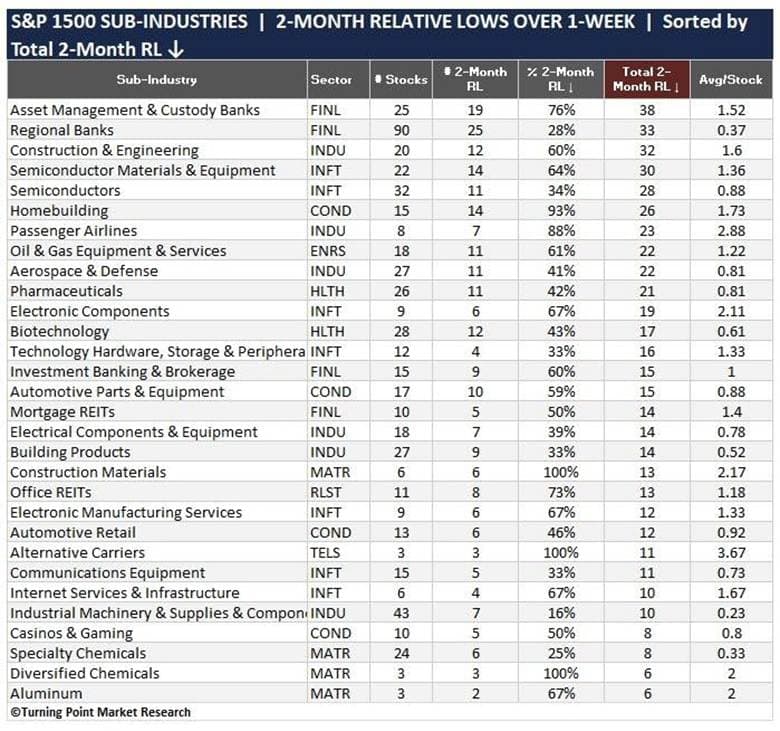
Relative lows clustered in financials, housing, and AI hardware. Although regional banks have long been among the groups with the most relative lows, asset management and custody banks posted the most two-month relative lows last week. A closer look revealed broad-based weakness across individual stocks, suggesting the pressure extends beyond alternative asset managers facing private credit concerns.
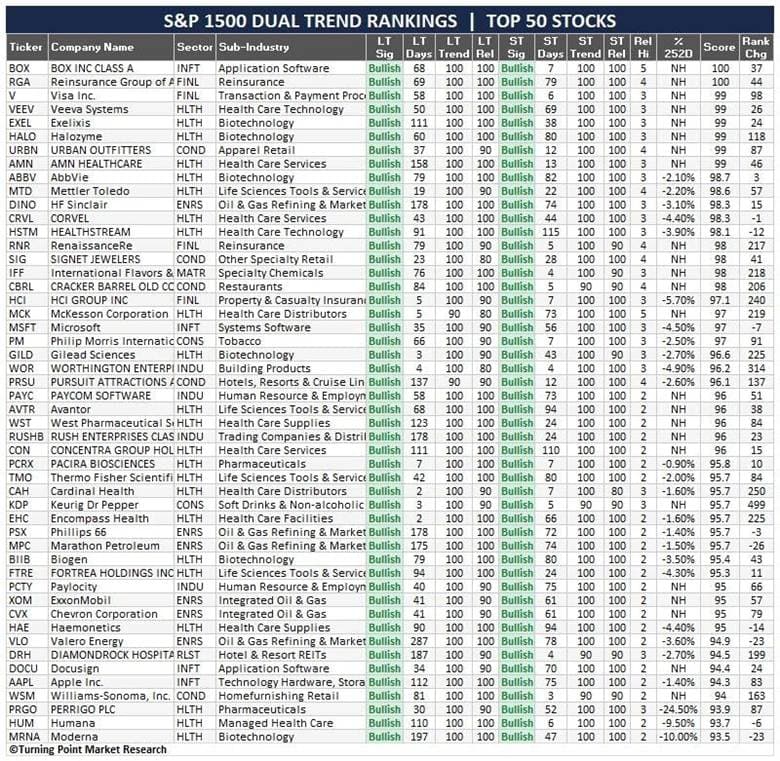
Health care continued to dominate the top 50 stocks in the S&P 1500 rankings, with 23 names represented. Technology’s presence shrank considerably as several stocks fell out of the top 50, leaving only BOX, MSFT, DOCU, and AAPL. Notably, none are semiconductor stocks.
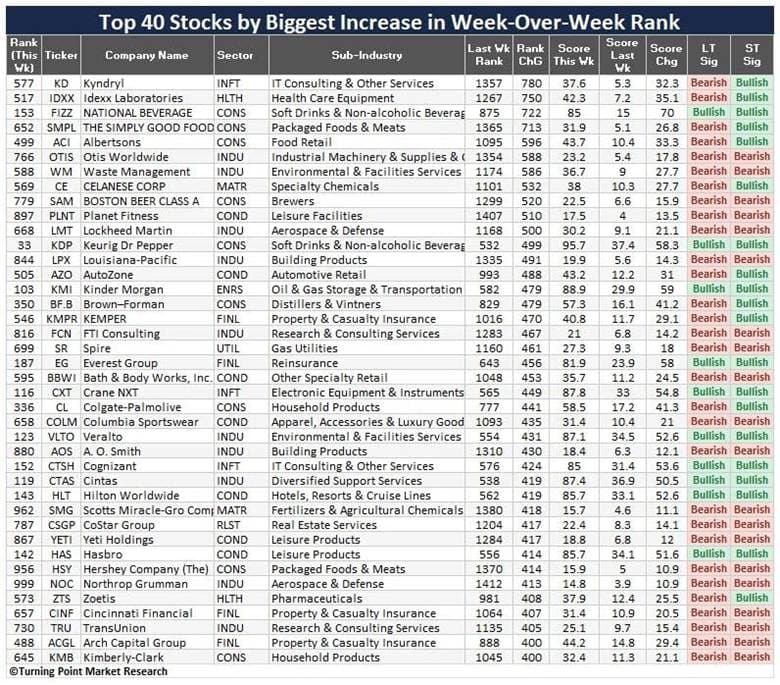
Nine of the 40 stocks with the largest ranking gains over the past week came from consumer staples. However, most of these names still show bearish long-term dual-trend conditions. Two of the more interesting week-over-week advances came from Lockheed Martin (LMT) and Northrop Grumman (NOC), particularly given the sustained pressure across the broader aerospace and defense group.
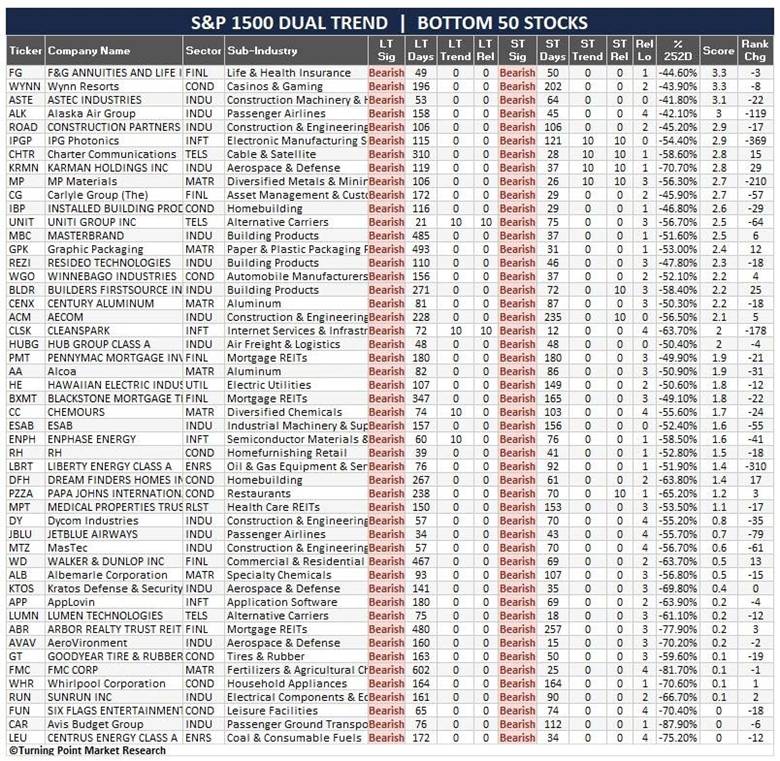
The notable laggards include housing, airlines, materials, and mortgage REITs. Within materials, metals and mining stocks hold several spots in the bottom 50.
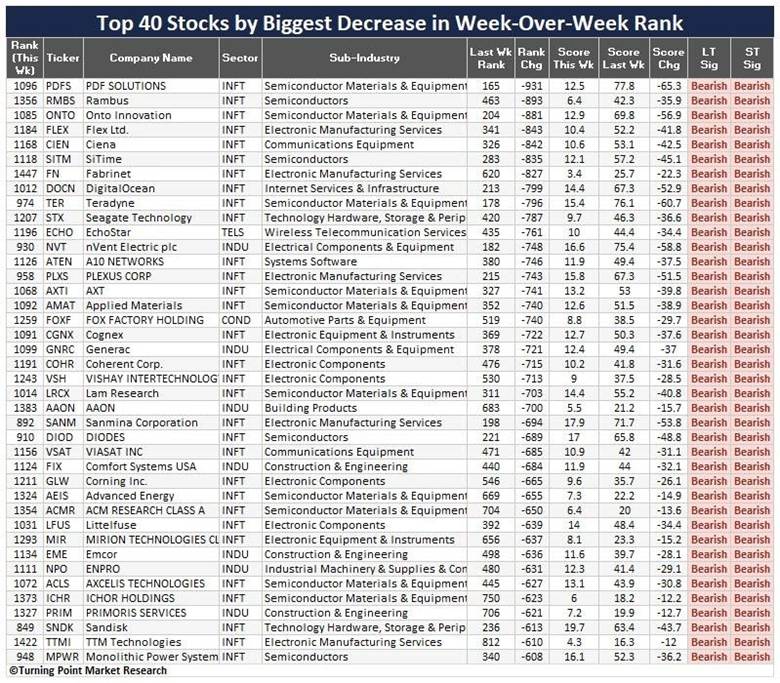
Technology accounted for 31 of the 40 largest week-over-week ranking declines, led by semiconductor stocks. Industrials accounted for most of the remainder, with the two sectors representing 95% of the biggest decliners and underscoring the intense downward pressure on the AI beneficiaries.
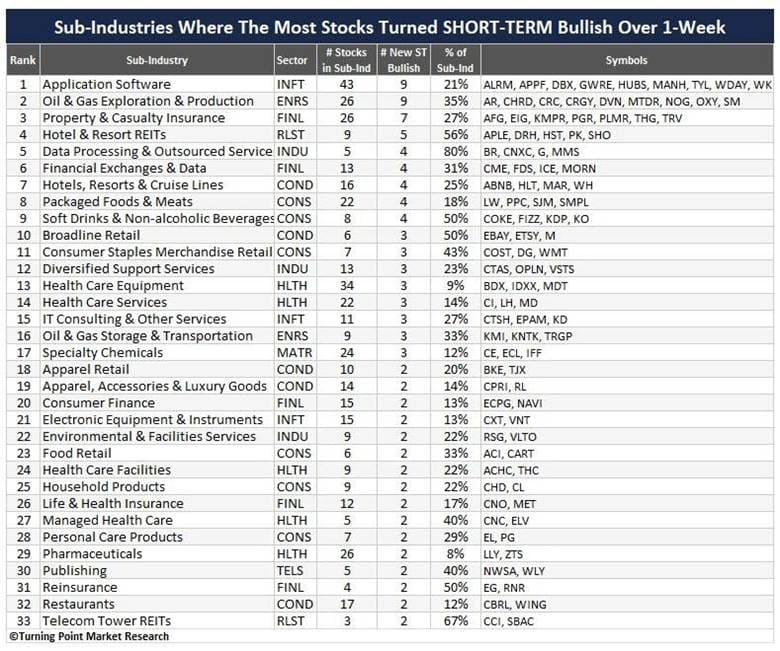
Software, energy, and travel and leisure led the groups with the highest proportion of new short-term Dual Trend buy signals across all sub-industries over the last week.
What the research tells us…
Technology and industrials, two of the primary beneficiaries of the AI buildout, came under intense selling pressure last week, with their rankings plunging to fourth and ninth, respectively. The magnitude of the decline suggested possible forced selling, similar to the Situational Awareness pullback over the summer. Whatever the underlying cause, the message from price trends and relative strength is clear: the AI trade is in the penalty box.
That leaves health care and energy as the market’s two dominant leadership groups. Consumer staples and consumer discretionary have shown some resilience, but neither presents a compelling enough opportunity to justify a meaningful portfolio allocation. For a momentum investor, this is a challenging tape with few attractive places to deploy capital, so a conservative approach is prudent for now.