Key points:
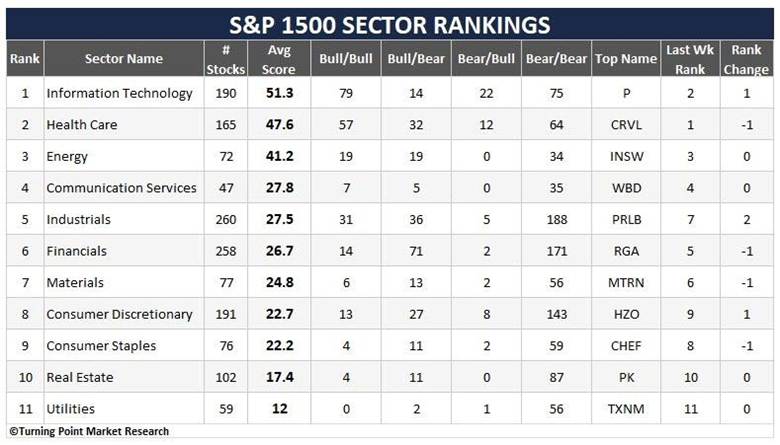
- Technology rose to #1 in the standings, with improvement from semiconductors
- Industrials gained two spots, supported by strength in fuel-sensitive groups
- A TCTM Risk-Off component triggered a warning
A fragile environment, with a few signs of stabilization
For the first time in five weeks, the percentage of S&P 1500 stocks with bullish short- and long-term Dual Trend signals held steady rather than declining. At 16%, the reading remains low for a bull market, but stabilization is at least a small step in the right direction.
Technology continued to strengthen and now ranks as the top sector. Industrials also improved, climbing two spots, a constructive development and an area worth monitoring for further gains.
Financials, meanwhile, slipped again to sixth place. That trend also deserves attention, particularly because leadership in technology or energy combined with weakness in financials is often associated with the later stages of a market cycle.
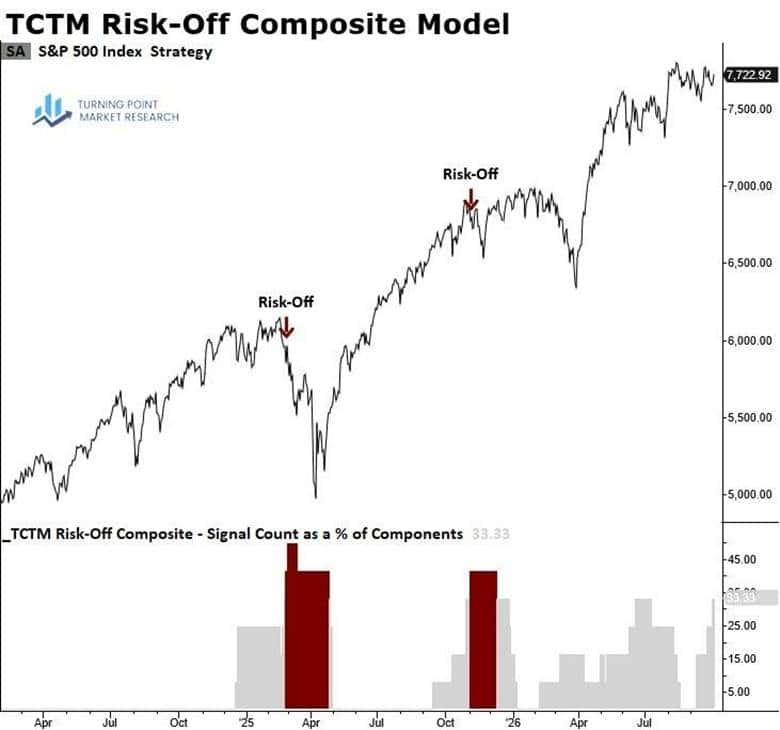
That backdrop matters more because a new TCTM Risk-Off component warning occurred, raising the composite reading to 33.33% and leaving just one additional alert needed to trigger a broad risk-off signal.
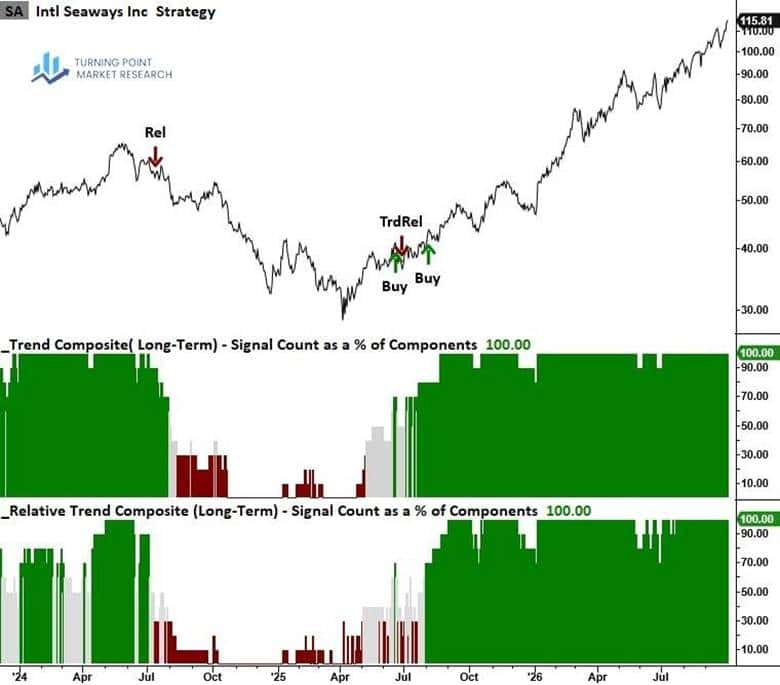
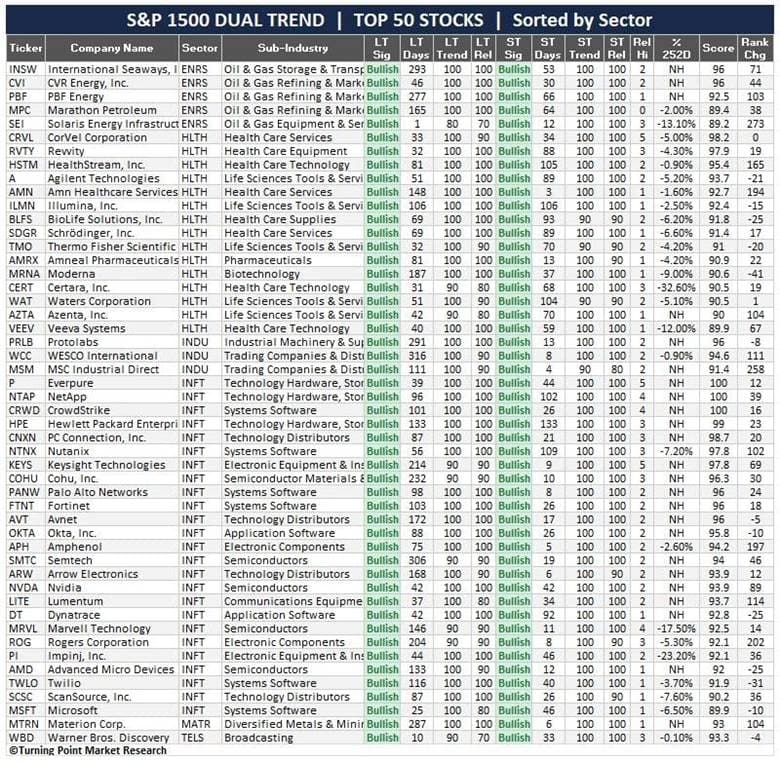
International Seaways (INSW), the top energy stock in the latest rankings, continues to grind higher in a remarkably steady fashion. Its fortunes, however, are tied less to crude oil prices than to the tanker cycle. Based on price action alone, INSW and its peers still appear to be in the favorable part of the cycle. The challenge is determining how long that window remains open before rising vessel supply pressures tanker rates.
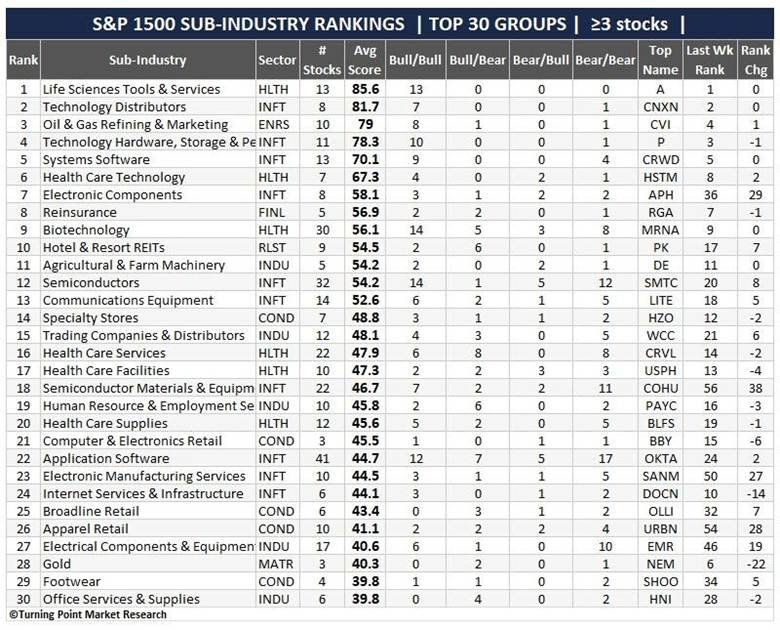
Life sciences tools & services remains the top-ranked sub-industry, and Agilent Technologies (A) is still the #1 stock within the group for a second straight week.
What stands out in the latest rankings is the broad improvement across technology. Semiconductor materials & equipment jumped 38 spots, the biggest move of any group, and three of the five biggest gainers came from technology. Electrical components & equipment was also among the top five, making it an industrial group worth watching as several names are tied to the AI data center spending trend.
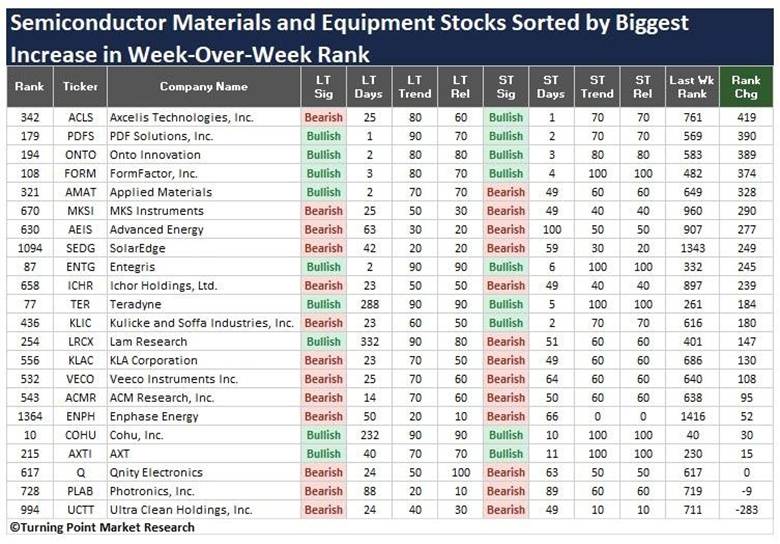
The semiconductor materials & equipment group showed broad improvement, with 19 of its 22 stocks moving higher in the rankings. Applied Materials (AMAT), one of the industry’s bellwethers, surged 328 spots and also shifted to a bullish long-term Dual Trend status.
For the second week in a row, technology led all sectors in both the percentage and total number of stocks reaching two-month relative highs over a five-session stretch. Relative lows remained concentrated in real estate, financials, and consumer discretionary.
Utilities, however, stood out. Two weeks ago, 86% of utility stocks hit a two-month relative low, representing 201 stocks. For the week ending October 2, that number fell sharply to 32%, or just 30 stocks. That contraction suggests downside momentum in utilities may be subsiding—and could be an important clue for the sector. As noted previously, the 10-year Treasury yield is in the driver’s seat.
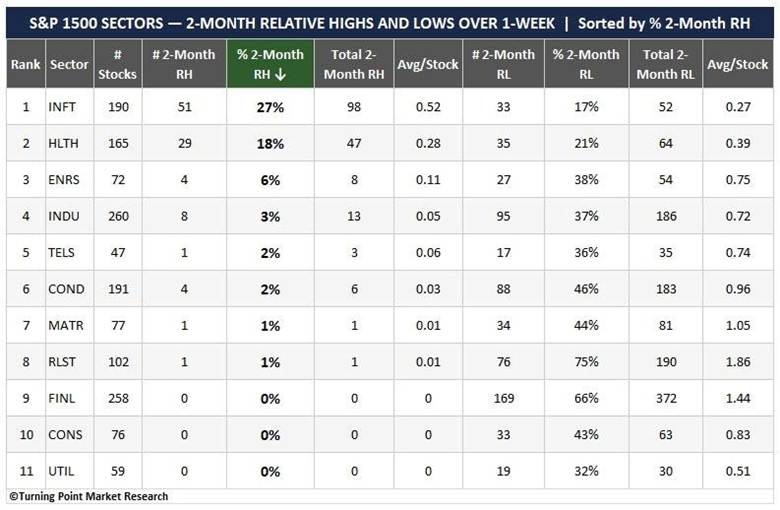
Technology and health care dominated the top 10 sub-industries based on the percentage of stocks reaching two-month relative highs, with tech accounting for seven of the top 10.
Semiconductors led all groups in total relative breakouts.
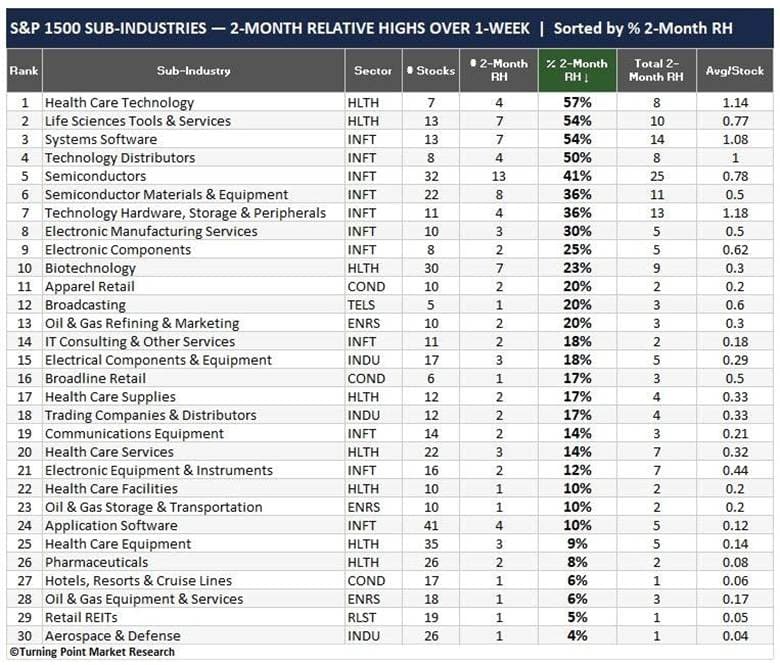
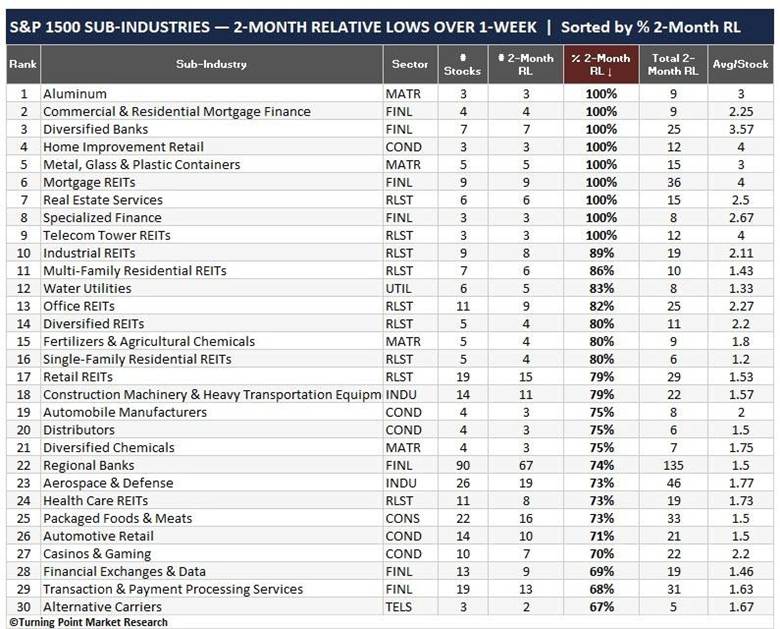
Two-month relative lows continued to pile up in rate-sensitive areas. Real estate led the way, with 79% to 100% of stocks across its sub-industries registering relative lows. Financials also remained under pressure, with every stock in four sub-industries posting a relative breakdown.
The top 50 stocks in the S&P 1500 rankings remain dominated by Technology and Health Care, which account for 40 of the top 50 names.
Solaris Energy Infrastructure posted the biggest weekly jump, climbing 273 spots. While its GICS classification remains Oil & Gas Equipment & Services, the business is increasingly becoming a power-infrastructure play tied to the AI and data-center buildout, with a smaller oilfield-logistics operation still in place.
Technology led all sectors in week-over-week ranking gains. More notable, though, was the improvement in consumer discretionary, led by cruise lines, which likely benefited from the recent pullback in oil prices. Lower fuel costs also boosted several transportation companies in industrials.
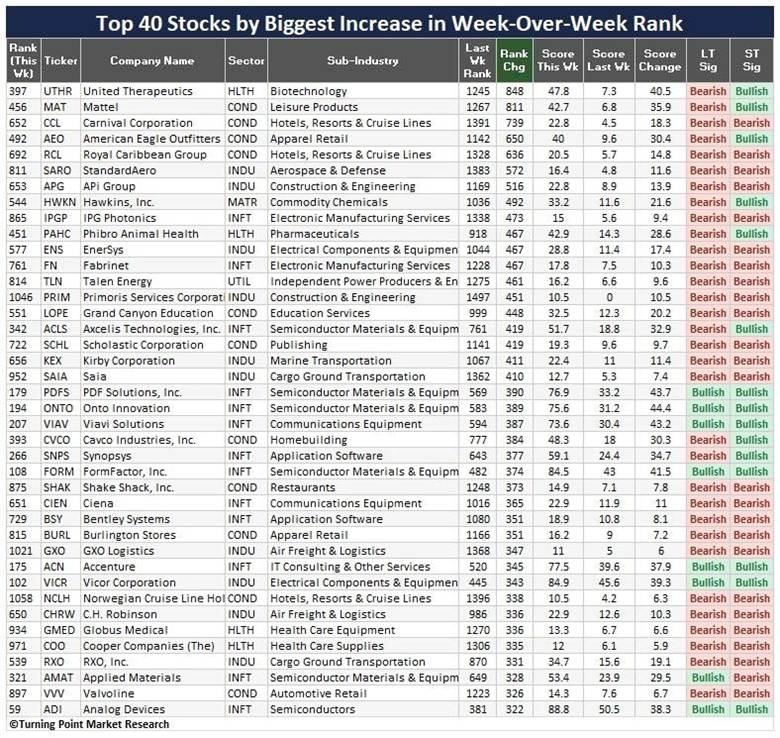
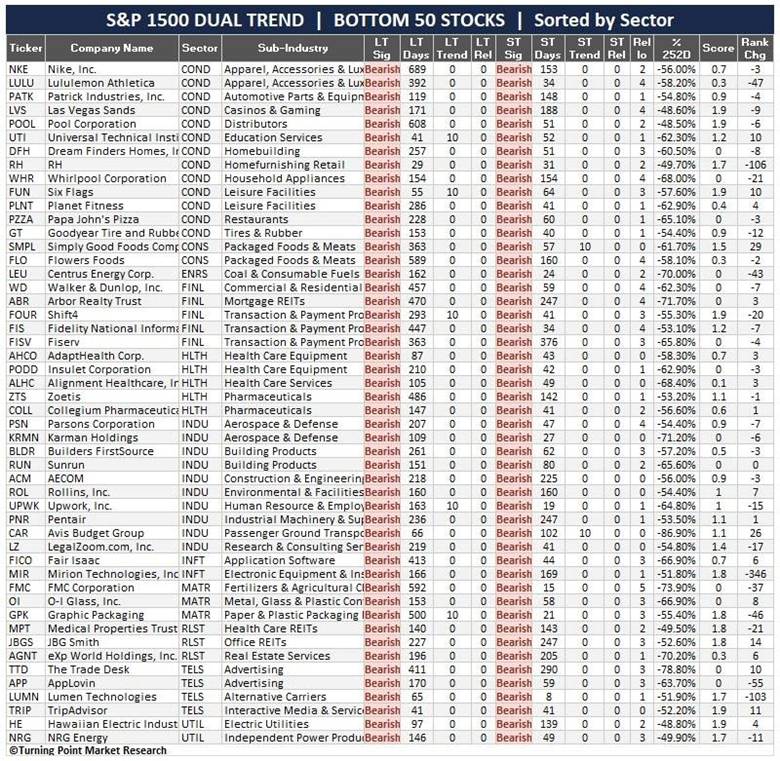
Consumer discretionary and industrials continue to account for most of the names in the bottom 50 stocks. Digging a little deeper, though, the sub-industry data doesn’t reveal an obvious common thread.
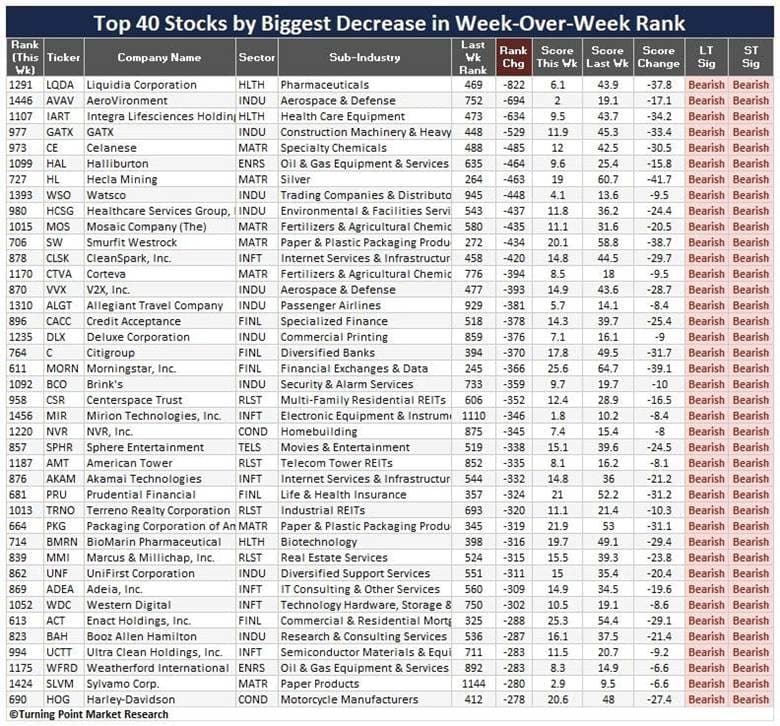
Among the stocks with the biggest week-over-week deterioration in rankings, industrials had the largest representation, followed by materials.
Another TCTM warning
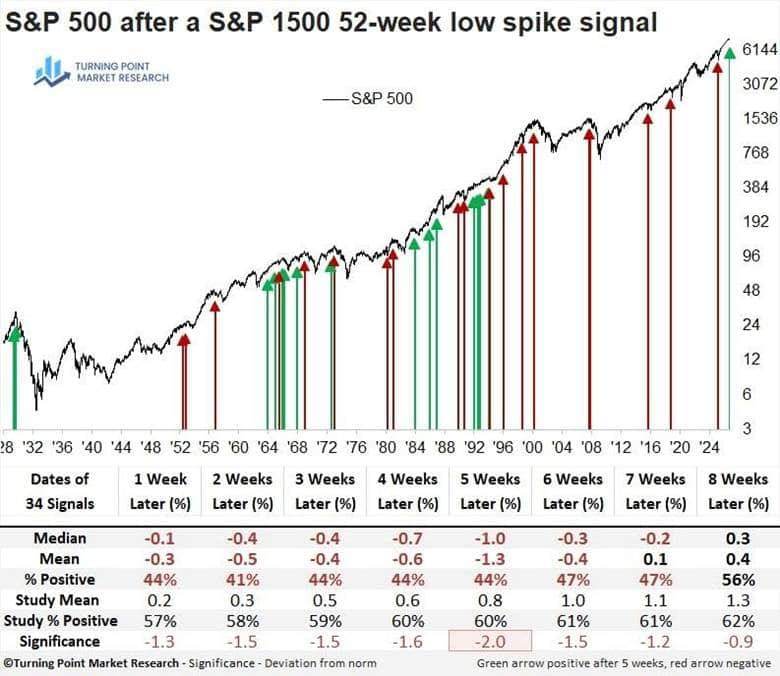
The 52-week low spike model for S&P 1500 stocks triggered a signal last week, indicating that stocks across all market-cap segments are breaking down on an annual basis even as the S&P 500 remains near a high.
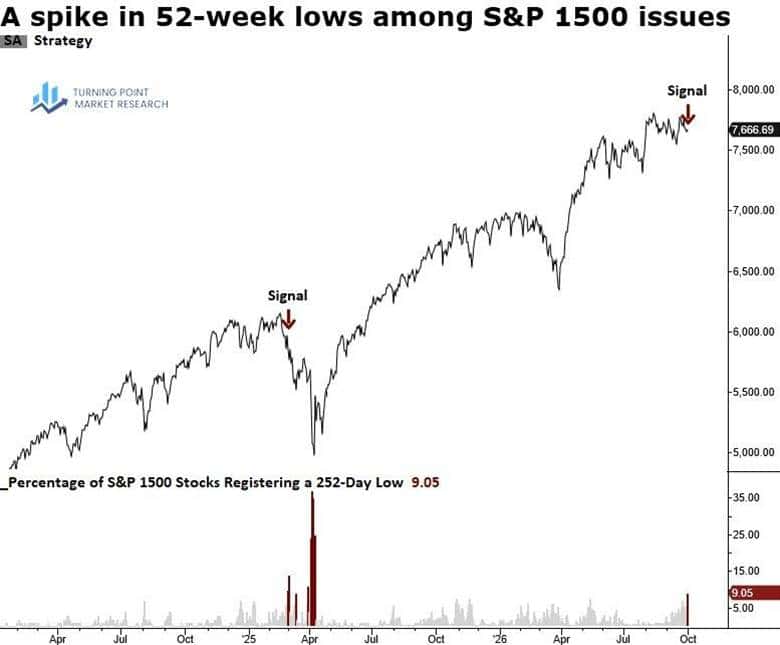
Over the next eight weeks, the S&P 500 posted weak returns and unfavorable win rates, with several signals coinciding with major market peaks.
Three of the four models that monitor 52-week lows have issued warnings, pointing to broad downside participation. As noted previously, the silver lining is that financials have not yet triggered an alert, which has historically occurred around significant market peaks.
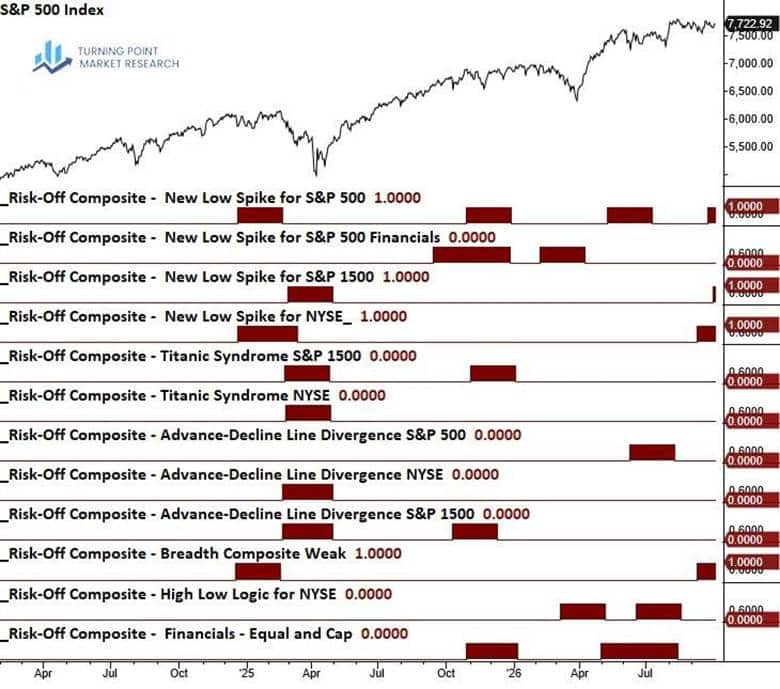
The TCTM Risk-Off Composite signal count increased to 33.33%, putting it one alert shy of a broad model warning. It’s worth noting that the composite reached this same level in June, after which the S&P 500 traded sideways for six weeks before breaking out to a new high.
What the research tells us…
Technology returned to the top of the S&P 1500 rankings, with improvement across several sub-industries, most notably semiconductors and semiconductor equipment. Industrials also climbed two spots, helped by fuel-sensitive industries such as cruise lines and improving conditions in several areas tied to the data-center buildout. Utilities, meanwhile, appear to be stabilizing after reaching one of their most severe oversold conditions on record. A decline in interest rates could catalyze a mean-reversion bounce. The bigger picture remains one of narrow leadership, but last week’s stabilization in several market segments is a step in the right direction. For now, however, four active TCTM Risk-Off components argue for maintaining a slightly higher cash position as a portfolio hedge.
SP1500_DT_Assessment_2026-10-02