Key points:
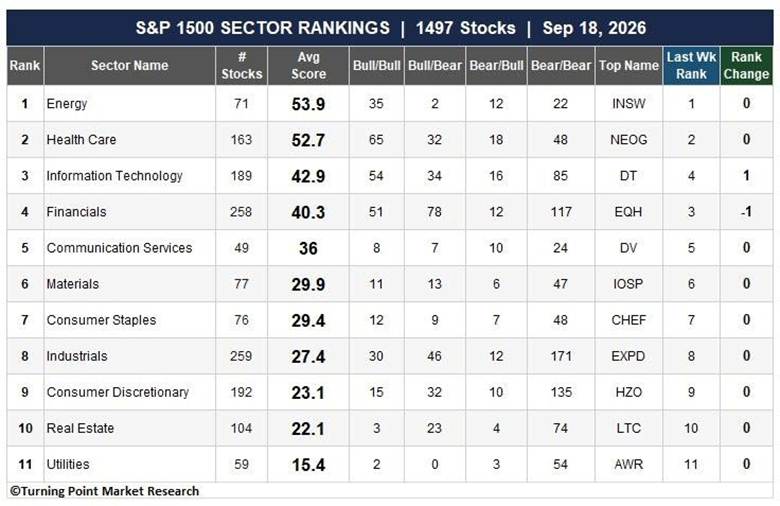
- The energy sector retained the top spot in the latest S&P 1500 rankings
- Technology jumped to number 3 in the standings, overtaking financials
- Financials had the second-largest number of total 2-month relative lows
Setting the stage for a technology-driven year-end rally
Sector leadership was largely unchanged last week, with energy maintaining the top spot.
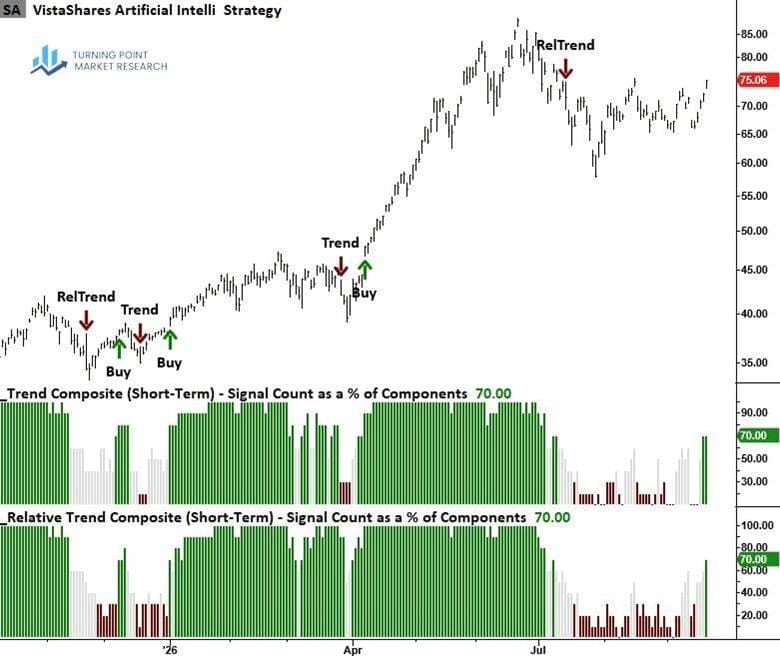
Technology was the more interesting story. AI stocks were slammed on Monday, September 14, after comments from AI leaders rattled the group. Instead of continuing lower, however, they bottomed that day. By Friday’s close, the VistaShares Artificial Intelligence ETF (AIS), a proxy for the group, had gained 9% and recovered above its pre-gap-down close.
That kind of price action is hard to ignore: one of the most bullish things a market can do is rally on negative news.
Aside from technology, the overall backdrop continues to deteriorate. For the fourth consecutive week, the percentage of stocks showing bullish short- and long-term Dual Trend signals declined, falling from 27% to 25%, then to 22%, and finally to 19%.
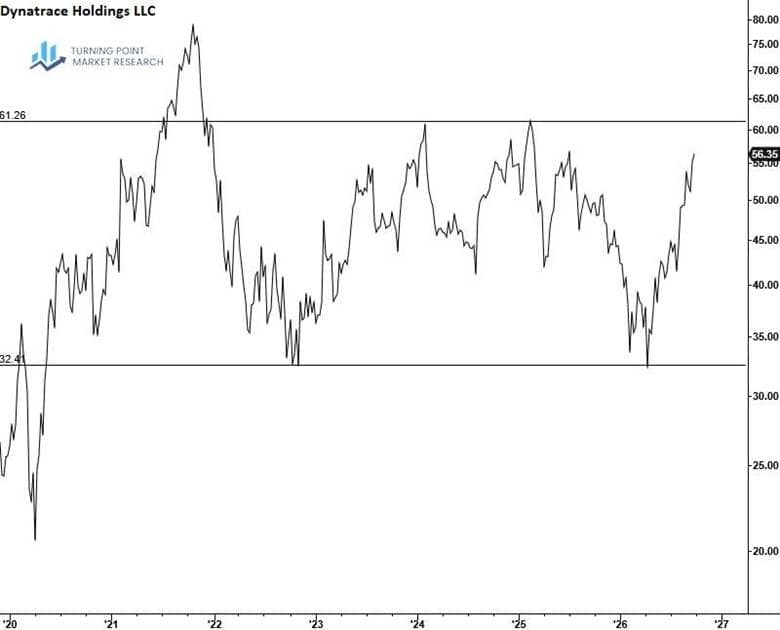
Dynatrace, the #1-ranked technology stock this week, stood out to me for a couple of reasons. First, the stock has spent several years in a broad consolidation, but this latest upswing has been exceptionally strong. Second, the company sits in an increasingly interesting part of the AI value chain. Dynatrace uses AI to monitor complex IT environments, diagnose problems, predict issues, and increasingly automate remediation and optimization through AI agents.
The first phase of the AI trade has been dominated by the “picks and shovels” providers supplying the infrastructure. The next phase could increasingly shift toward companies using AI to improve efficiency, productivity, and automation—and Dynatrace is positioned directly in that trend.
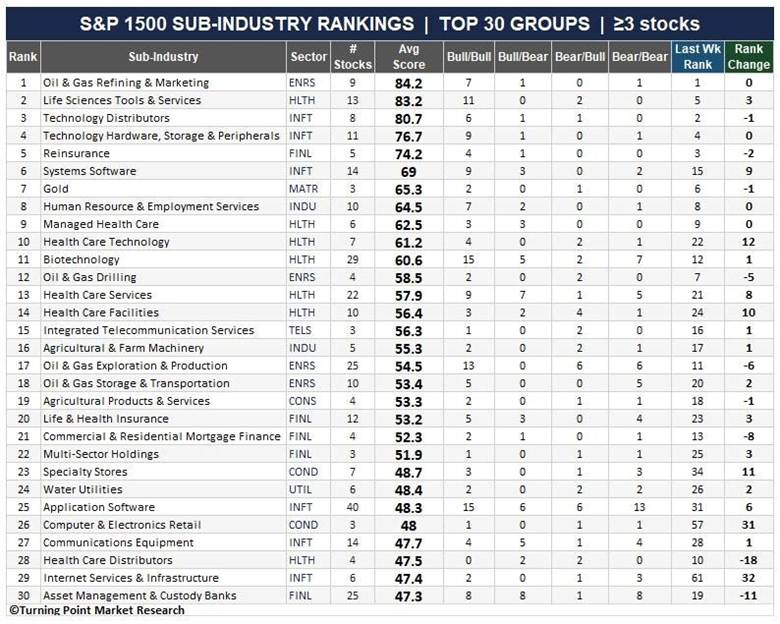
Health Care showed the broadest improvement among the top 30 ranked sub-industries, with five groups moving higher over the last week. Health Care Technology posted the biggest gain, jumping 12 spots. Technology also improved broadly, with four groups advancing, led by Internet Services and Infrastructure.
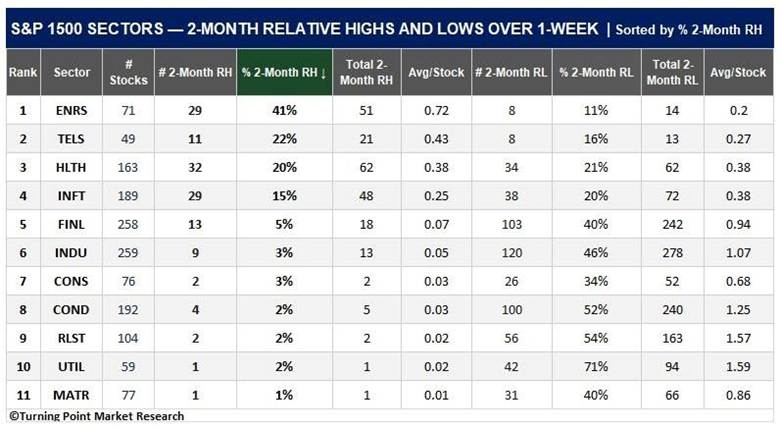
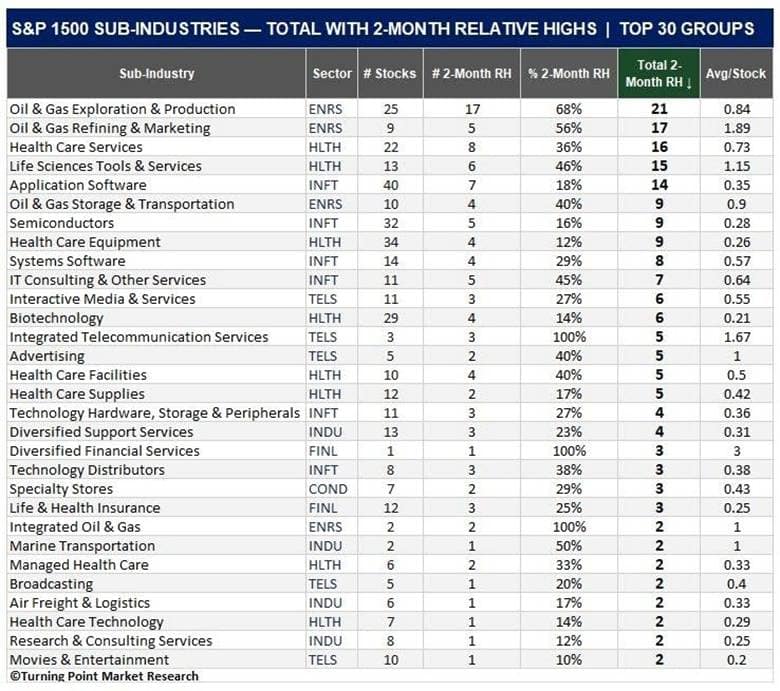
The energy sector once again led all sectors in two-month relative highs, with 41% of its constituents breaking out over the past week. Looking at total relative highs, however, health care led, followed by energy and technology. Relative lows remained concentrated in industrials, financials, and consumer discretionary, continuing a trend that has persisted for several weeks.
Energy, health care, and technology produced the largest proportion of total two-month relative highs across sub-industries. Notably, oil and gas exploration and production moved ahead of refining and marketing, which had been the dominant energy group among relative breakouts for some time.
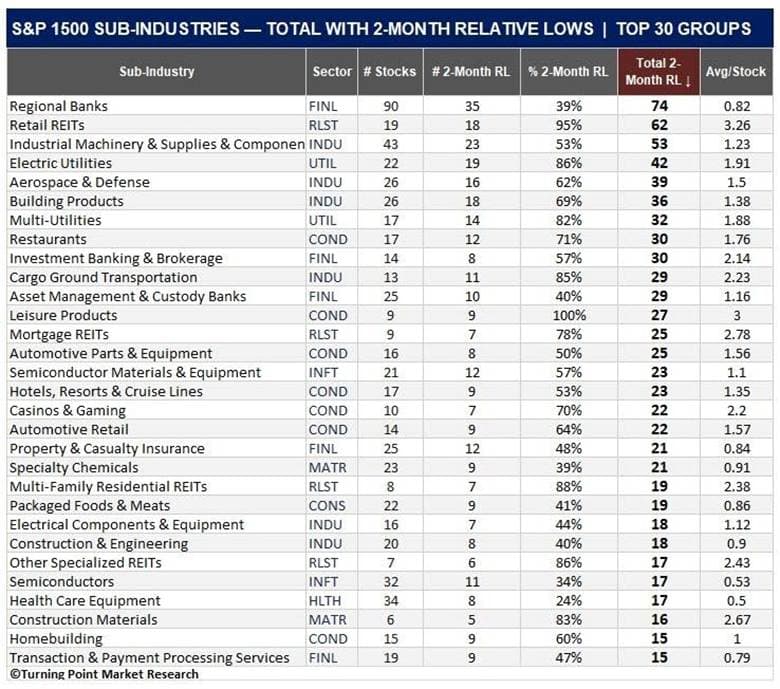
Old-economy cyclical industries continue to dominate the relative-lows list. Two financial groups that entered the top 30 this past week caught my attention: Investment Banking & Brokerage and Asset Management & Custody Banks. Investment Banking & Brokerage is particularly notable, likely reflecting recent comments from Bank of America’s CEO that investment banking revenue was expected to decline year over year, while trading revenue was projected to be flat from the previous quarter.
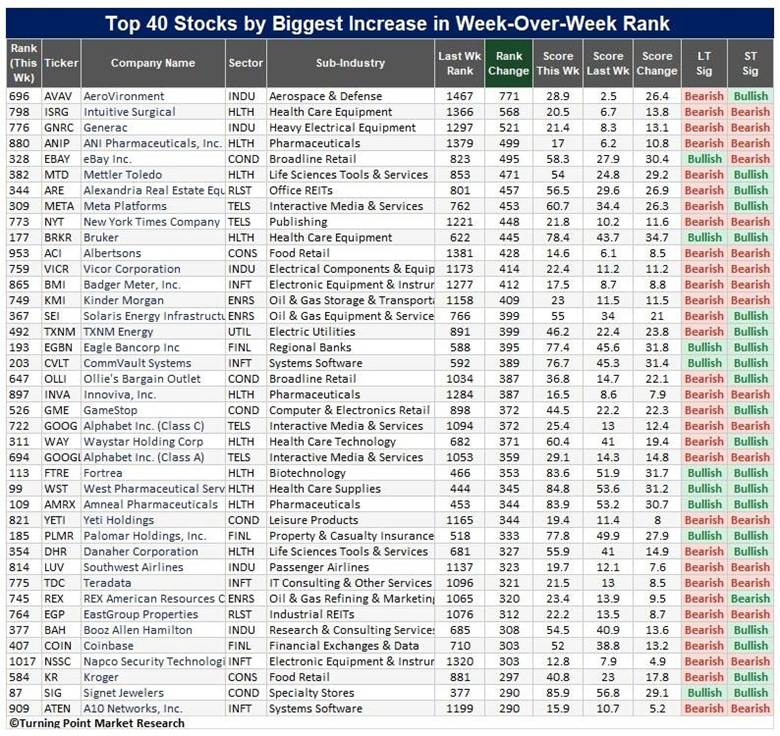
Among the top 50 stocks in the S&P 1500, health care had the largest proportion of stocks improving their rankings week over week, led by life sciences companies. Within technology, systems software led the gains, with Fortinet standing out. The stock has been consolidating in a tight range for several months and appears poised for an upside breakout.

Two names stand out among the largest week-over-week ranking gainers across the S&P 1500: Meta Platforms (META) and Alphabet (GOOG). Of the two, Meta looks more compelling, having recently shifted to a bullish ST DT signal and gaining significantly today on strong usage data from its Muse agent.
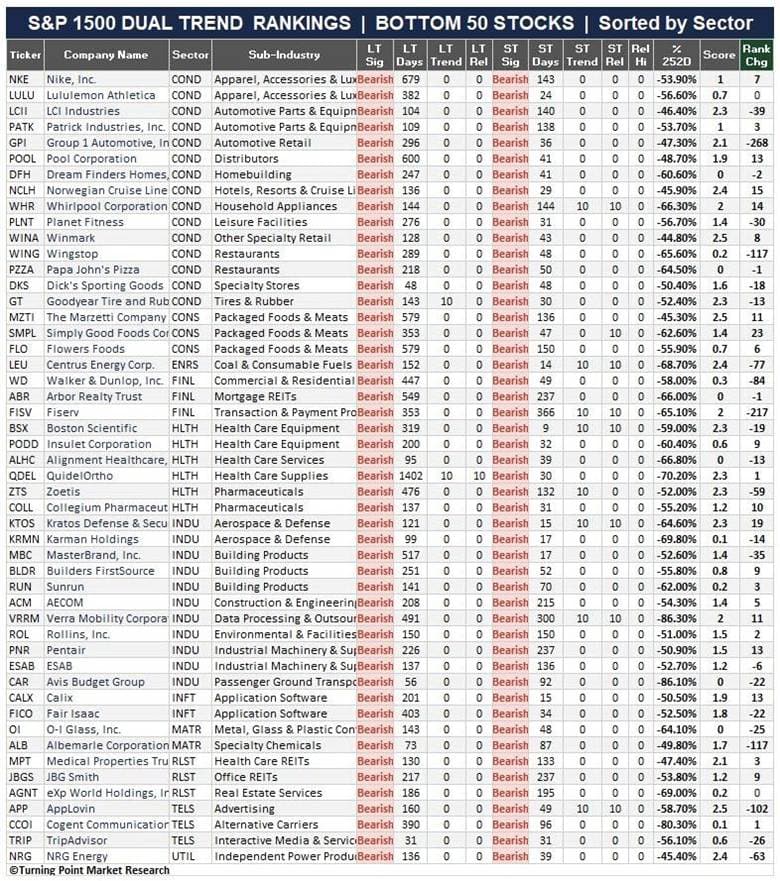
Consumer discretionary and industrial stocks continue to account for the largest share of names ranked in the bottom 50 of the S&P 1500. Group 1 Automotive (GPI) posted the largest weekly decline, falling 268 spots and providing further evidence of deterioration in a cyclical business tied to a major consumer purchase—automobiles.
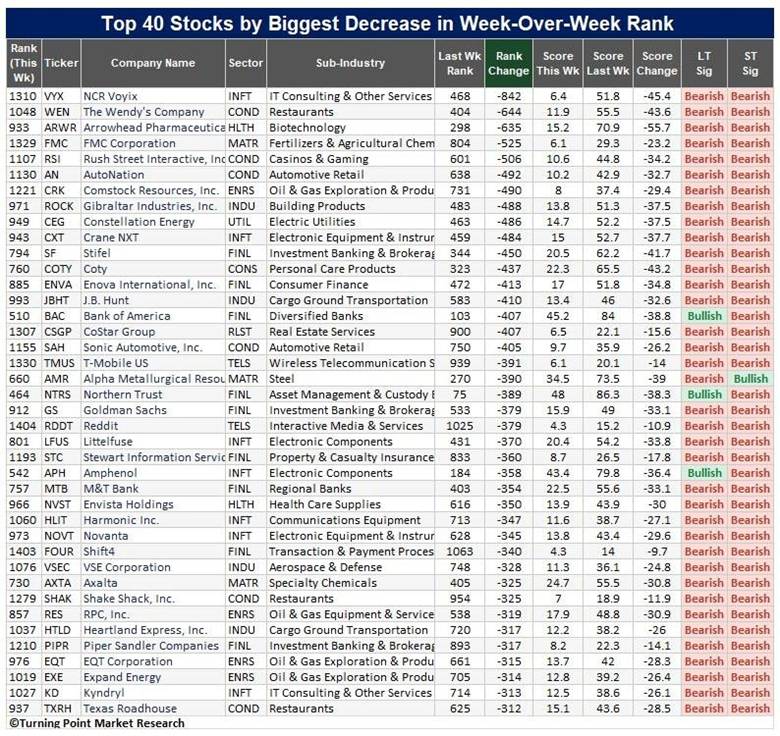
Among the 40 stocks with the largest week-over-week ranking declines, financials once again accounted for the largest share, with Bank of America, SIFEL, Goldman Sachs, and Piper Sandler seeing significant declines. This is a group worth monitoring closely going forward, particularly if more comments emerge similar to those from Bank of America’s CEO. More broadly, a deteriorating capital markets environment would be unfavorable for the overall market.
AI trade shows signs of reacceleration
The VistaShares Artificial Intelligence ETF (AIS) looks poised to shift to a bullish ST DT status on the close today.
What the research tells us…
What a difference a week makes. Last Monday, the AI trade looked increasingly vulnerable after comments from several AI labs raised concerns about the pace of future development. One week later, AI stocks have ripped higher, reversing much of that concern in the price action and helping lift the broader technology sector. Software is also showing strength, which is particularly encouraging. If AI picks-and-shovels stocks and software can maintain their bullish alignment, technology could once again emerge as the market leader, especially if elevated rates and oil prices continue to pressure old-economy stocks. While seasonality and other factors still argue for caution, a technology-led advance could carry the cap-weighted S&P 500 higher.