Key points:
- The Nasdaq 100 and Nasdaq Composite closed at new record highs
- Similar breakouts following a consolidation suggest the uptrends are resuming
- Several tech and growth ETFs shifted to bullish dual-trend conditions
Is the resurgence in growth-oriented indexes sending a message?
Technology indexes have surged over the last four sessions, with the Nasdaq 100 and Nasdaq Composite both reaching new record highs and establishing a bullish sequence of higher highs and higher lows.
Despite these bullish patterns, a key question remains: Did the three-month consolidations do enough to reset overbought conditions and provide a foundation for a sustained advance, or are we simply seeing a replay of late July and early August, when a similar growth-led surge ultimately stalled?
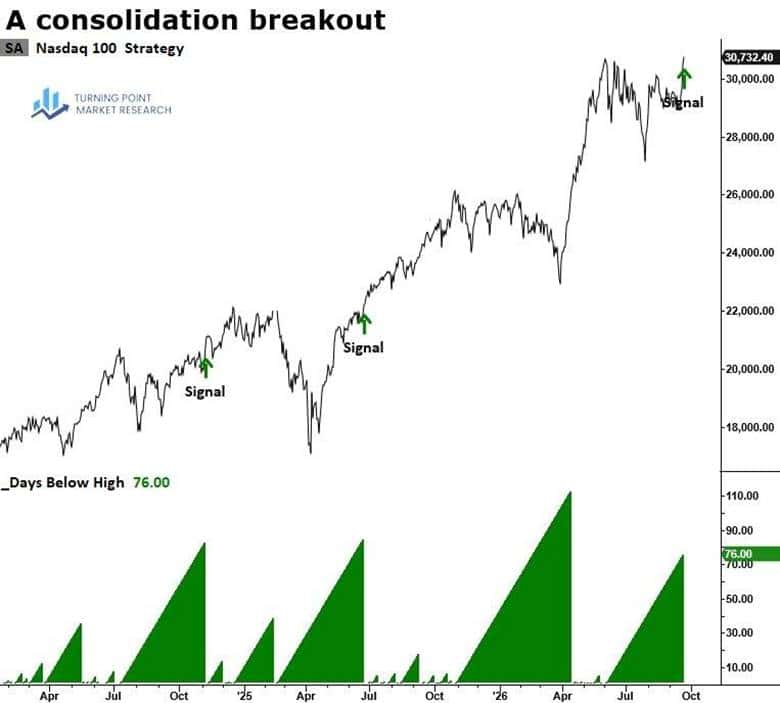
Outstanding results
Record highs in the Nasdaq 100 following medium-term consolidations have produced consistently bullish outcomes, with the index advancing 100% of the time over the subsequent five weeks.
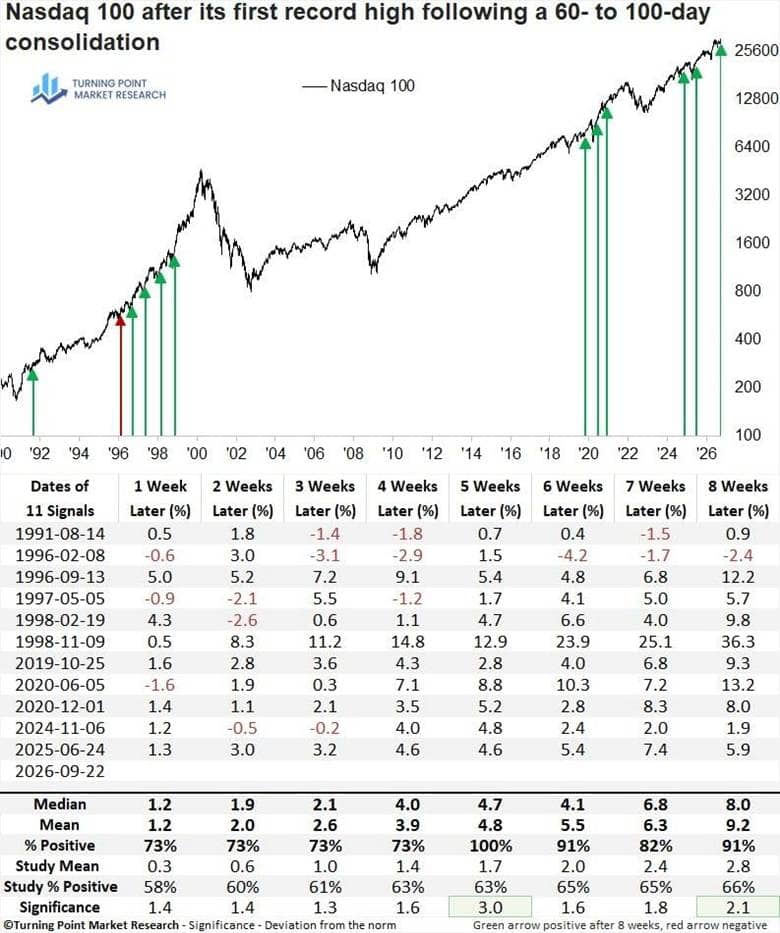
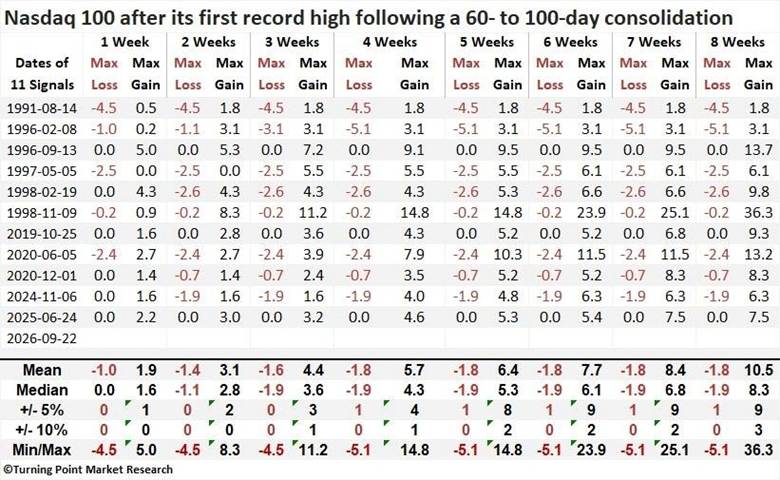
Over the following eight weeks, the Nasdaq 100 saw only one maximum loss of 5% or greater, compared with nine gains of at least 5%, while avoiding a 10% maximum loss altogether—evidence of a bullish risk/reward skew.
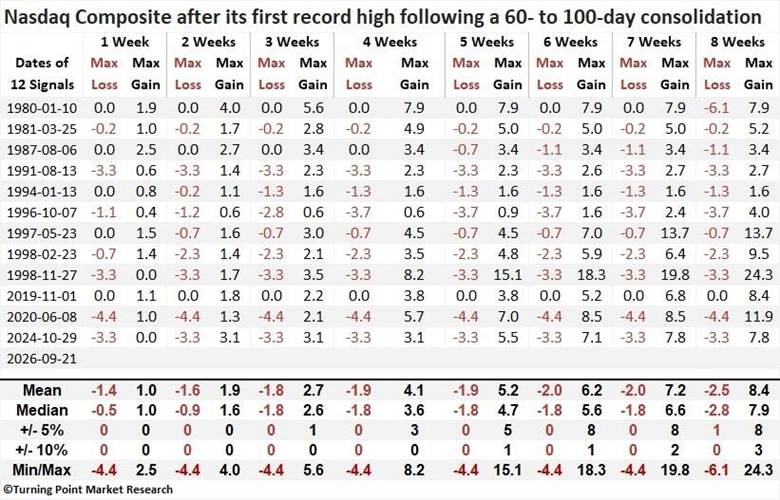
The Nasdaq Composite, which has a longer history, also closed at a new record high following a medium-term consolidation. Like the Nasdaq 100, its historical performance following multi-month consolidation breakouts to record highs has been outstanding.
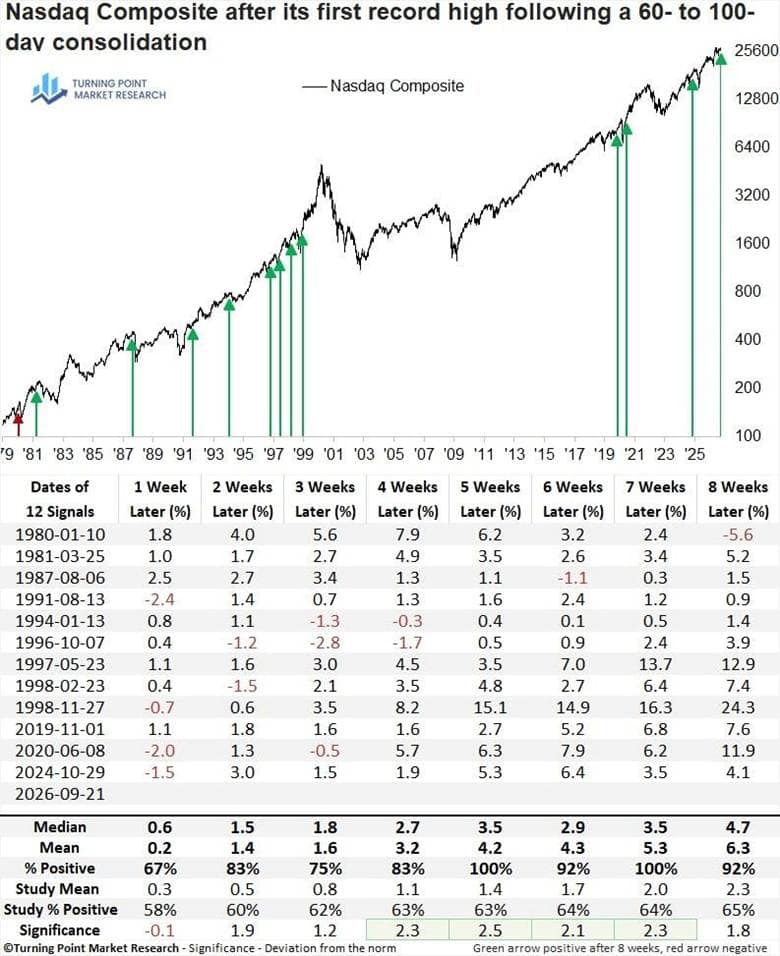
The risk/reward profile was favorable, as maximum gains of 5% and 10% significantly outpaced losses of comparable magnitude over the next eight weeks.
Bullish, but with an important caveat
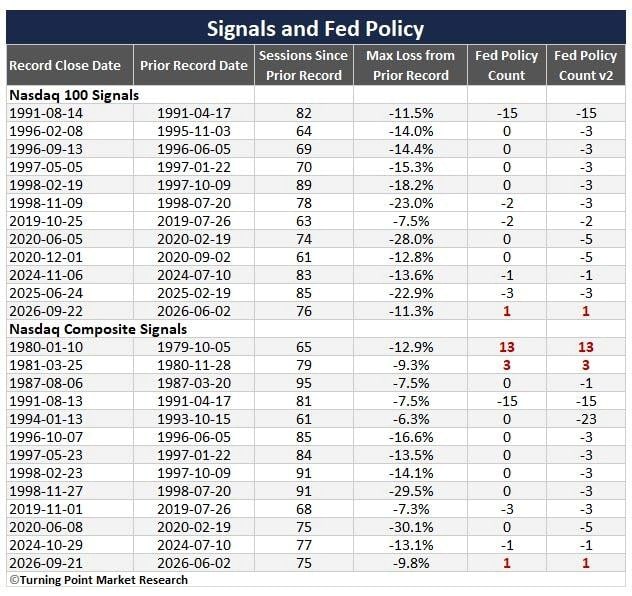
Given that the Federal Reserve increased its target rate last week, I wanted to examine how these signals have aligned with Fed policy. Until now, every Nasdaq 100 signal occurred within an easing cycle or a pause following an easing cycle, while all but two Nasdaq Composite signals occurred under the same conditions. The two exceptions for the Nasdaq Composite occurred in 1980 and 1981. While the index rallied over the following seven weeks in both instances, each eventually experienced significant drawdowns.
So while these signals lean bullish, the current setup comes with a different Fed backdrop. However, it’s also important to recognize that today’s environment also includes a massive technology capital-expenditure cycle.
Tech/Growth groups shift bullish
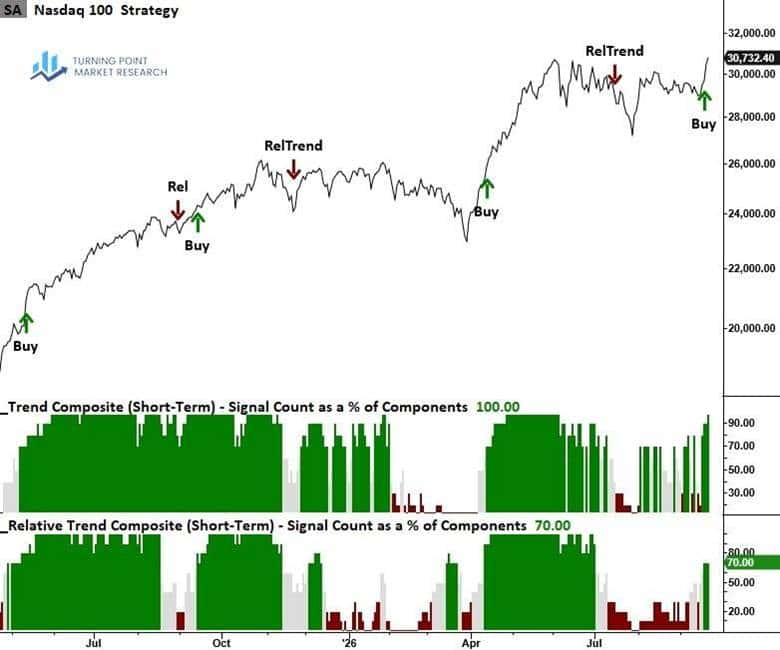
Several technology-oriented ETFs, including the Nasdaq 100, have shifted back to a bullish short-term Dual Trend status in recent sessions, suggesting that growth is once again moving into a leadership position.
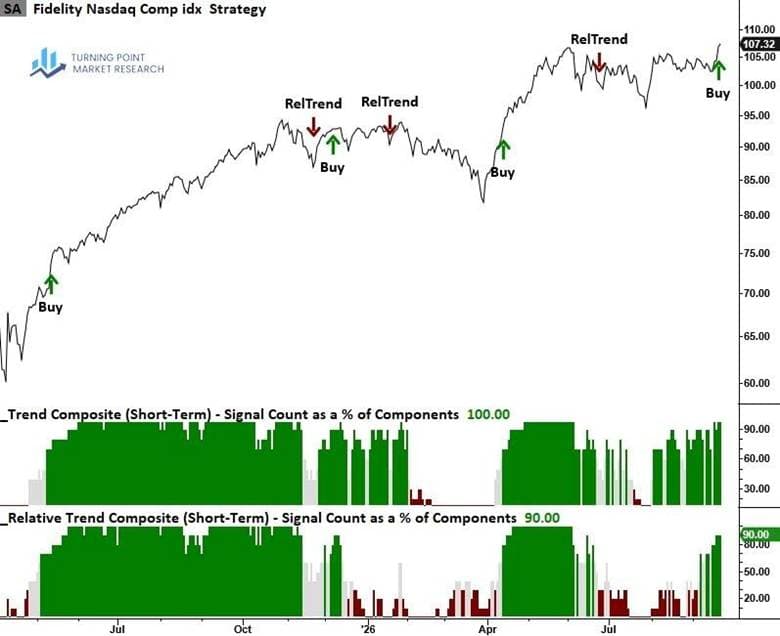
The Nasdaq Composite, which represents a significantly broader basket of technology-oriented stocks, shifted to a bullish status one day ahead of the Nasdaq 100.
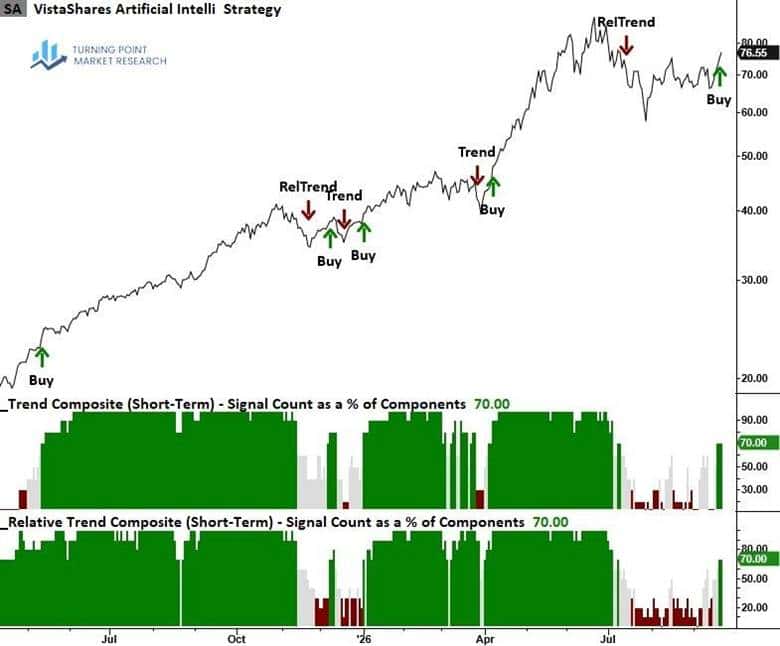
As Monday’s S&P 1500 rankings report highlighted, the VistaShares Artificial Intelligence ETF was on the verge of flipping bullish. The signal arrived at the close of trading, prompting an allocation to the Dual Trend portfolio.
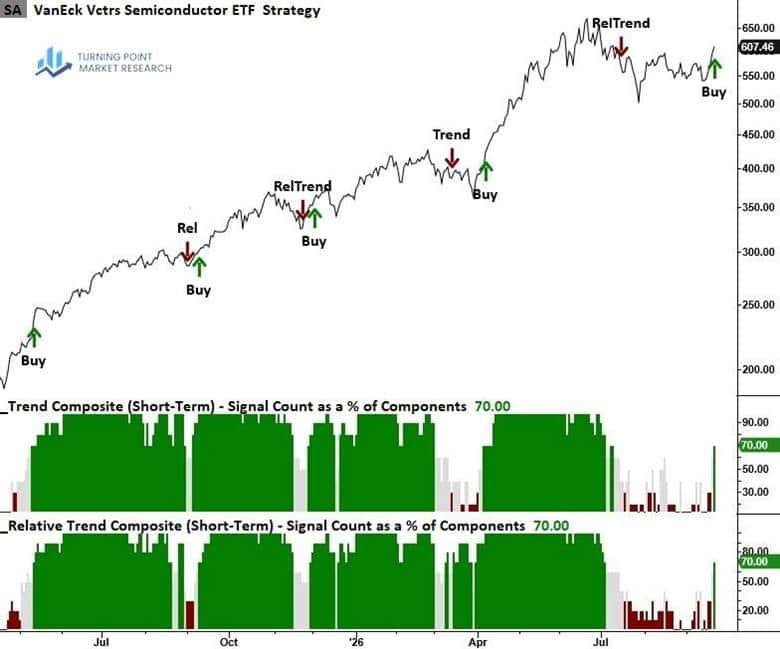
On Tuesday, the VanEck Semiconductor ETF (SMH) turned bullish on a short-term basis, aligning its short-term and long-term models. SMH’s weighting is more skewed toward the top holdings, with NVDA accounting for about 19% of the fund. The more diversified SOXX has yet to flip bullish, providing a somewhat different read on the broader semiconductor group.
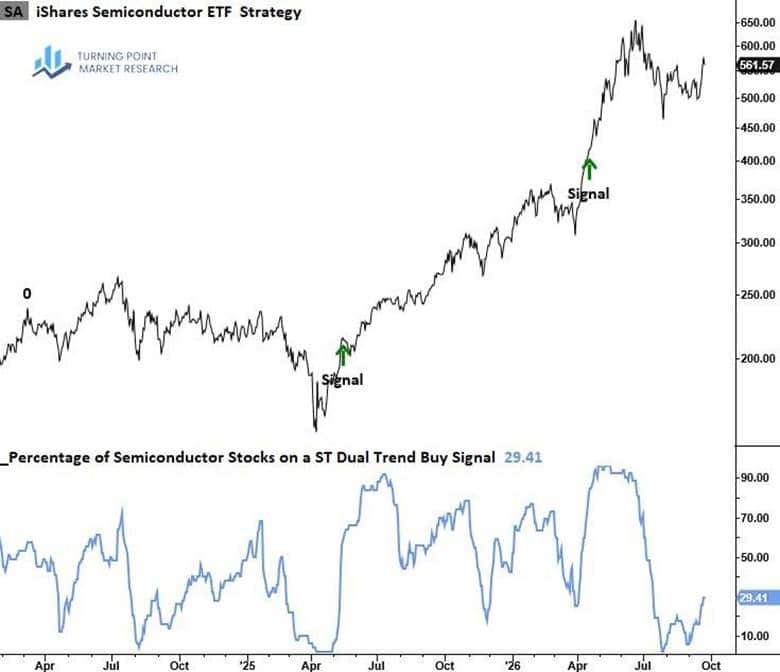
The percentage of semiconductor stocks with a short-term Dual Trend buy signal has risen, but the improvement has been modest, suggesting a more selective environment within the group. That selectivity is evident in SMH triggering a bullish signal while SOXX has yet to follow.
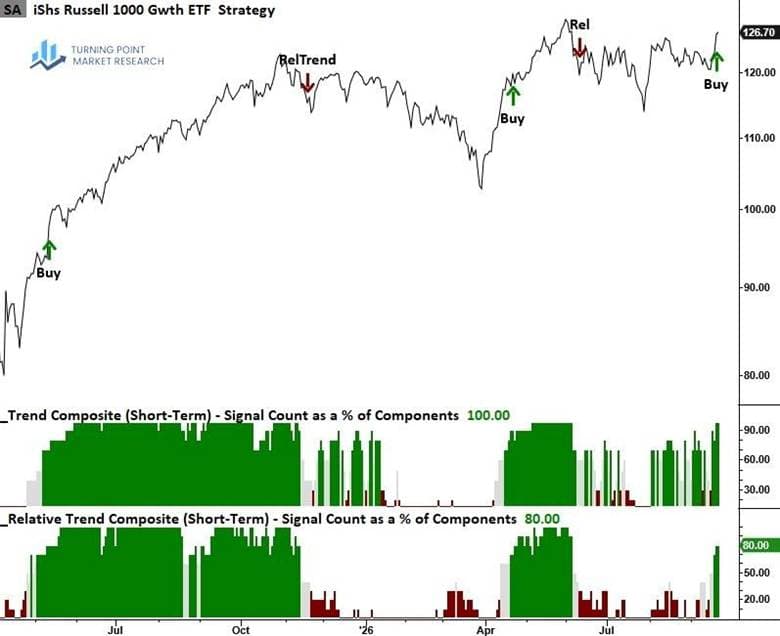
Strength across technology stocks has helped push the Russell 1000 Growth ETF into a bullish Dual Trend signal.
What the research tells us…
Historically, breakouts to new record highs following medium-term consolidations have been powerful signals for both the Nasdaq 100 and Nasdaq Composite, with both indexes advancing 100% of the time five weeks later. However, this time around, there is an important distinction. These signals have typically occurred during dovish Fed policy regimes, while the latest breakout comes shortly after the Fed raised rates for the first time since 2023. That difference warrants a more measured interpretation of the historical results. Moreover, the renewed strength in growth-oriented groups may reflect expectations that tighter monetary policy will eventually weigh on economic growth, making companies with stronger secular growth characteristics relatively more attractive. In that environment, technology is likely to remain a leadership group. Still, even tech is vulnerable to rising interest rates, as today’s weakness amid a new cycle high in the 10-year Treasury yield illustrates.