Key points:
- A bottom-up ranking of S&P 1500 stocks finds health care leading
- Energy improved again, climbing from 5th to 2nd over the last week
- Technology and industrials showed notable deterioration in trends
Market leadership continues to shift
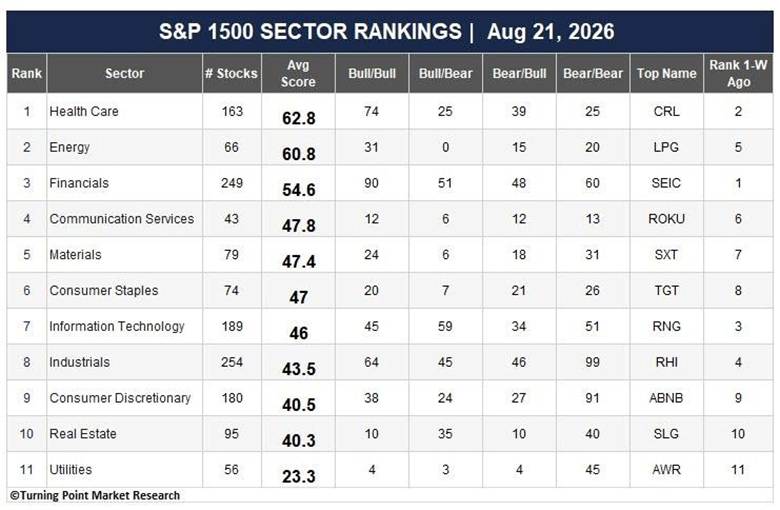
As the final days of summer approach, the price action in the world’s most benchmarked index has quieted down. Under the surface, however, the picture is far more dynamic. Leadership is shifting—and shifting quickly. Technology, particularly AI beneficiaries, has stalled following its rebound, sending the sector tumbling from third to seventh in the S&P 1500 bottom-up rankings over the past week. Industrials have also lost momentum, with weakness in data-center-related groups and transportation stocks, compounded by rising oil prices, pushing the sector from fourth to eighth.
Meanwhile, health care and energy continue to stand out.
In fact, health care moved into the top spot this week, overtaking financials. At the same time, energy recorded the largest week-over-week move in the rankings for the second consecutive week, jumping from fifth to second as its underlying trends and relative strength continued to firm.
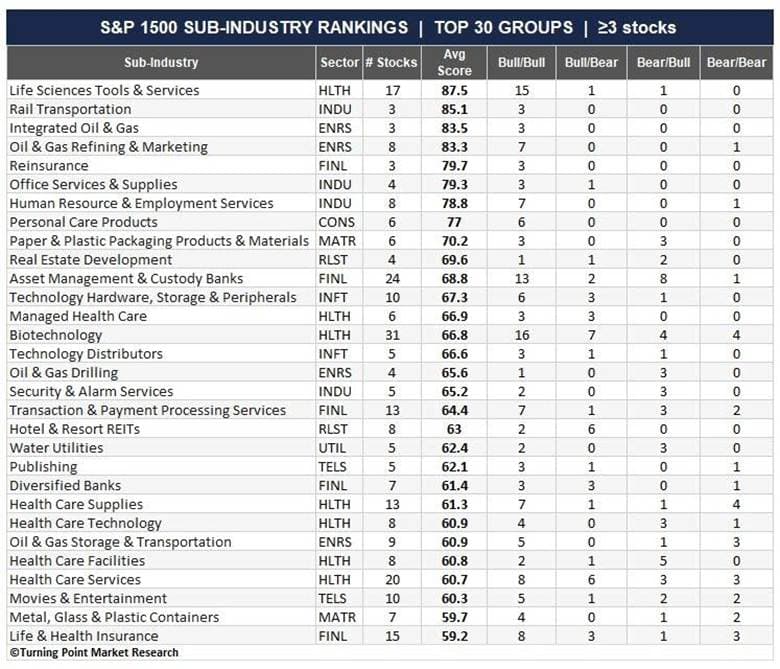
For the second week in a row, life sciences tools & services held the top spot among sub-industries, with 15 of its 17 stocks maintaining bullish short- and long-term Dual Trend buy signals—a remarkable level of consistency.
Integrated oil & gas moved into the top spot among energy groups, overtaking oil & gas refining & marketing, which had held the position for some time. Overall, health care continues to dominate the top 30 sub-industries, underscoring the sector’s broad-based strength.
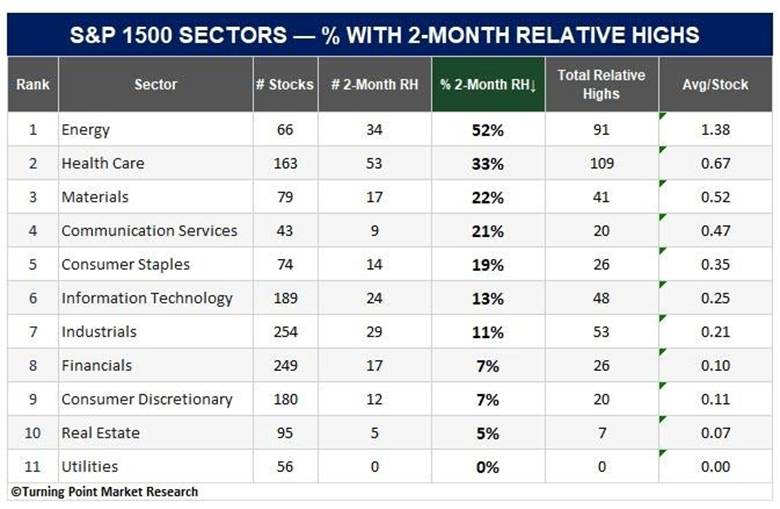
Health care had the most stocks hitting two-month relative highs, but energy led on a percentage basis, with 52% of its members reaching a multi-month relative high. Materials also showed notable strength, ranking third in relative breakouts as precious and industrial metals stocks surged last week.
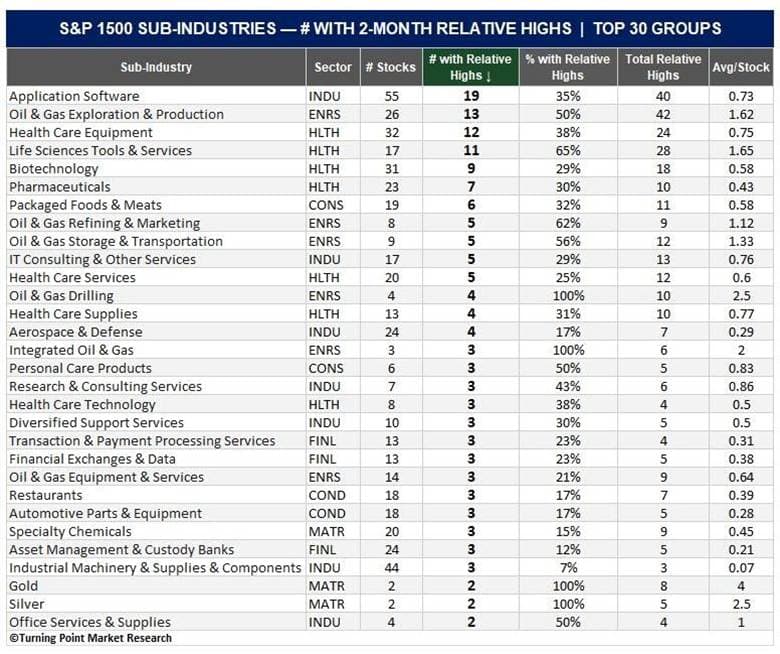
Four of the six sub-industries with the highest number of 2-month relative highs came from health care, reflecting the sector’s broad-based strength. Interestingly, oil and gas exploration & production led all energy groups, with half of its constituents breaking out to a new relative high.
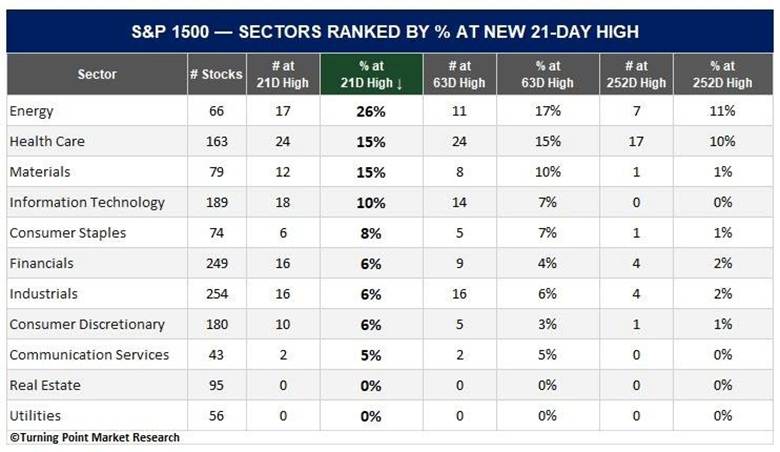
Energy once again led all sectors, with the highest percentage of stocks registering new 21-, 63-, and 252-day highs for the second straight week.
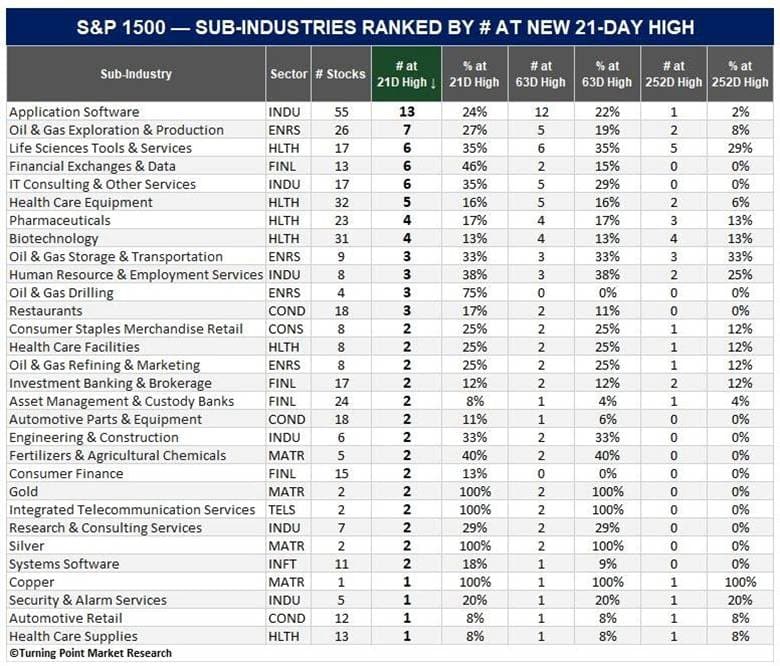
Among the sub-industry groups, financial exchanges and data caught my attention, with nearly half of its stocks breaking out to new 21-day highs last Friday. Robinhood and Coinbase stood out in particular, as both caught a bid amid the surge in cryptocurrencies. Adding to Robinhood’s appeal, the stock now carries bullish short- and long-term Dual Trend signals.
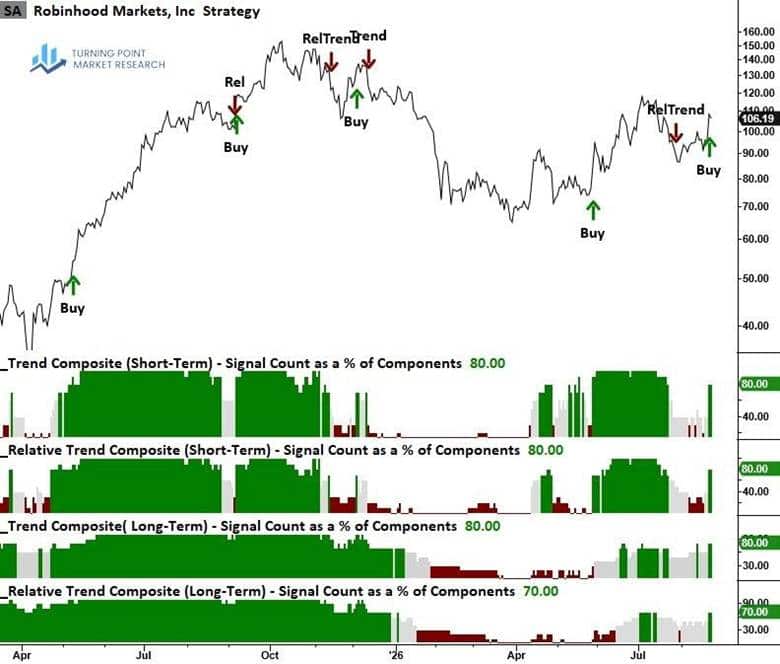
Robinhood is becoming increasingly interesting. With both short- and long-term Dual Trend signals bullish, a breakout above its July high could unleash another leg higher toward its 2025 high.
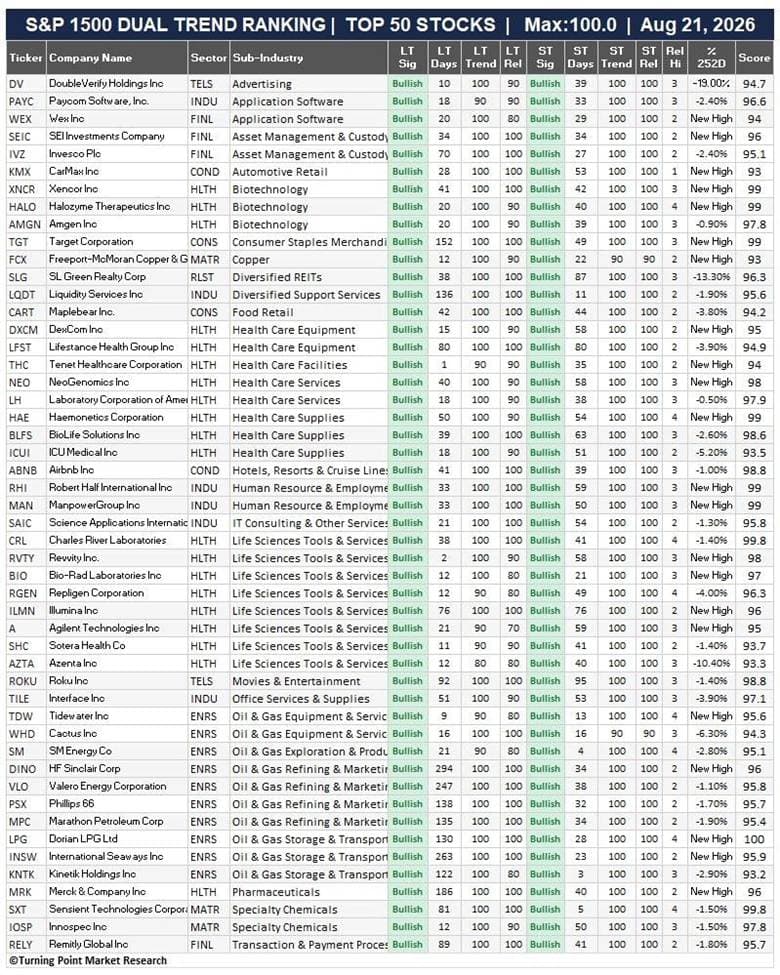
Health care and energy remain the standout sectors among the top 50 stocks in the S&P 1500 rankings. Airbnb (ABNB) is one of the more intriguing names on the list, breaking through resistance after its latest earnings report. Like several high-profile IPOs from the past 5–10 years that endured prolonged weakness after their public listing, Airbnb may finally be turning the corner.
Bullish follow-through
The following list highlights S&P 1500 stocks that have shifted to a bullish short-term status over the past 10 sessions and delivered the strongest relative performance versus the S&P 500. Energy stocks and precious metals miners have shown the strongest upside follow-through after their bullish shifts.
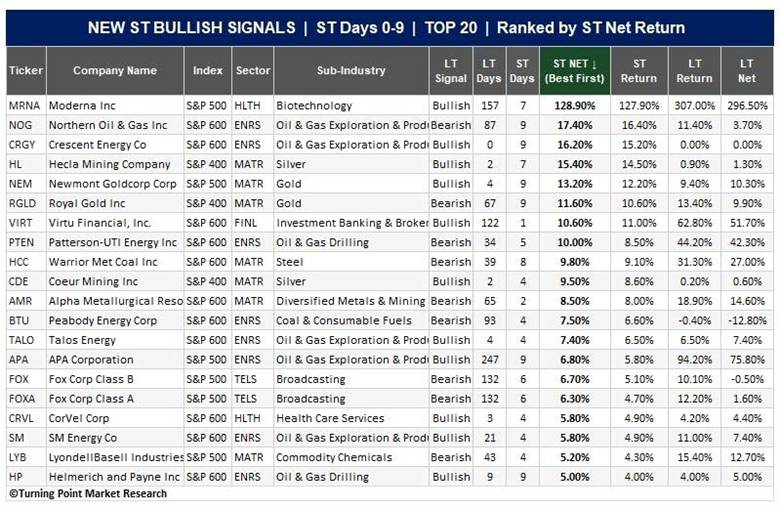
What the research tells us…
Sector leadership continues to favor health care, now the top group, and energy, which has shown the greatest improvement over the past few weeks. Financials remain near the top of the rankings, although they have slipped modestly. More importantly, the bounce in technology may have run its course, with the sector falling from third to seventh. In all likelihood, tech will remain a laggard until it either experiences a more meaningful downside reset or spends more time working off its excesses through a sideways consolidation. To some extent, pockets of industrials tied to AI data-center buildouts are suffering from the same hangover as technology and could languish for the time being. Given the significant runup in health care, energy, and metals of late (they likely consolidate) alongside a fading AI trade, it is difficult to envision the market making a runaway move to the upside from here. While some compelling idiosyncratic ideas catch my attention, for now, I’m inclined to do less rather than more when it comes to portfolio changes.