Key points:
- The energy sector claimed the top spot in the latest S&P 1500 rankings
- Technology held its #4 ranking, with some improvement among a few AI names
- The South Korea ETF (EWY), a play on memory, shifted to a bullish ST DT status
When energy leads, the market’s opportunity set tends to narrow
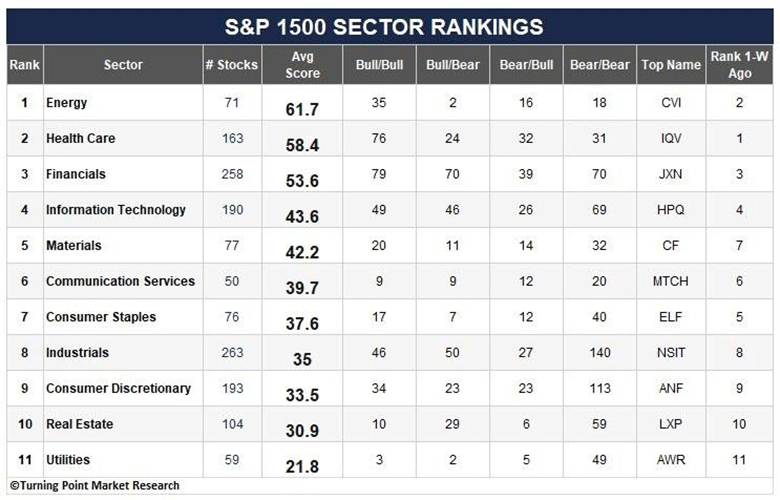
Energy emerged as the new leader in the S&P 1500 rankings this week, overtaking health care as higher oil prices continue to support the sector amid ongoing tensions with Iran. When Energy leads, as it does now, fuel-sensitive, consumer-oriented, and interest-rate-sensitive groups tend to lag, narrowing the overall opportunity set.
The Dual Trend rankings reflect that deterioration, with the percentage of stocks showing bullish short- and long-term signals continuing to dwindle, falling from 27% to 25% over the past week.
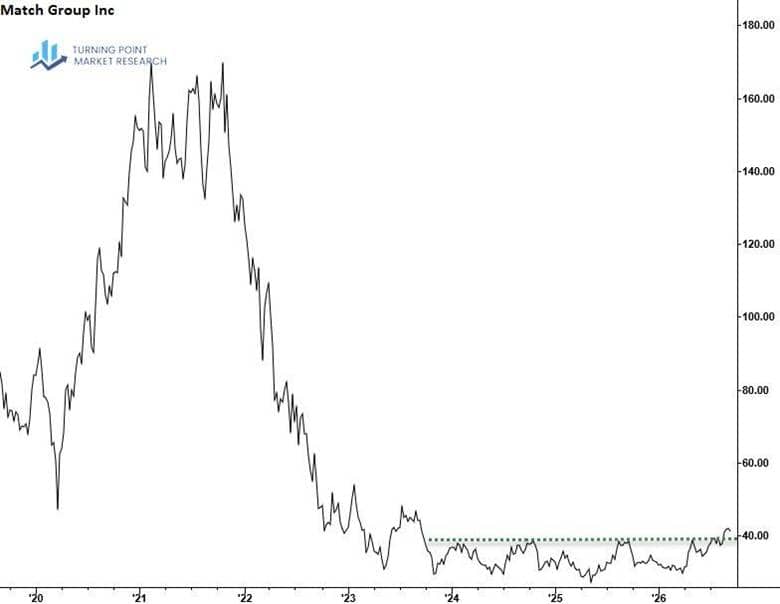
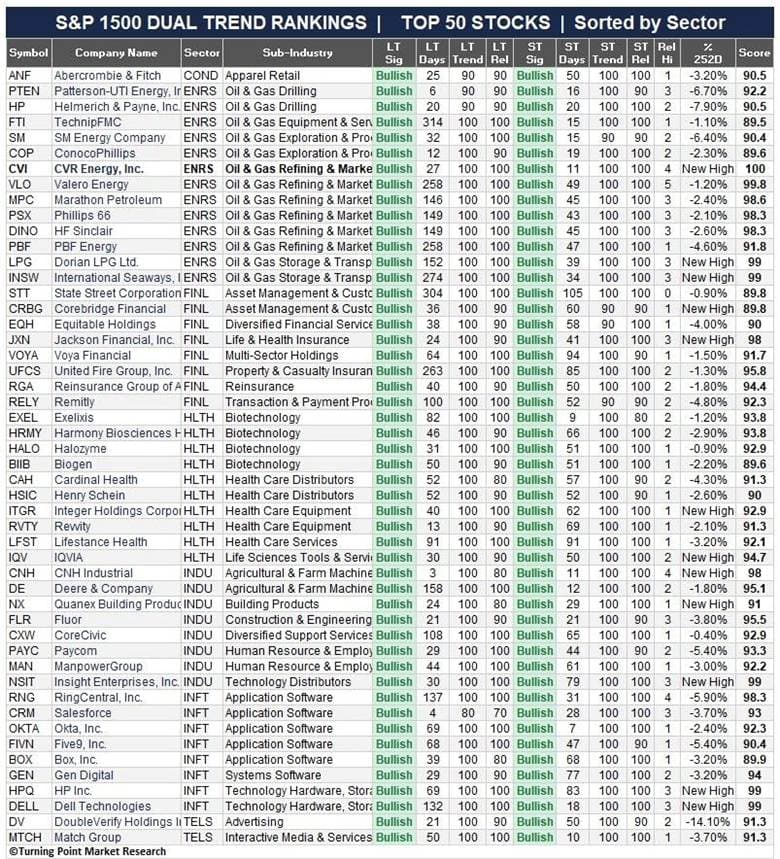
Match Group caught my eye when I scanned the charts of the top-ranked stocks in each sector. After an almost 85% collapse from its peak, the former growth favorite has spent the past several years building a base and recently broke out.
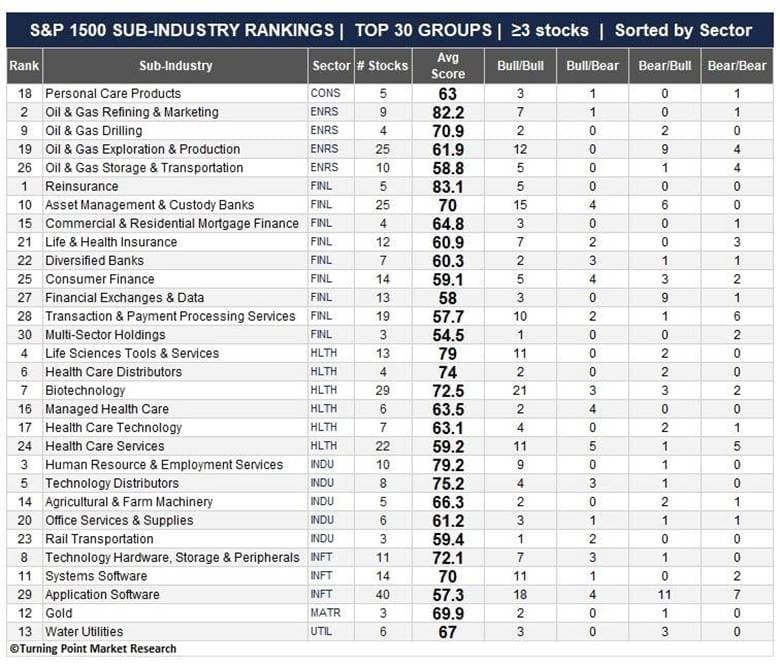
Oil & gas refining & marketing remains energy’s top-ranked group and rose to No. 2 overall among all sub-industries, just behind reinsurance, which surged from fifth to first over the past week.
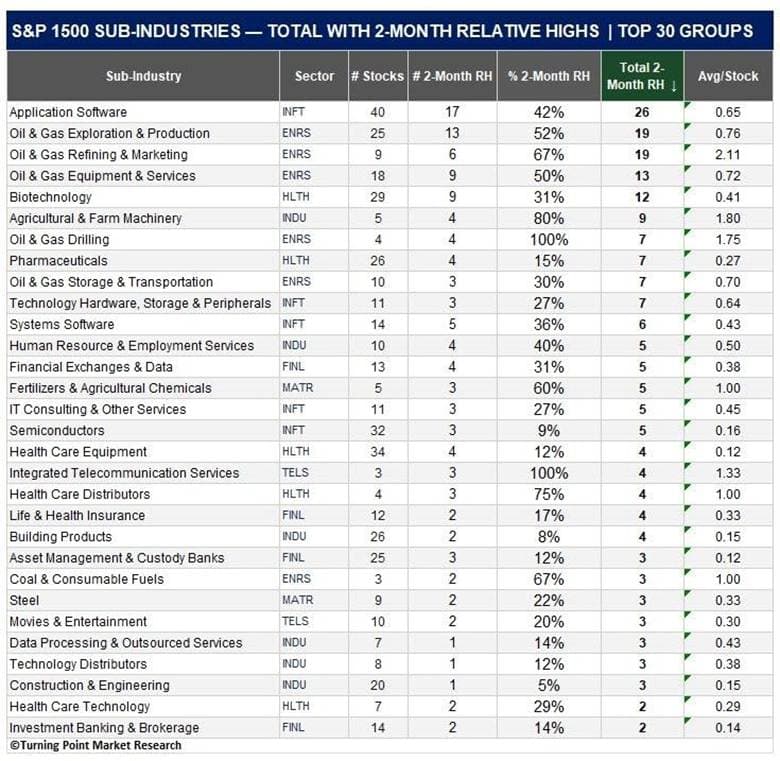
The energy sector posted the highest percentage of stocks at two-month relative highs over the past week, with more than half of its stocks breaking out—a figure well ahead of any other sector.
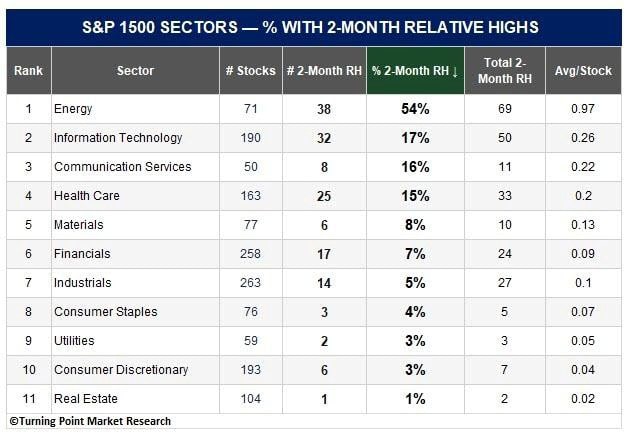
Over the last week, application software led in the total number of stocks at 2-month relative highs, while energy groups showed the strongest concentration of relative highs by percentage.
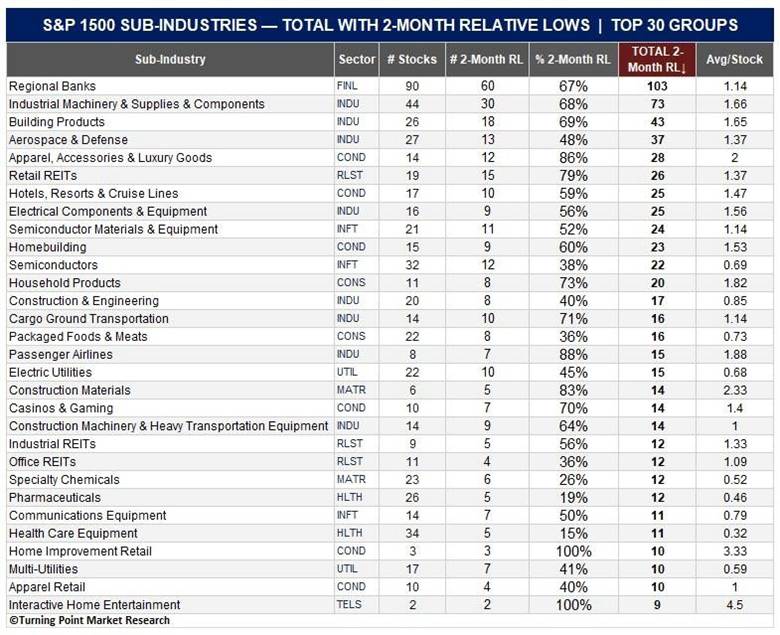
The table below highlights the sub-industry groups with the most 2-month relative lows over the past week, illustrating the impact of higher energy prices and, in turn, higher interest rates on fuel-sensitive, consumer-oriented, and rate-sensitive groups. Regional banks stand out most clearly, leading all groups in relative lows as rising rates can increase deposit costs, compress net interest margins, and reduce the value of bond holdings.
CVR Energy, which was featured in last week’s rankings as the top-ranked stock within the energy sector, has now risen to the No. 1 position among all S&P 1500 constituents. The overall top 50 still reflects a strong bias toward energy, health care, and financials, with select leadership in technology and no representation from defensive sectors.
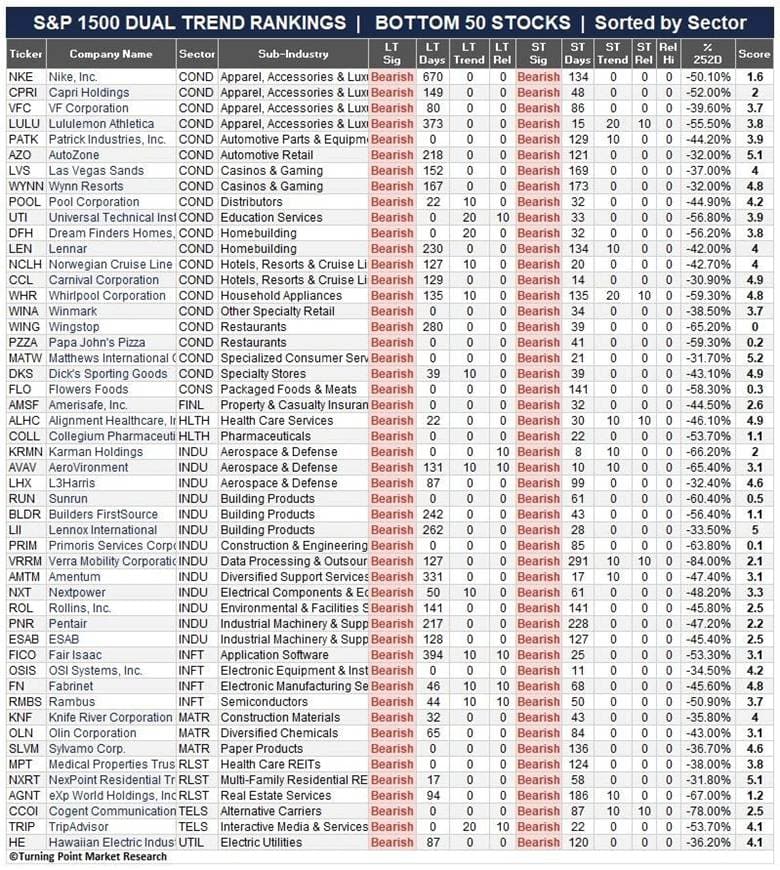
At the other end of the rankings, the bottom 50 stocks feature a significant concentration of consumer discretionary names, which face added pressure from higher oil prices and interest rates.
A bullish shift in memory names
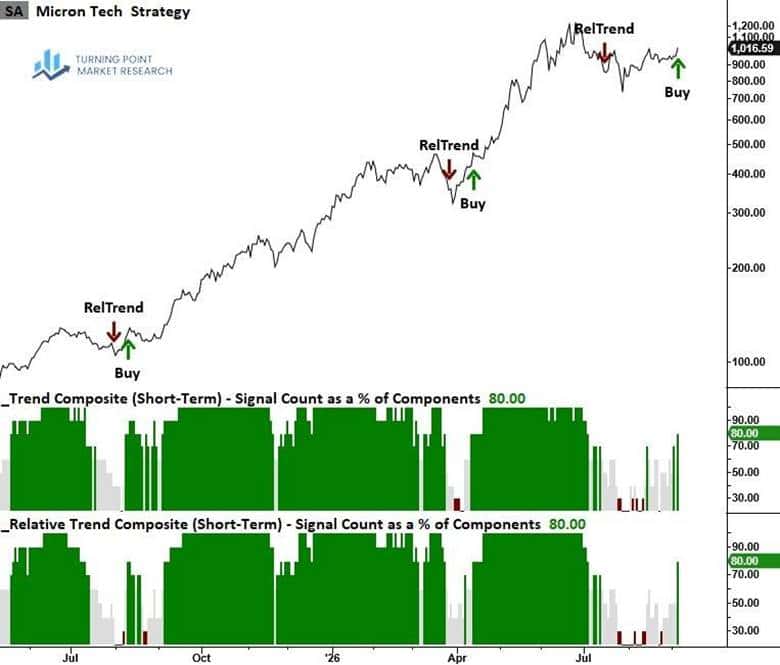
As noted in the weekly brief, Micron Technology (MU) was on the verge of returning to a bullish short-term Dual Trend signal, which occurred at Friday’s close. With both models now aligned bullishly, the Dual Trend portfolio initiated a position.
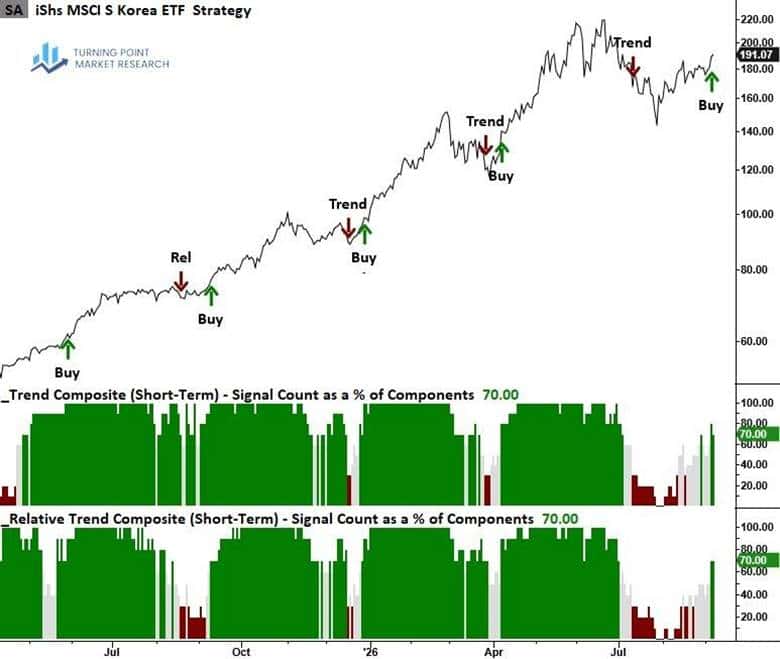
The South Korea ETF (EWY), which contains SK Hynix Inc and Samsung Electronics Co Ltd, two memory plays that account for 45% of the ETF, also shifted back to a bullish short-term DT status.
The Roundhill Memory ETF (DRAM) is another vehicle to gain exposure to this theme. Unfortunately, its limited history does not provide enough data to calculate the indicators the Dual Trend system requires.
Overall tech view
While the Dual Trend Portfolio initiated a new position in Micron Technology and continues to hold Dell Tech and the equal-weighted S&P 500 technology sector ETF, it remains guarded in its overall AI exposure. The current environment lacks the broad-based “tide that lifts all boats” dynamic that would justify more aggressive positioning, making selectivity imperative until a more wholesale shift in AI-related leadership emerges.
What the research tells us…
Energy has taken over the top spot in the S&P 1500 rankings, pushing health care into second place. The rise in oil prices has clearly benefited energy stocks, but that same trend is creating pressure elsewhere, particularly among consumer-oriented groups facing a squeeze on household purchasing power. More importantly, energy-led markets have historically tended to produce narrower leadership, reducing the number of attractive opportunities across the broader market. That makes the recent improvement in memory stocks particularly noteworthy, with Micron Technology and EWY both shifting back to bullish short-term status and now confirming with their long-term models.