Key points:
- Copper has reversed sharply from an all-time high
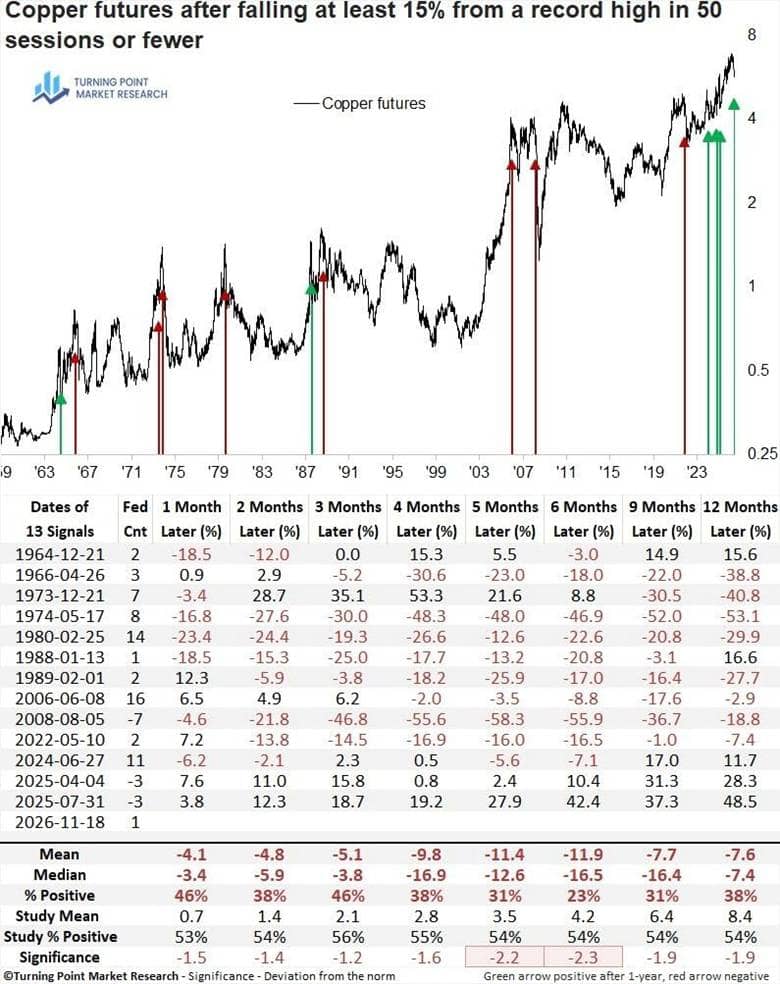
- After similar signals, the commodity was lower six months later in 77% of cases
- Conditions across the commodity complex are beginning to deteriorate
A growing list of markets is flashing warning signs
Commodities came under heavy selling pressure on Wednesday. Across the 19 spot prices I track in my market breadth measures, 16 finished lower, with losses averaging 2%.
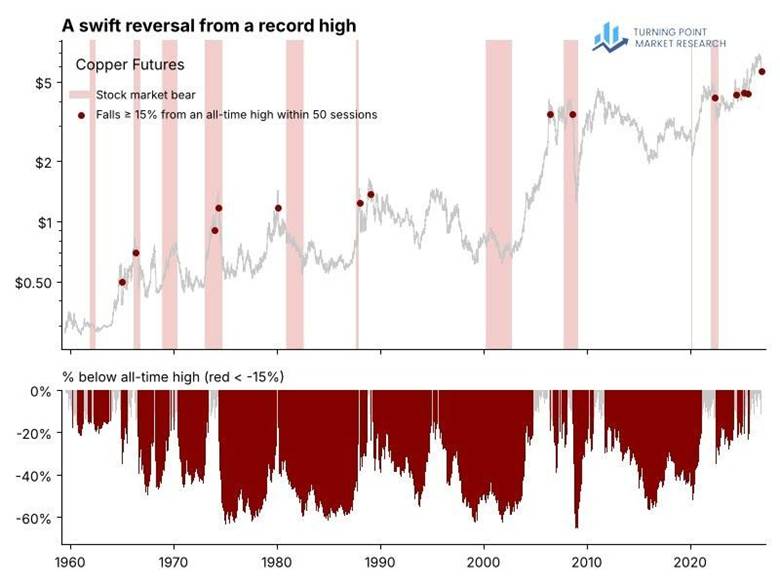
Copper took the biggest hit, tumbling 5.77%, the largest move in the complex. A single-day decline of that magnitude is noteworthy, but the bigger concern is the deterioration since copper peaked just a few months ago. Over the past 50 sessions, copper has fallen 17% from its record high, bringing it within striking distance of bear market territory.
As illustrated below, declines of this magnitude and speed have historically marked several major tops in copper and, in some cases, aligned with equity bear markets.
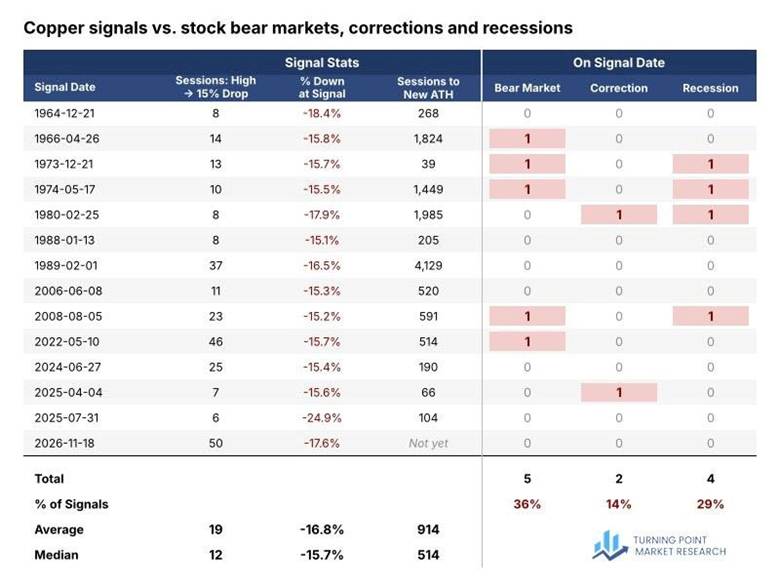
Of the 13 prior cases, five occurred during equity bear markets, while another two took place during market corrections. Moreover, four coincided with recessions. Most notably, the recovery to a new high took a median of 514 trading sessions. The best-case scenario was 1973, when a new high was reached just 39 sessions later.
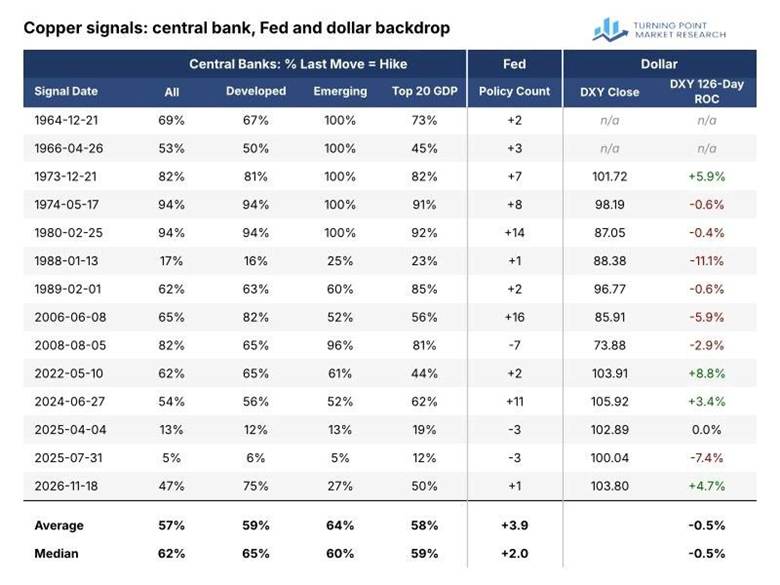
One plausible explanation for the pullback in commodities, particularly copper, is the recent strength in the U.S. dollar. The dollar’s advance has been fueled by expectations that the Federal Reserve may tighten policy further at its December meeting, with additional rate hikes possible in 2027.
As several recent reports highlighted, central banks worldwide have also been tightening monetary policy. Over time, this coordinated shift toward tighter financial conditions could weigh on global growth, a scenario that commodity markets may already be beginning to discount.
When copper falls 15% within 50 sessions of a record high, weakness tends to persist.
Prices declined at some point over the following eight weeks in 11 of 13 cases.
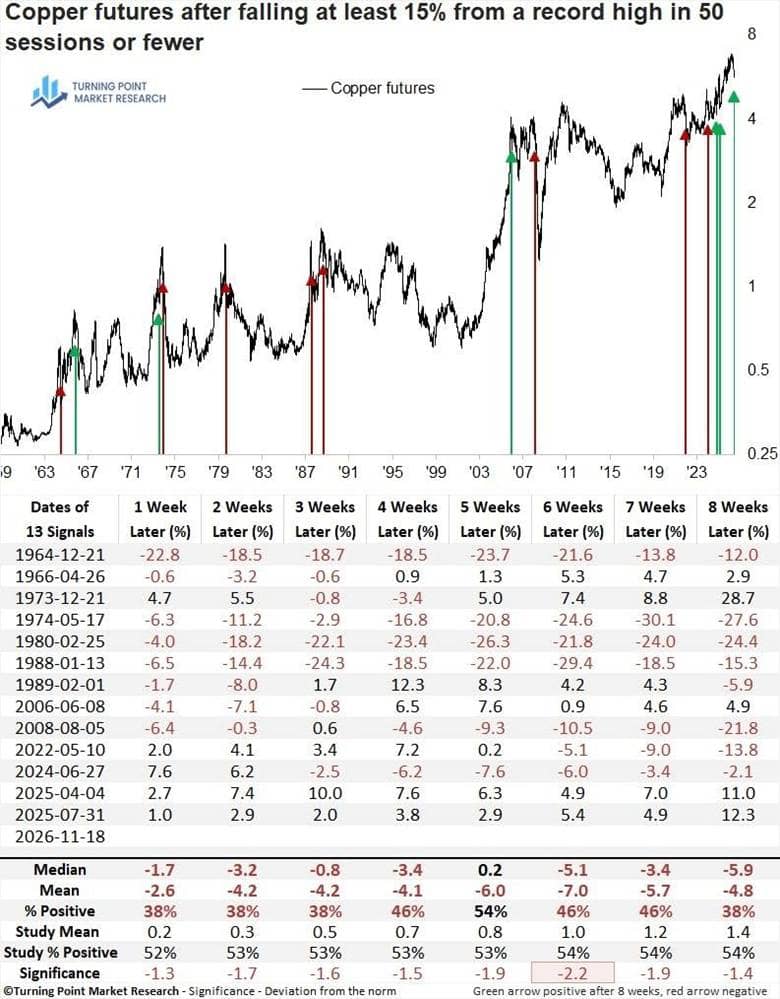
The risk/reward profile was unfavorable, as the odds of a 5% or 10% loss exceeded the odds of a comparable gain across all time frames.
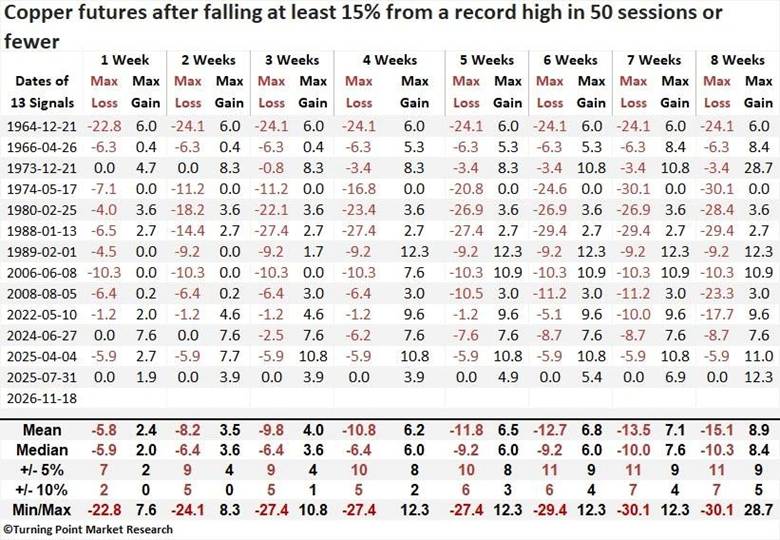
Over longer time frames, the odds favor a significant top in copper, with prices declining 77% of the time over the following six months.
The last two signals in 2025 were exceptions, generating meaningful gains. However, both occurred during an easing cycle, with the Fed cutting rates three times before the signals and another three times afterward. Furthermore, both instances also coincided with tariff-related policy developments that saw risk assets snap back sharply.
The topping process is complete
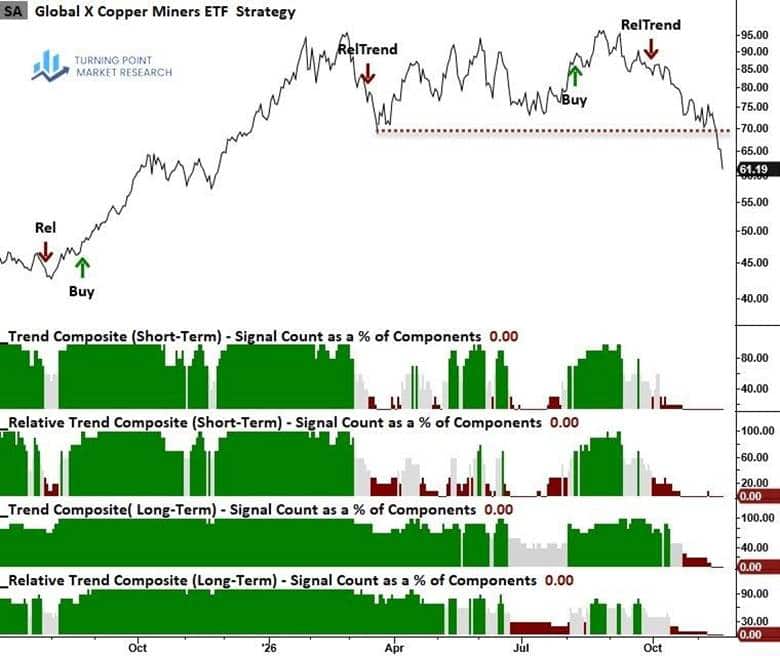
In my October 22 report on the metals complex, I highlighted the bearish setup in copper miners, noting:
“Both the short- and long-term dual trend systems remained on sell signals for the copper miners ETF (COPX), while a potential double top was taking shape. A break below the March low near $69 would complete the pattern.”
That level has now been breached, confirming the double top. Given the outlook for copper, miners remain an avoid.
The overall commodity landscape
The share of commodities in a bear market has reached 47%, the highest level in over a year. Historically, similar readings following a record high have accompanied commodity tops and, in some cases, aligned with equity bear markets.
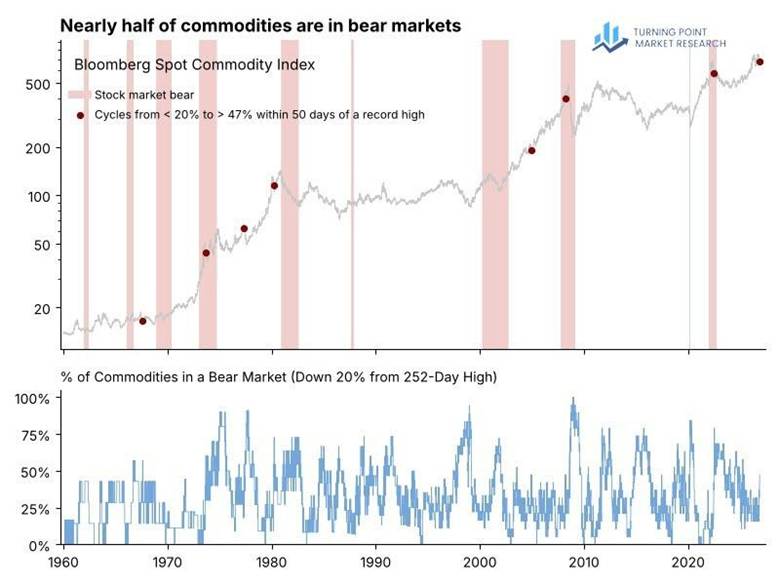
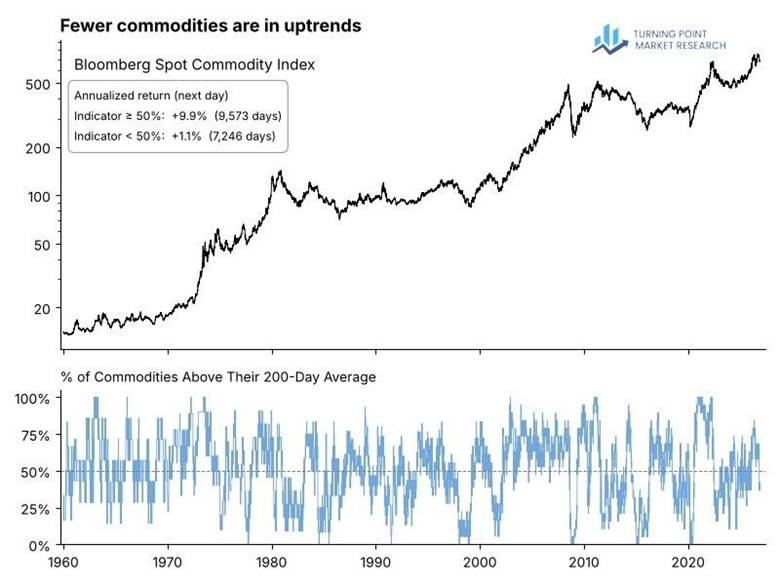
Long-term trends are showing similar signs of deterioration. Only 36% of commodities remain above their 200-day moving average. Historically, readings below 50% have been associated with annualized returns of just 1.1% in the Bloomberg Spot Commodity Index, sharply contrasting with the 9.9% return recorded when more than half of commodities are above their long-term average.
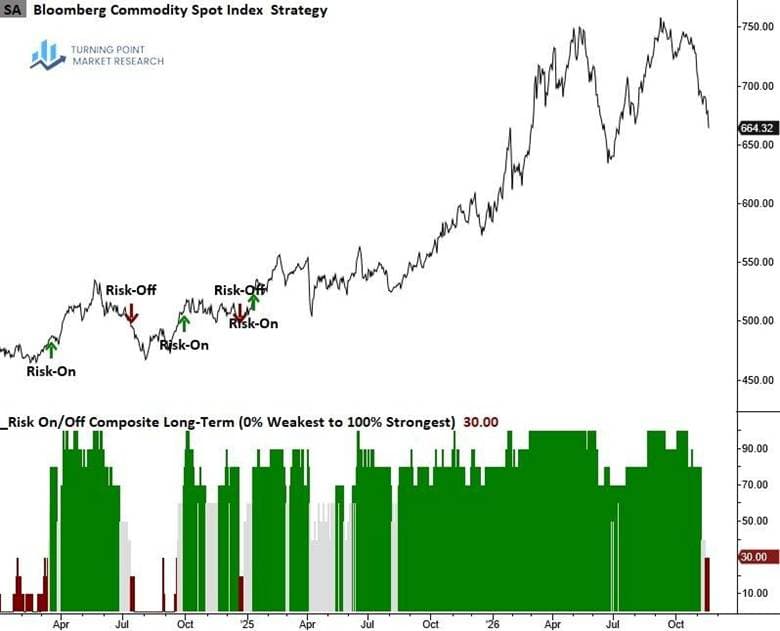
Despite the recent deterioration across commodities, the long-term risk-on/off model for commodities remains bullish. Featured in last week’s Chart of the Week, the model currently has two favorable inputs: one trend component worth 20% and one breadth measure worth 10%.
A change in either would flip the model to risk-off.
What the research tells us…
Copper’s sharp retreat from record highs raises the possibility that a significant topping pattern has formed. Whether the weakness reflects concerns about slowing data center investment, potential construction moratoriums, or the cumulative effects of tighter monetary policy worldwide remains an open question.
Copper and copper miners are best avoided on the long side for the foreseeable future. Those inclined to establish short positions should be patient. A recovery toward former support, now resistance, would offer a more attractive risk/reward opportunity than chasing prices lower.
More importantly, copper is not acting in isolation. Commodities broadly are weakening, reinforcing the possibility that markets are beginning to discount a slowdown in global growth. With commodities joining AI stocks, precious metals, cryptocurrencies, and thematic equities in the risk-aversion bucket, it’s getting increasingly difficult to get excited about the prospects for 2027.