Key points:
- Defensive sectors led, with staples ascending to the top
- Weakness persisted in tech, energy, and materials
- Financials and industrials slipped, while discretionary ticked up
Remain flexible and keep an open mind to all outcomes
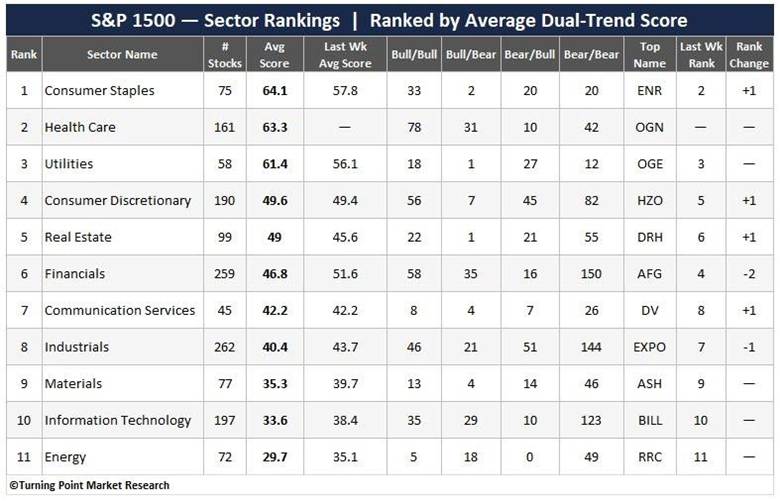
Consumer staples grabbed the #1 spot with an average score of 64.1 (up from 57.8), and health care (63.3) and utilities (61.4) rounded out the top 3 once again, reflecting a defensive market backdrop.
Despite dropping to second, health care still has the highest percentage of stocks with bull/bull dual-trend status. Financials (150) and industrials (144), meanwhile, remain heavily populated with Bear/Bear names.
For the second week running, energy (29.7), technology (33.6) and materials (35.3) ranked as the three weakest sectors, with average scores deteriorating notably across the board.
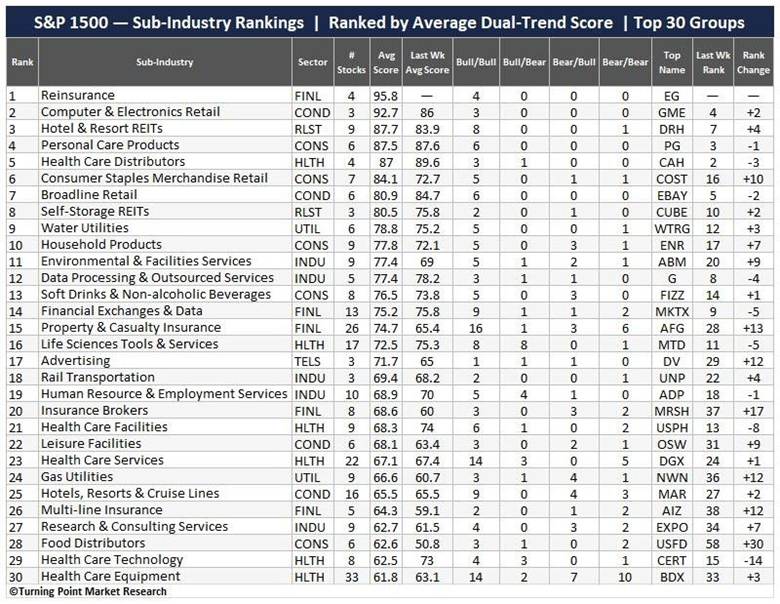
Health care once again dominated the top 30, with more sub-industry groups represented than any other sector. The more notable development, however, was the broad-based improvement across insurance groups, led by insurance brokers.
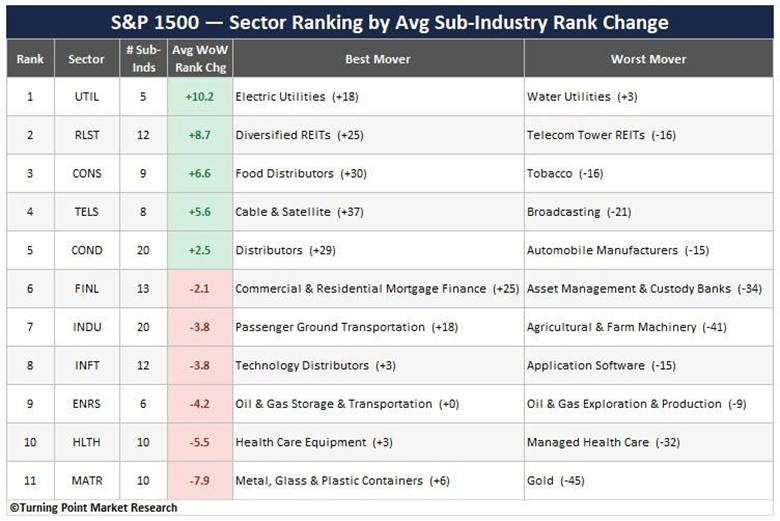
Utility groups improved by an average of 10.2 points, and even the ‘worst’ one (Water Utilities) still gained three. Deterioration was concentrated in financials, led by asset management and custody banks; industrials, led by agriculture and farm machinery; health care, led by managed care; and materials, led by gold.
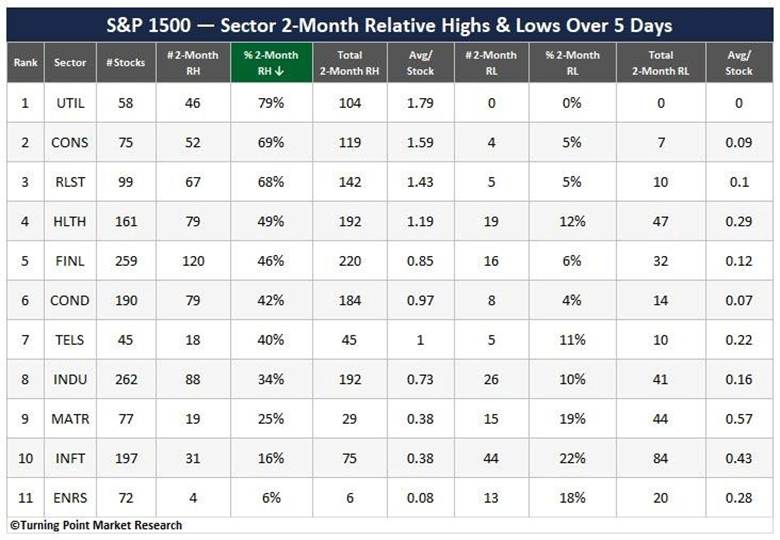
A remarkable 79% of utilities stocks hit a 2-month relative high in the last five days — with zero relative lows. Staples (69%) and real estate (68%) weren’t far behind, reflecting the market’s defensive tone.
Conversely, only 6% of energy names made new relative highs, and tech has the most stocks making relative lows of any sector (22%).
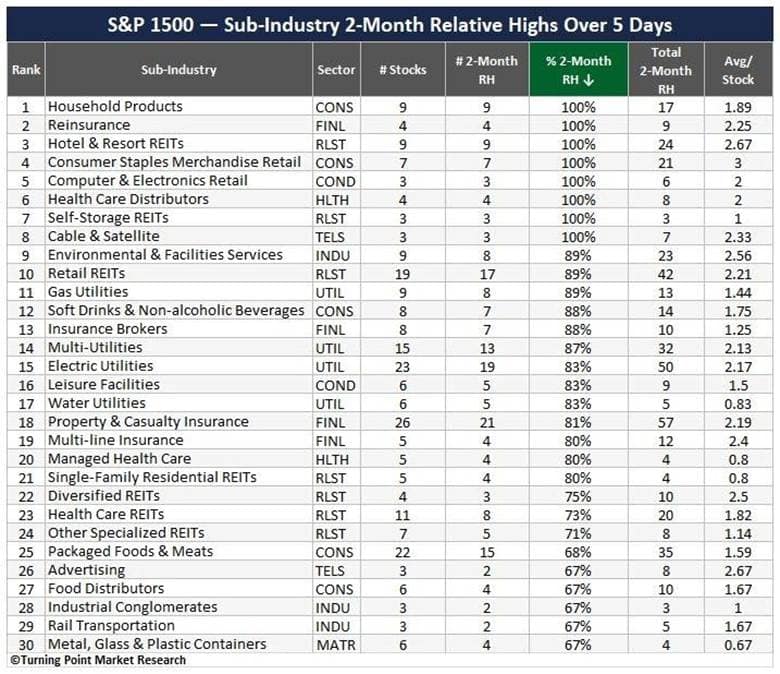
Among sub-industries, eight groups had every single member make a new two-month relative high, including household products, reinsurance and hotel & resort REITs. REITs were particularly well represented, with eight real-estate groups making the top 30. Retail REITs stood out, with 17 of their 19 stocks hitting new relative highs. Utilities also showed strength, with all four groups represented: gas, multi, electric, and water.
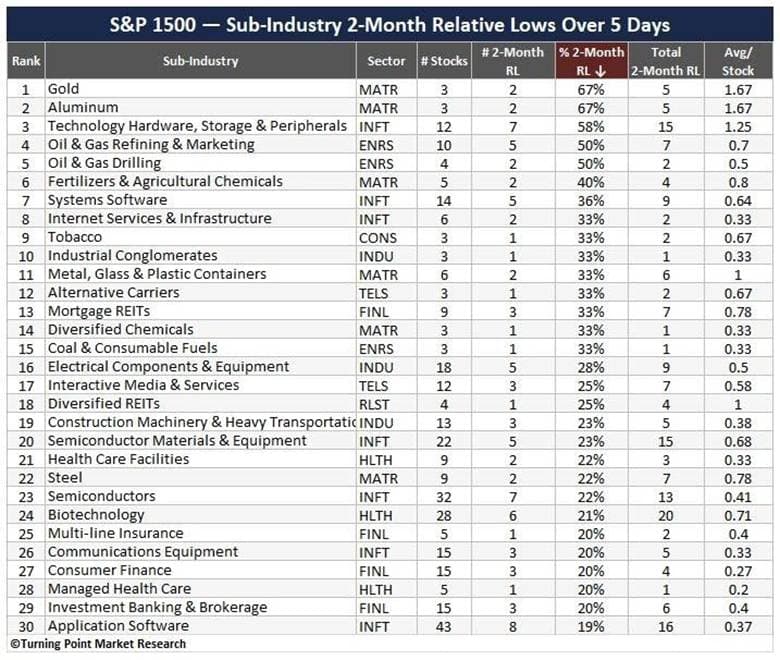
Relative lows across sub-industry groups were predominantly clustered in metals, energy, and technology.
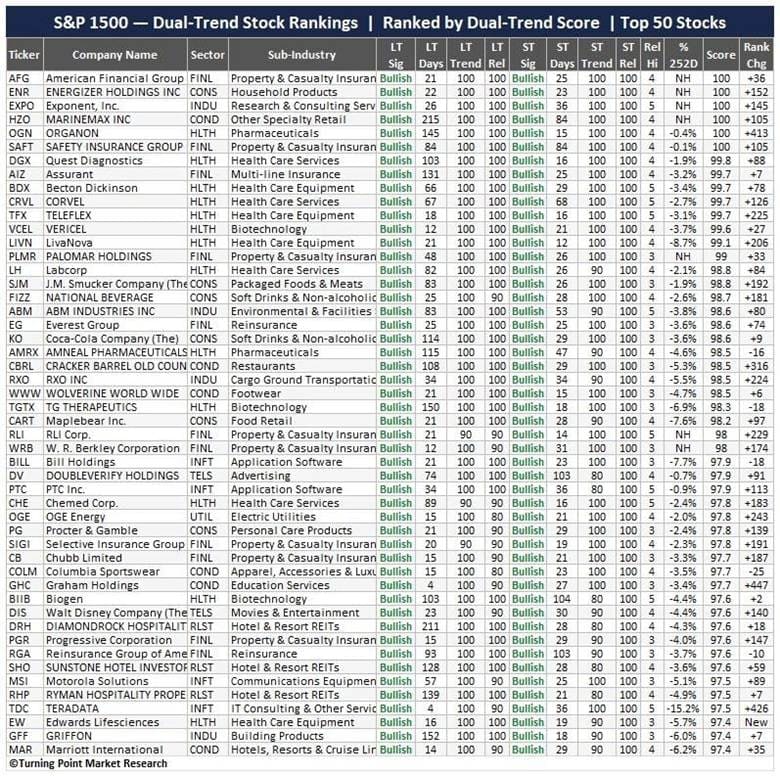
Health Care (13 names) and Financials (11, almost all insurers) make up nearly half of the top 50 ranked stocks in the latest standings.
Disney is one of the more interesting names in the top 50. The stock has been building a base for nearly four years and is now approaching the upper end of that range.
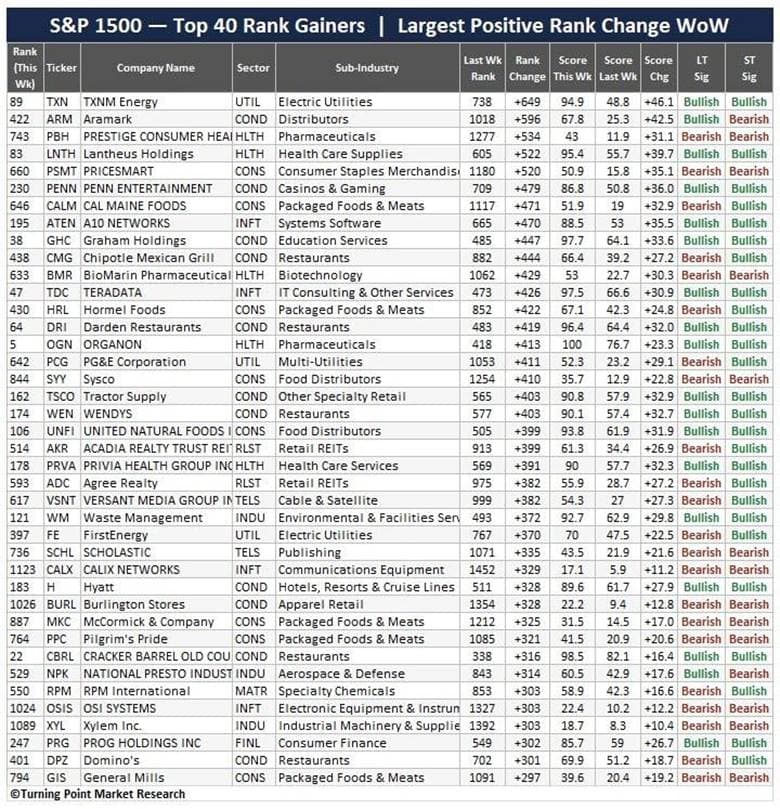
Consumer stocks saw the largest rank improvements over the past week, with 11 discretionary names and eight consumer staples issues posting notable gains. Within discretionary, restaurants led all sub-industry groups.
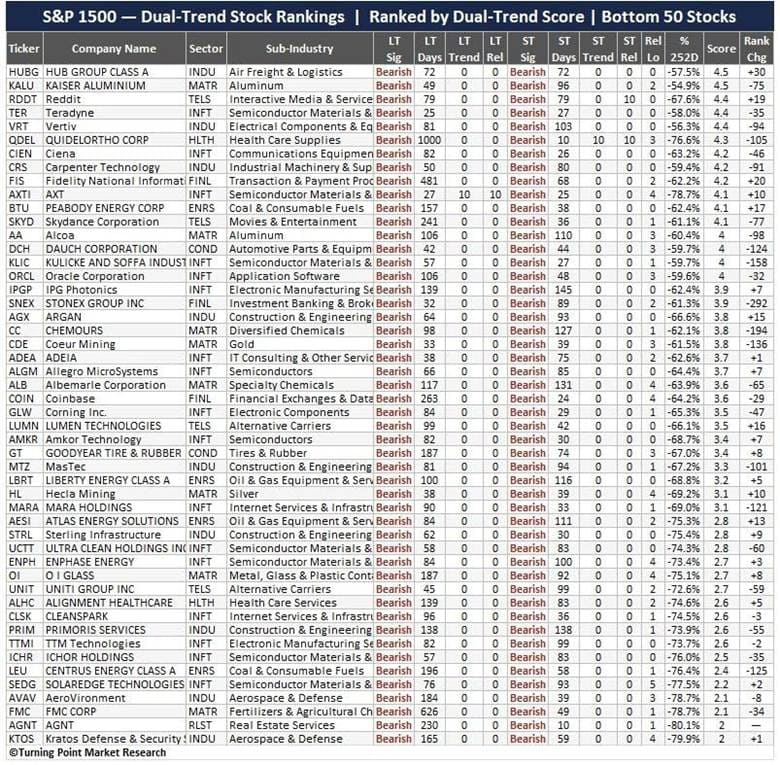
Technology has the largest presence in the bottom 50 stocks, with 17 names, many of them tied to semiconductor equipment and hardware. Materials also have a sizable presence, with eight names.
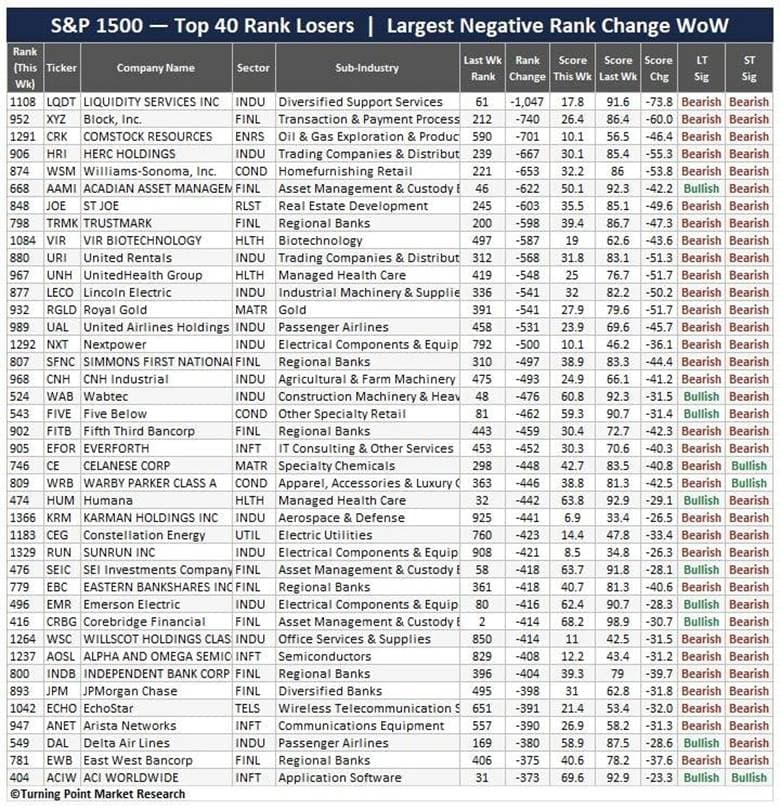
Industrials had the most names among the biggest week-over-week decliners, with 13 stocks, followed by financials with 11. The weakness highlights growing deterioration across cyclical sectors beyond technology.
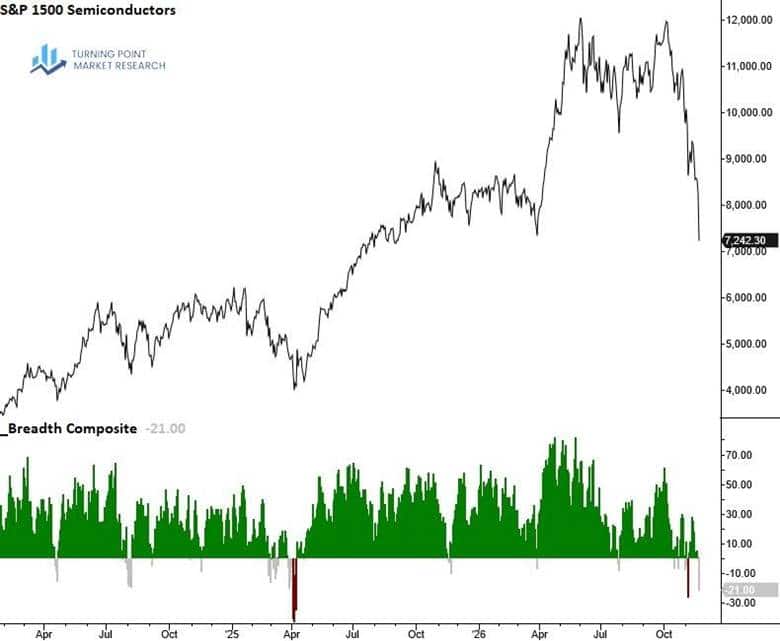
Technology stocks, particularly AI-related names, are staging a massive rally today following the NVIDIA news. Interestingly, the semiconductor breadth composite flashed a slight bullish divergence late last week, showing a higher score even as the index pushed to a new low on Friday.
What the research tells us…
With Nvidia reinstating Jensen Huang as CEO, another Liberation Day reversal scenario could be developing. The broader market never reached the oversold extremes seen in April 2025, but technology stocks certainly did, and they’re responding with some outsized moves today. Whether this is the start of another sustained rally or just a sharp countertrend bounce remains to be seen. I’ll be watching closely for breadth thrust signals to help gauge whether the rally has legs. Until things settle over the next few days, a wait-and-see approach makes more sense than making impulsive, news-driven decisions about the market’s likely path.