Key points:
- A substantial number of consumer discretionary stocks registered 21-day lows
- Similar expansions in new lows preceded an unfavorable outlook for the sector
- The discretionary sector showed a consistent bias to underperform the broader market
Discretionary stocks feel the squeeze from oil and rates
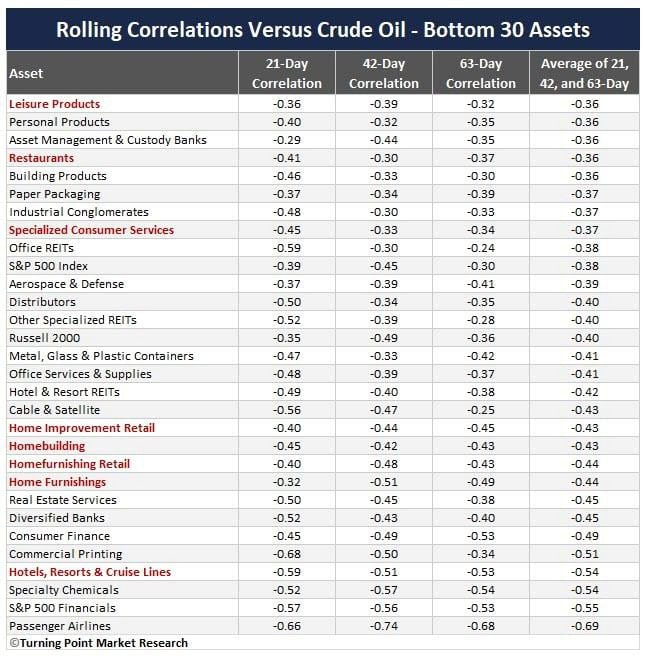
Crude oil has surged 34.5% over the past two months, a move seen only 16 other times since 1986. The rally has been a powerful tailwind for energy stocks but a significant headwind for other areas, as discussed in last week’s industrials report.
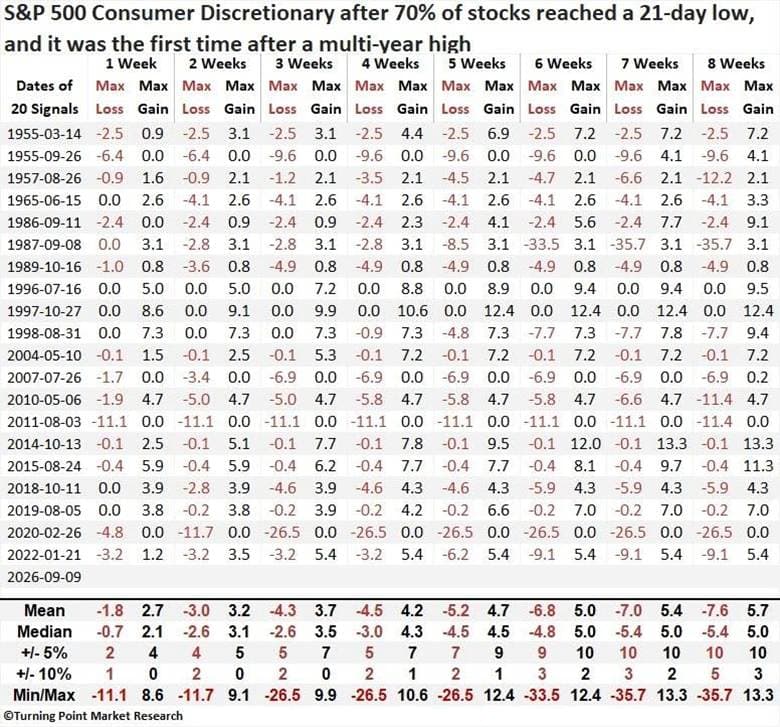
The weakness has now spread further into consumer discretionary, where more than 70% of stocks registered a 21-day low on Wednesday—the first time that threshold has been reached since September 2022, during the final leg of the 2022 bear market.
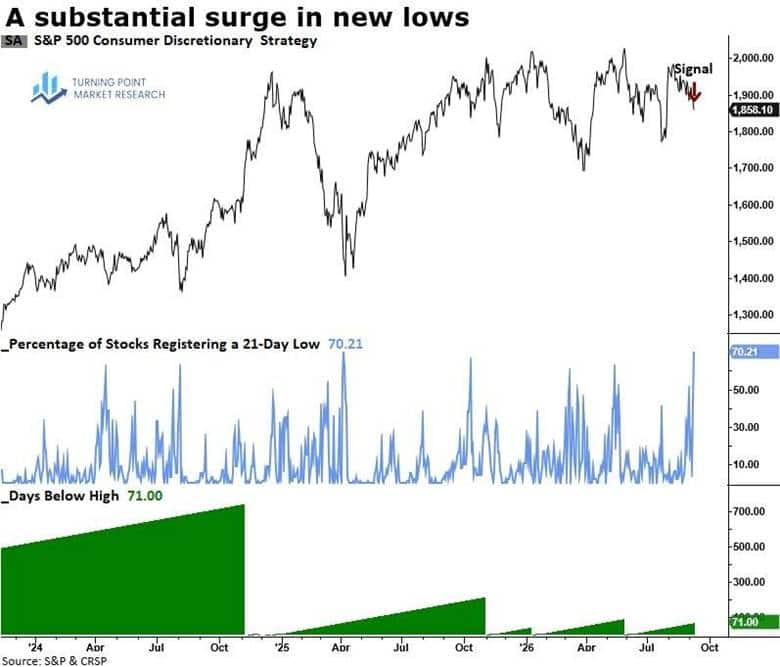
New lows across S&P 500 consumer discretionary stocks point to broad weakness spanning apparel, auto, housing, travel, and restaurants, all of which are sensitive to household purchasing power and vulnerable to the squeeze from higher oil prices and interest rates.
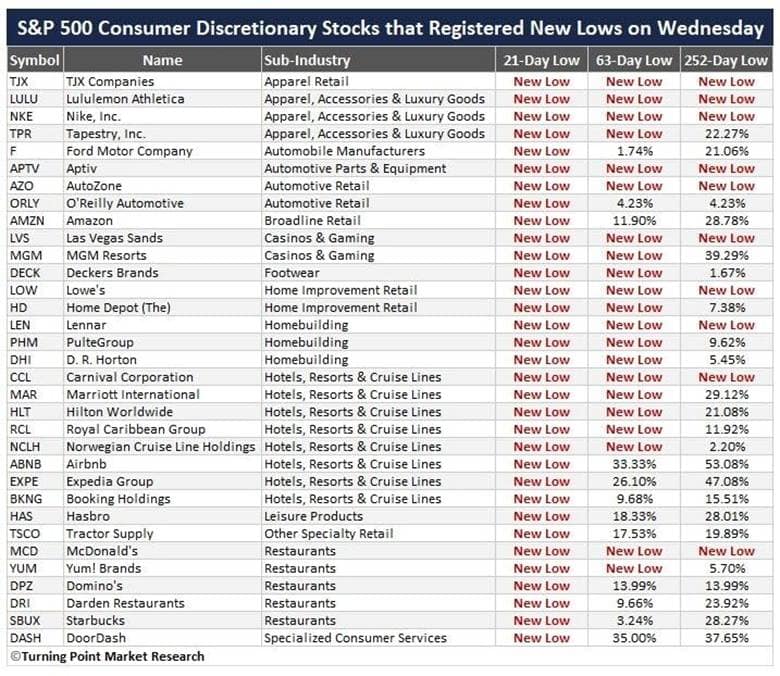
Several of the sub-industry groups highlighted in the new-lows table rank among the 30 most negatively correlated assets to crude oil, meaning they tend to move in the opposite direction of oil prices.
Mostly below average results
When a significant number of consumer cyclical stocks register 21-day lows for the first time after a multi-year high, the discretionary sector has generally experienced lackluster performance over the following few months, with the most pronounced weakness occurring five to six weeks later.
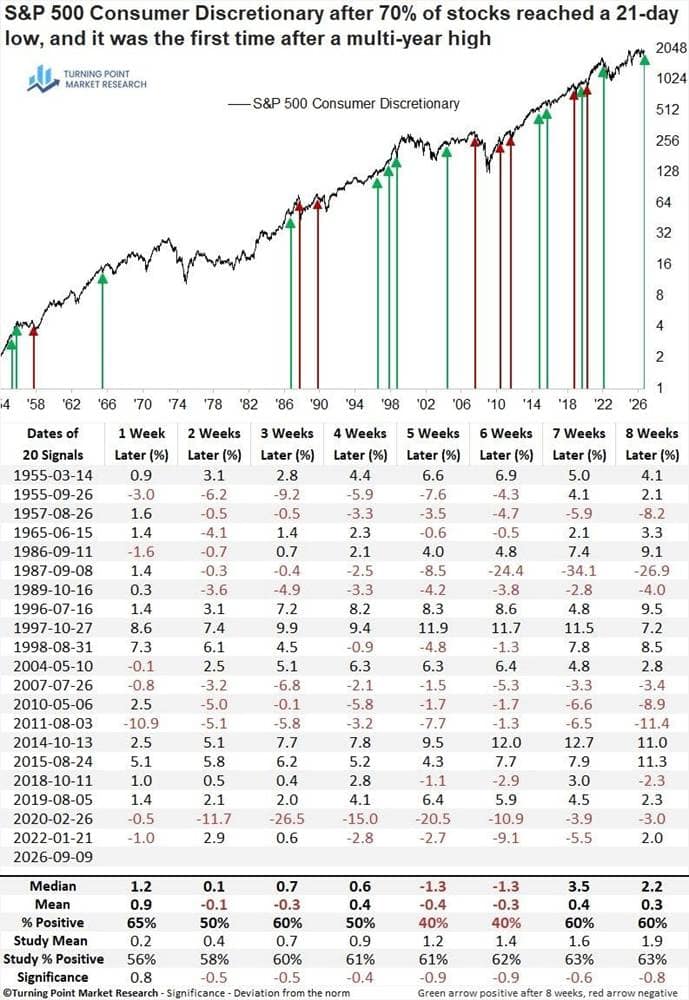
Over the following eight weeks, the odds of a maximum 5% loss or gain were evenly balanced, while the distribution for a 10% move was slightly skewed toward losses.
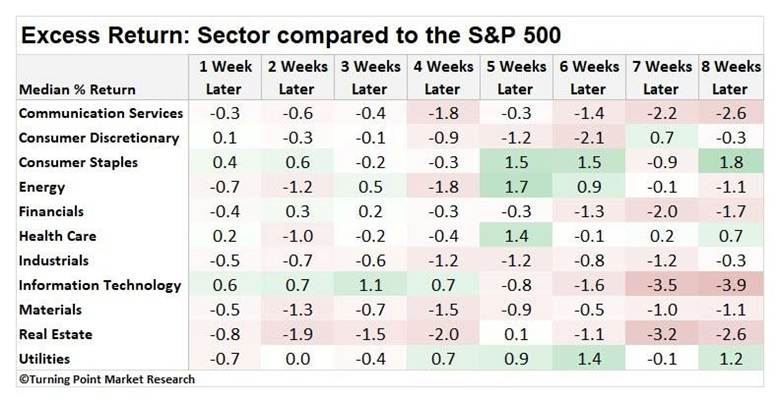
The consumer discretionary sector lagged the S&P 500 in 6 of 8 intervals over the subsequent two months.
Unfavorable relative strength
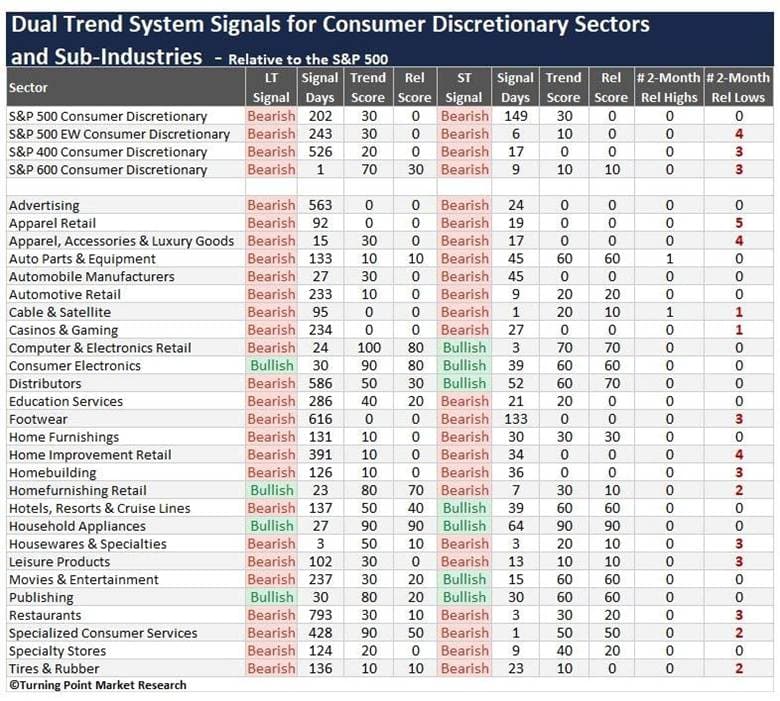
Across sectors and sub-industries, spanning different market caps and weighting methodologies, the dual trend system picture is broadly bearish for consumer-related groups. Moreover, the relative backdrop for most groups has deteriorated further of late, as reflected in the elevated number of relative breakdowns over the past week.
Weak breadth
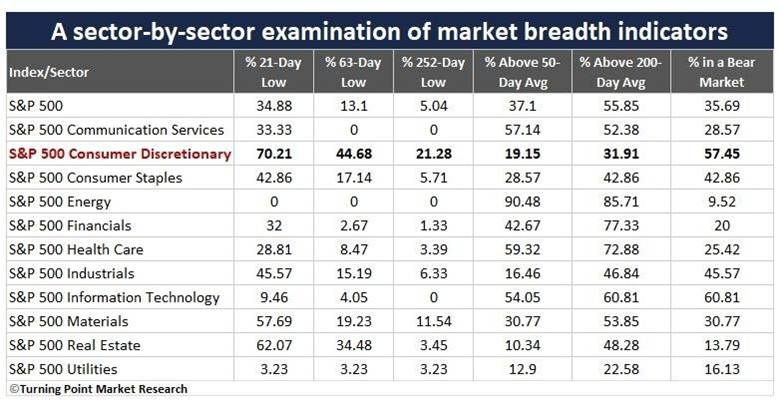
On Wednesday, consumer discretionary posted the highest proportion of new lows across multiple time frames. Furthermore, the percentage of stocks above their 200-day averages ranks second-worst, ahead of only utilities, while the percentage in a bear market trails only technology.
Overall, the discretionary sector remains broadly unattractive from a technical perspective.
A concerning scenario
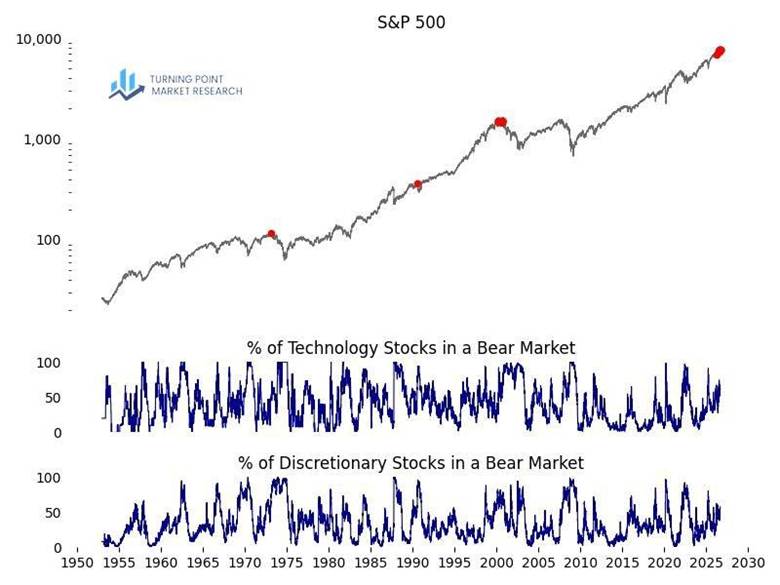
With more than 50% of stocks in both the technology and consumer discretionary sectors in a bear market while the S&P 500 sits less than 3% below its record high, I wanted to see when a similar setup has occurred historically. As the red dots highlight, 1973, 1990, and 2000 stand out as comparable periods. Notably, two of the three coincided with significant oil spikes.
What the research tells us…
Consumer discretionary has been under pressure for some time, with deterioration intensifying as oil prices and interest rates continue to rise, culminating in a massive spike in 21-day lows—the highest level since the 2022 bear market. While similar expansions in new lows have not historically been overwhelmingly bearish in absolute terms, they have generally been associated with relative underperformance. That argues for maintaining a significant underweight, if not avoiding the group altogether in a portfolio. From a tactical trading perspective, however, the setup is becoming more interesting as the sector shows signs of being oversold. Keep a close eye on oil and rates, as a reversal in either could trigger a sharp countertrend bounce.