Last month, a Collective member sent me a conversation with Emily Haisley, the psychologist who leads behavioral finance at BlackRock. Her mandate, in part: keep the firm’s portfolio managers in a state of mind and body worth trusting with risk.
Her team’s instrument is a consumer wellness gadget: the Oura ring. Managers wear them day and night; Haisley overlays what the body reports on what the portfolio does. In lab studies, a week of elevated cortisol measurably tilts preferences toward risk aversion. Stress does not simply feel bad; it silently repositions portfolios. And her data shows it live: a drawdown arrives, stress accumulates above baseline, and the body starts steering the risk decisions—while the manager insists the losses are not affecting him.
The instinct is familiar: when losing, work harder. More hours. More vigilance. More screens. Haisley presses the opposite: “It’s not just their job to work hard, it’s also their job to rest hard.“
Our bodies, like financial markets, are complex systems. And complex systems that endure move in cycles. Fields lie fallow. Aspens drop their leaves. Even price rests: every strong trend is born from a base. Only the relentless speculator believes he is exempt.
What is it to rest hard? My answer begins with telling deep rest from shallow.
Deep rest is stillness. A walk through groves of coast redwoods with no podcast. An afternoon at the lake with children who ask nothing of our PnL. Shallow rest is the bottomless scroll. The queue of episodes. The third refresh of a portfolio we swore we would let idle until September.
From the outside, both look like rest. Inside, only one is. Because shallow rest keeps our nervous system running: we have taken our hands off the work, but we continue to loop, to scenario plan, to indulge the inner voice. None of it purges the elevated cortisol Haisley’s team guards against. Deep rest replenishes. Shallow rest flips the channel until the allotted time expires.
August has already cleared the calendar. An industry that measures everything in basis points takes its one sanctioned pause. How much of it will you give to deep rest?
Every strong trend is born from a base.
Break, Retest, Resume
In the August 1, 2026, issue, we highlighted White Sugar futures’ retest of the 50-DMA. This week, price hit the 3-month symmetrical triangle’s 1x measured move target at 514.3.

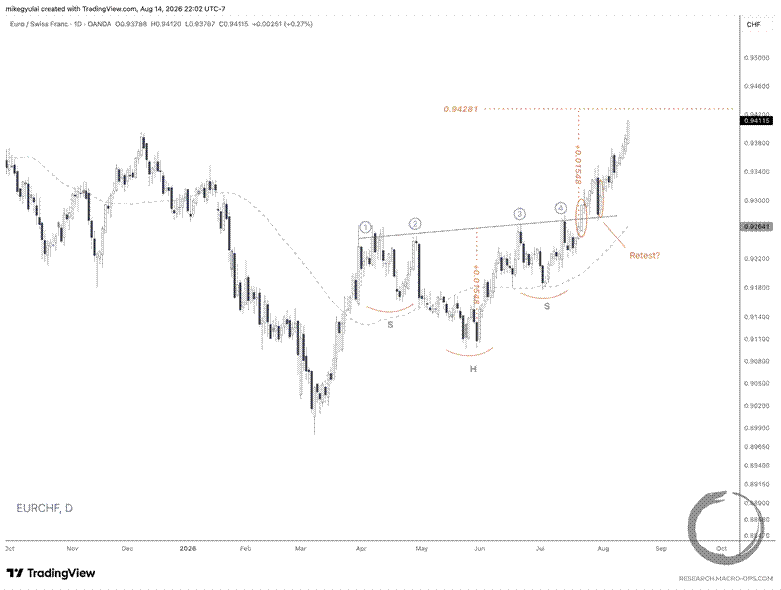
In the same issue, we also featured EUR/CHF’s 3.5-month head-and-shoulders continuation. The retest of its neckline held successfully, sending price upward to clear over 70% of the 1x measured move target at 0.94281.
Currency Watch
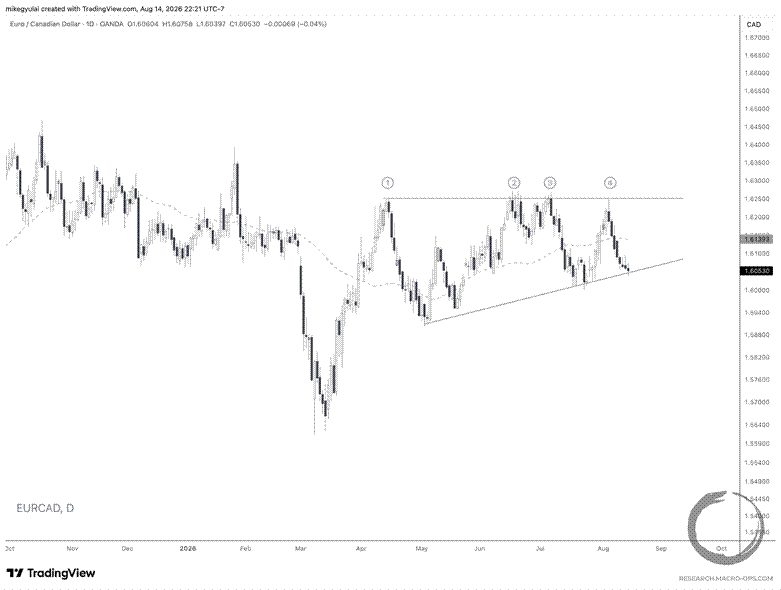
The 4-month ascending triangle in EUR/CAD remains in development. We hold a risk-defined long position in Euro FX futures in the Macro Ops portfolio.
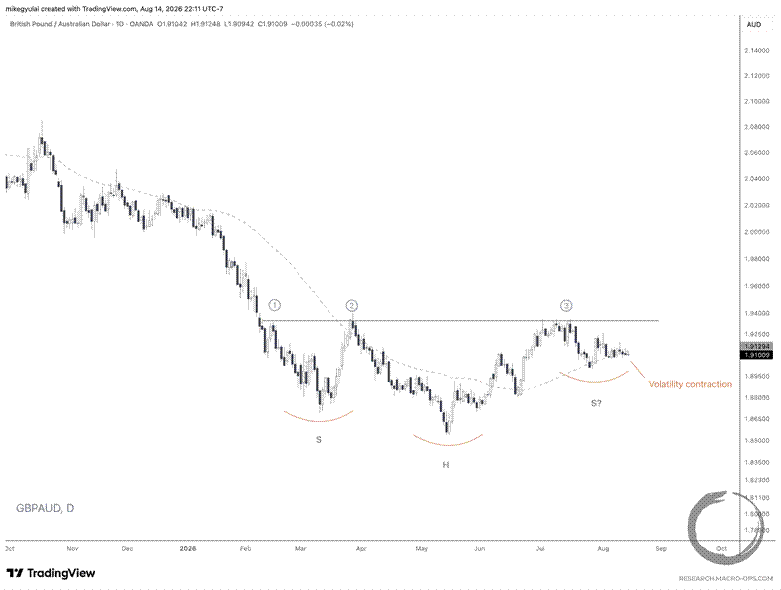
GBP/AUD volatility has contracted significantly as price progresses through the right shoulder of a 5.5-month head-and-shoulders bottom. While volatility contractions themselves are directionally neutral, a bullish breakout may provide an advantageous early entry point if the broader bottoming structure resolves higher.
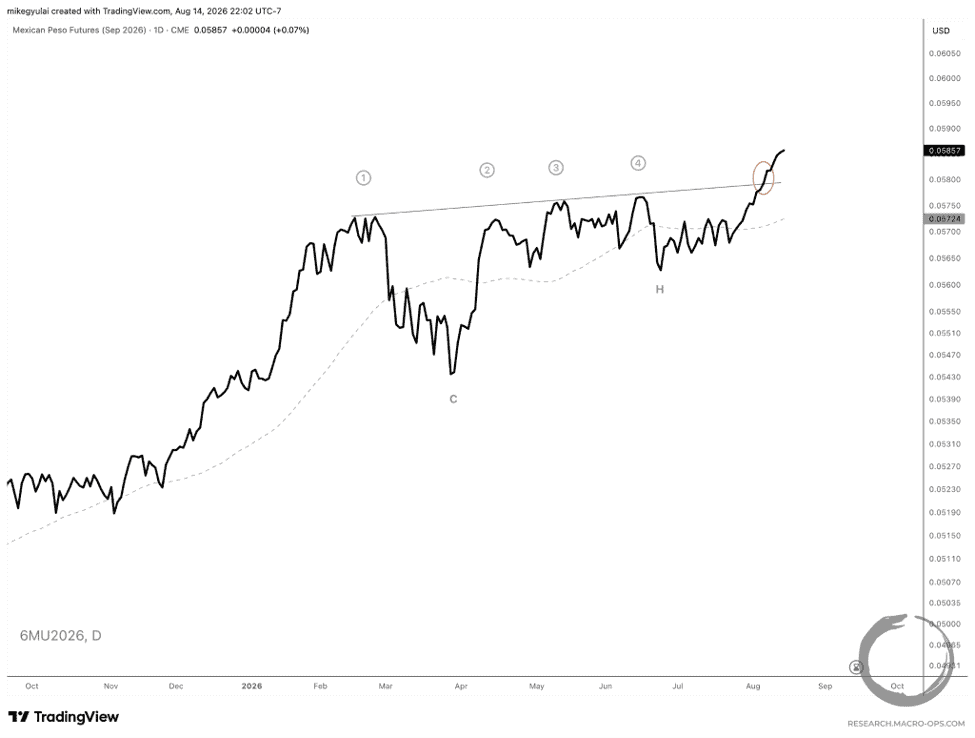
Mexican peso futures followed through on last Friday’s breakout from a 6-month cup-and-handle in the September contract. A risk-defined long position remains active in the Macro Ops portfolio.
The yen remains under sustained pressure, as seen in AUD/JPY, which is consolidating near its highs within a 5-month rectangle.

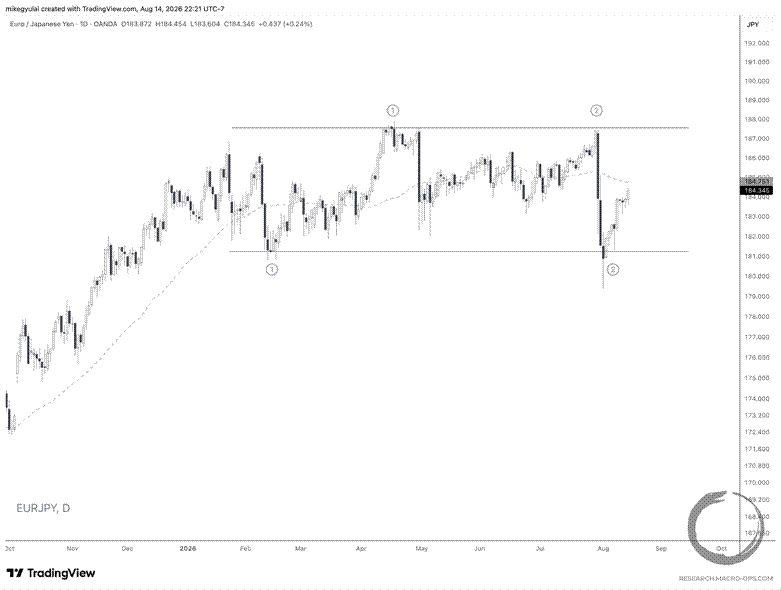
EUR/JPY is consolidating in a similar 6-month rectangle continuation.
Commodity Complex
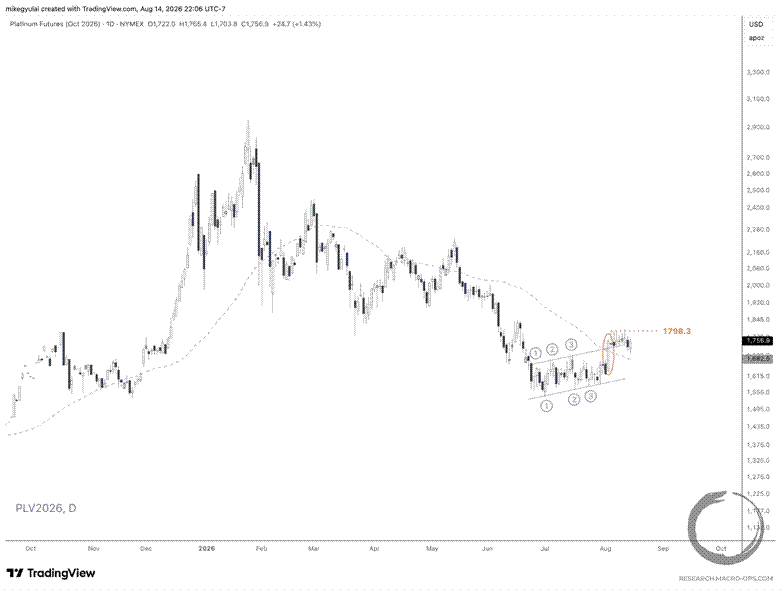
October Platinum futures remained in a tight, post-breakout consolidation, with the 1798.3 level serving as the key pivot for potential upside continuation.
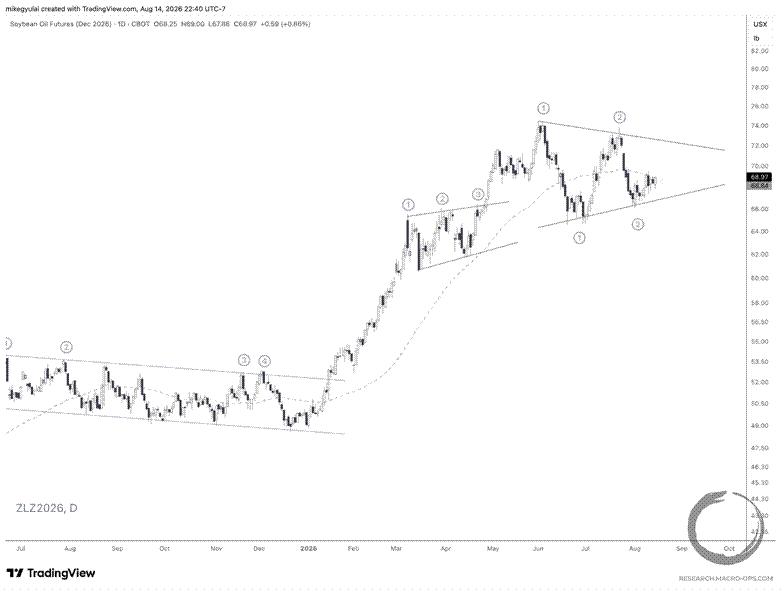
Soybean Oil futures are developing a 2-month symmetrical triangle on the December contract.
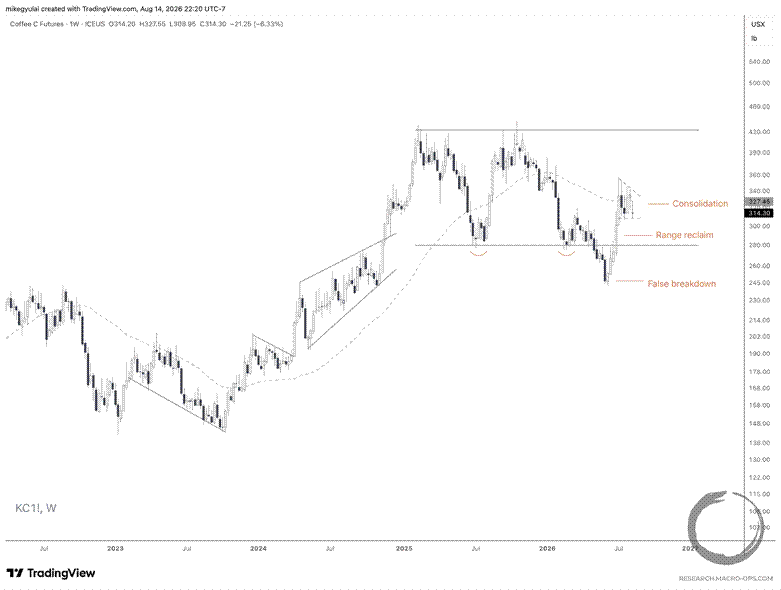
Following a false breakdown on the weekly chart, Coffee futures continue to consolidate midrange on the continuation contract. While the daily descending triangle currently leans bearish, a potential dip to new lows followed by a sharp reversal higher would transform the pattern into a bull flag, pointing toward the top of the trading range as the primary upside target.
The Pauses That Refresh
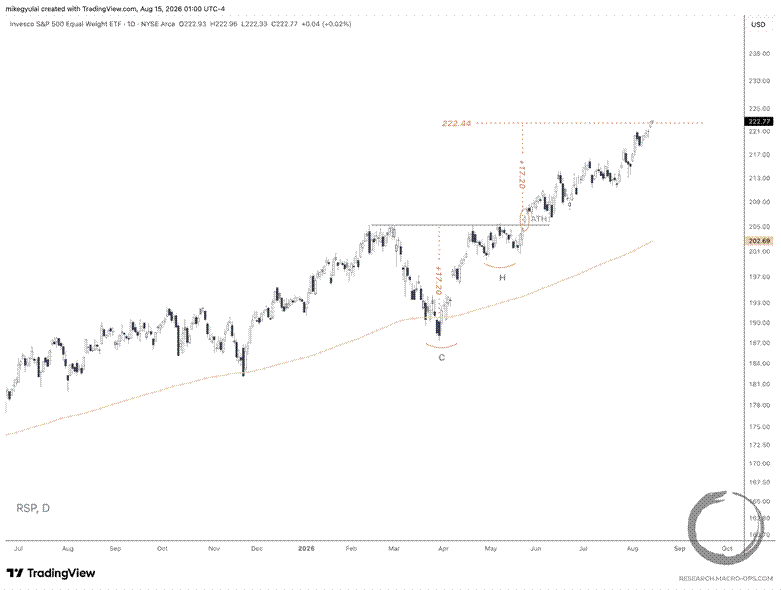
In equities, the S&P 500 Equal Weight reached its 1x measured move target of 222.44 this week. This follows its breakout from the 3-month cup-and-handle we have been tracking since spring as a prime example of healthy rotation away from earlier AI market leadership into broader sectors and industries.
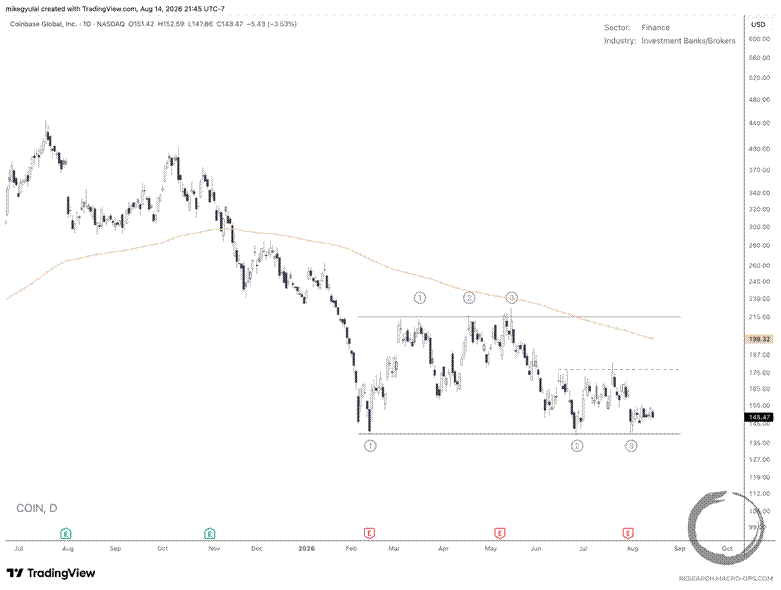
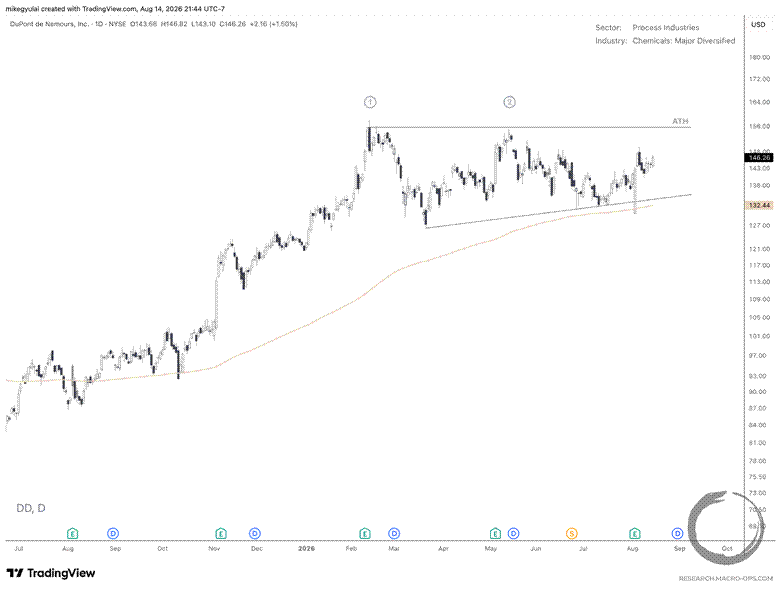
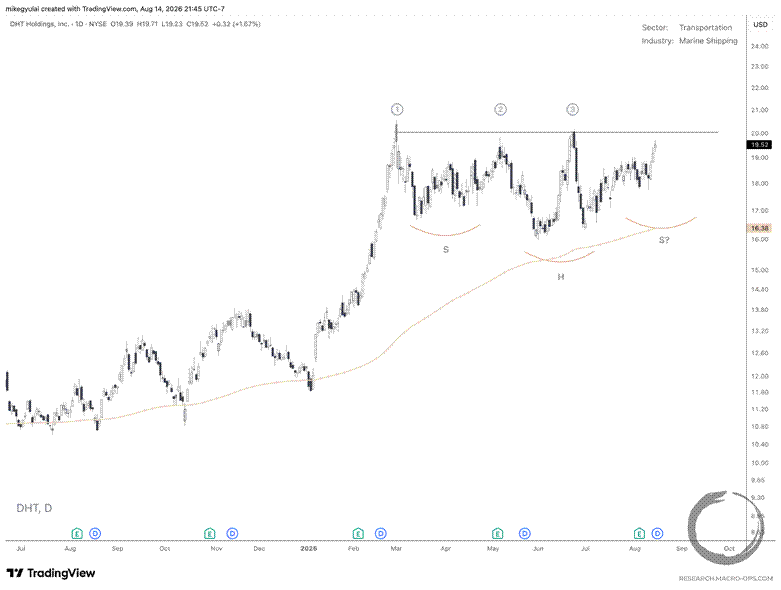
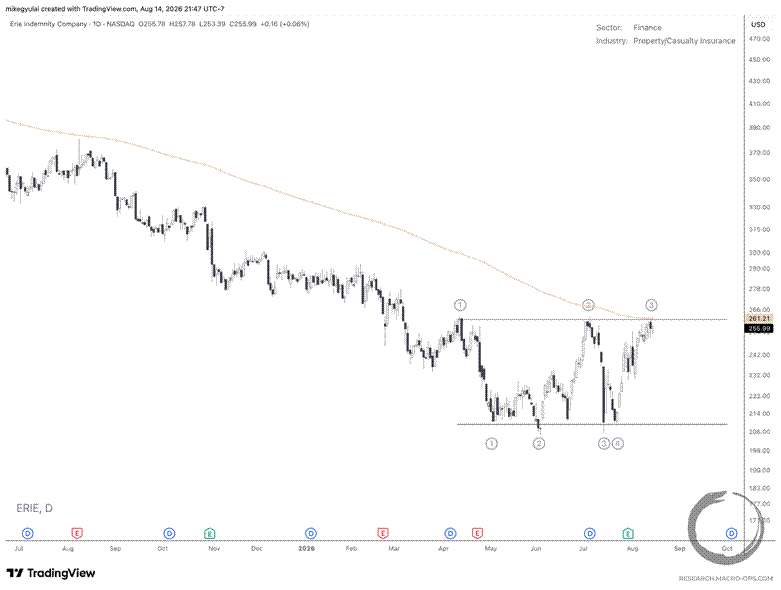
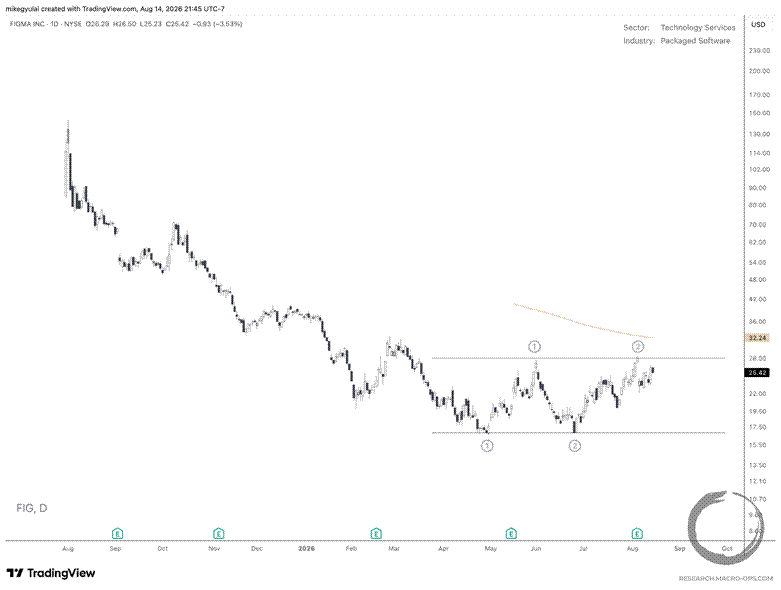
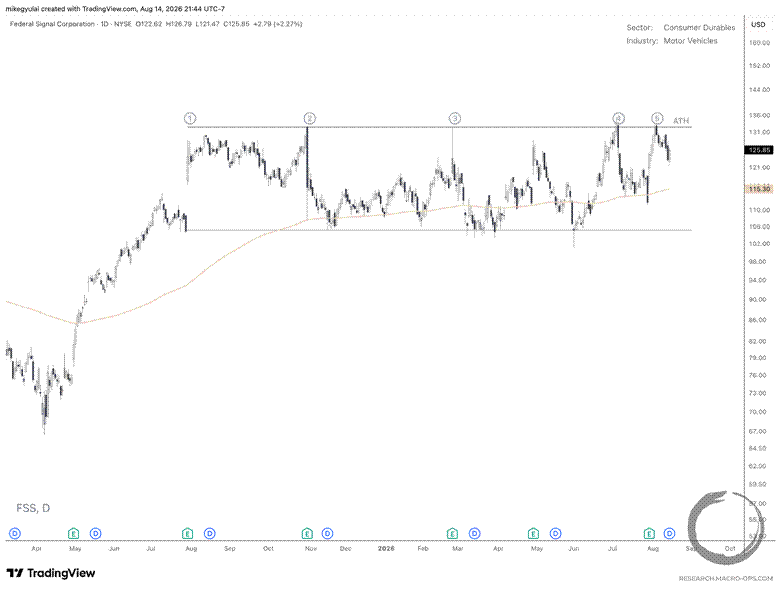
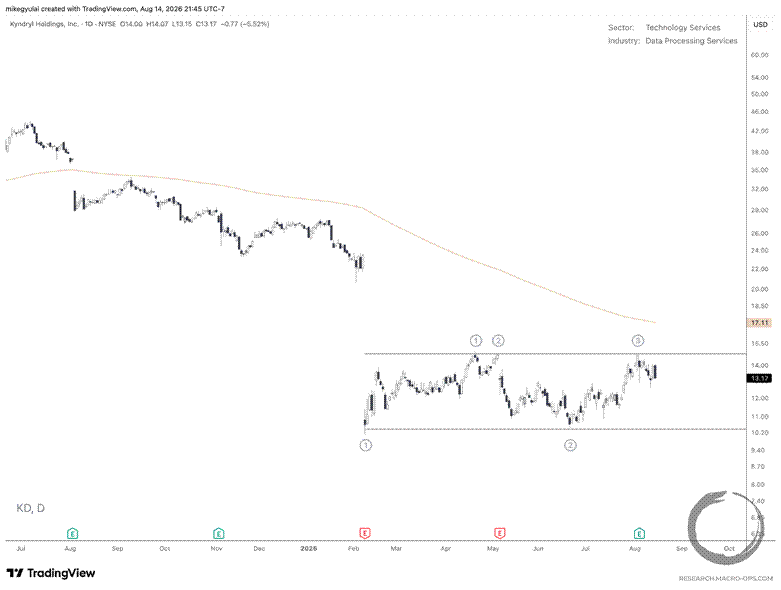
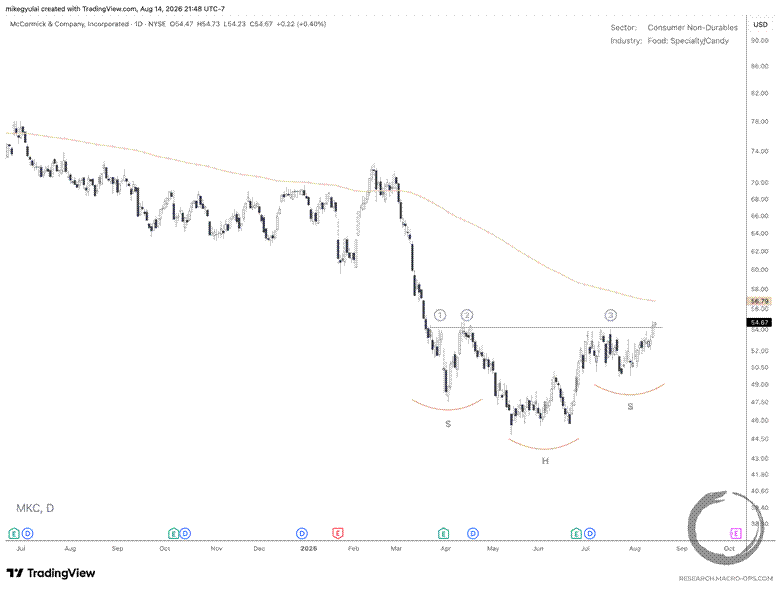
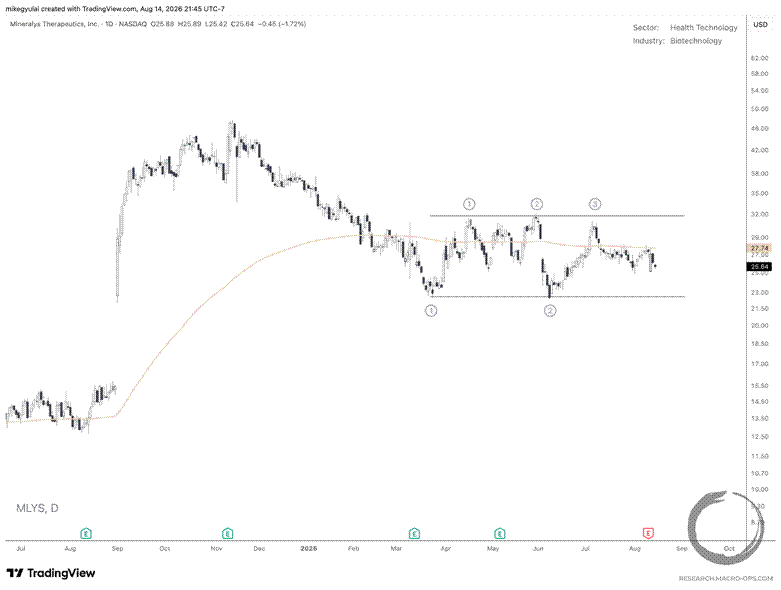
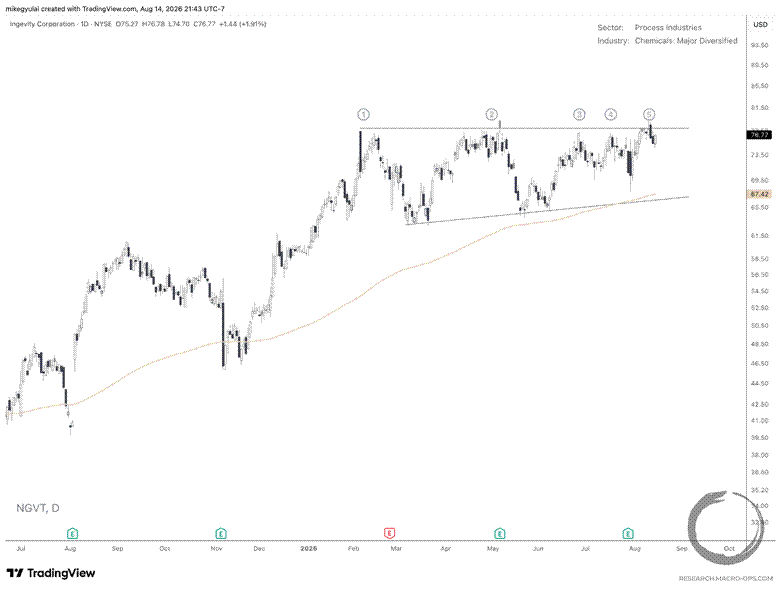
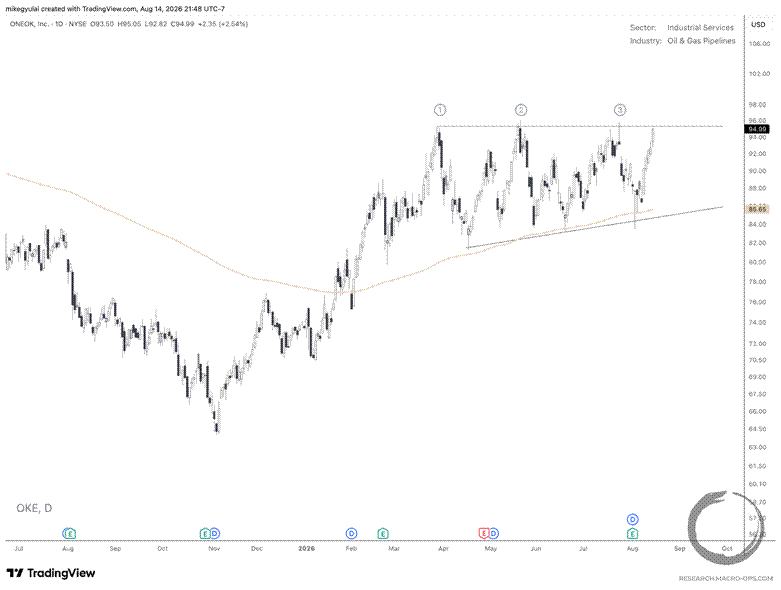
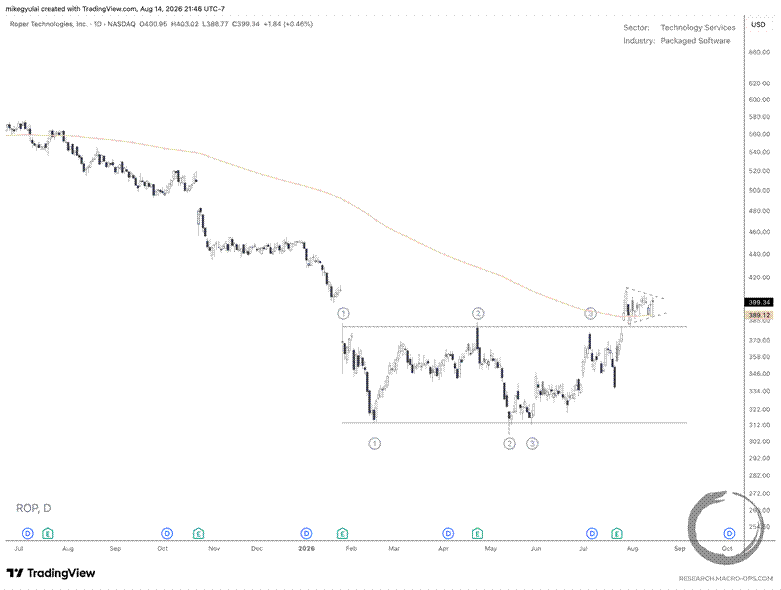
This week’s equity screen returned an intriguing mix of long and short setups, as well as notable continuations and reversal patterns.
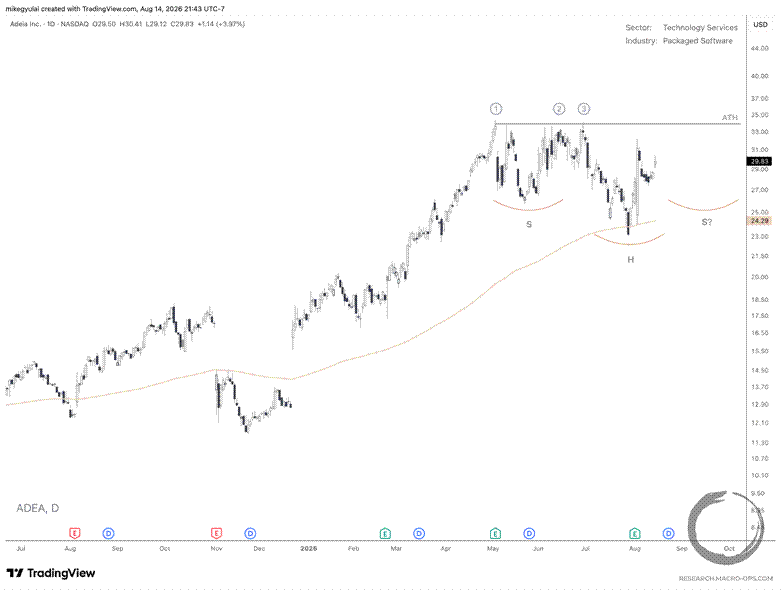
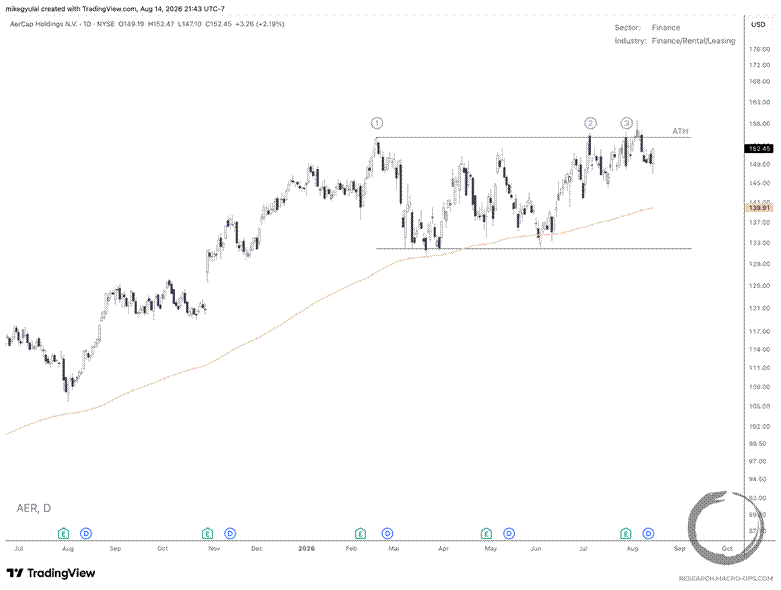
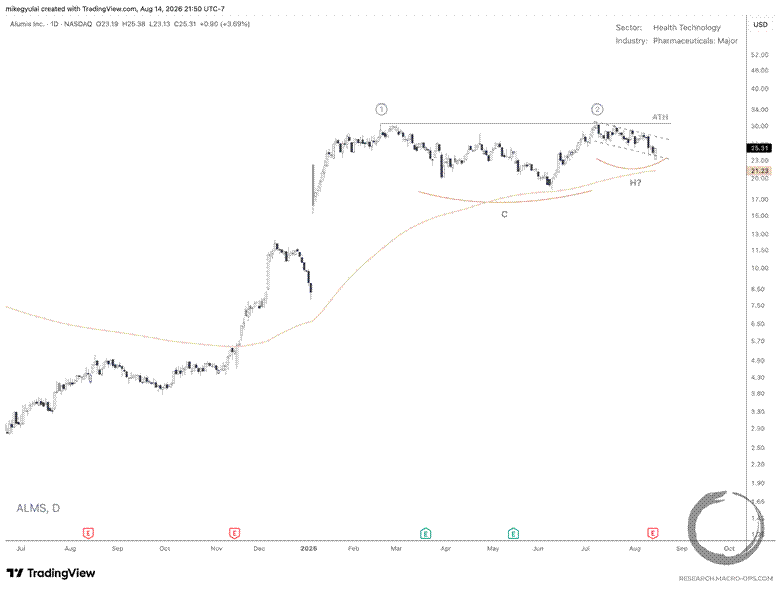
Here are the key setups that caught my attention:


Best wishes in your trading, and see you in the next issue.