Key points:
- Health care, energy, and staples held steady, ranking #1, #2, and #3
- Utilities had the biggest week-over-week increase, climbing four spots
- Software remains a notable area of strength within technology
Leadership tilts defensive
The AI trade is approaching an important technical test. Selling pressure persisted last week, although most of it occurred during Thursday’s session. South Korean equities (KOSPI), semiconductor stocks (SOXX), and AI-focused ETFs are all attempting to hold critical support near their late-July lows. Their ability to defend these levels will be important.
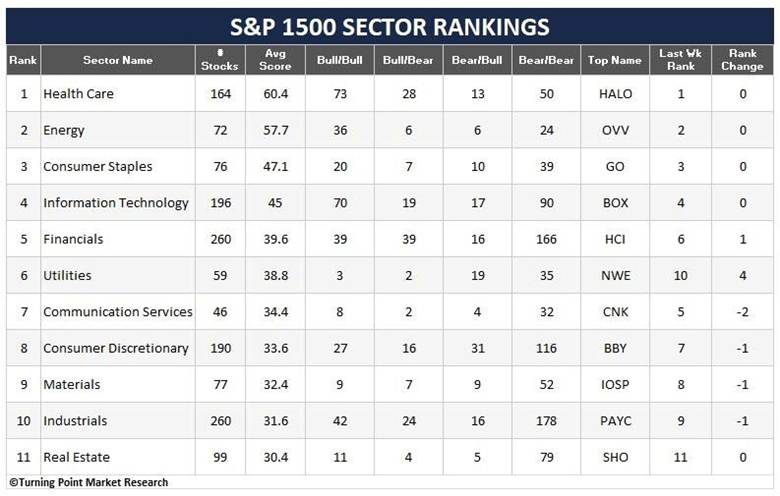
Elsewhere, defensive leadership remains firmly in place. Health care leads the rankings with an average score of 60.4, followed by energy at 57.7. Consumer staples ranks third, 10 points behind energy. Technology held at fourth, with software strength offsetting weakness across AI stocks. Industrials continued to deteriorate, dropping to tenth, while utilities advanced four spots to sixth.
The rotation continues to favor defensive areas over more cyclical and growth-oriented segments of the market.
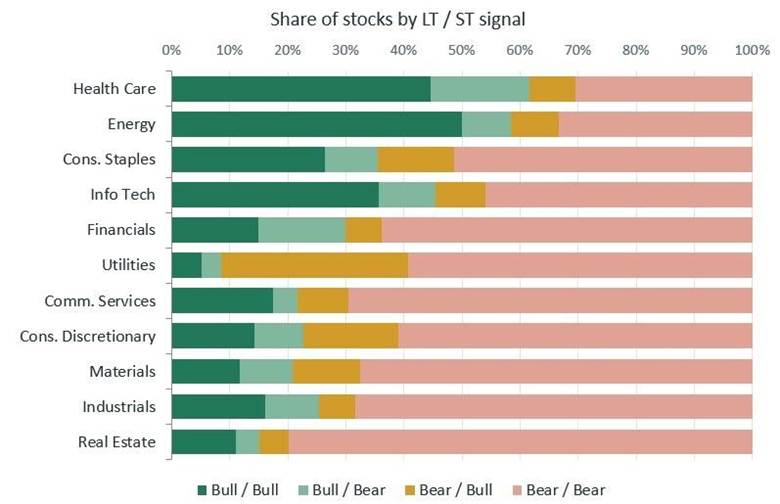
Although health care holds the top overall sector ranking, energy leads in the percentage of stocks with bullish ST and LT Dual Trend signals, at 50%.
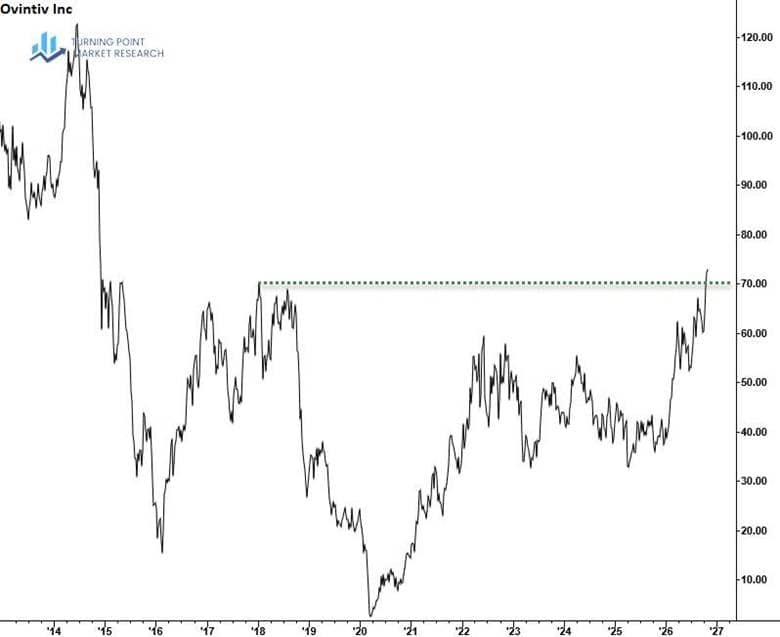
Speaking of energy, Ovintiv (OVV), the highest-ranked stock among all S&P 1500 energy names, just broke out of a nine-year base that also resembles a reverse head-and-shoulders pattern.
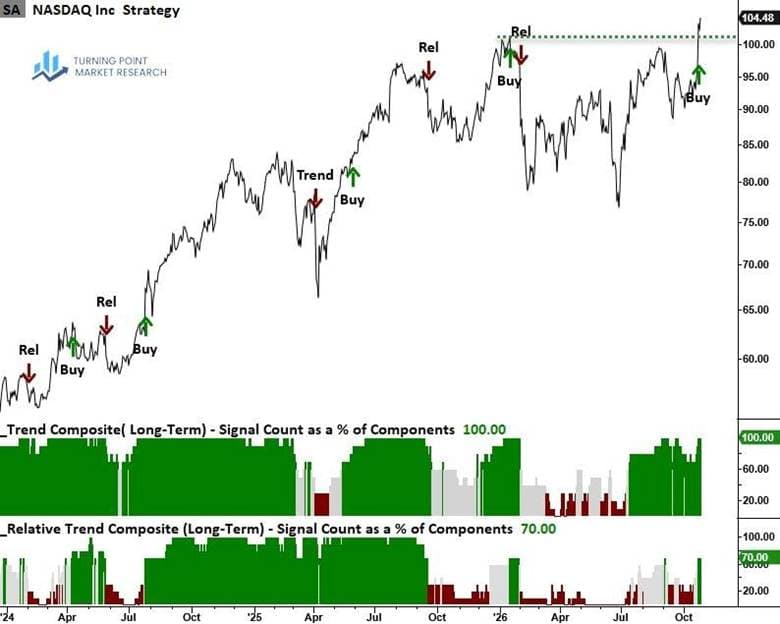
Health care continues to stand out, with seven sub-industries in the top 30, led by managed health care and life sciences tools. Reinsurance remains the top-ranked group overall, while financial exchanges & data continued to climb the rankings. In the exchange space, Nasdaq (NDAQ) recently broke out to a new high after 10 months of consolidation.
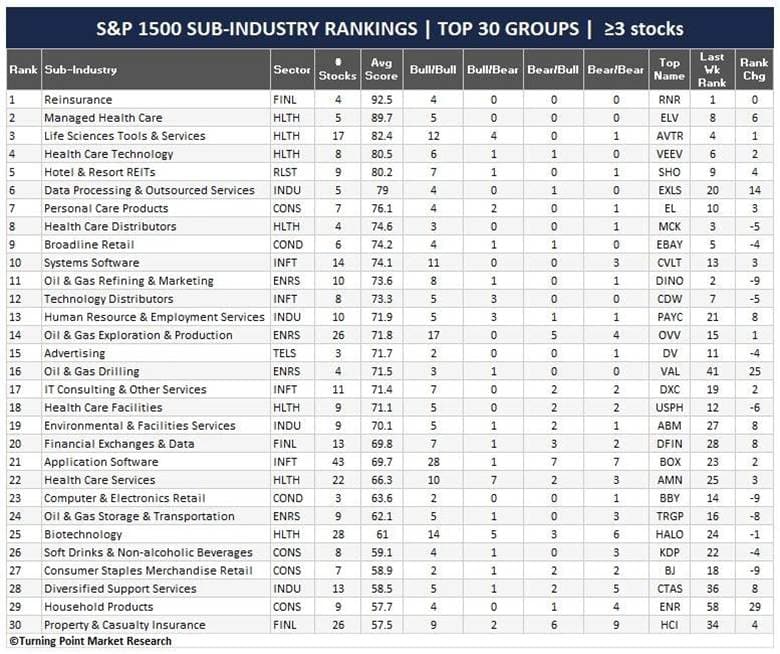
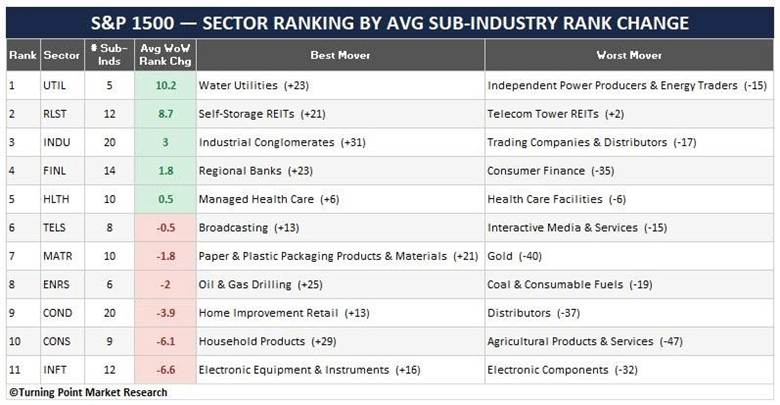
Utilities and real estate, two interest rate-sensitive groups, posted the largest increases in average sub-industry rankings last week. Meanwhile, technology sub-industry rankings declined more than those of any other sector for the second consecutive week. However, the pace of deterioration slowed sharply, with the average ranking falling 6.6 points, down from 32.7 the previous week.
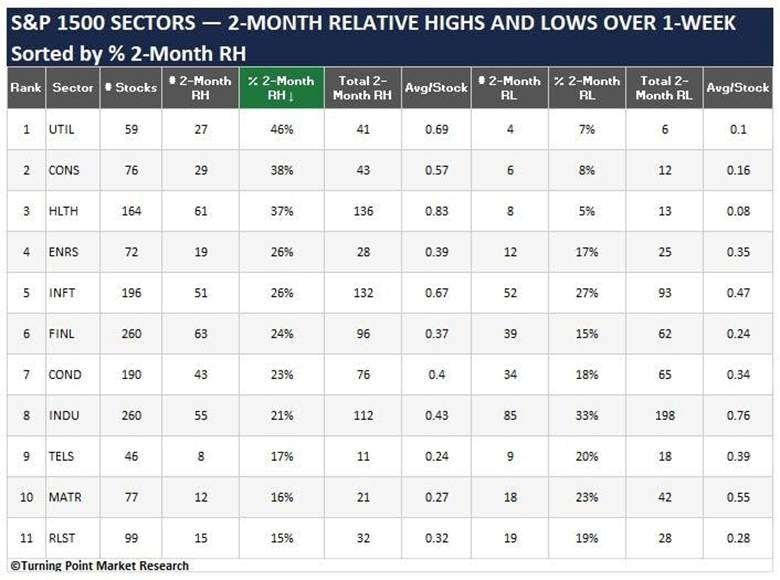
The distribution of relative highs and lows across sectors once again reflected the market’s defensive tone. Utilities, consumer staples, and health care led in the percentage of stocks reaching two-month relative highs. That’s not exactly comforting, nor is it what you typically see in a healthy bull market.
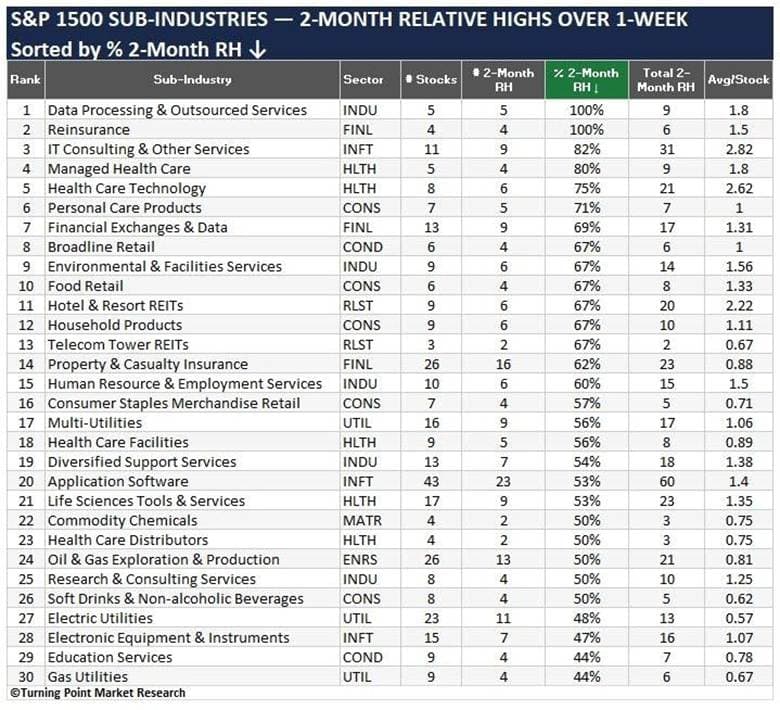
Health care, consumer staples, and industrials each had five sub-industries in the top 30. The two defensive sectors make sense given the market’s tone, but industrials were less expected. Its strength is concentrated in service-based businesses, not the AI-related or fuel-sensitive groups that have been taking a hit.
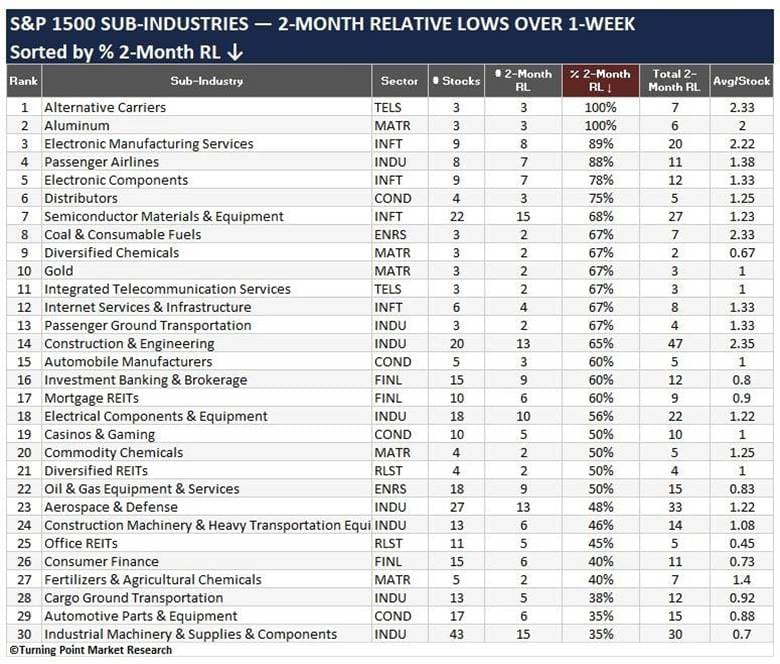
AI beneficiaries, transportation, and consumer-oriented groups continue to account for a large share of the relative lows, reflecting ongoing pressure on AI-related trades and areas vulnerable to higher fuel costs or interest rates.
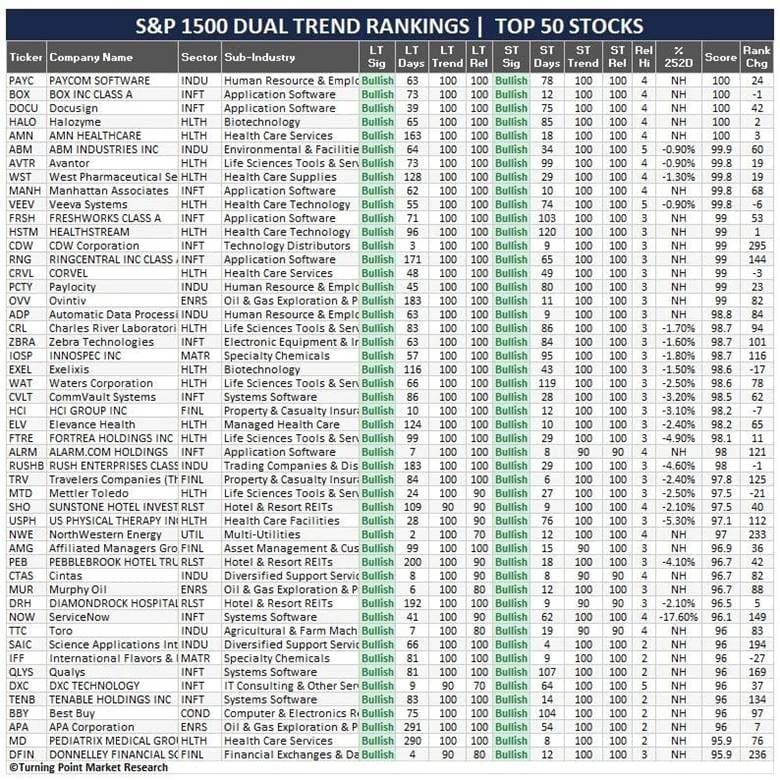
Health care once again topped the leaderboard, with 15 stocks in the top 50 and life sciences tools and services contributing the most names. Technology ranked second with 13 stocks, though that strength was concentrated in software, which accounted for 10 of the sector’s 13 names.
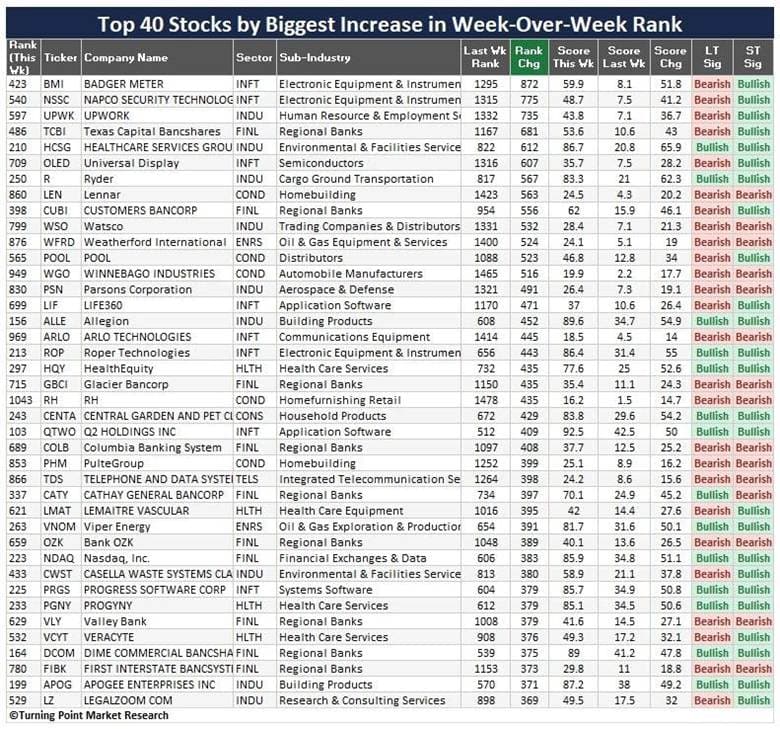
Ten of the 40 stocks with the largest ranking gains over the past week came from financials, led by regional banks. Two notable movers were homebuilders Lennar (LEN) and PulteGroup (PHM), whose rankings surged, likely benefiting from the pullback in the 10-year Treasury yield.
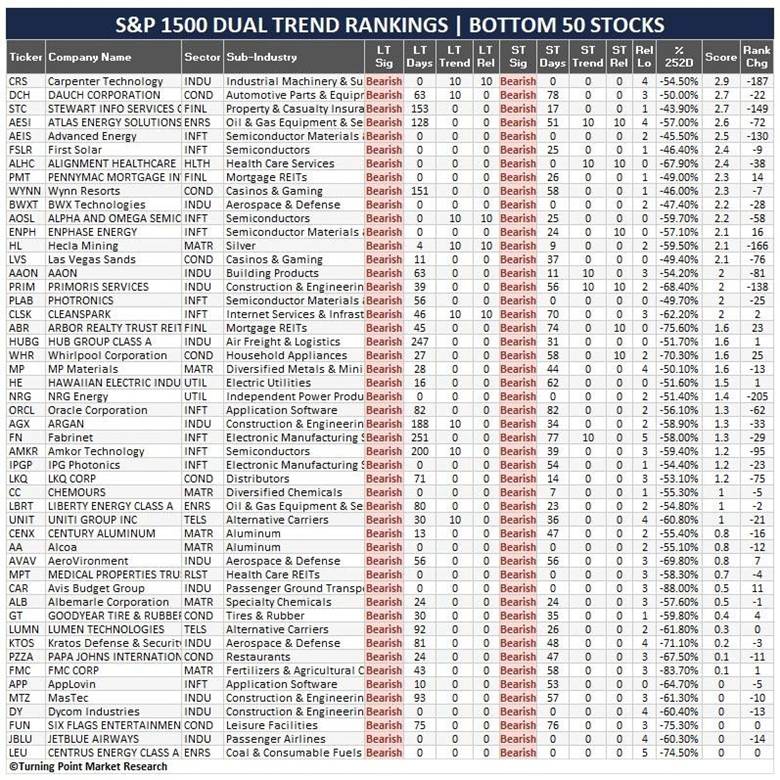
Technology and industrials dominate the bottom of the S&P 1500 rankings, accounting for 23 of the 40 worst-ranked stocks. Much of that reflects deteriorating trends and relative strength among AI beneficiaries. Casino and gaming, aerospace and defense, and metals also remain areas of concern, with several stocks in each group ranking among the bottom 50.
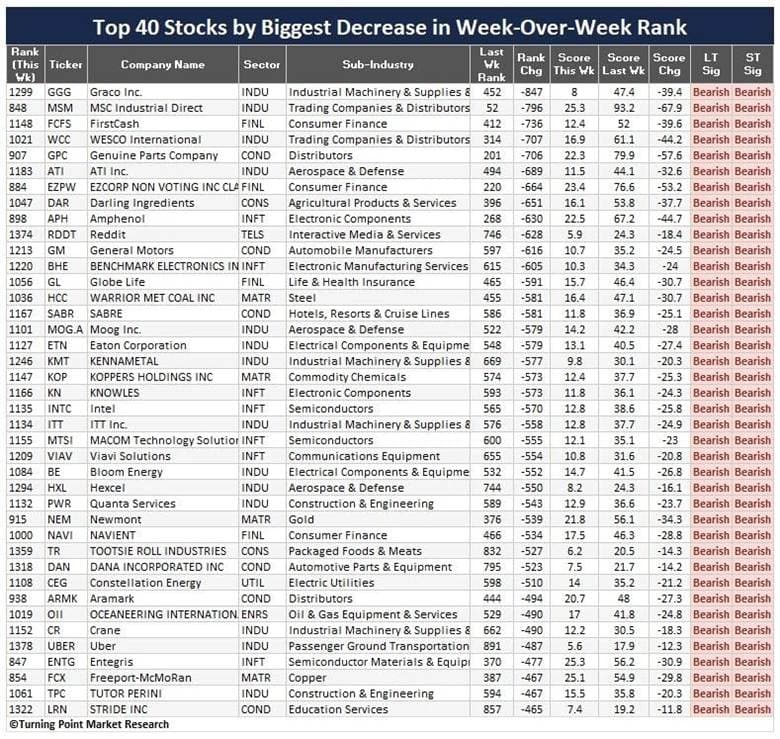
Technology and industrials dominated the list of the 40 largest week-over-week ranking declines, accounting for 21 names combined. Much of the deterioration was concentrated among AI beneficiaries, with industrials contributing more stocks than any other sector. Autos and aerospace and defense continued to show signs of trouble, in line with other market trends. Meanwhile, sharp declines in rankings among several consumer finance stocks suggest pressure is spreading to other consumer-oriented areas.
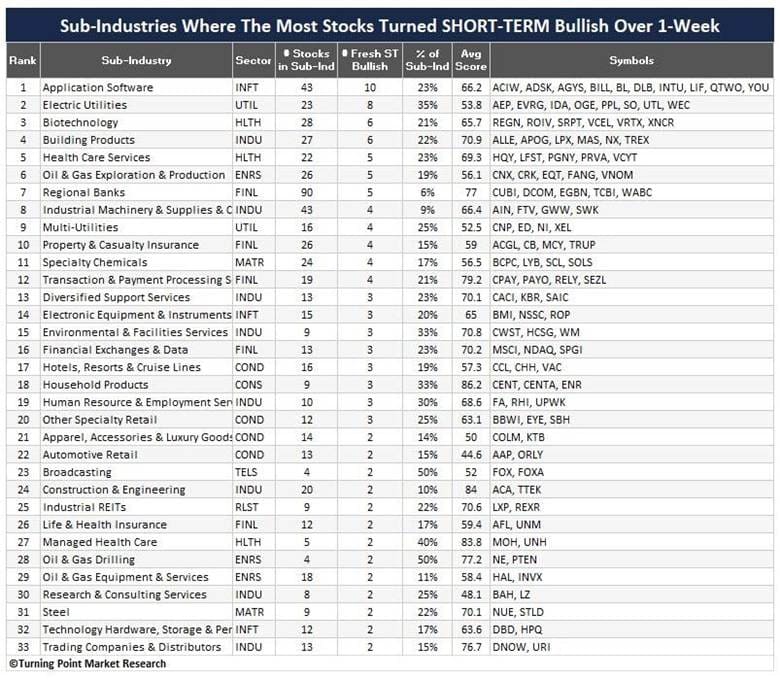
Application software topped all sub-industry groups, with 10 stocks shifting to a bullish short-term status over the past week. Consistent with the two-month relative-high data, most of the new short-term buy signals in industrials came from service-oriented groups.
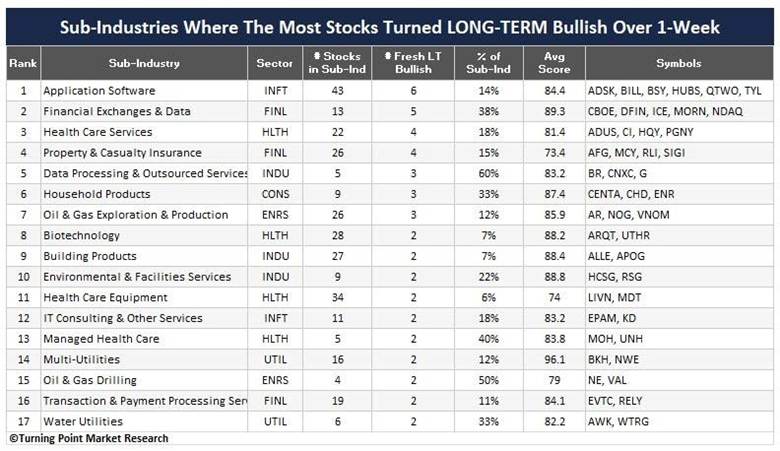
Application software also had the most long-term dual-trend buy signals among sub-industry groups, with financial exchanges & data ranking second.
As noted above, Nasdaq (NDAQ) recently closed at a new high. Moreover, it shifted to a bullish long-term dual-trend status, confirming the short-term model.
What the research tells us…
The latest S&P 1500 rankings point to an increasingly defensive market leadership profile, reflecting deteriorating trends among several former winners. Macroeconomic headwinds continue to weigh on old-economy segments, particularly those sensitive to interest rates. Against this backdrop, there is little justification for taking on meaningful additional risk beyond tactical opportunities with tight stops. Beaten-down technology stocks may offer one such opportunity. The AI trade, in particular, has reached a pivotal technical juncture, with several names testing support levels that could determine whether they stabilize or enter another leg lower. A successful defense of these levels could position them to participate in a year-end advance, though the broader chart structures raise questions about the durability of any recovery.
Against this backdrop, conservative sector positioning and a modestly elevated cash allocation offer a prudent balance between capital preservation and the flexibility to respond if conditions improve.