Broad Market Thoughts
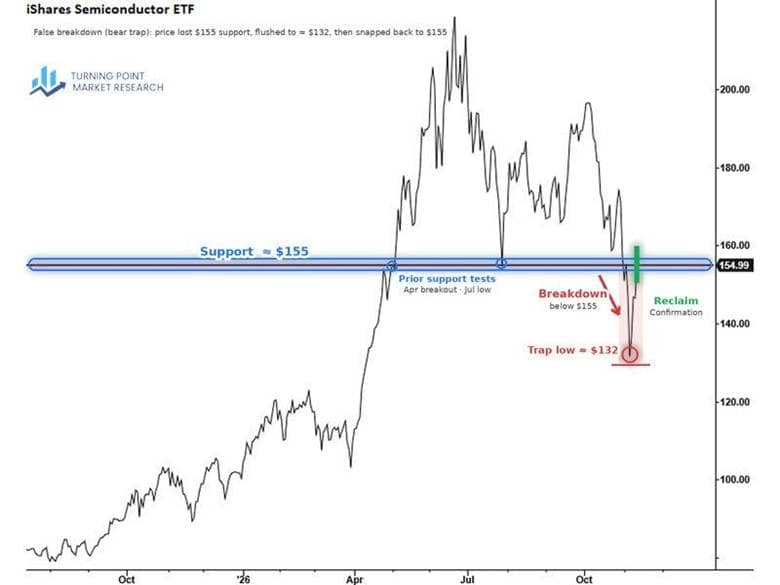
Two weeks ago, I highlighted a failed breakout, or bull trap, in technology. The weakness continued, with most stocks and tech indices breaking below critical late-July support and forming what looked like medium-term topping patterns. This week, however, the oversold conditions discussed in last week’s brief helped fuel a sharp rebound, raising the possibility of a failed breakdown, or bear trap.
The SOXX provides the clearest example, having rallied back to its former support level. While some gains are being surrendered today, the next several weeks should be telling. If prices remain below former support, now resistance, the odds of the topping patterns playing out will increase. Until the market provides greater clarity, patience is advised.
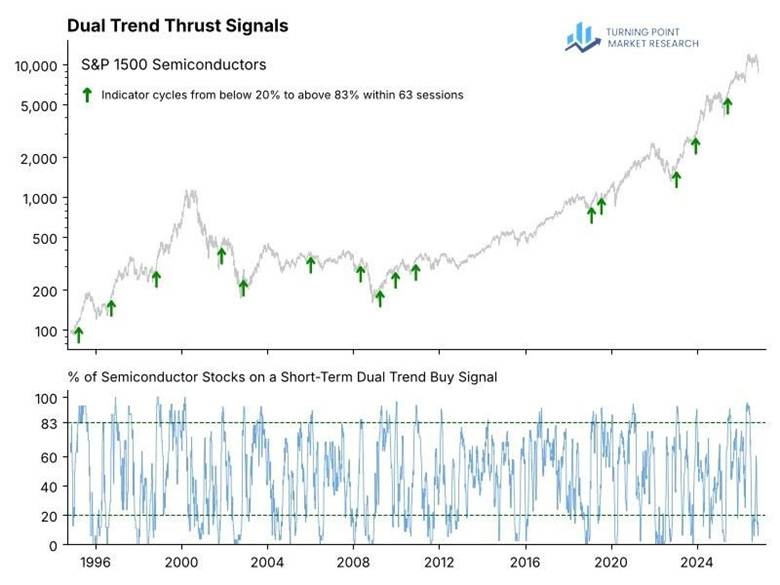
If the current corrective phase in semiconductors mirrors the 1996 and 1998 drawdowns during the dot-com era, the short-term Dual Trend breadth indicator should eventually deliver an all-clear signal, as it did in both instances. Until then, treat any semiconductor exposure as a tactical trade within an oversold bounce rather than a core portfolio holding.
Inflation and central bank policy remain key risks
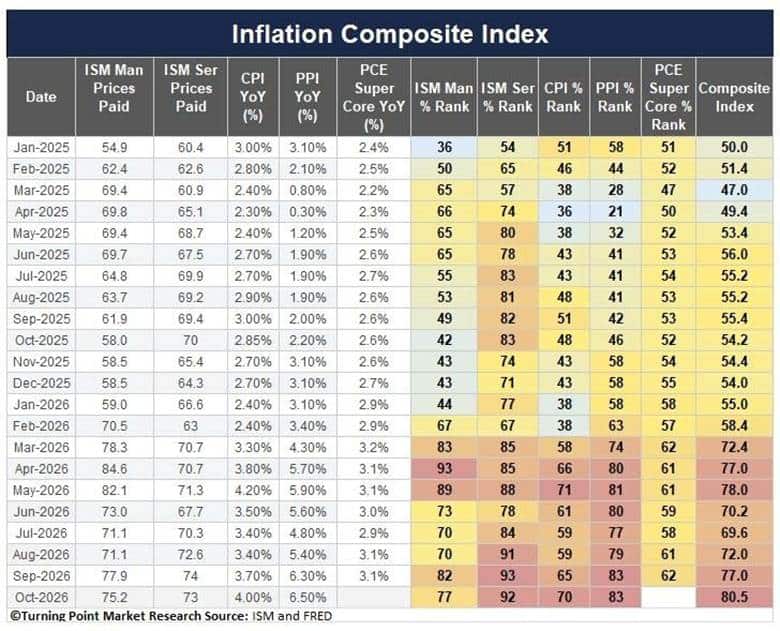
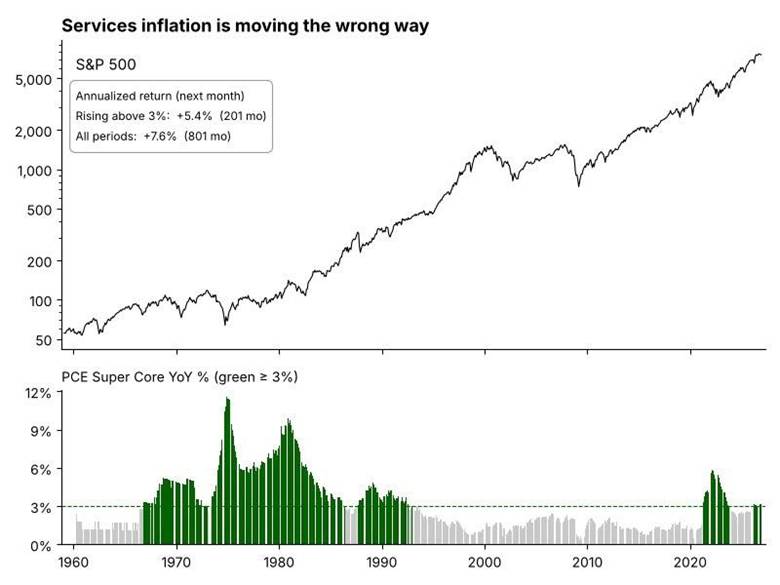
October’s inflation data have been mixed. ISM manufacturing and services activity contracted modestly, while CPI and PPI both moved higher. The next major data point will be the PCE report on November 25, just ahead of the Fed’s December meeting. I’ll be watching the PCE Super Core number, as it excludes food, energy, and housing and provides a clearer look at underlying inflation persistence. Another move higher would be an unwelcome development and could force the Fed to shift toward a more hawkish policy stance.
When the PCE Super Core is rising above 3%, the S&P 500 has generated annualized returns of just 5.4%, below its historical average of 7.6%. By comparison, readings below 3% (goldilocks) have coincided with stronger annualized returns of 8.7%.
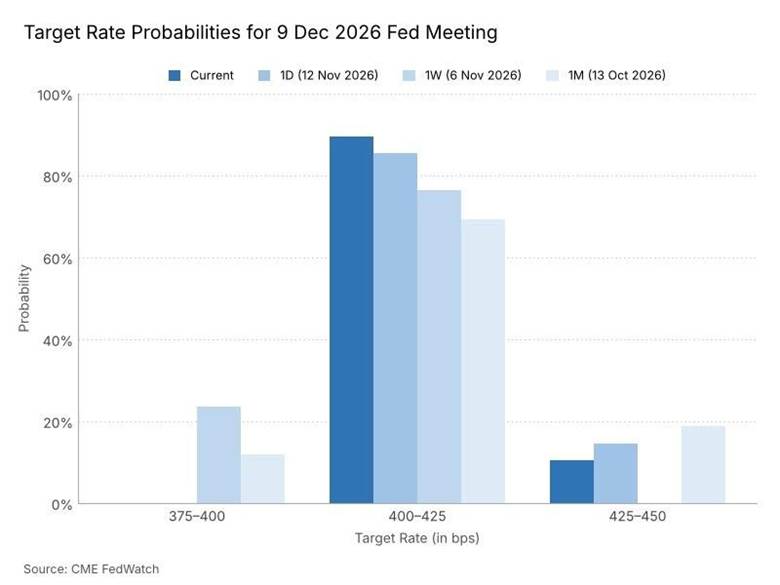
As things stand, a second rate hike appears increasingly likely, with the CME Fed Watch Tool indicating a greater than 80% probability of a December move.
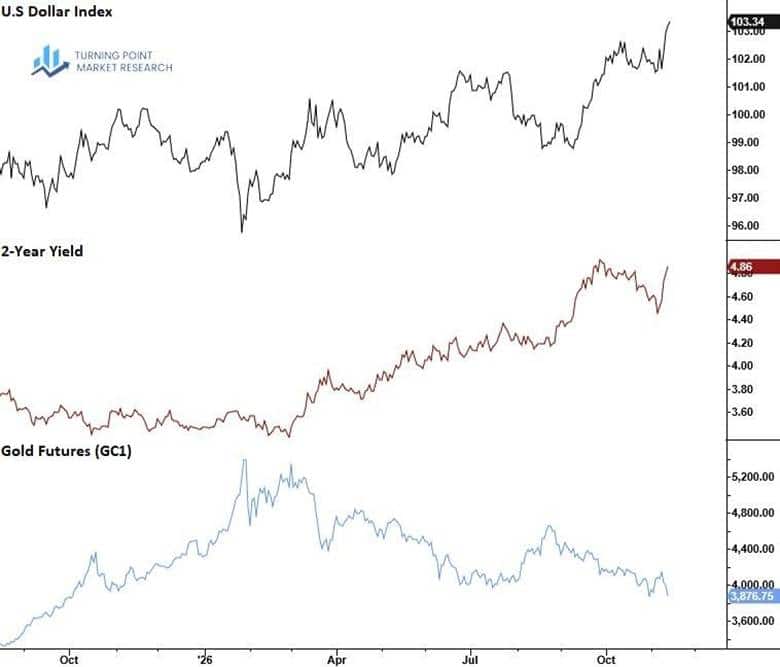
The shift in policy expectations has driven a sharp rise in both the dollar index and 2-year Treasury yield this week, putting pressure on precious and industrial metals.
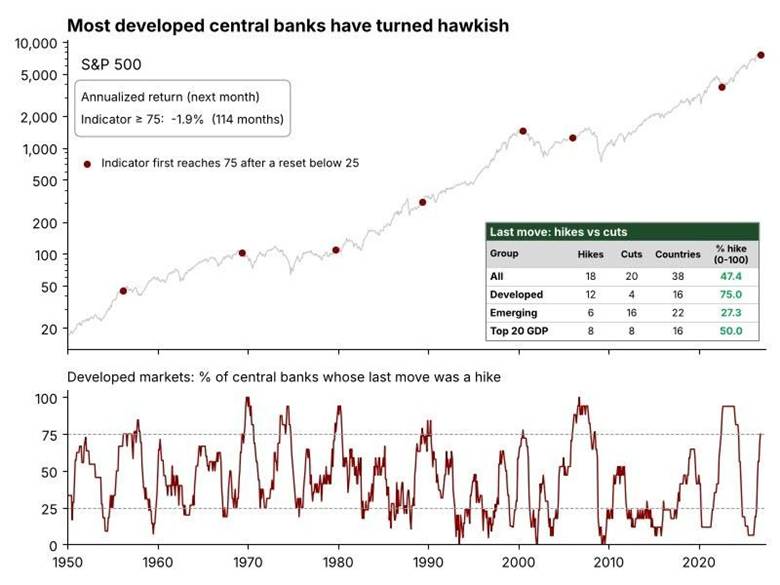
Central banks worldwide continue to shift toward tighter monetary policy. Since the last update, the share of developed-market countries whose most recent policy move was a rate hike has risen from 69% to 75%. Historically, this type of policy environment has been a headwind for equities, with the S&P 500 producing an annualized return of -1.9%.
Sentiment has moderated, but it hasn’t reached the kind of pessimistic extreme that tends to create a fat-pitch contrarian opportunity. Instead, what we’ve experienced is arguably one of the more dangerous sentiment developments: a reversal from excessive optimism. These reversals can be particularly damaging because they undermine investor confidence and leave market participants reluctant to rebuild positions or increase exposure.
We’re seeing this play out in the granddaddy of sentiment surveys, Investors Intelligence, where the percentage of bulls has fallen from above 57% to 37% in just six weeks. Notably, this deterioration has occurred while the S&P 500 remains within 5% of its record high, as the red dots in the chart below highlight.

History offers some cautionary examples, with similar sentiment reversals occurring near market peaks in 1966, 1973, 1980, and 2025. The broader outlook was weak, though not exceptionally so. The most recent occurrence, following the initial Iran conflict drawdown, was followed by a substantial advance in the S&P 500. Importantly, however, that episode coincided with a broadly oversold market, providing a very different backdrop from the one confronting investors today.

Research this week
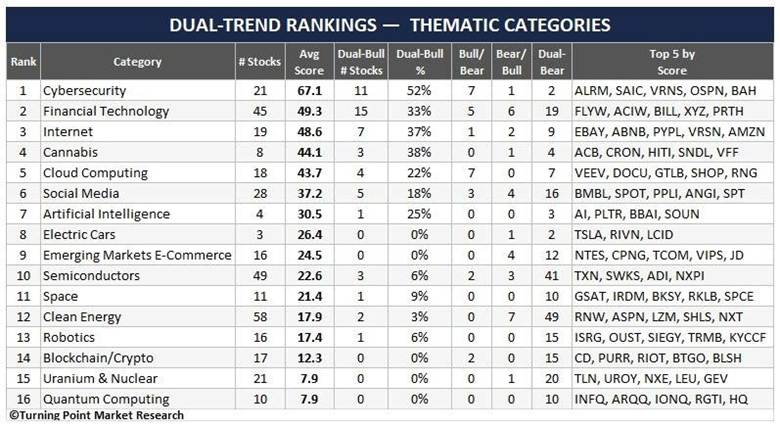
The latest S&P 1500 rankings highlighted a continued shift in leadership away from growth-oriented industries, particularly AI beneficiaries, and toward more defensive and value-oriented cyclical groups.

Wednesday’s report included a broad look at thematic stocks, which tend to be more speculative and offer a useful window into investors’ risk appetite. The picture was largely unfavorable, with most groups remaining bearish. Cybersecurity and financial technology were the lone exceptions.
Dual trend analysis
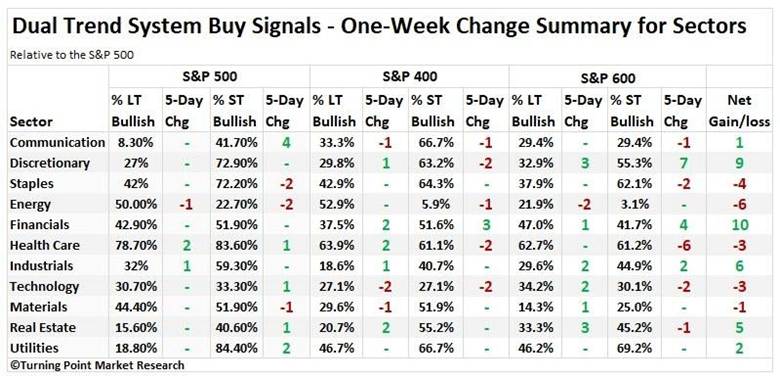
Dual Trend activity was limited over the past week, with financials and consumer discretionary leading the gains.
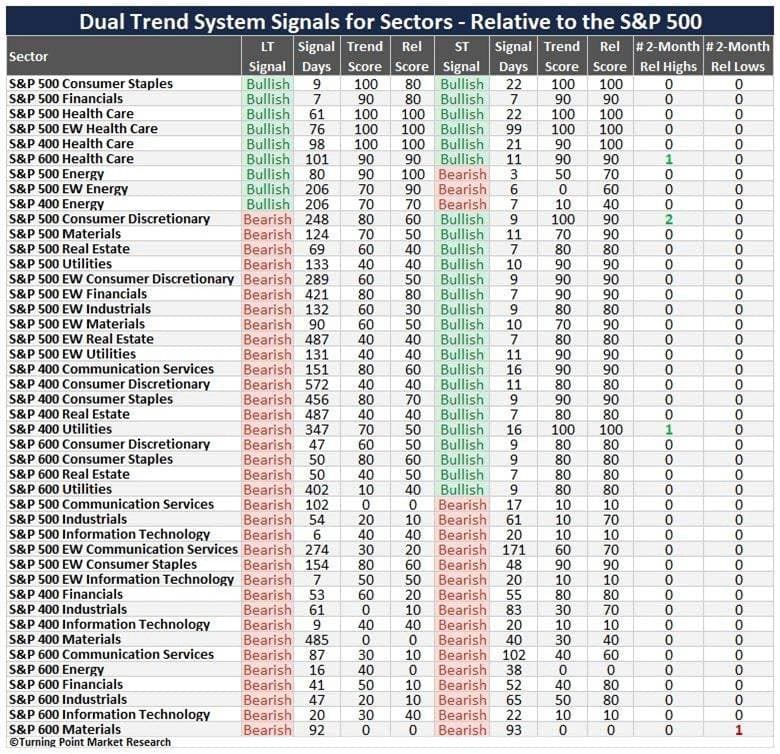
Sector signals were also limited, with the only meaningful shift occurring in the S&P 500 energy sector, which moved to a bearish status.
Portfolio update
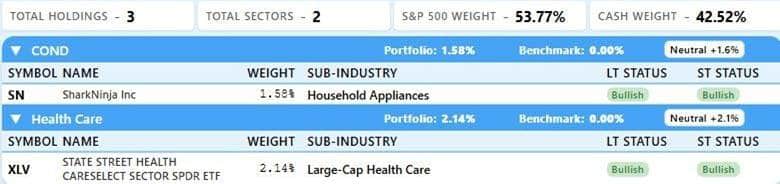
Trading activity was minimal this week, which is consistent with the portfolio’s defensive mandate under a TCTM Risk-Off regime. A tactical trade in Royal Gold (RGLD) was established but quickly reversed following the CPI release.
The portfolio continues to hold a high level of cash, underscoring its conservative stance.
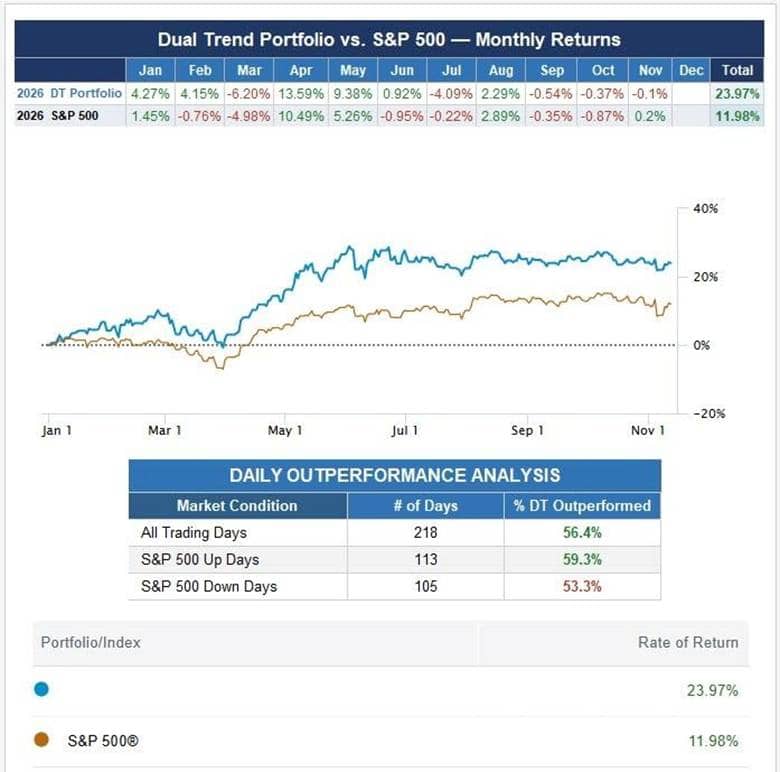
Through Thursday’s close, the Dual Trend portfolio had gained 23.97%, outperforming the S&P 500’s 11.98% return.
Final thoughts
A TCTM risk-off regime remains in effect, with little evidence that conditions are improving. Price action in the market’s most crowded trade, technology, remains poor. Inflation is elevated and rising, expectations for additional rate hikes are increasing, and the resulting strength in the dollar and Treasury yields is tightening financial conditions. Lower-quality and speculative assets, along with precious and industrial metals, are coming under pressure, while defensive groups are attracting relative strength.
With earnings season largely behind us, inflation and Fed policy are likely to be the primary market catalysts through year-end, neither of which appears particularly supportive. A sustainable year-end rally would likely require a broad-based oversold condition to create the foundation for a recovery, but that scenario has yet to develop. For now, maintaining a cautious stance toward equities remains the best course of action.