Key points:
- Nearly half of global central banks’ last move was a rate hike
- Synchronized tightening backdrops tended to exhibit below-average returns
- Stock returns get worse as more banks increase rates
Another headwind for stocks
As widely expected, the Federal Reserve refrained from raising the target rate on Wednesday, suggesting it wants to assess more information ahead of the December meeting.
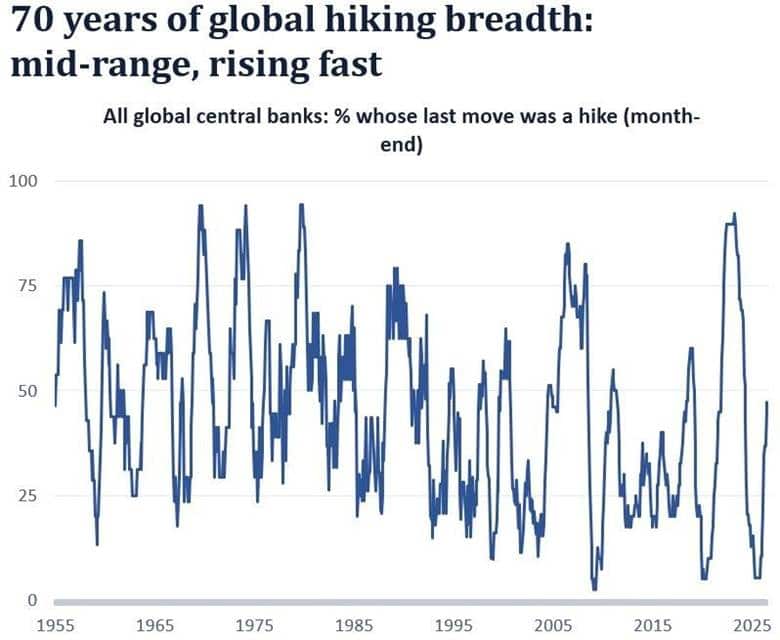
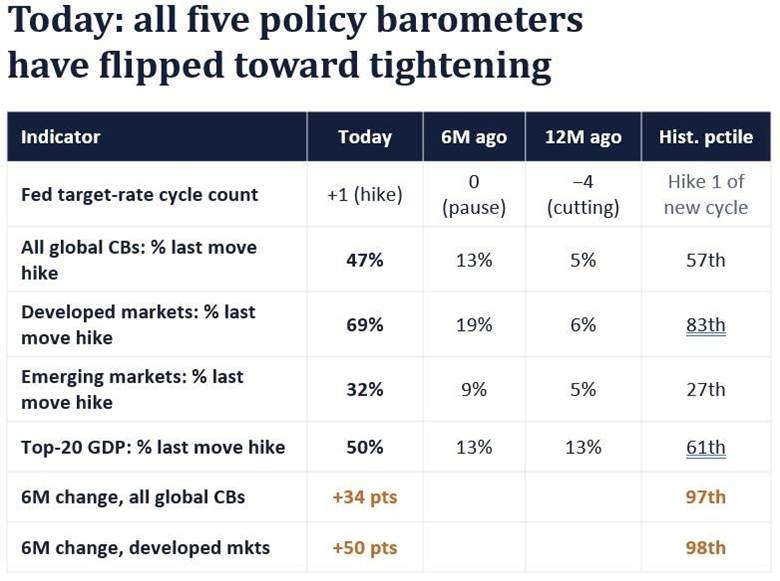
The bigger story is the worldwide shift toward tighter monetary policy. The share of global central banks that hiked last has jumped from 5% a year ago to 47% today.
This matters because central banks collectively influence liquidity, credit availability, economic growth, and asset valuations. Synchronized tightening can create a challenging environment for risk assets, especially stocks, as the cumulative effects begin to weigh on growth and corporate earnings.
Developed markets are leading the shift toward tighter monetary policy, with 69% of central banks’ latest policy moves being rate hikes, versus 32% in emerging markets. The speed of this shift also stands out. The six-month change in policy rates for all central banks and developed markets ranks in the 97th and 98th percentiles, respectively, compared with historical cycles.
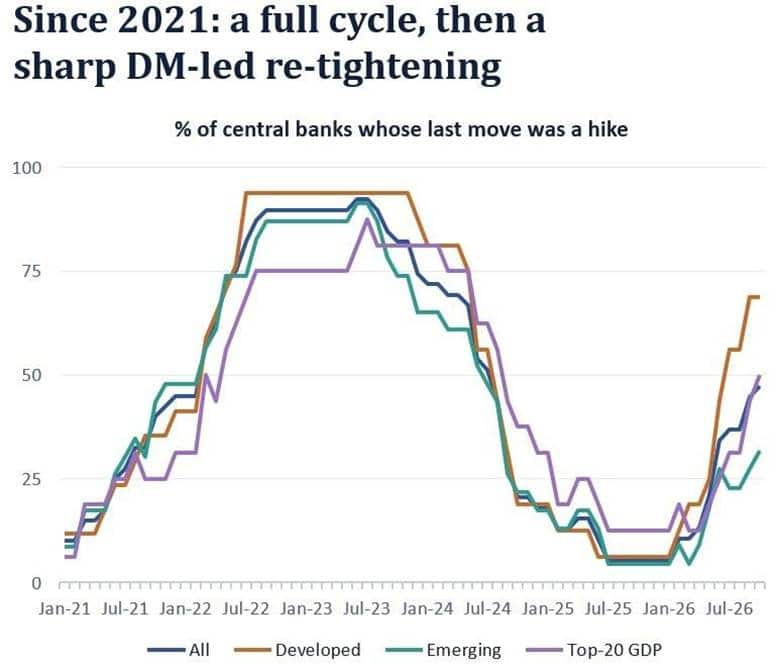
Central bank policy was largely neutral through most of 2025, but tightening accelerated in March as the Iran conflict sent crude oil prices soaring. The key question is whether that trajectory will flatten if the conflict ends and crude oil prices reverse lower.
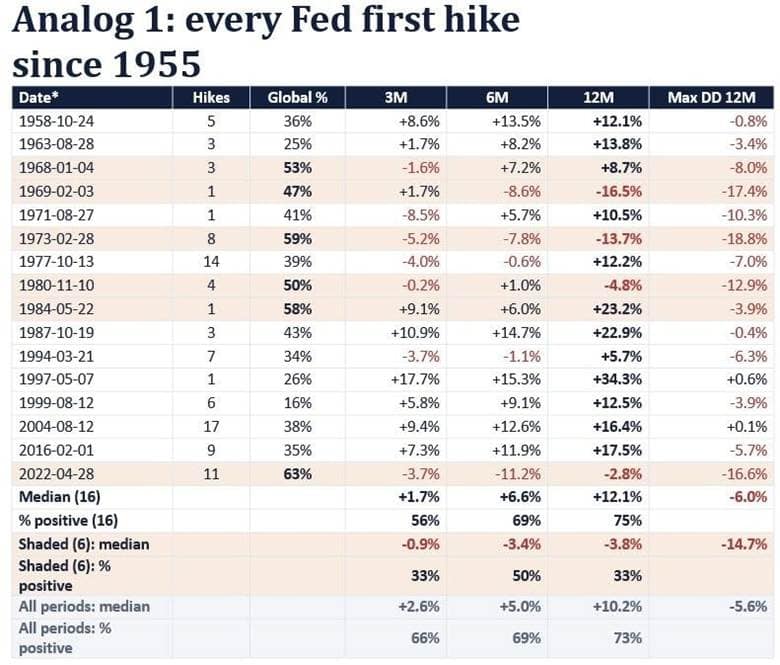
Historically, when more than 45% of global central banks had raised rates, and the Federal Reserve had also raised its target rate, forward S&P 500 performance was unfavorable. In every instance but one, the index declined at some point over the next 12 months.
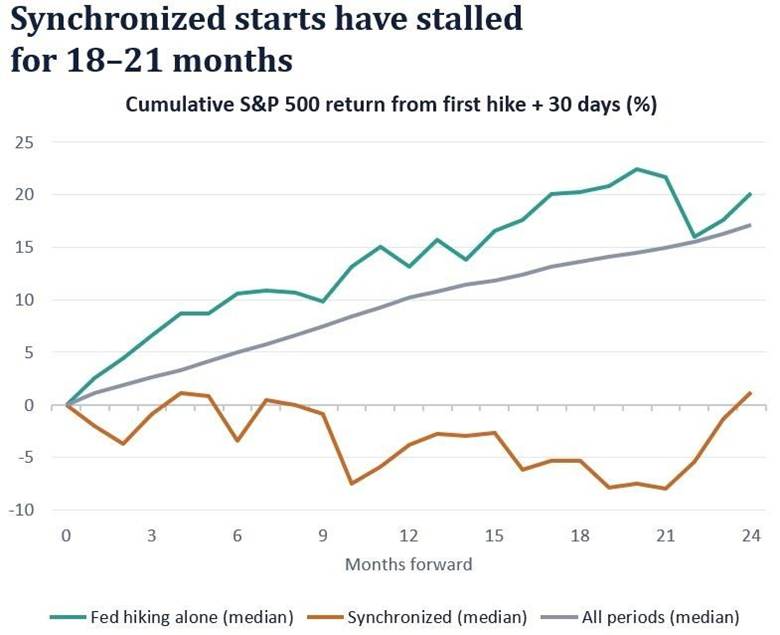
When the Fed hikes and most other central banks are not on board, S&P 500 returns climb steadily, reaching about +20% by month 18. Synchronized tightening produces a different outcome, with returns drifting sideways to lower before bottoming near −8% in month 21 and recovering by month 24.
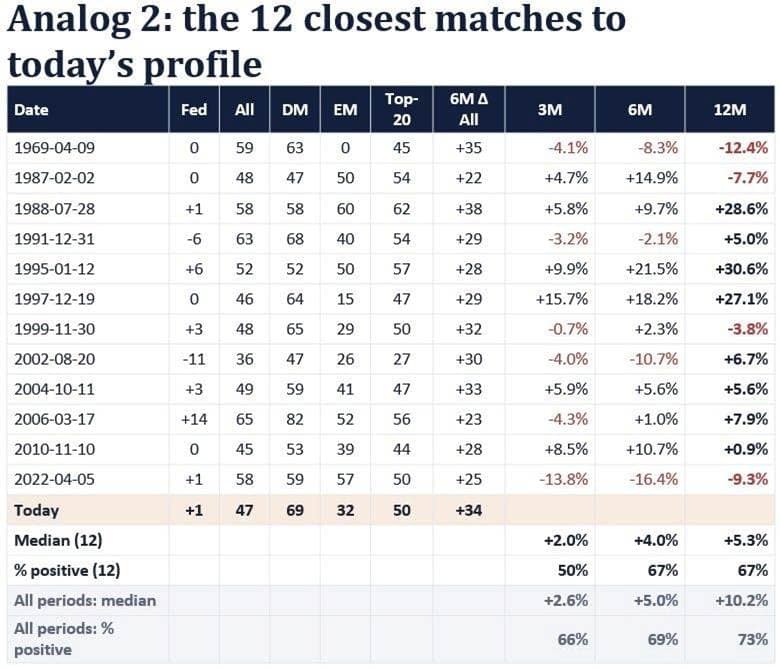
The 12 instances most closely matching today produced returns and win rates below the baseline results over the full study period.
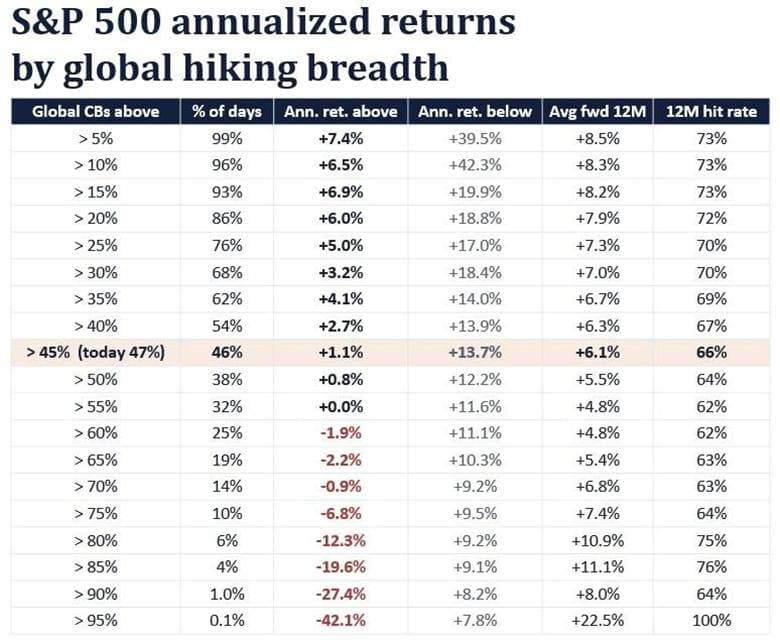
A clear relationship exists between synchronized global tightening and equity performance: as more central banks enter hiking cycles, S&P 500 returns deteriorate. Once the share reaches 60%, annualized returns turn negative. Whether this tightening trend accelerates or reverses will be critical for markets.
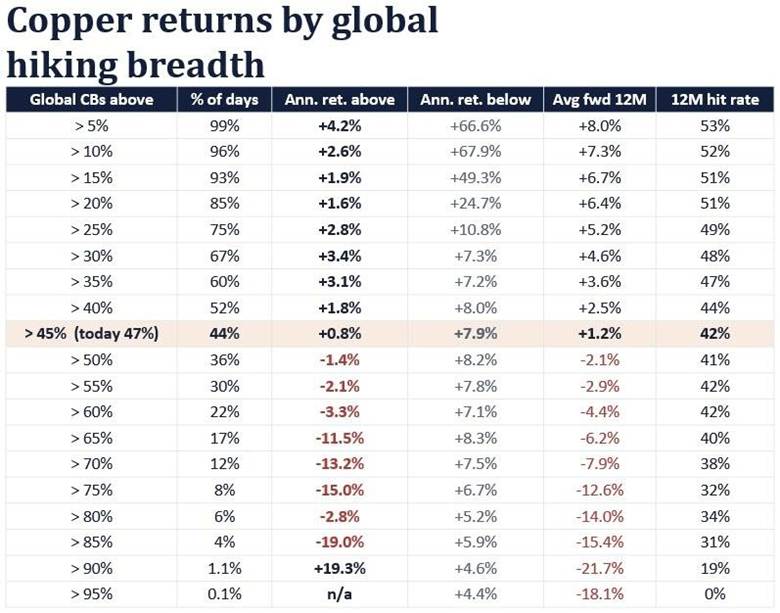
Copper, the metal with a PhD in economics, turns bearish as 50% of global central banks tighten, likely reflecting a slowing economy.
What the research tells us…
The Federal Reserve may have held rates steady this week, but the global policy backdrop is becoming increasingly restrictive. Nearly half of central banks have hiked rates as their latest policy move, led by developed markets. History suggests this is an unfavorable development for equities. Synchronized tightening cycles have tended to leave the S&P 500 trailing its average performance, and the results have been worse when the Fed joins the global tightening effort.
The Iran conflict and the associated surge in crude oil prices are central to the outlook. A diplomatic breakthrough that drives oil prices lower could ease inflation pressure and give central banks room to slow or reverse their tightening trajectory. That could provide a tailwind for stocks. Without that relief, continued rate hikes would deepen the headwind facing equities.
Wall Street has long warned investors not to fight the Fed. As tightening spreads across the global economy, the bigger risk may be fighting the collective direction of central bank policy.