Broad Market Thoughts
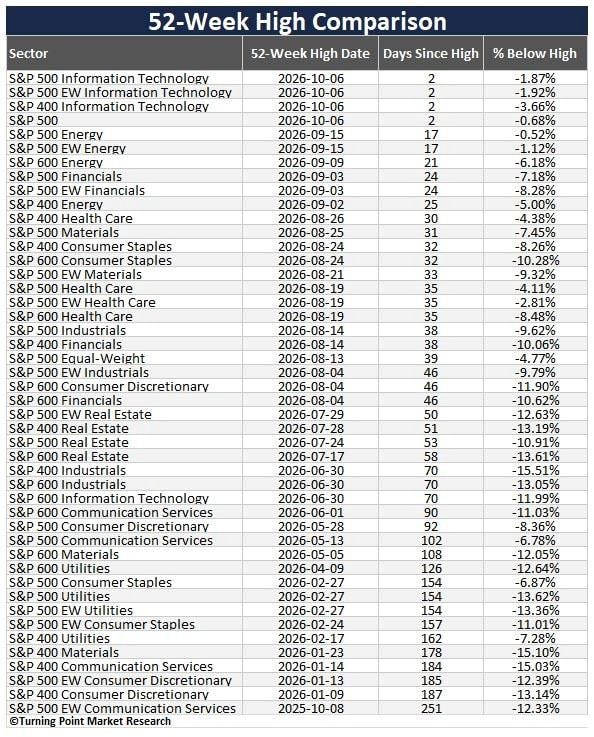
The S&P 500 closed at a record high on Tuesday, driven by technology. Yet the strength remains exceptionally narrow, with no other sector recording a new high. Across the broader market, most groups remain in multi-month consolidations, while some are approaching significant, prolonged drawdowns. Market breadth continues to paint a troubling picture, with deterioration evident across just about every measure.
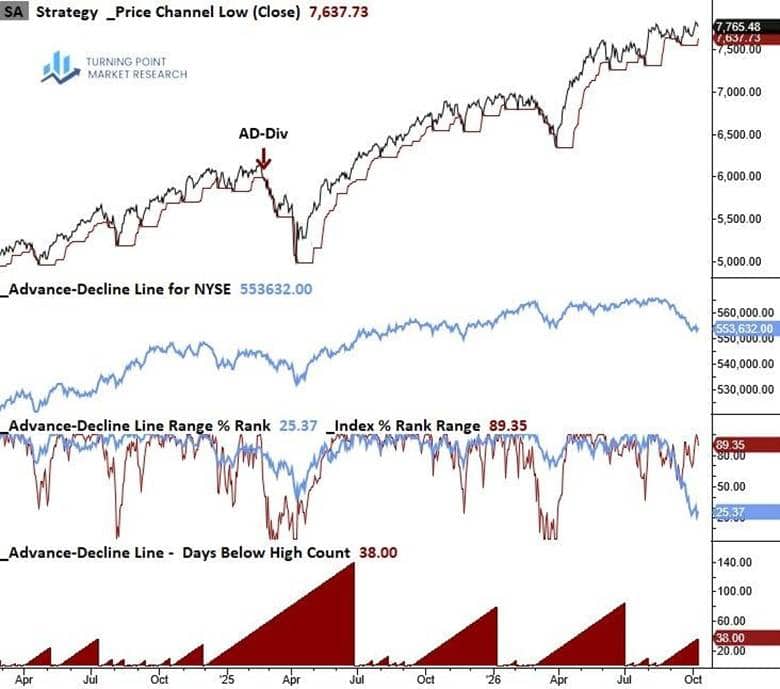
Tuesday’s new S&P 500 closing high triggered divergence conditions across the NYSE, S&P 500, and S&P 1500 advance-decline line models within the TCTM Risk-Off composite. The magnitude of these divergences is particularly striking, with readings at their most extreme levels since 1999–2000. The final piece of the signal requires the S&P 500 itself to deteriorate. That condition has yet to occur. Stay tuned.
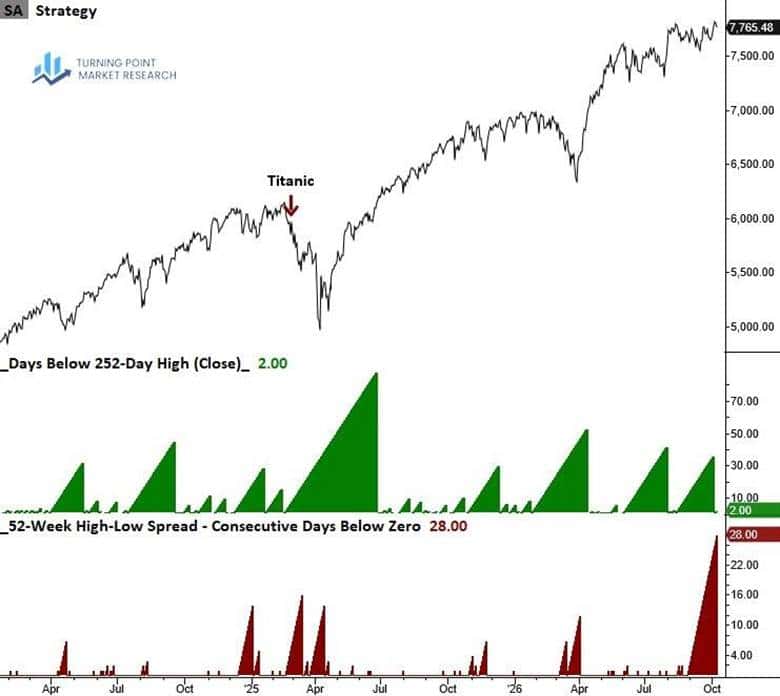
Another TCTM component under watch is the Titanic Syndrome. This signal requires 52-week lows to outnumber 52-week highs for five consecutive sessions within the seven sessions immediately following a multi-year high. The NYSE has recorded two consecutive qualifying sessions, with a third likely today. The S&P 500 and S&P 1500 have also reached two sessions, although the S&P 500 has more highs than lows today.
Research this week
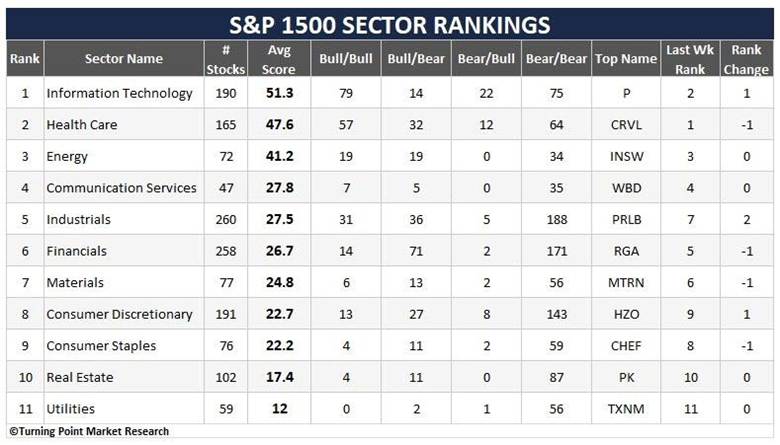
Monday’s S&P 1500 Rankings report showed technology extending its improvement to reclaim the top sector ranking, while industrials climbed two spots. This is encouraging, especially if the improvement continues. Financials fell again, dropping to sixth place. That slippage could prove more consequential, as strong technology or energy leadership combined with deteriorating financials has often emerged in the later stages of a market cycle.
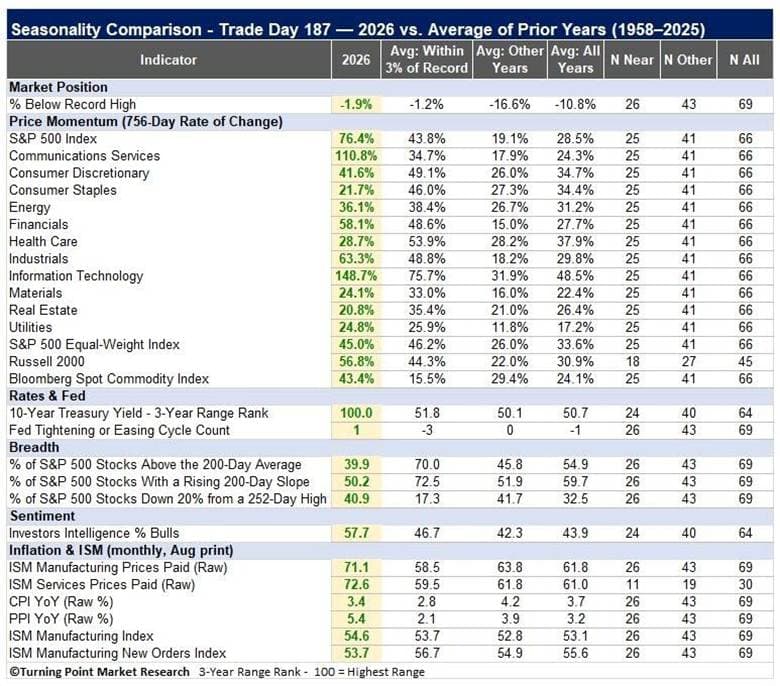
Thursday’s report took an in-depth look at seasonality as stocks entered the calendar’s most bullish window. However, a comparison of market conditions at the October seasonal low across several key indicators revealed that 2026 looks unlike most years. In fact, the four closest historical matches were 2007, 2018, 2025, and 1967, all of which were followed by negative returns over the subsequent six months.
The takeaway: investors should temper their seasonality expectations as the market transitions from 2026 to 2027.
Note: Look for a report next week examining midterm election seasonality, building on the seasonal analysis published Thursday. I think you’ll find it fascinating.
Dual trend analysis
For the first time in more than a month, Dual Trend signals recorded net gains across several sectors. The gains were modest, but a reversal in the right direction has to start somewhere. Health care led all sectors in net losses, driven primarily by health care equipment and biotechnology.
If Treasury yields stabilize or reverse, buy signals are likely to expand across a broader universe of stocks.
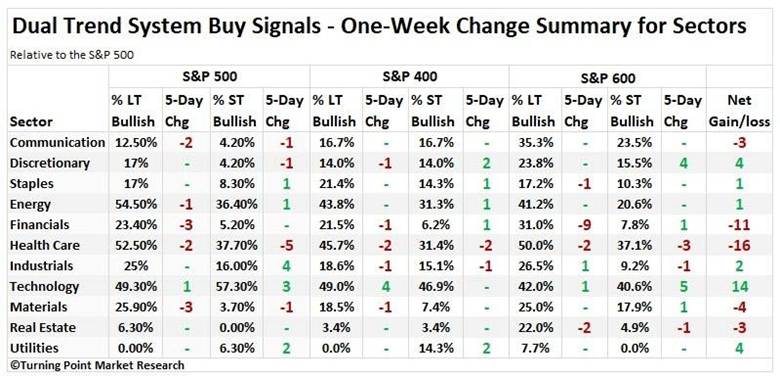
The short-term Dual Trend system for the S&P 500 health care sector shifted to a bearish status this week, confirming the deterioration in individual stock signals noted above. Outside health care, little changed over the past week, with relative lows remaining elevated across sectors beyond the market leaders.

Portfolio Update
This week’s portfolio adjustments included initiating a position in Charles River Laboratories (CRL), with life sciences tools & services leading the latest S&P 1500 sub-industry rankings. Exposure to Marvell Technology (MRVL) was increased as its relative strength continued to improve. SanDisk (SNDK) was eliminated amid persistent deterioration in memory and storage price action. VistaShares AI ETF (AIS) was also sold as momentum across AI-related investments began to weaken.
Cash stands at 20%, reflecting a cautious tone.
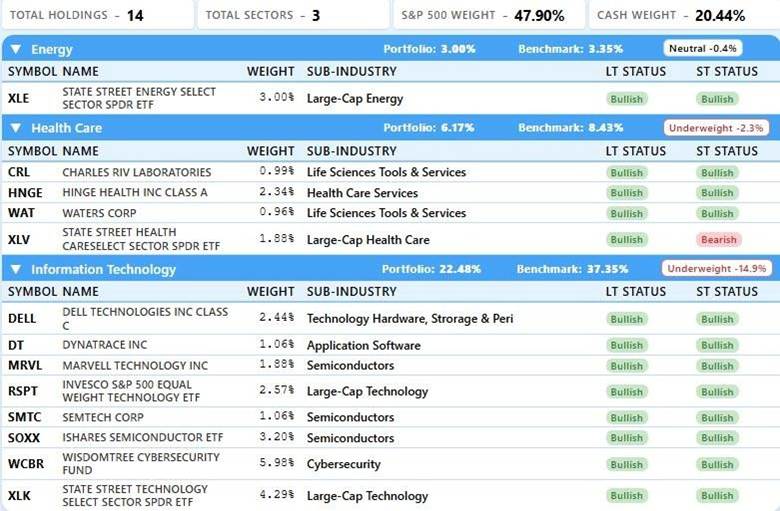
Through Thursday’s close, the Dual-Trend portfolio had gained 25.96%, outperforming the S&P 500’s 14.45% return.

Final thoughts
Little has changed in the underlying market environment. Breadth remains poor, leadership is narrow, and the persistent deterioration increases the risk of additional TCTM Risk-Off warnings. These developments reinforce the view that the market remains structurally unhealthy despite the S&P 500’s resilience. The coming weeks should help determine whether conditions improve enough to support a year-end rally or whether the average stock continues to stagnate. CPI, PPI, and the Fed’s late-October meeting will be key catalysts, particularly for the 10-year Treasury yield and yield-sensitive equities, which have stabilized this week alongside rates. Until yield direction becomes clearer and market participation improves, it’s appropriate to maintain a cautious posture.