Key points:
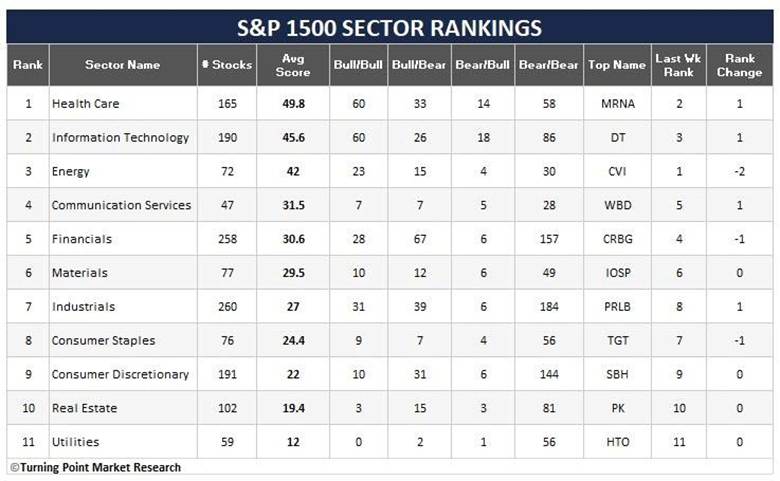
- The health care sector claimed the top spot in the latest S&P 1500 rankings
- Technology rose to #2 in the standings, aided by improvement in semiconductors
- Financials continue to lose momentum, falling to fifth in the rankings
Growth strengthens while value falters
Leadership has become increasingly concentrated over the past month. Only 16% of stocks finished last week with bullish short- and long-term Dual Trend signals, down sharply from 27% at the end of August.
The narrowing leadership is reflected in the sector rankings, where investors have crowded into growth-oriented groups at the expense of old-economy and interest-rate-sensitive sectors, which the sharp rise in yields has pressured. Technology has been the primary source of strength within growth and has now risen to #2 in the sector rankings.
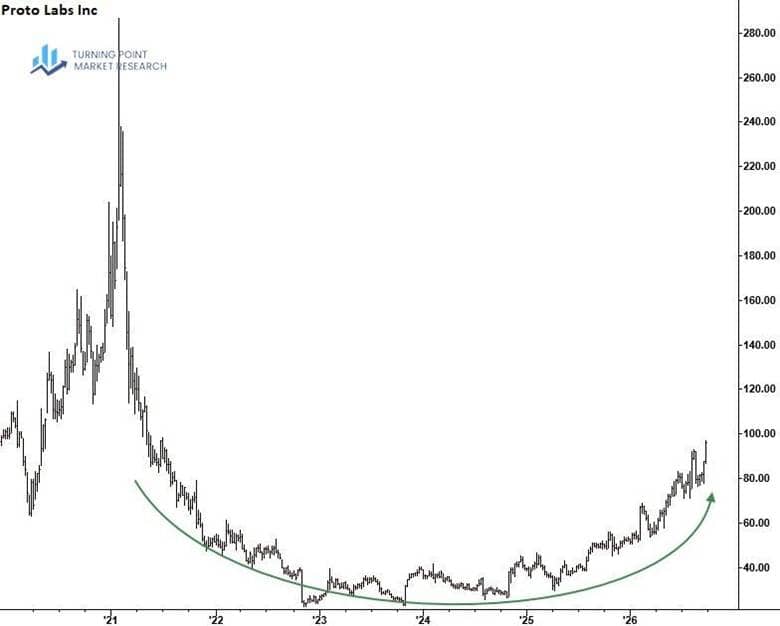
Proto Labs (PRLB), the top industrial name in the latest rankings, closed at a new 5-year high last week, but the bigger-picture chart may be even more interesting. The stock has spent years building a massive rounding-bottom formation. Proto Labs combines software, automation, and a global manufacturing network to produce custom parts for industries ranging from aerospace & defense and automotive to medical devices, robotics, consumer electronics, and industrial equipment.
Its exposure to robotics provides the clearest secular link to AI, making PRLB worthy of a closer look.
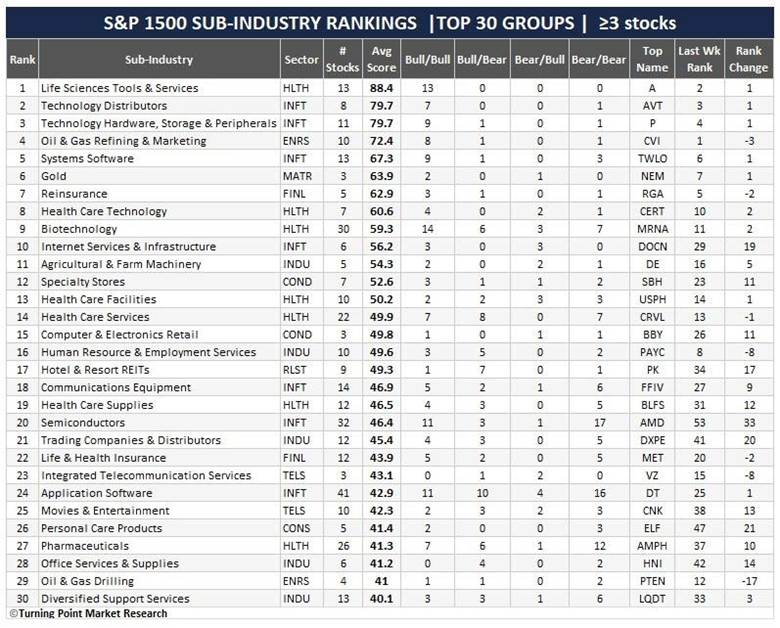
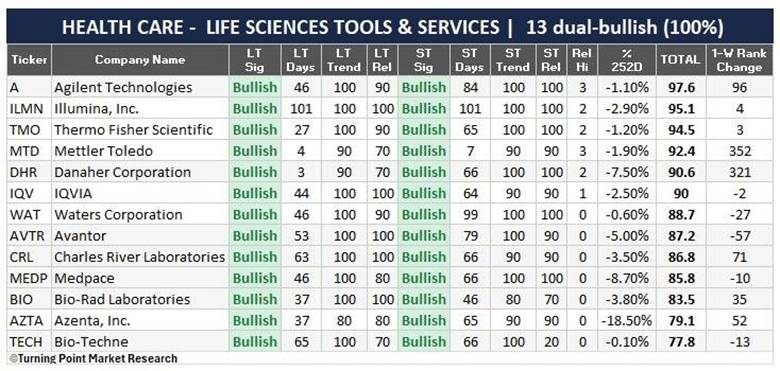
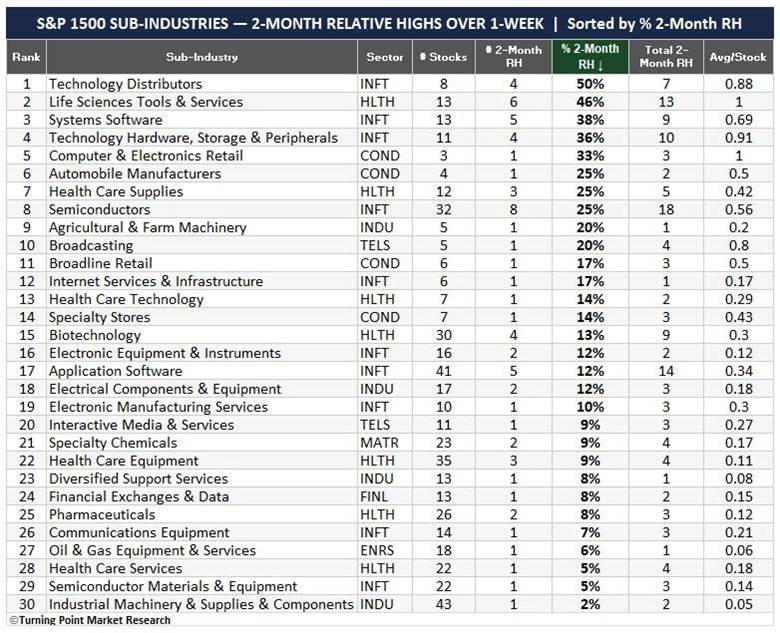
Life sciences tools and services emerged as the top-ranked sub-industry, with all 13 stocks carrying bullish short- and long-term dual-trend signals. Technology continues to improve, with three groups among the top five. Semiconductors also surged up the rankings, posting the largest week-over-week improvement among the top 30 groups, climbing 33 spots from No. 53 to No. 20.
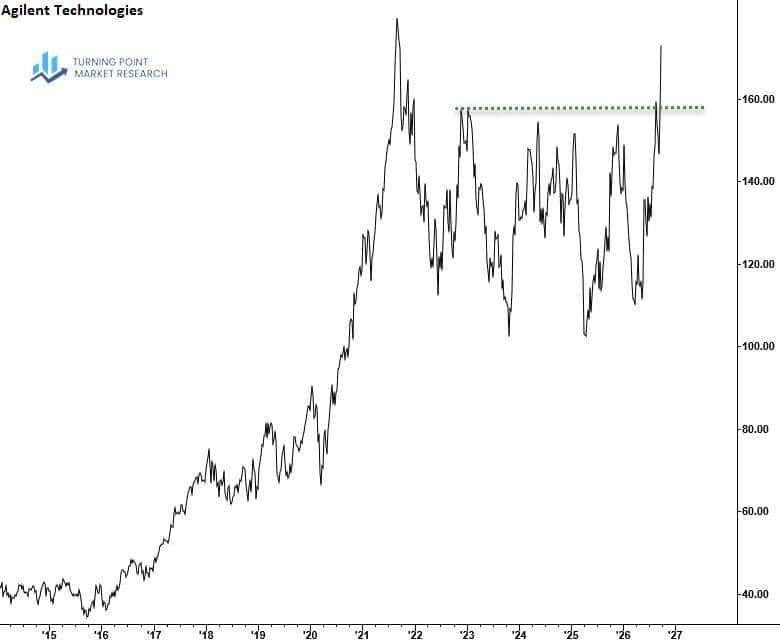
Within life sciences tools and services, Agilent Technologies (A) ranks as the top stock, closing at a new five-year high and setting the stage for a potential advance toward a new record high.
Bullish trends in life sciences tools & services are widespread, with 8 of 13 stocks climbing in the S&P 1500 rankings last week. Mettler-Toledo (MTD) and Danaher (DHR) made particularly strong advances, while Waters (WAT) recently cleared a five-year consolidation, potentially providing a roadmap for Agilent Technologies (A).
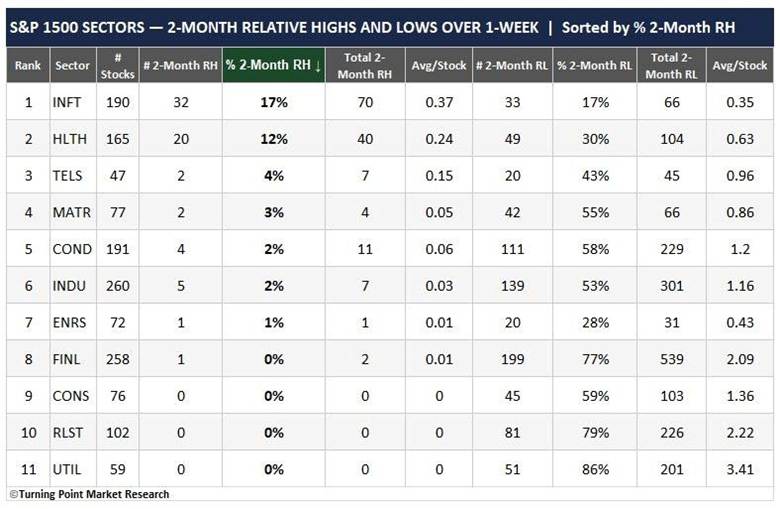
Technology led all sectors in both the percentage and total number of stocks reaching two-month relative highs over the past week. Relative lows remained concentrated in utilities, real estate, and financials as the higher-rate environment continues to pressure these interest-rate-sensitive groups.
Within technology, tech distributors led all groups in the percentage of stocks hitting two-month relative highs, while semiconductors produced the most total relative breakouts.
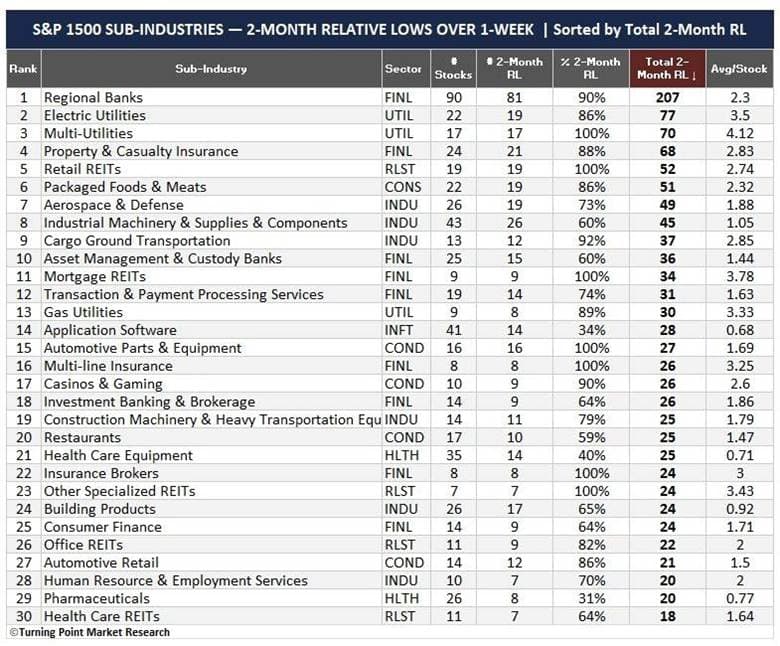
Rate-sensitive areas continued to account for a disproportionate share of two-month relative lows. Financials led all sectors in breakdowns, with regional banks responsible for a substantial portion. At the same time, utilities also posted elevated readings as multi-utilities averaged more than four relative lows per stock.
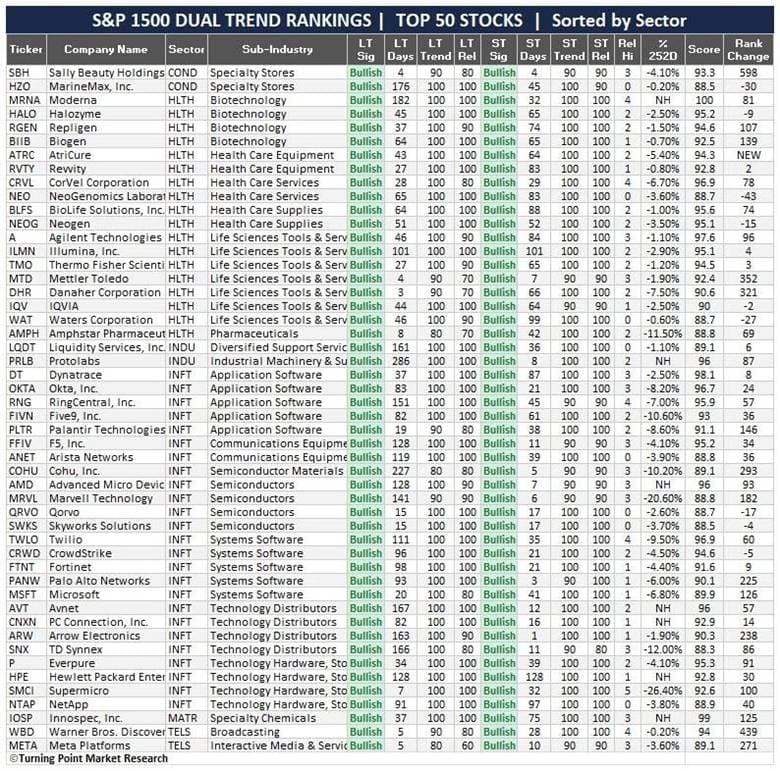
Health Care and technology dominate the latest S&P 1500 rankings, accounting for 43 of the top 50 stocks. Within technology, leadership is relatively broad across several groups, while health care is concentrated primarily in life sciences tools & services and biotechnology.
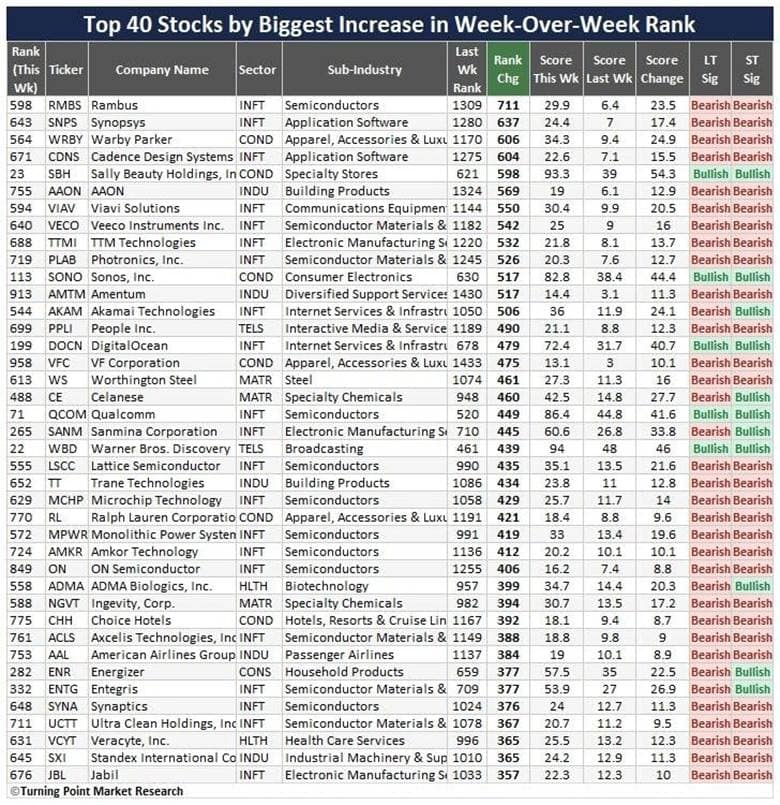
Technology accounted for 21 of the 40 largest week-over-week gainers in the rankings, with semiconductor stocks making up the bulk of those advances.
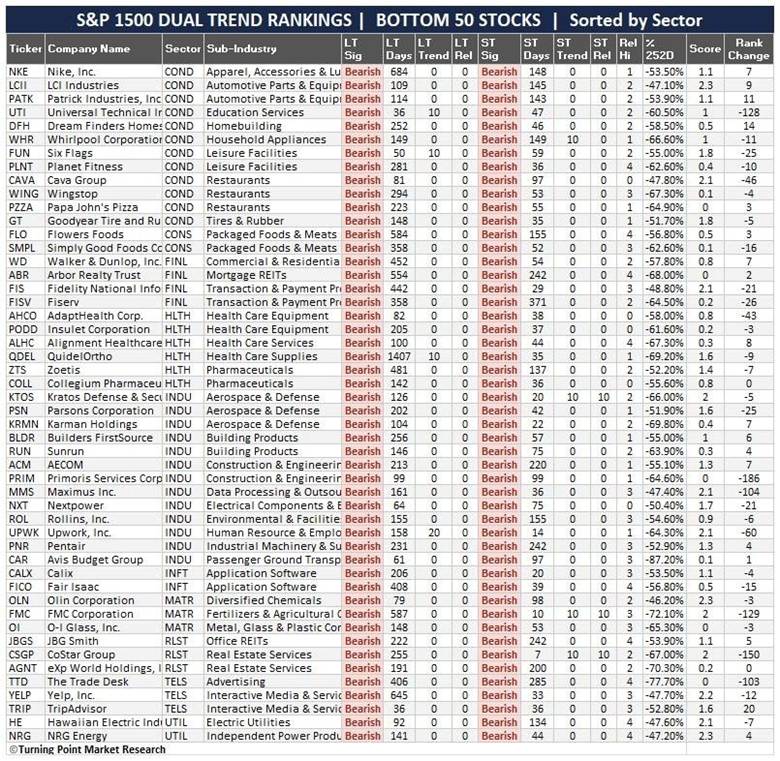
Consumer discretionary and industrial stocks continue to account for the largest share of names ranked in the bottom 50 of the S&P 1500.
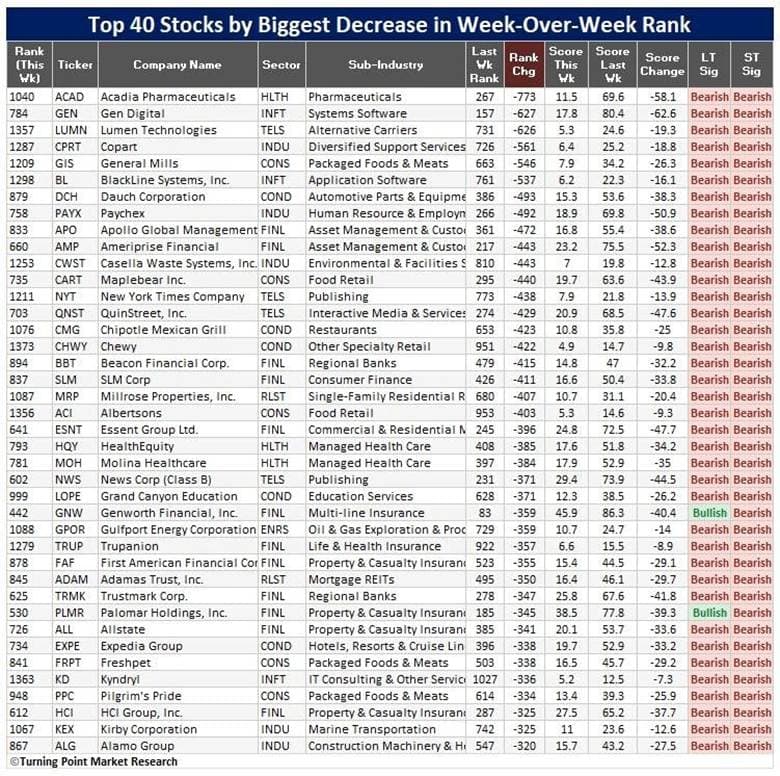
Financials led all sectors in the largest week-over-week declines in the rankings, driven primarily by insurance names.
What the research tells us…
Market leadership continues to narrow, with health care and technology accounting for an increasingly large share of the strongest trends. Life sciences tools & services currently stands out as the strongest area within health care, while semiconductors continue to gain momentum within technology. Meanwhile, conditions across other sectors are deteriorating, making it increasingly difficult to identify compelling opportunities outside these leadership groups. Until interest rate pressure eases, the broader market backdrop is likely to remain challenging, reinforcing the importance of staying focused on areas showing relative strength.