The best improvements I’ve made to my trading—the novel insights that meaningfully added to my edge—are ideas whose source I cannot name.
This summer, like each before it, I will audit the adaptations I made earlier in the year: what worked, what didn’t. Inevitably, I will try to reverse engineer the best discoveries. I will ask: where did I go when I found them? And I will plot a deliberate return.
And yet it’s never about where I go. It’s about what goes away.
What goes away is the justification to start.
What goes away is the ten-step plan.
What goes away is the knowable payoff: the guarantee that the time I invest in following a thread today will not be wasted time tomorrow.
Traders and investors have a particular relationship with the unknown. We are trained to model it, manage it, mitigate it.
We peer into the future and concern ourselves with the unknowables: the hidden leverage, the black swan, the tail risk that undoes the thesis.
We forget to look back at what the unknown has already given us.
Every unexpected discovery. Every insight that arrived from no discernible direction. Every leap forward that came not from a plan but from following a thread with no destination defined.
The unknown births all that is new. What is known is priced in—already an edge the market has adapted to. And your edge, as you know it today, will never be transformed by the familiar.
It will require befriending the very thing you have been trained to defend against.
The unknown is not the enemy of your edge. It is the source.
Shifting Expectations
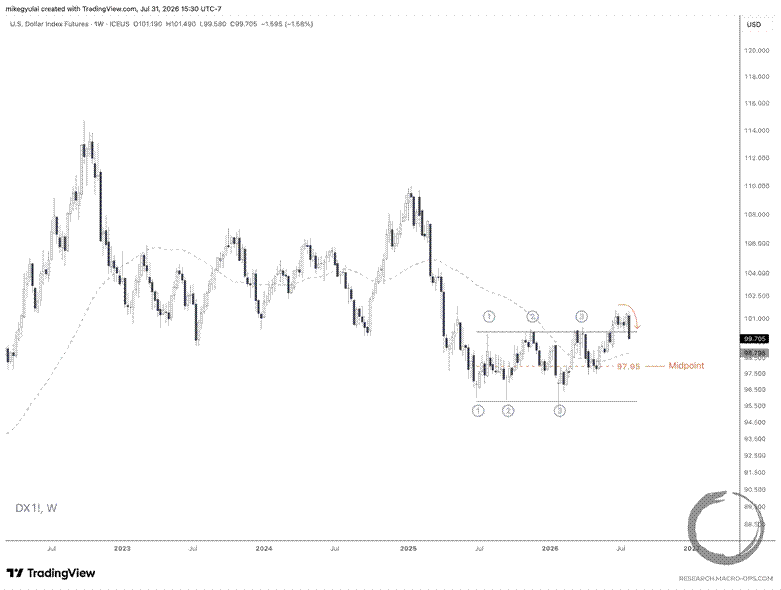
The U.S. Dollar dropped sharply back inside its year-long range this week when the Federal Reserve decided to hold interest rates steady. Leading up to this week’s meeting, we’d been tracking the Dollar’s steady rise on speculation of a potential rate hike. And in last week’s issue, we highlighted the 101.57 level as a critical point to watch for either a confirmed higher high or a rejection. Wednesday’s meeting gave us our answer: the Fed opted to maintain the status quo and the premium for immediate hikes dissipated, prompting a broad selloff as expectations readjusted.
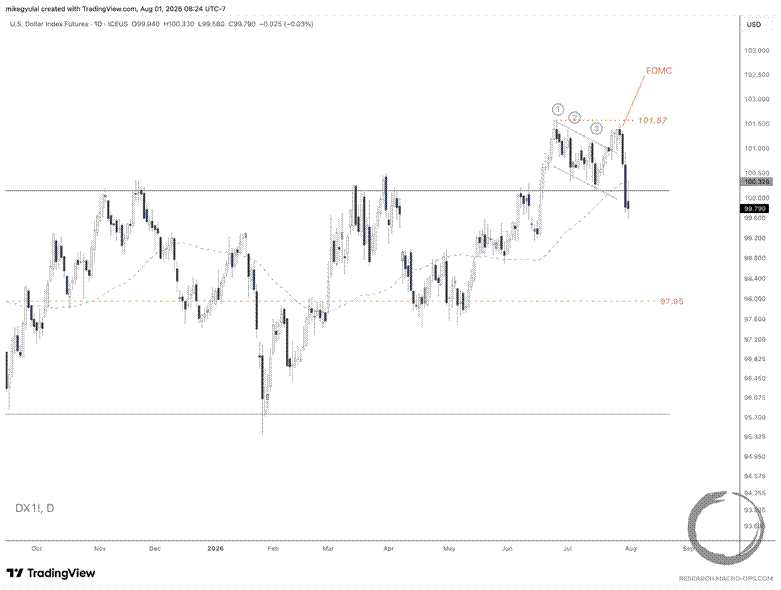
Friday’s close back inside the weekly range establishes a short bias, with an initial midline target of roughly 97.95 for the failed breakout.
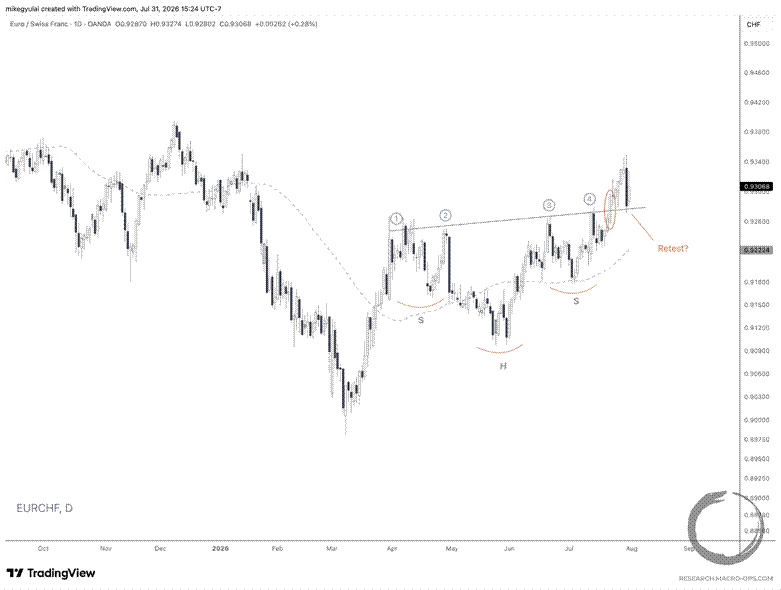
Also in currencies, Euro / Franc pulled back to retest the neckline of its three-and-a-half-month Head & Shoulders Continuation pattern.
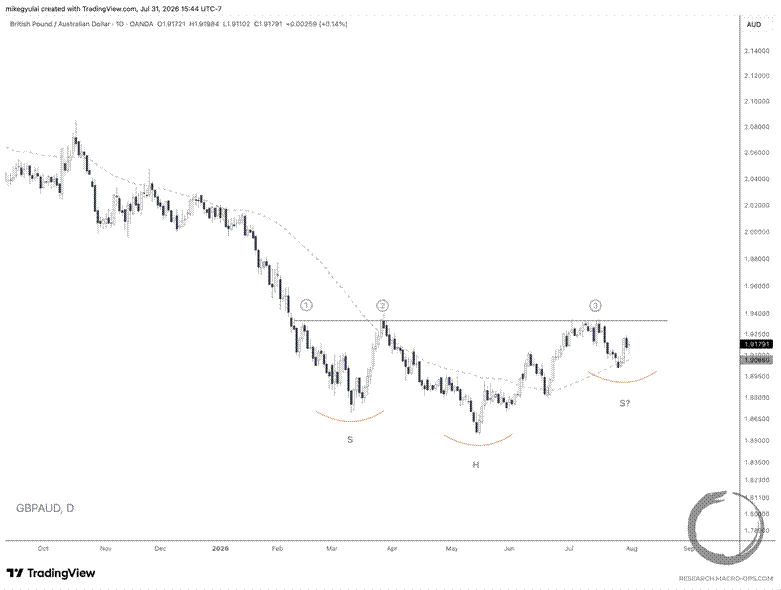
And Pound / Aussie is forming a five-and-a-half-month Head & Shoulders Bottom pattern.
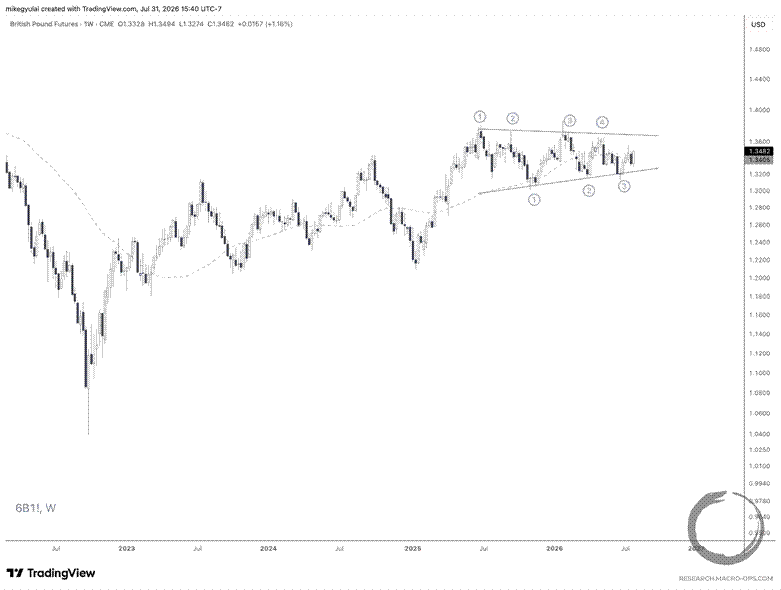
While British Pound futures have been coiling for over a year now inside what could be a massive Symmetrical Triangle. Weekly chart shown here.
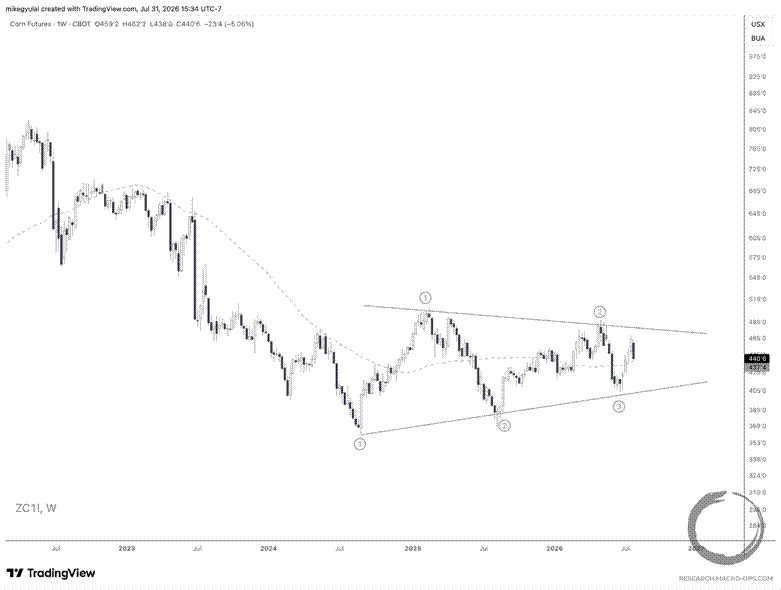
Another Symmetrical Triangle on the weekly has formed in Corn futures. The continuation contract shown here. No pattern on the daily to get involved as of yet.
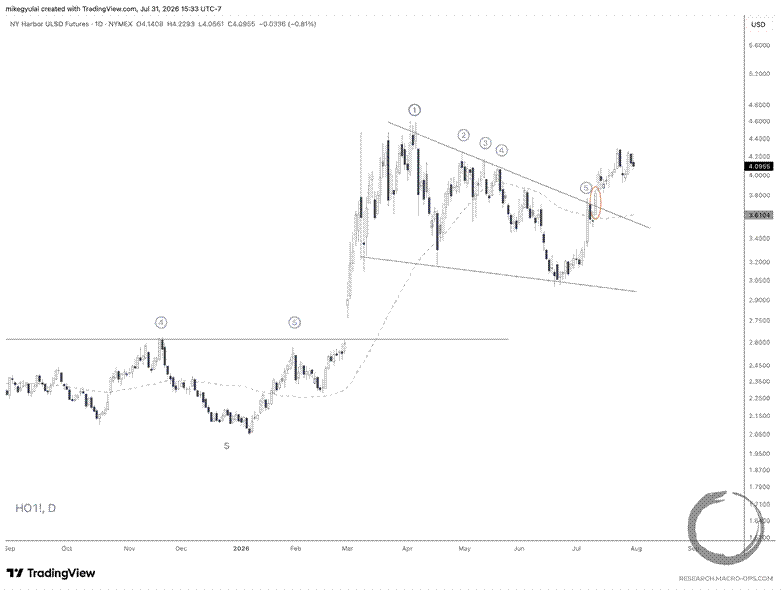
Heating Oil futures continue to hold the breakout from a Falling Wedge pattern on the continuation chart, and could now be forming a small continuation pattern.
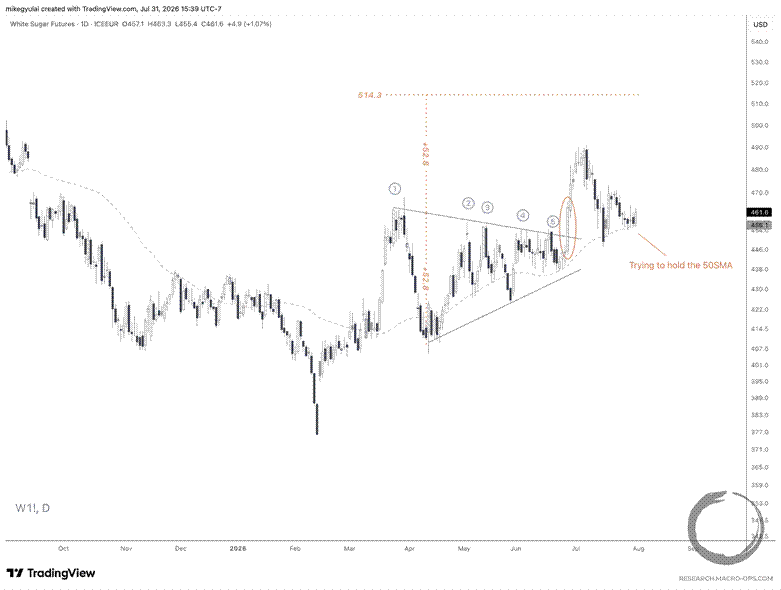
After an impulsive initial breakout from a Symmetrical Triangle, White Sugar futures is back to its 50DMA attempting to hold and resume higher, toward a 1x measured move target of 514.3.
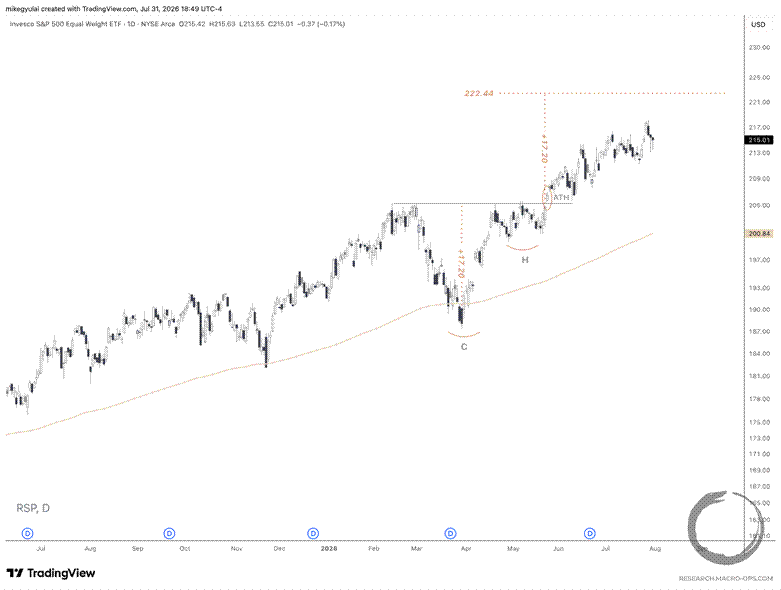
And despite all the volatility in semiconductors and AI-infrastructure names, which continued to hit the Nasdaq this past week, the S&P 500 Equal Weight ETF has slowly drifted higher since breaking out of its three-month Cup & Handle Continuation pattern this past May.
RSP displays just how resilient the broader market has been despite SPY’s continued consolidation and QQQ’s sharp selloff. A 1x measured move target for RSP sits at 222.44.
The Pauses That Refresh
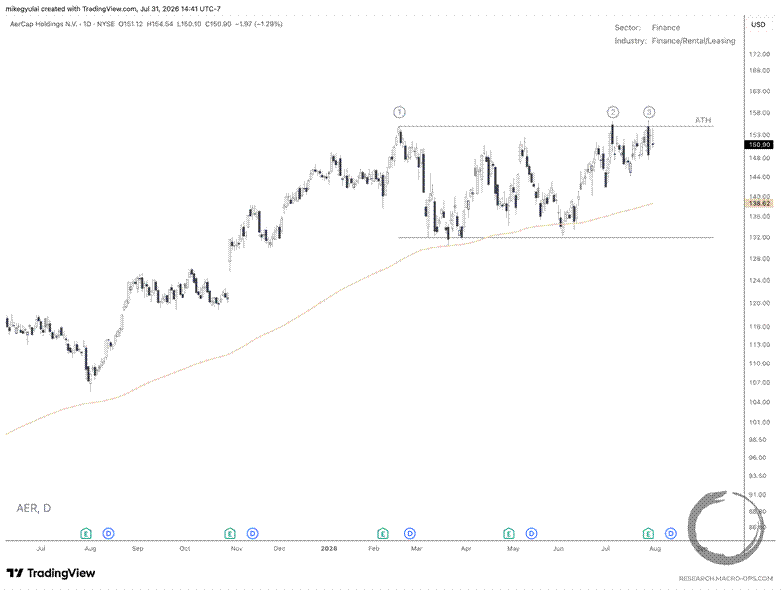
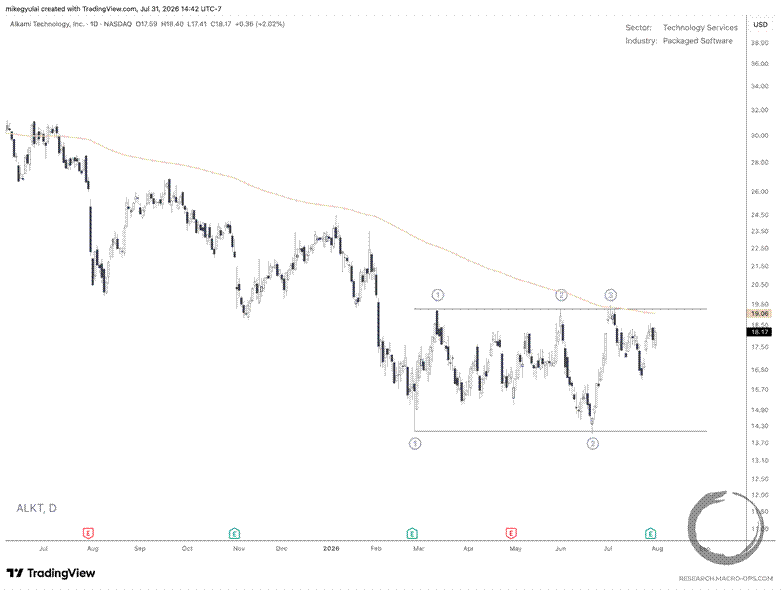
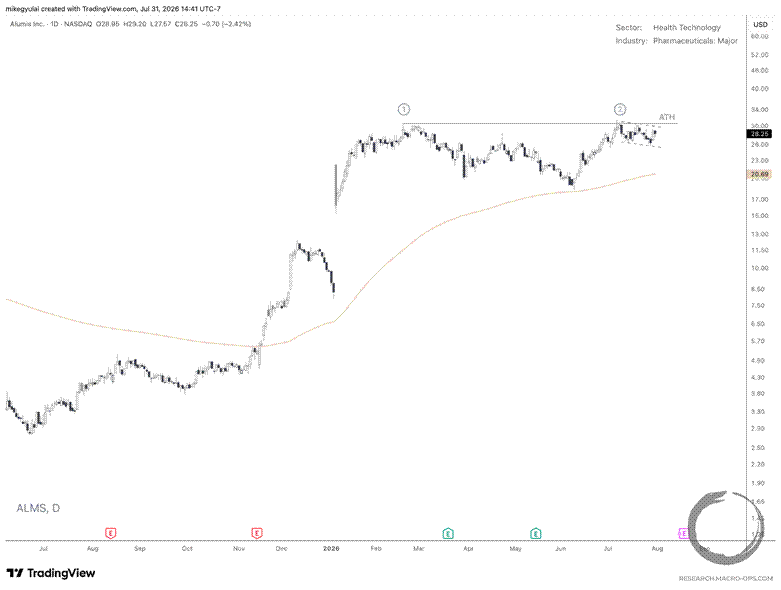
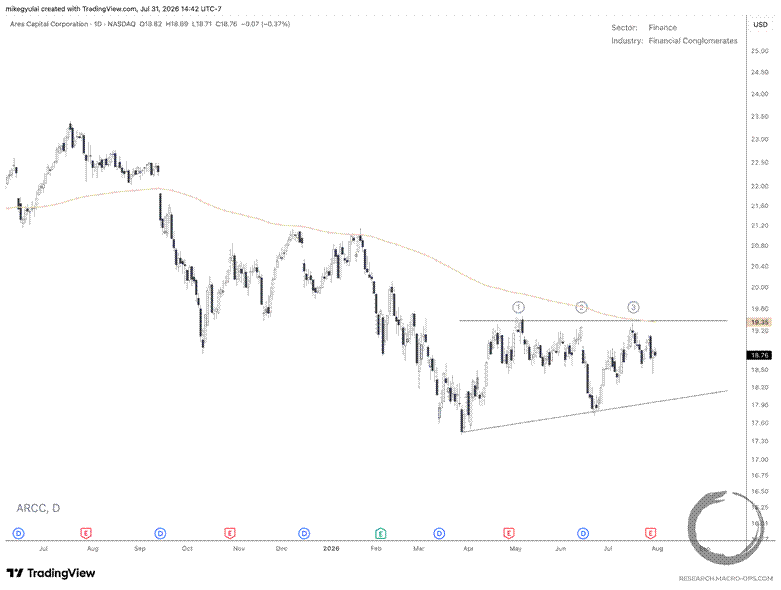
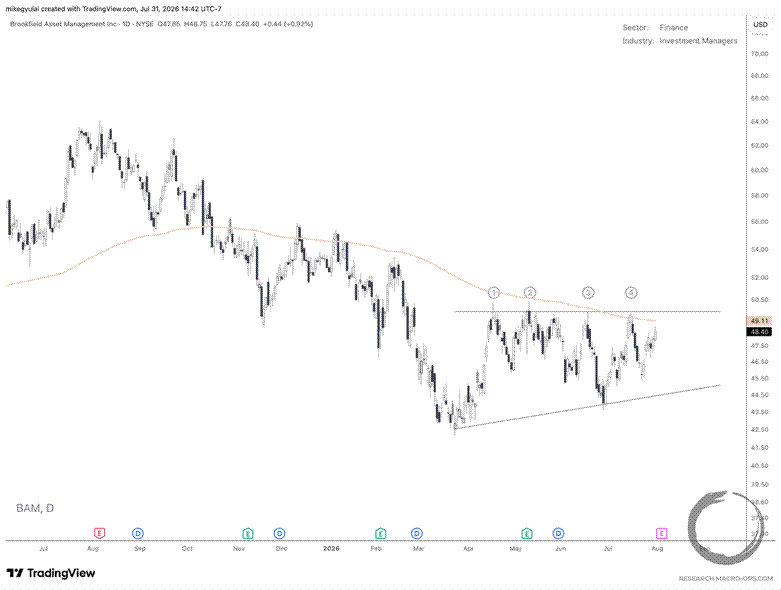
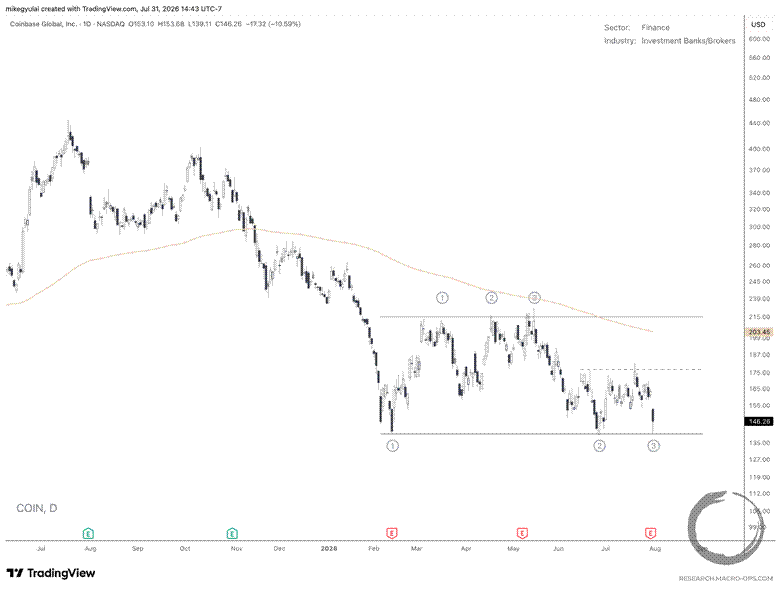
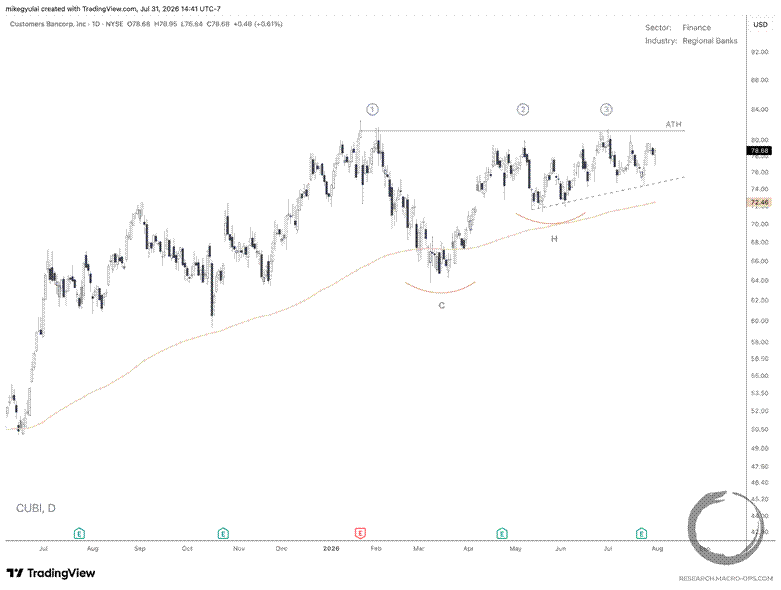
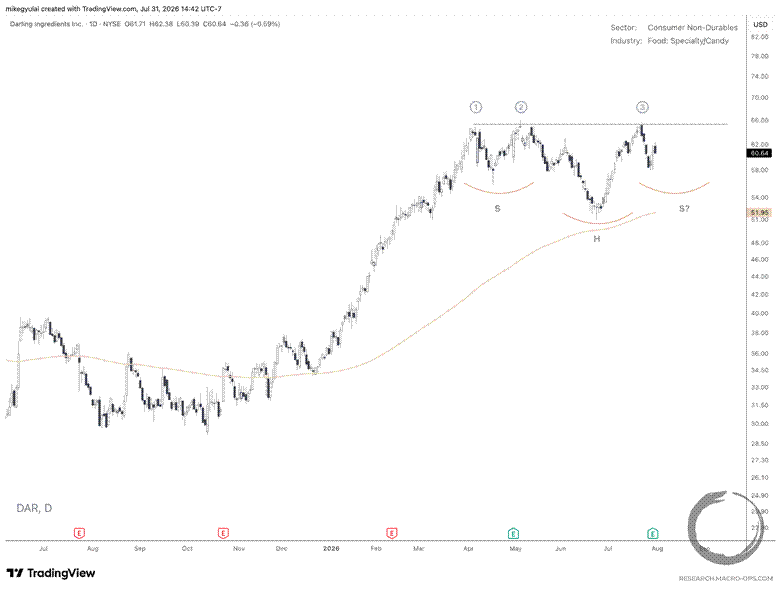
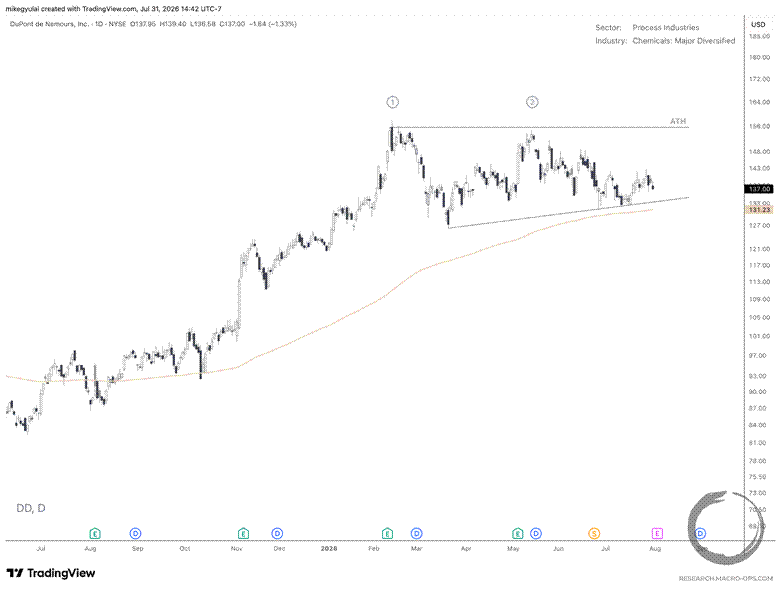
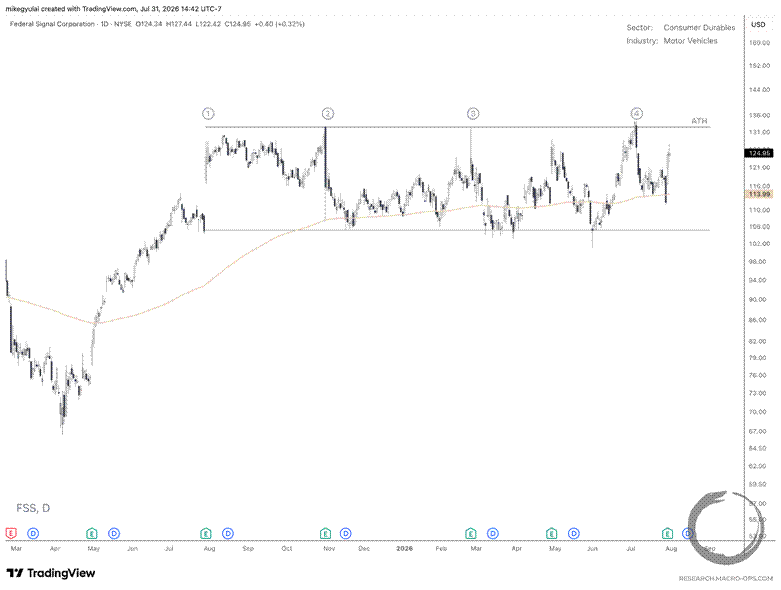
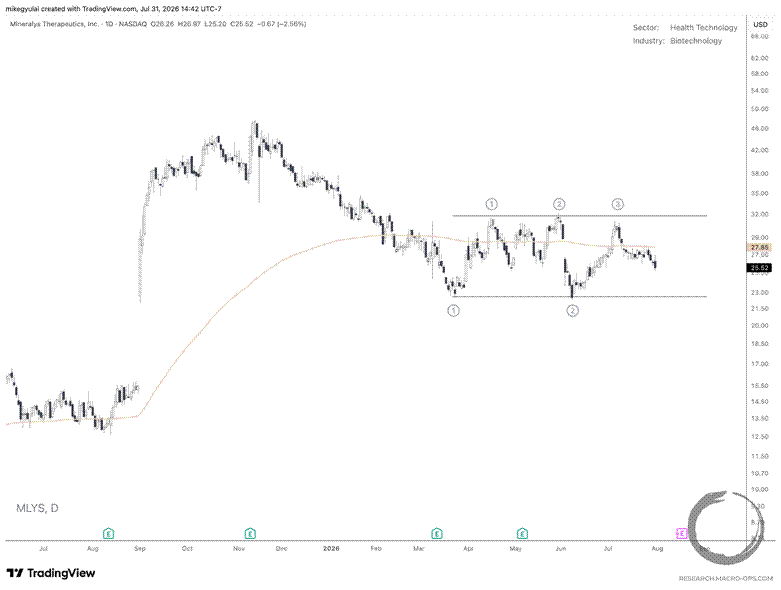
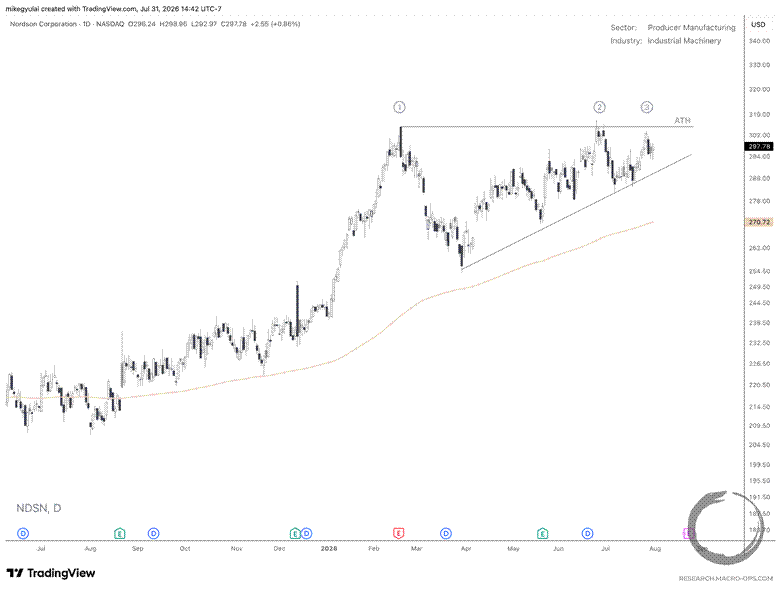
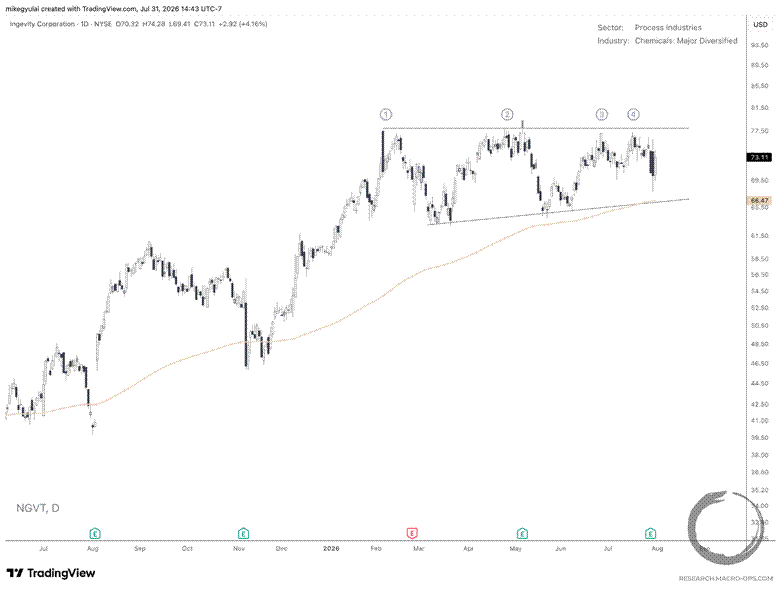
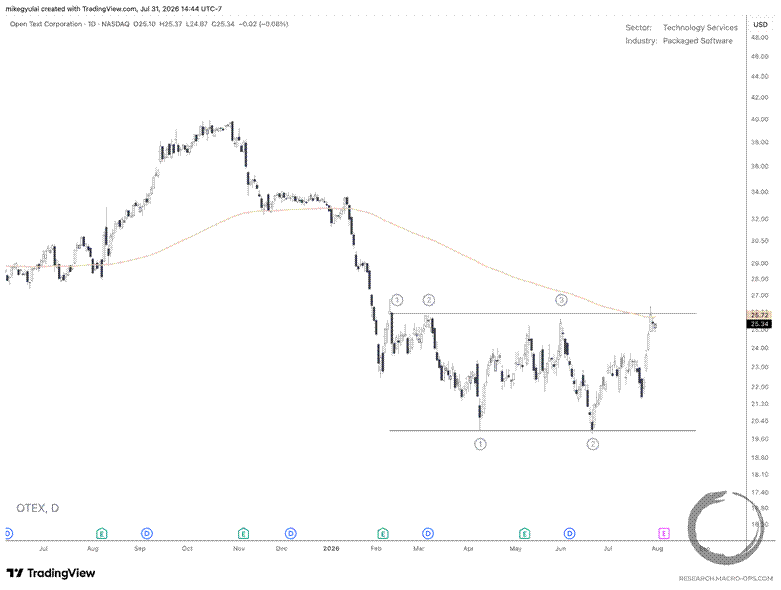
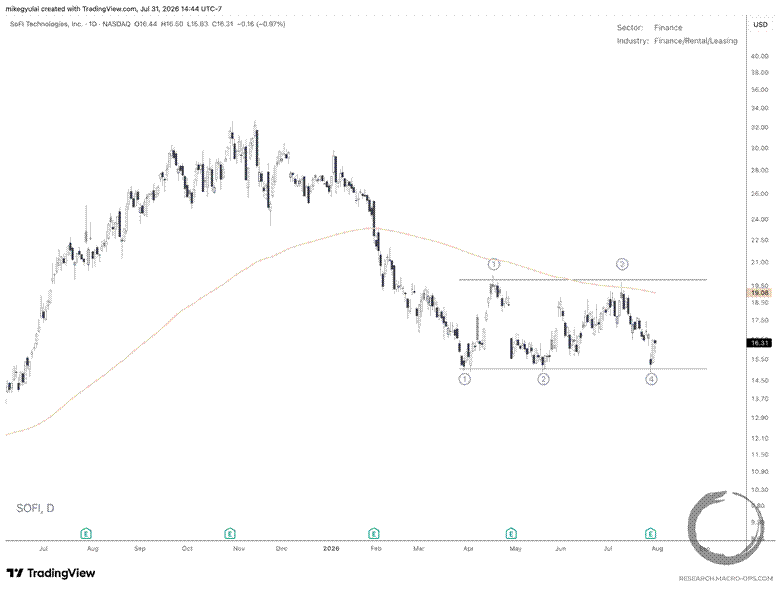
There is a notable mix of long setups, short setups, continuations and reversals in this week’s equity screen.
Here are the names that caught my attention:
Best wishes in your trading, and see you in the next issue.