In 1994, the University of Iowa produced the Iowa Gambling Task—now a cornerstone of neuropsychology—reshaping how we understand decision-making under risk.
Participants chose cards from four decks, aiming to maximize play money. Two groups played: healthy individuals, and those with damage to the ventromedial prefrontal cortex—the region that converts past emotional experience into anticipatory gut feeling. When a healthy human loses money or makes a mistake, their amygdala fires and the vmPFC tags that feeling as a subtle signal that resurfaces when they face similar risk again.
Two decks offered high immediate rewards but large, unpredictable penalties; two offered smaller rewards but smaller penalties—the superior decks over time. Both groups had to discover this through trial and error.
The vmPFC-damaged group had no anticipatory emotional memory. Every time they looked at the four decks, it was as if they were seeing them for the first time. Without gut feeling pulling them away from the dangerous decks, they relied purely on short-term arithmetic. And they chose the dangerous decks time and again, repeatedly surrendering their winnings. The healthy group followed their gut and came out ahead.
Mainstream Wall Street wisdom preaches just what the damaged cohort did: cold, memoryless execution. “Trade the market in front of you, not the one in your head.” “Be like a goldfish.“
The Iowa Gambling Task suggests this is not wisdom. It is a disability.
As artificial intelligence proliferates across all sectors—not least finance and trading—a new cohort of participants is entering markets: those with superhuman ability for calculation, logic, and cold-blooded rationalism. What they have no access to: self-awareness, discernment, gut feel.
Some of the smartest money knows this. Last September, D.E. Shaw—which for over 30 years pioneered quantitative investing by treating the market as a massive data-processing problem—quietly raised five billion dollars for its first purely discretionary, human-led hedge fund.
The Wall Street mantras may not be entirely false. They may simply be incomplete.
Don’t trade the market in your head. Trade the one in your gut.
Bend with the Trend
Equities, spearheaded by the Nasdaq, appeared positioned for further gains until Friday’s exceptionally strong U.S. employment data revealed a remarkably robust economy. This shift abruptly extinguished expectations for rate reductions and reignited concerns regarding future interest rate increases.
Consequently, a Bearish Engulfing pattern emerged, wiping out the advances made during the preceding week.
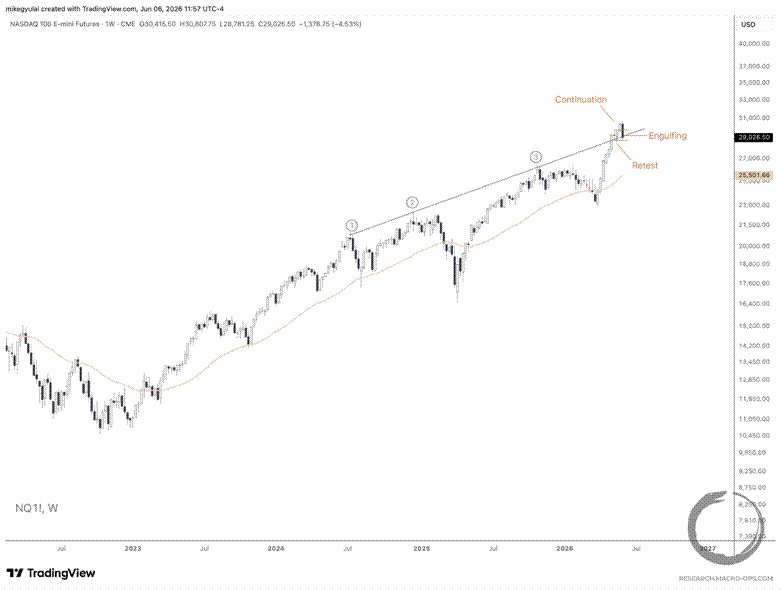
NASDAQ 100 E-mini Futures (NQ1!), 1W
In accordance with the principle that Price is Truth—the first rule of This Infinite Game—we closed our Nasdaq long position this week as the trend began to shift.
Adhering to the trend is a core component of our process, as evidenced by various examples within our Macro Ops Portfolio and previous issues of this very report.
While this move signals a shift, it is not a cause for alarm. Following a strong run of eight positive weeks out of nine since the April low, the market may simply be entering a phase of digestion.
This pause could facilitate a transition where other sectors take over leadership from the AI trade. The future outlook depends on the nature of this correction: whether it manifests as a price decline that drags down other risk assets, or a time-based consolidation that allows for a healthy rotation.
Our commitment to bending with the trend is further illustrated by our coverage and positioning in Coffee Futures.
In April, we identified a potential upside reversal at a long-term support level; however, as that support failed to hold and the reversal attempt stalled, we adjusted our stance.
Consequently, we have maintained a short position in Coffee since the middle of May.
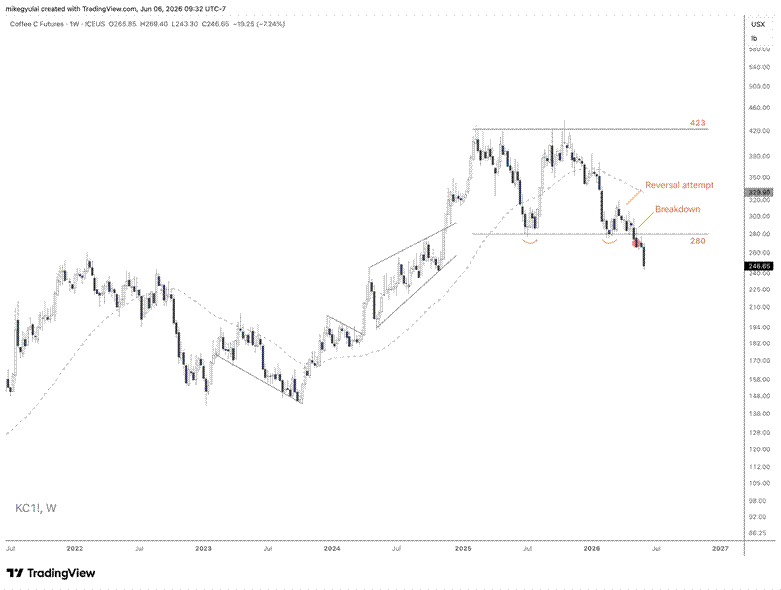
Coffee C Futures (KC1!), 1W
Another case in point is Ethereum.
Throughout the first quarter, ETHUSD battled to maintain its footing at a multi-year trendline that has served as a reliable floor for price pullbacks since 2022.
Early signs of accumulation appeared on the daily charts as buyers attempted to defend this key support level, prompting us to initiate several long positions within the Macro Ops Portfolio.
However, by Q2, the bullish momentum began to wane.
Recognizing that the prevailing trend was shifting, we adjusted accordingly: we flipped our bias to short last month and secured partial profits during the sharp downside break of the last week.
In addition to our short ETHUSD position, our Macro Ops Portfolio has maintained short exposure to both BTCUSD and SOLUSD.
We took this week’s opportunity to peel off profits on these positions as well.
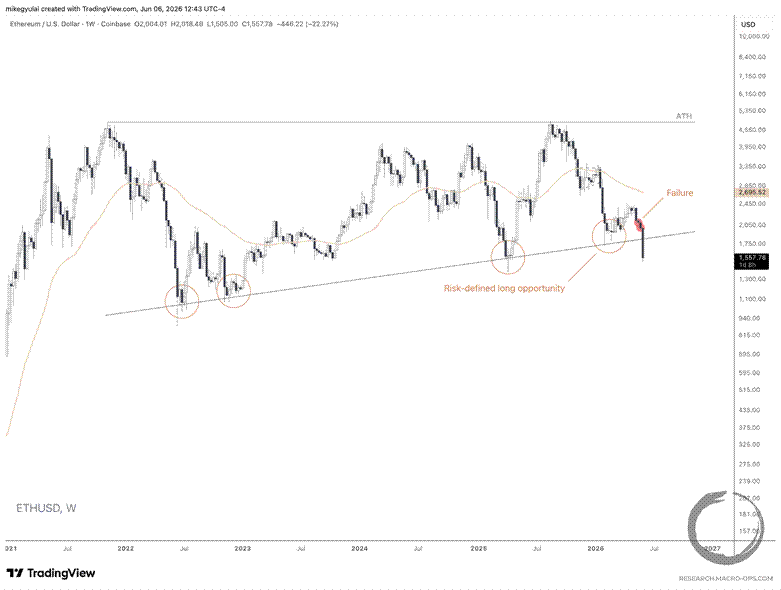
Ethereum / U.S. Dollar (ETHUSD), 1W
Note the significance of this week’s breakdown. This is the first time in four years that this trendline has failed to act as support.
For the previous two weeks, I highlighted a Symmetrical Triangle forming in July Soybean Futures. While my default expectation for consolidation patterns is a continuation of the prior trend—which, in this case, suggested a measured move higher—the market had other plans.
This Tuesday, price decisively breached the pattern’s lower support boundary. This breakdown provided a clear, risk-defined entry to the short side. Since that break, an impulsive decline has already carried price roughly two-thirds of the way toward its downside objective of 1095.50.

Soybean Futures (Jul 2026) (ZSN2026), 1D
Our Macro Ops Portfolio managed to edge higher this week, successfully weathering the risk-off environment.
This resilience was a direct result of our commitment to bending with the trend and respecting price as the ultimate truth.
Despite entering the period with material exposure to various AI and Tech holdings, as well as a long position in the Nasdaq, adherence to our process ensured we remained on the right side of the tape.
The Pauses That Refresh
Should market breadth widen beyond the AI theme, there are a number of consolidations occurring at or near all-time highs.
Here are the names that caught my eye this week:
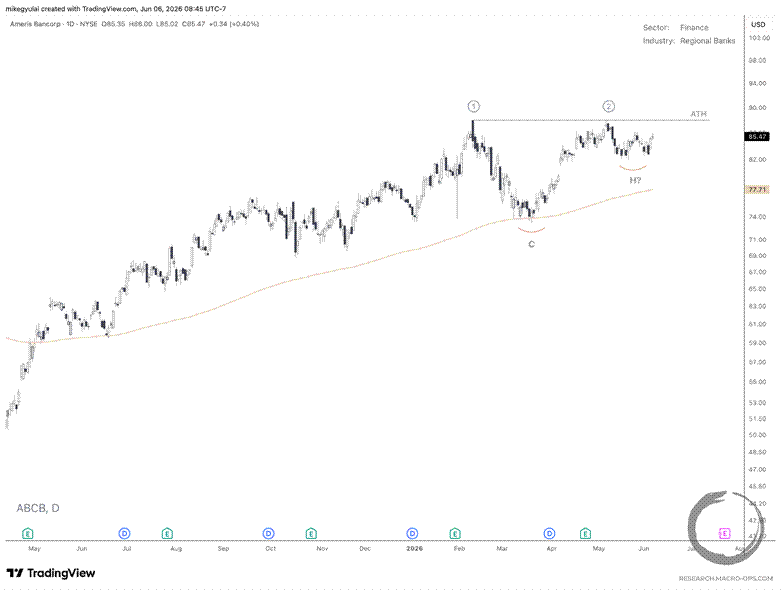
Ameris Bancorp (ABCB), 1D
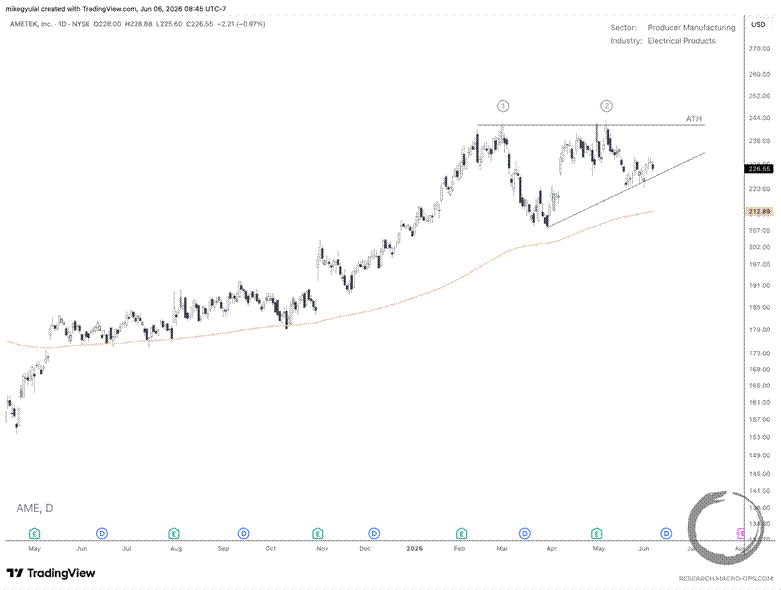
AMETEK (AME), 1D

Aurinia Pharmaceuticals (AUPH), 1D

AvePoint (AVPT), 1D

Boyd Gaming Corporation (BYD), 1D
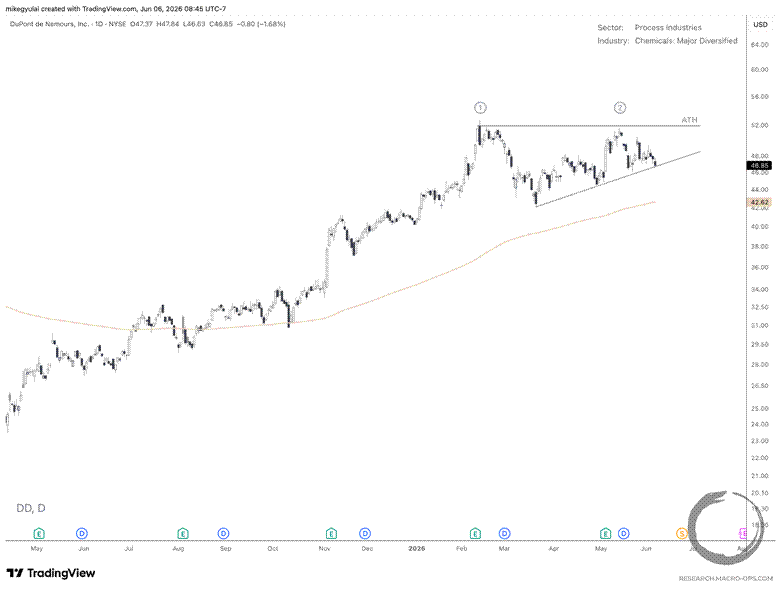
DuPont de Nemours (DD), 1D

Enova International (ENVA), 1D

Evergy (EVRG), 1D
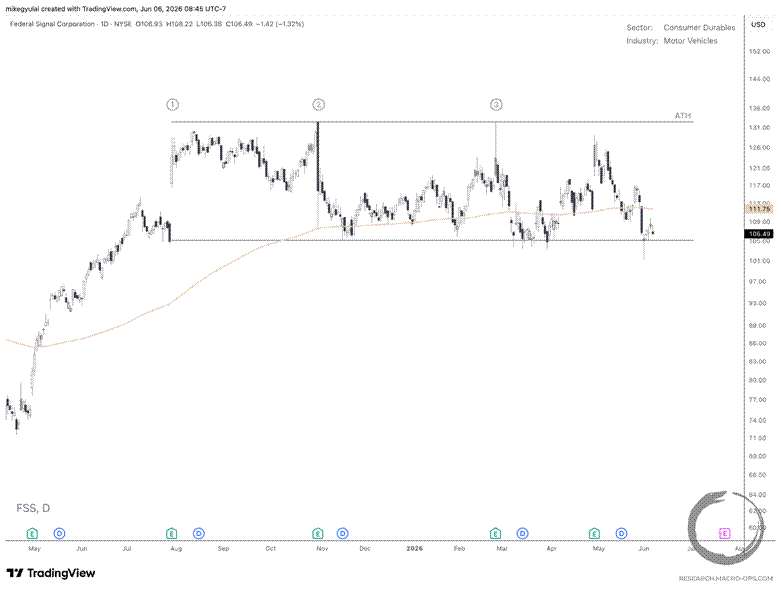
Federal Signal Corporation (FSS), 1D
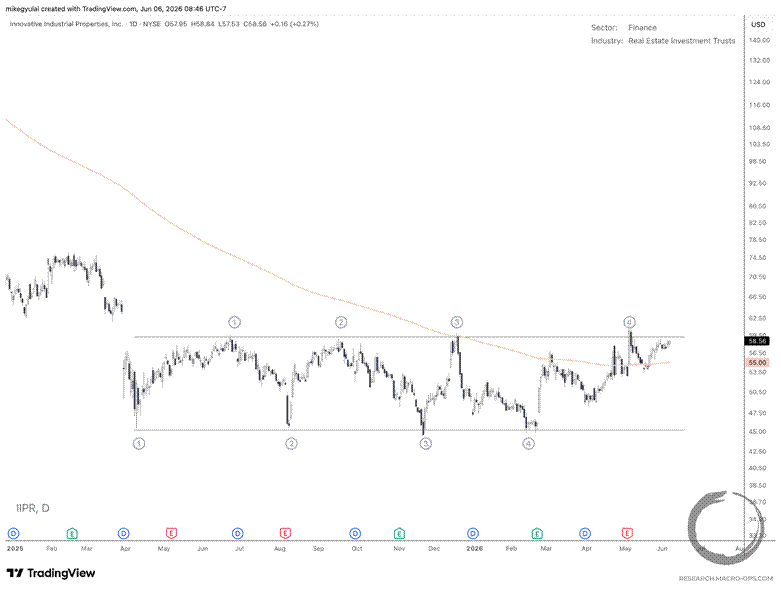
Innovative Industrial Properties (IIPR), 1D
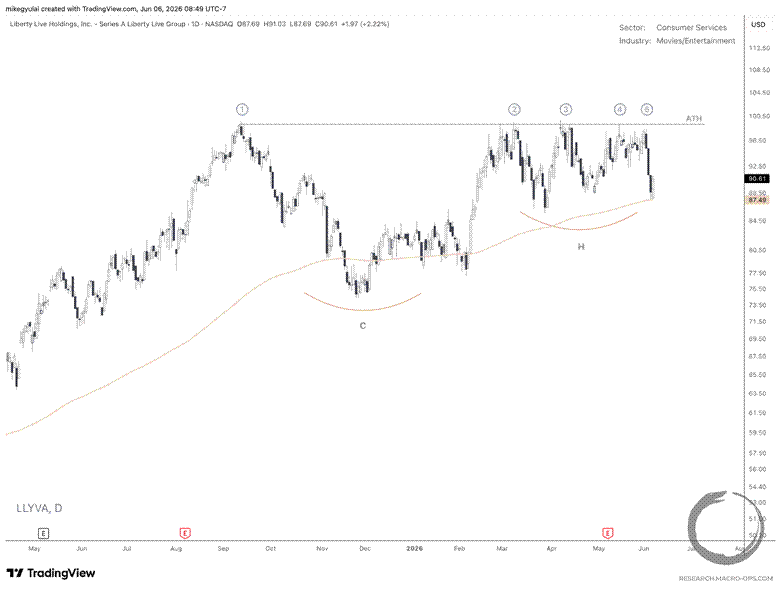
Liberty Live Holdings (LLYVA), 1D

Mueller Industries (MLI), 1D

PACS Group (PACS), 1D
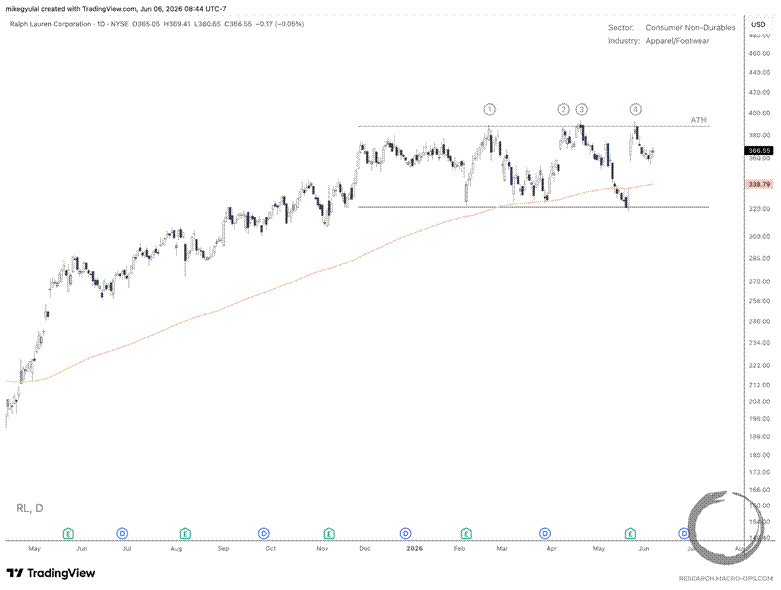
Ralph Lauren Corporation (RL), 1D
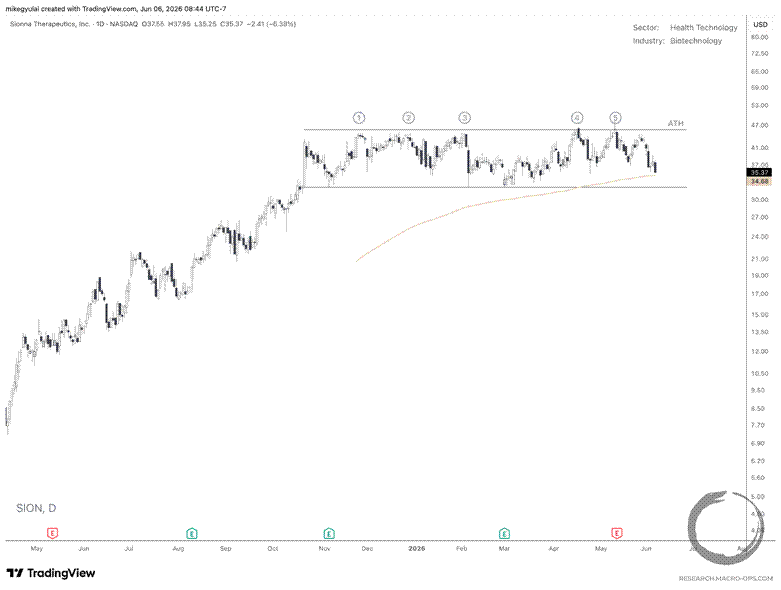
Sionna Therapeutics (SION), 1D
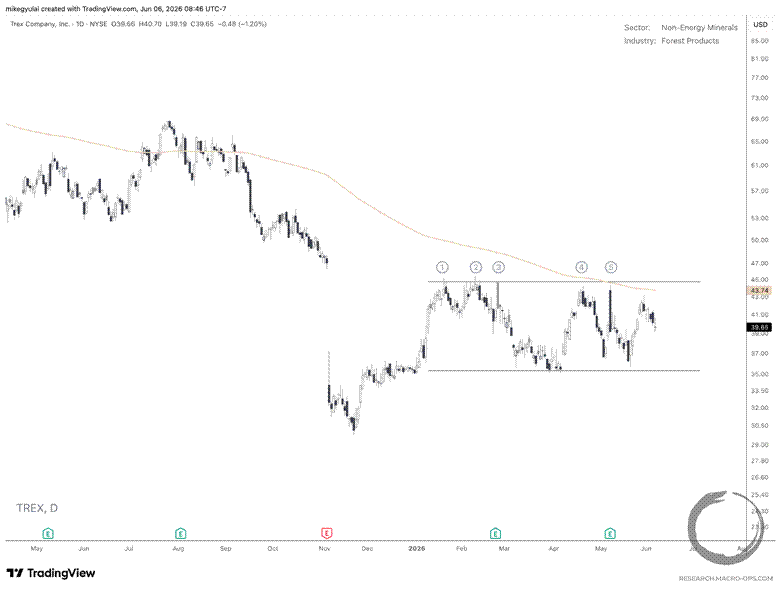
Trex Company (TREX), 1D
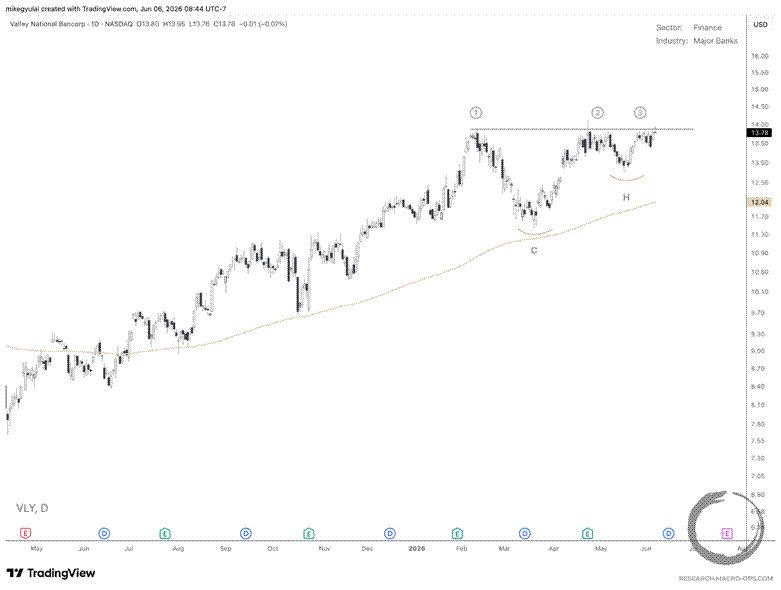
Valley National Ban (VLY), 1D
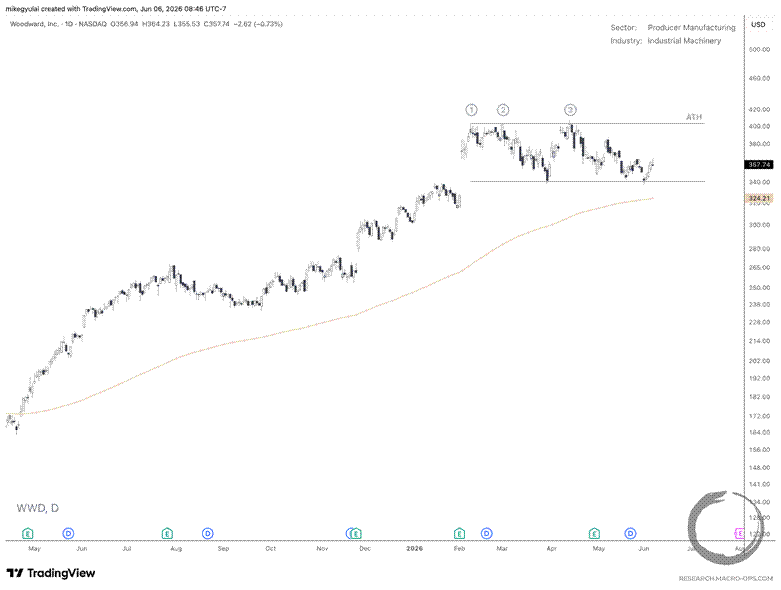
Woodward (WWD), 1D
Best wishes in your trading, and see you in the next issue.